Sandalwood Buying Guide: Care for Daily-Use Pieces
Dust can collect around a wooden pendant’s cord opening. This sandalwood buying guide explains how to choose a piece you can maintain, remove loose dirt, manage everyday exposure, and recognize damage that needs attention. At Buddha Stones, we recommend reading the material details and care notes before deciding how you will wear or carry an item. A necklace, a keychain, and a phone attachment face different kinds of contact, so begin with the intended use rather than color alone.
Sandalwood Buying Guide: Tools and Materials for Care
Start with a small, clean workspace where a loose bead or detached fitting will be easy to find. Good light helps you distinguish dust from a split and examine the places where rope passes through wood.
- A clean, dry, lint-free cloth: Use a cloth without polish or cleaning solution already on it.
- A soft brush: Reserve it for loose dust in accessible recesses. Its bristles should bend easily under light pressure.
- A shallow tray: Keep the piece supported during inspection instead of holding it over a sink.
- A clean pouch or divided box: Choose storage that prevents keys and loose fittings from rubbing against the wood.
Before buying, compare the stated dimensions with the space where you intend to carry the piece. Check the selected option carefully: a keychain and a phone attachment should not be treated as interchangeable simply because they appear on the same product page.
A Step-by-Step Routine for Wiping and Storage
- Remove the piece before wet or messy tasks. Set wooden jewelry aside before washing, bathing, swimming, or applying lotions and perfume. Keep a keychain away from a wet countertop. Planning a dry resting place is easier than dealing with residue afterward.
- Inspect before you wipe. Look for loose knots, thinning rope, separated fittings, and cracks around holes. Support the wooden component while checking its attachment. Do not pull firmly on a cord to find out whether it is about to fail.
- Lift away loose dust. Wipe with gentle passes, turning the piece so you can reach its edges. If dust remains in a recess, use the soft brush with light strokes directed outward. Stop if a bristle catches on a rough edge or loose fiber.
- Work around mixed materials carefully. Fold the cloth to a clean section when moving between wood, rope, stone, or metal. A cleaner intended for one component may be unsuitable for another. Keep routine care dry unless specific instructions authorize a different method.
- Respond promptly to accidental moisture. Blot the surface without scrubbing, then leave the piece in a shaded, ventilated place at room temperature. Avoid enclosing it while damp. If discoloration, swelling, or a loose attachment appears, suspend use and assess the damage.
- Put it away without pressure. Let cords lie loosely instead of winding them tightly around the pendant or fitting. Keep tassels from being trapped under a lid. Choose a location away from direct sun, radiators, and damp bathroom surfaces.
Give the attachment a brief visual check before use. Repeat the dry wipe when you see dust or surface residue; vigorous daily polishing is unnecessary. For a keychain, also check the contact points where neighboring keys can strike the wood.
When choosing a carrying position, leave enough clearance for the attachment to move without being crushed. A wooden accessory caught between a bag zipper and its contents faces a different problem from ordinary surface dust.
What Not to Do When the Surface Changes
Do not soak a wooden piece or run it under a faucet. Water can reach cord openings and joints that are difficult to dry. Avoid steam cleaners, ultrasonic cleaners, abrasive pads, and household disinfectants as routine care methods.
Do not apply cooking oil, essential oil, furniture polish, or wax to change the appearance or scent. An unverified treatment can leave residue or alter a finish. Likewise, avoid rubbing a marked area with alcohol or solvent without instructions specific to that item.
Do not use sanding, scraping, heating, or burning as an authenticity test. These actions can permanently damage the piece, and the resulting appearance or smell does not establish its identity. Before purchase, rely on the supplied material description and seek clarification about any missing detail that matters to your choice.
Do not try to force a uniform color. Grain differences and gradual surface changes may be described in an item’s care notes. Keep the original description available so you can distinguish an expected change from damage.
When to Repair, Replace, or Retire a Piece
A color change alone does not establish that a piece has reached the end of its useful life. Examine its structure instead. A cord that is visibly thinning, a knot that repeatedly slips, or a fitting that no longer closes securely is a reason to stop carrying or wearing it until repaired.
A split extending through an attachment hole deserves particular attention because that area supports the piece. Put the item aside if the wood sheds fragments or an edge catches on fabric. Seek an assessment before attempting glue or a replacement attachment.
Retirement can mean keeping a piece in a dry display box rather than continuing to carry it. When repair is impractical, a worn accessory can remain a personal keepsake without relying on a damaged cord or joint.
Products: Match the Details to Your Intended Use
The following descriptions focus on stated specifications and care notes. Words such as Blessing, Fortune, and Protection in product names express traditional wishes. They offer no guarantee of luck, wealth, protection, or another result.
A Cat Pendant Necklace
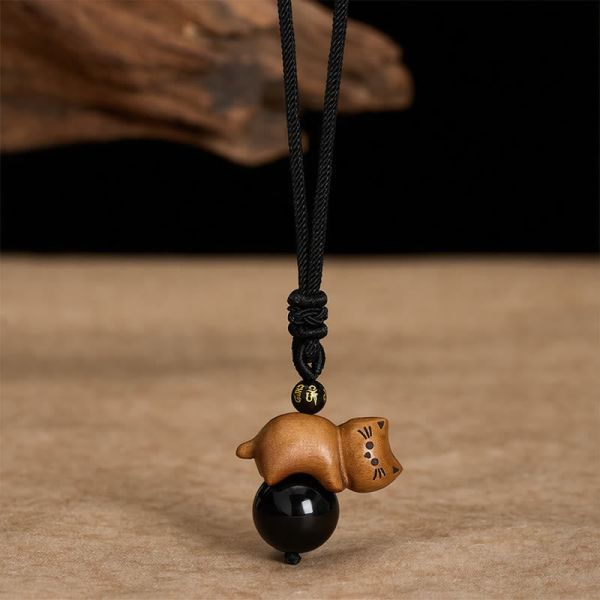
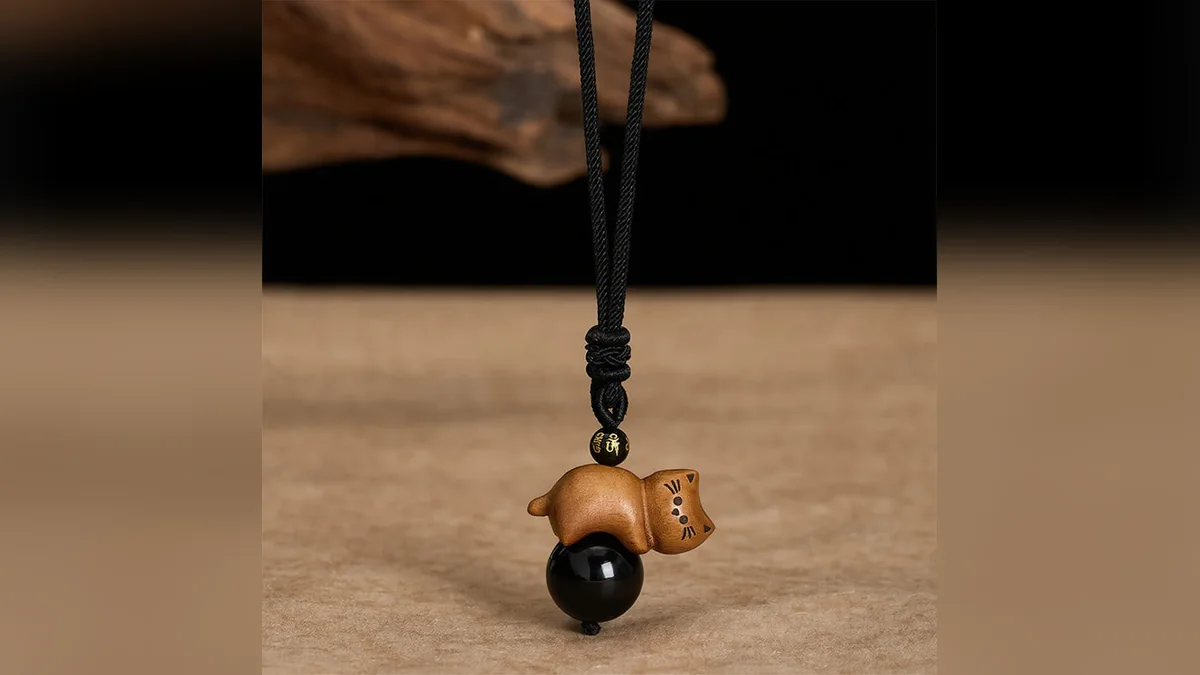
Our Sandalwood Cat and Black Obsidian Rope Necklace combines sandalwood, black obsidian, and rope. Its necklace length is Approx. 18 in / 45 cm, and its pendant size is Approx. 1.18 × 1.30 in / 3 × 3.3 cm. The care information says to avoid water exposure and notes that sandalwood may develop a richer patina over time.
Money Bag Designs with Attachment Choices
The Sandalwood Chinese Coin Money Bag Keychains offer green sandalwood, red sandalwood, and sandalwood choices, with keychain and phone hanging options. The stated size is Approx. 38*29*15mm. Green sandalwood may gradually shift from yellow to green with light exposure; the care instructions also advise avoiding water and prolonged sun exposure. Do not leave it in sunlight to accelerate that change.
A Red Sandalwood Money Bag
Our Red Sandalwood Money Bag Keychains come in Money Bag Tassel and Simple Money Bag options. Materials are red sandalwood, cord, and copper alloy; weight is Approx. 14-16g. The wood may develop a natural patina with wear. Avoid water exposure, and allow room for the tassel when storing the tassel option.
A Yuanbao Design
The Red Sandalwood Yuanbao Keychains have Simple Yuanbao and Tassel Yuanbao options. Red sandalwood and rope are the stated materials, and the weight is 17 g. The wood may vary in color and grain and deepen over time with wear. Include the rope attachment in your regular inspection.
Keep the Care Routine Easy to Repeat
Choose a piece whose dimensions, attachment, and care requirements suit its intended place in your day. Keep a dry cloth near its storage spot, remove loose dust gently, and check the supporting cord before use. When the surface changes, consult the item’s notes before treating it. When an attachment weakens, pause use and address the fault.
Shop the story
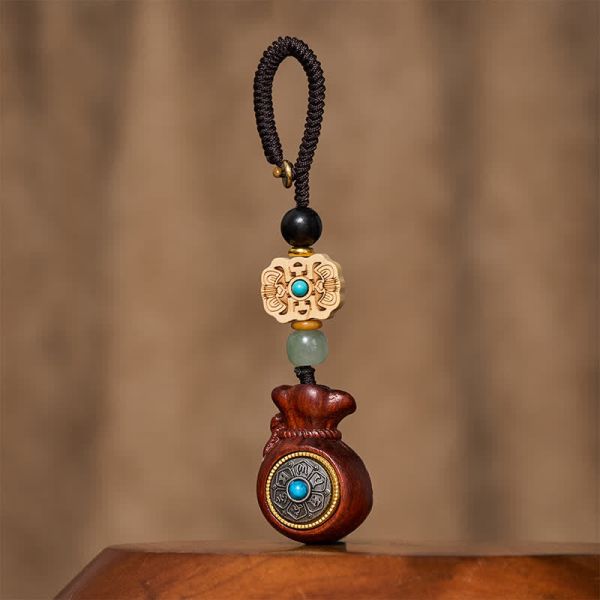 Buddha Stones Red Sandalwood Green Sandalwood Om Mani Padme Hum Blessing Chinese Coin Money Bag Design Serenity KeychainsAs low as $25.59 Regular Price $34.58
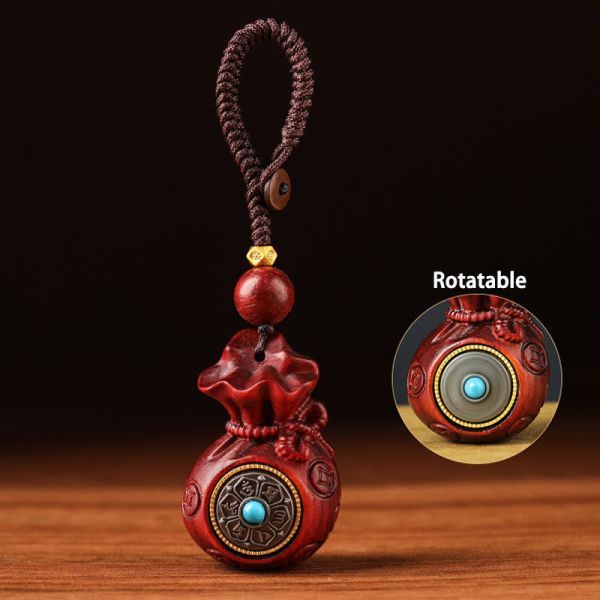 Buddha Stones Red Sandalwood Money Bag Om Mani Padme Hum Wisdom Fortune KeychainsAs low as $25.59 Regular Price $35.54
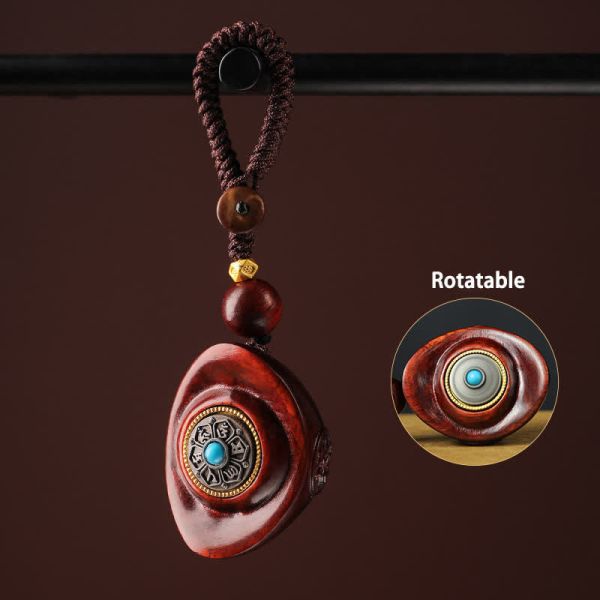 Buddha Stones Red Sandalwood Om Mani Padme Hum Yuanbao Wisdom KeychainsAs low as $25.59 Regular Price $36.04