Ring Style Guide: Build a Balanced Everyday Look
One focal ring gives your jewelry a clear starting point. This ring style guide explains how to choose that piece, arrange supporting bands, balance both hands, and connect your rings with bracelets and clothing. Start with the outfit you plan to wear, then add jewelry one decision at a time. At Buddha Stones, we suggest judging the whole arrangement before adding another piece: the useful question is which detail you want someone to notice first.
1. Ring style guide basics: choose a focal piece
Choose the ring that will lead the arrangement. It might have a broad face, a raised setting, a distinct shape, or a color that stands apart from your clothes. You do not need several attention-grabbing rings to make an outfit feel complete. A single visible feature gives you something concrete to build around.
Put that ring on first and leave the neighboring fingers bare while you assess it. If its outline already fills much of the space across your hand, try a narrow supporting band on the other hand. If it is visually quiet, you have more room to add a second shape. Use contrast deliberately instead of making every ring equally prominent.
2. Place rings across your hands before stacking
Decide where the rings will sit before deciding how many to wear. An arrangement can look balanced without matching from left to right. A broad ring on one hand can sit alongside two smaller rings on the other. Empty fingers provide visible space between details, so treat them as part of the composition.
There is no universal styling rule assigning a particular kind of ring to every finger. Personal habits and cultural conventions may influence placement, especially for wedding or commitment rings. Keep those choices in place and arrange decorative pieces around them. For an everyday starting layout, try one focal ring on one hand and one plain band on the other.
3. Build a stack around a shared detail
Choose one connection between neighboring rings: a repeated color, a similar curve, or a common finish. Then vary another feature, such as width. Two identical-looking bands create repetition; a narrow band beside a broader one creates contrast. Both approaches can work, but naming your connection helps the stack look intentional.
Start with two rings on one finger and check how their edges meet. Raised settings and unusual outlines may leave gaps. Keep a gap if you like its appearance; do not force the rings together to imitate a seamless stack. Bend your fingers and handle an ordinary object before adding another band. Remove a ring if the arrangement interferes with the task.
4. Repeat a color when mixing finishes
You can combine gold-colored and silver-colored jewelry without making every piece match. Begin with one finish as the main visual thread, then repeat the second finish elsewhere. For example, a silver-colored focal ring and a gold-colored band can connect with another small gold-colored detail in your outfit.
Use clothing color as another guide. A plain shirt leaves more visual space for varied ring shapes. A patterned shirt already introduces several lines and colors, so a simpler ring arrangement may be easier to read. Look at your hands beside your sleeves rather than judging the jewelry against an unrelated background.
Keep bright accents selective. If a ring introduces a strong color, repeat that color once in your clothing or leave the surrounding palette quiet. Exact color matching is optional; a consistent choice matters more than collecting several nearly matching shades.
5. Balance rings with bracelets and sleeves
Check the space between your rings and your cuffs. A wide cuff, a watch, and several broad rings on the same side can create a dense arrangement. Move one detail to the opposite hand or remove it, then compare the result. Make one change at a time so you can see what it contributes.
If you are considering bracelets, decide whether the wrist or the fingers should carry the main detail. A prominent bracelet can accompany a plain ring; a statement ring can accompany a quieter wrist. With long sleeves, assess the outfit with the cuffs in their usual position. Jewelry that is mostly hidden does not need another visible piece added to compensate.
6. Coordinate your scarf without adding another focal point
A scarf brings color and pattern near your face, while rings add detail at your hands. Connect those areas through one repeated color or a similar degree of contrast. A busy scarf pattern can sit alongside a simple ring arrangement. If your rings already combine several shapes, try keeping the clothing palette more restrained.
Check the full outfit in a mirror, then look at your hands beside the scarf and sleeves. You are comparing the distribution of details, not trying to make accessories identical. Finish by removing one optional piece and deciding which version has a clearer focal point.
Mistakes to avoid when arranging rings
- Starting with every accessory: Choose your focal ring first, then add supporting pieces individually.
- Copying both hands exactly: Compare visual weight instead of requiring the same ring count on either side.
- Forcing a stack together: Allow space between settings when their shapes do not nest.
- Ignoring everyday tasks: Check the arrangement while bending your fingers and handling the objects you normally use.
- Adding detail to every area: Leave some fingers or one wrist bare when the outfit already has several points of interest.
- Changing several things at once: Adjust one ring, bracelet, or clothing detail before reassessing the whole outfit.
Four scarf options for coordinating your outfit
Use the color options below when planning the clothing side of your arrangement. Our product details provide the following materials, dimensions, and package contents.
Classic Charcoal Stripe Fringe
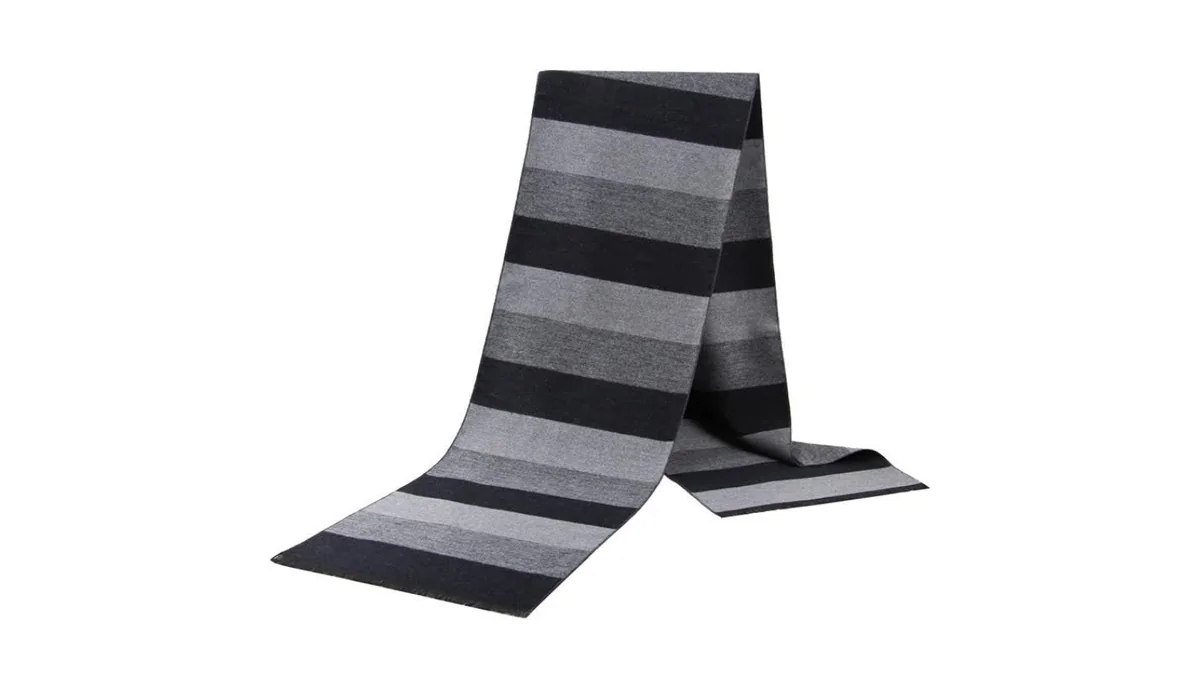
The Buddha Stones Fall Winter Classic Charcoal Stripe Fringe Men's Scarf is viscose. Its size is Approx. 180 cm × 30 cm / 70.8 in × 11.8 in. Options are Beige, Black, Maroon, and Peru. The package contains one scarf.
Classic Plaid Fringe
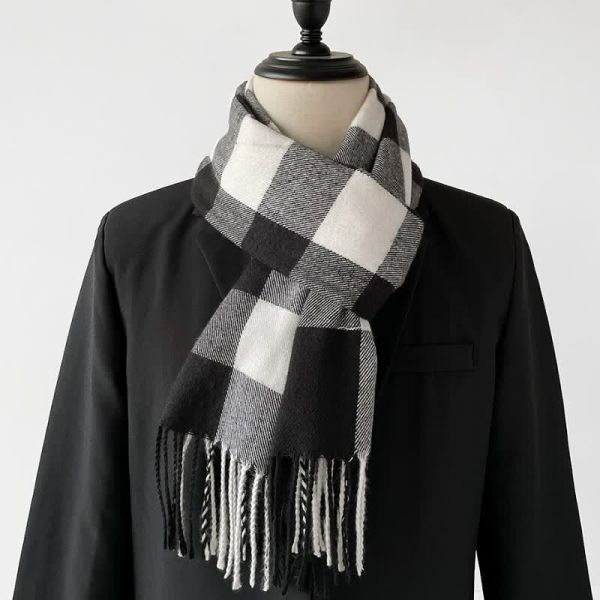
The Buddha Stones Fall Winter Classic Grey Plaid Fringe Cozy Men's Scarf is viscose and measures Approx. 32 cm × 180 cm / 12.5 in × 70.8 in. Options include Black, Blue Gray Black Plaid, Blue Gray Plaid, Blue Gray Squares, DarkGray, Gray Black, Gray Black Plaid, and Gray Blue. One scarf is included.
Dark Grid Tassel Layering
The Buddha Stones Fall Winter Dark Grid Tassel Layering Men's Scarf is polyester. Its size is Approx. 200 cm × 130 cm / 78.7 in × 51.1 in. Available options are DarkSlateGray, DimGray, RosyBrown, and SaddleBrown. Package contents are one scarf.
Long Rectangular Plaid Fringed
The Buddha Stones Fall Winter Long Rectangular Plaid Fringed Men's Scarf is polyester, with the item type specified as Shawl. Dimensions are Approx. 180 cm × 32 cm / 70.9 in × 12.6 in. Options are Beige, Black, Crimson, and SteelBlue. One shawl is included.
Keep a repeatable starting arrangement
Choose one focal ring, add a supporting band, and check both against your sleeves and scarf. Once the arrangement works for your outfit and ordinary tasks, keep it as a starting point. Change one detail when your clothing changes.
Shop the story
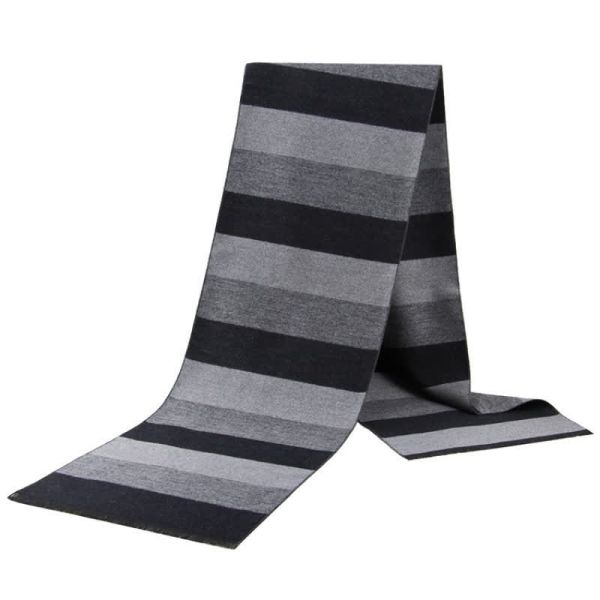 Buddha Stones Fall Winter Classic Charcoal Stripe Fringe Men's ScarfAs low as $21.59 Regular Price $30.41
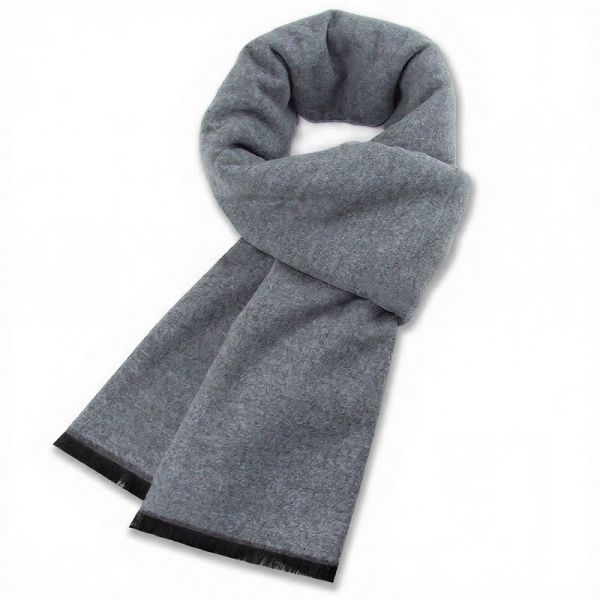 Buddha Stones Fall Winter Classic Grey Plaid Fringe Cozy Men's ScarfAs low as $22.59 Regular Price $30.95
 Buddha Stones Fall Winter Dark Grid Tassel Layering Men's ScarfAs low as $22.59 Regular Price $30.12