
Prayer Bead Materials: A Guide to Wood and Seeds
Wood grain can remain visible across a polished bead. Among prayer bead materials, wood such as sandalwood and plant seeds or hard fruit coverings offer distinct surfaces for traditional mala strands and bracelets. Malas are used to count prayers or mantra repetitions; a bracelet can also carry a personal religious association. Understanding the plant material, its finish, and its stringing tells you more about care than color alone.
At Buddha Stones, we encourage reading the material description before interpreting a name. This guide concentrates on wood and seed construction, then identifies several other material options from our product pages.
Prayer bead materials: botanical names and trade labels
A wood bead is shaped from woody tissue. A seed bead begins with a seed, while some objects commonly called seeds in jewelry are actually hard parts of a fruit surrounding the seed. Everyday bead names do not always follow botanical terminology. A familiar label therefore cannot answer every question about the plant or the finished surface.
Wood identity starts beyond the color
Sandalwood is associated with aromatic wood used for beads and other objects. Its name deserves more attention than a pale or brown appearance: color and fragrance alone cannot establish an exact botanical identity. Nor does a dark red bead automatically belong to the same plant group as an aromatic sandalwood bead. Use an explicit material identification when one is available.
For wood sold under a broad trade name, separate the stated information from what remains unknown. A species name, a finish description, and a treatment disclosure answer different questions. None can be reliably supplied by looking at a photograph. Our sandalwood bracelet article discusses the associated traditions; here, the practical concern is what the bead is made from.
Seed names need similar care
A religious or trade name can carry associations without serving as a botanical identification. For a bead sold as “bodhi,” check whether the description also names its plant material. Surface grooves, spots, and a pale finish are not enough to identify the source plant. When a description stops at a trade name, keep that uncertainty rather than assigning an origin or species.
Seed beads may retain portions of their original contour, or they may be shaped into more regular forms. That difference affects appearance without establishing religious significance or quality. Our discussion of bodhi seed bracelet traditions provides separate context for the name and its symbolism.
From plant material to a strung strand
Wood bead making generally involves cutting workable blanks, forming the bead shape, drilling a passage, and smoothing the surface. Turning on a lathe is one common way to form round wooden beads. This describes a general process, not the manufacturing method of a particular item in our store.
Seeds and hard fruit structures need a different starting approach. Preparation depends on the plant material and may include removing remaining fruit tissue, drying, drilling, and smoothing. Some retain an irregular outline; others are reshaped. A polished surface does not reveal whether a coating was added, so look for a finish description rather than assuming bare wood or seed.
Stringing brings its own choices. Knots between beads can limit bead contact, while an unknotted strand allows adjacent beads to meet. Cord and elastic behave differently, and neither should be judged from bead material alone. Inspect the thread near holes and knots for fraying, and avoid pulling a strand hard to test its strength.
Reading grain, fragrance, and surface change
Grain belongs to the structure of wood; its direction can look different from bead to bead because the material was cut at different angles. Seeds can instead show ridges, pits, or other surface features. A smooth finish may soften those details without making the underlying materials identical.
Scent is relevant when the wood is aromatic, but it is not a dependable identity test. Storage, finish, and exposure can affect how noticeable a fragrance is. Avoid adding perfume to recreate a presumed original scent.
Handling can gradually change the sheen or color of some wood and seed surfaces. Often called patina, this change varies with the material and finish. It does not prove age, authenticity, or a particular level of quality. We would not promise that a strand will darken to a specific shade.
Care for wood and seed surfaces
These are general wood and seed care practices. Follow any material-specific instructions supplied with a particular strand, especially when its finish is identified.
- Keep water exposure brief. Remove beads before bathing, swimming, or washing dishes. Avoid soaking them. If they become damp, blot gently and let them dry away from direct heat.
- Do not make oiling a routine. Added oils can darken porous surfaces or leave residue. Unless the maker recommends a particular treatment, avoid applying household oils, essential oils, or furniture polish.
- Limit strong sunlight and heat. Choose shaded storage away from radiators and hot windowsills. Sudden drying can contribute to cracks in plant materials.
- Clean gently and check the cord. Start with a dry, lint-free cloth. Keep abrasive cleaners away, and have worn stringing replaced before continuing to use the strand.
Other material options from Buddha Stones
The following selections provide alternatives to wood and seeds. Their specifications describe different materials and bands, so use the individual details when comparing them. Words such as Luck and Prosperity in product names express traditional wishes. They do not guarantee favorable events or financial results.
Synthetic turquoise with copper alloy
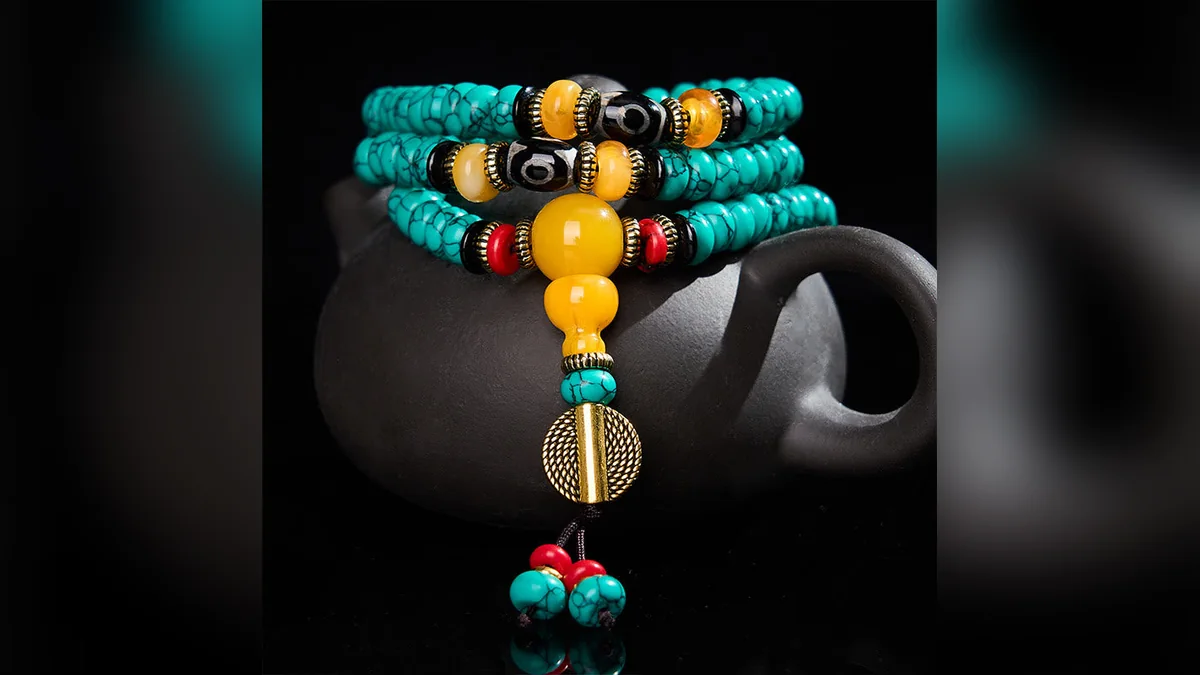
Our Turquoise Abacus Beads Dzi Bead Mala specifies Turquoise(Synthetic) and Copper Alloy, with 8mm beads and Premium String. Wrist Circumference: Approx. 6.3–7.1 in (16-18 cm). Its wrap style typically allows 2–4 turns around the wrist, depending on bead size and wrist circumference. The synthetic designation matters when comparing material descriptions.
Three named stone materials
The Green Aventurine, Blue Spot Jasper, and Indian Agate Mala Bracelet combines those three materials in a 108-bead design. Its specifications give 8mm beads, premium elastic string, and Wrist Circumference: 14-16cm. The product is categorized as both bracelet and mala.
Blue aventurine with alloy
Our 108 Blue Aventurine Lotus Bracelet uses Blue Aventurine and Alloy. It has 108 beads measuring 8mm, premium elastic string, and Wrist Circumference: 14-16cm. Its specifications acknowledge possible variations in color, details, and overall appearance.
Tianshan jade with alloy
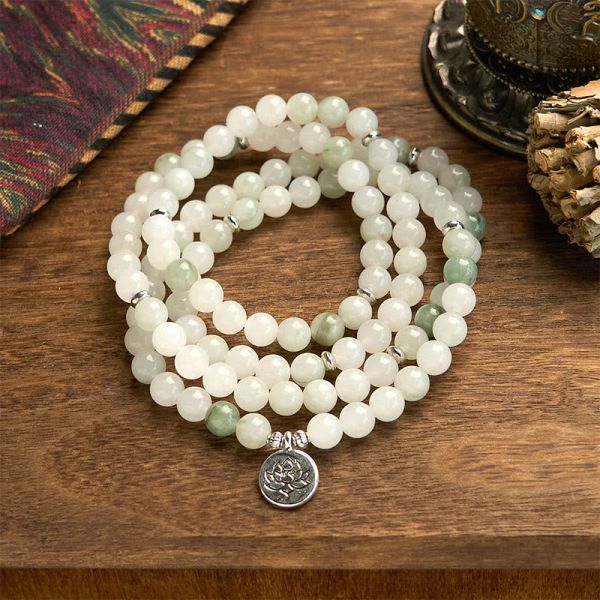
The 108 Tianshan Jade Lotus Bracelet identifies its materials as Tianshan jade and Alloy. It has 108 beads, an 8mm bead size, premium elastic string, and Wrist Circumference: 14-16cm. Keep the stated material name when comparing descriptions rather than substituting an assumed mineral identity.
Let the material description guide your choice
A useful description distinguishes the plant or trade name, the surface finish, and the stringing. Where those details are absent, leave room for uncertainty. For wood and seeds, gentle handling and conservative care respect the material without requiring a particular fragrance, shade, or patina as proof of its worth.
Shop the story
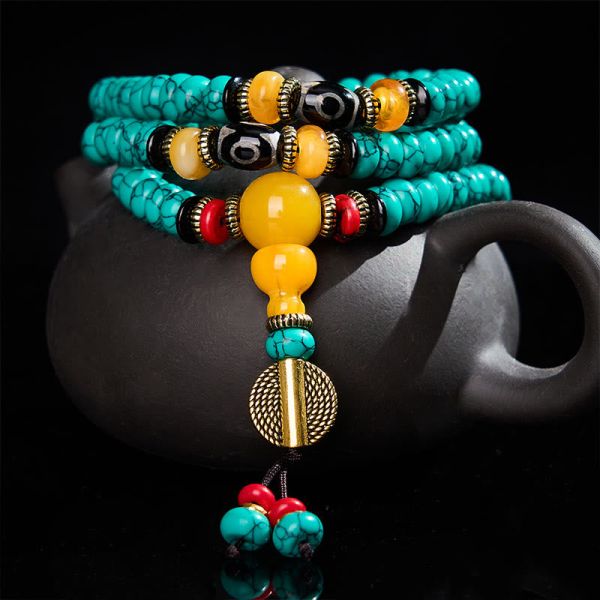 Buddha Stones Turquoise Abacus Beads Dzi Bead Communication and Prosperity MalaSpecial Price $29.59 Regular Price $41.10
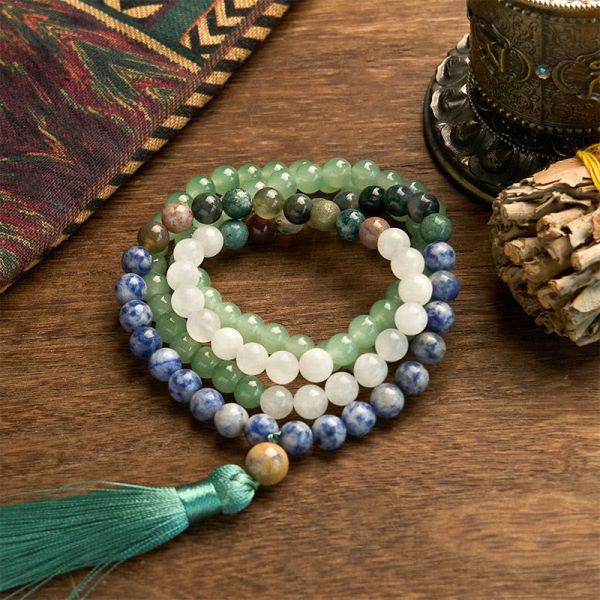 Buddha Stones 108 Mala Beads Natural Green Aventurine Blue Spot Jasper Indian Agate Green Tassel Luck BraceletSpecial Price $26.59 Regular Price $36.42
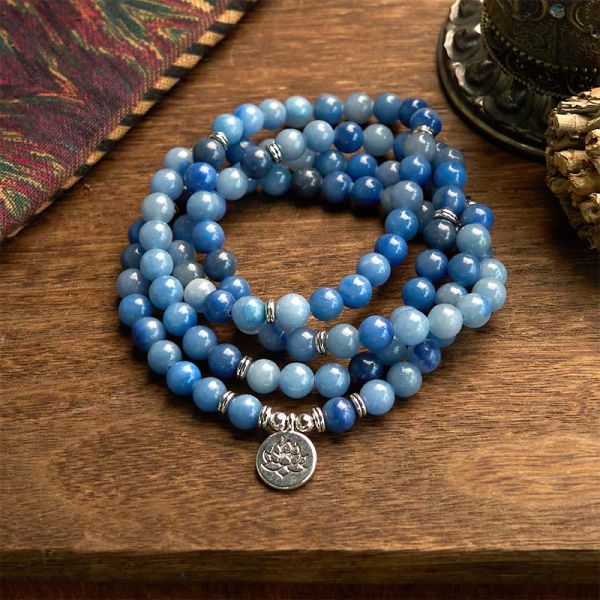 Buddha Stones 108 Mala Beads Multi-layer Natural Blue Aventurine Lotus Calm BraceletSpecial Price $29.59 Regular Price $40.53
 Buddha Stones 108 Mala Beads Natural Tianshan Jade Lotus Luck BraceletSpecial Price $29.59 Regular Price $41.68