
Plum Symbolism Across Art, Textiles, and Everyday Objects
Five rounded petals gather around a small center on a branching stem. In Chinese tradition, plum symbolism centers on perseverance, integrity, and renewal, drawn from the tree’s flowering during the cold season. Plum motifs also appear in decorations expressing wishes for good fortune. These are cultural beliefs and wishes: a flower pattern cannot guarantee luck, wealth, or protection. The meaning becomes more specific when you look at the branch, its companions, and the object carrying the design.
How a Seasonal Flower Became a Moral Image
The flowering plum associated with Chinese art is commonly called mei. Its familiar symbolic image emphasizes blossoms opening while much of the landscape remains bare. That seasonal contrast gave poets and painters a clear comparison for steadfast character: the flower appears despite difficult conditions. A bent branch with a few open flowers can therefore carry as much meaning as a tree covered in blooms.
This tradition developed through poetry, painting, and decorative arts rather than depending on one founding legend. Scholars valued the plum as a subject through which to express personal ideals. An old trunk and fresh flowers could place endurance and renewal in the same picture. The motif became a visual language that also traveled beyond scholarly settings into household objects and clothing.
That background helps distinguish a traditional reading from a rigid definition. A particular branch might emphasize endurance, seasonal change, or simply the pleasure of flowers. An inscription or accompanying motif can clarify the intention. Without those clues, it is sensible to describe the established associations while leaving room for decorative choice.
What Changes Across Art, Cloth, Jewelry, and Festivals
Paintings and decorative objects
In ink painting, the branch often matters as much as the bloom. Dark strokes describe its turns, while small circles or brush marks suggest petals and buds. Open space can leave a single flowering branch as the main subject. The contrast between a weathered stem and delicate flowers makes the traditional association with perseverance easy to recognize.
On ceramics, screens, or other household objects, plum flowers may instead form an allover pattern or sit inside a border. Repetition changes the way the motif reads: a continuous floral design gives less emphasis to one solitary tree. Before assigning a detailed message, look for accompanying plants, birds, writing, or a clear seasonal setting.
Embroidery and patterned textiles
Textiles translate the branch into lines of stitching, woven shapes, or printed outlines. A design may show one spray of flowers, several crossing branches, or a mixture of plants. These arrangements can carry traditional associations while also serving the shape of a garment or bag. A corner placement, for example, lets the branch follow an edge.
Color alone does not provide a universal symbolic code. A red flower on dark cloth and a white flower on blue cloth may belong to the same general motif. The product’s option name is useful evidence when identifying a design, especially where plum, peach, pear, and other flowers appear within one range.
Jewelry and small ornaments
A jewelry motif has less space for branches and surrounding scenery, so it may reduce the plum to a small five-petaled flower. That outline can suggest the blossom, but five petals alone do not establish an identification. A descriptive name, a visible branch, or a companion plant gives a stronger basis for reading the ornament.
For a gift, the motif can express admiration for perseverance or a wish for a fresh beginning. We treat that meaning as a message shared between people. It does not establish what will happen to the wearer, and choosing the design does not require a particular religious practice.
New Year and seasonal celebrations
Plum branches and blossom images appear in Lunar New Year decorations as signs of the approaching spring. In that setting, renewal becomes especially prominent. The same flower that suggests steadfastness in a painting can join a festive arrangement expressing hopes for the coming year.
The calendar and local climate affect which flowers are available, so a painted or embroidered branch need not document a particular festival display. Context supplies the distinction: celebratory writing, other seasonal decorations, or the occasion itself can make a New Year reading more likely.
Reading Plum Symbolism Through Its Companions
Plum, pine, and bamboo form the traditional group known as the Three Friends of Winter. Together, they stand for endurance through adversity. A composition containing those plants places the flowering branch within a shared statement about steadfastness. The grouping matters more than treating every leaf as a separate message.
Plum, orchid, bamboo, and chrysanthemum are the Four Gentlemen of Chinese painting. They connect plant imagery with admired qualities of character and with the seasons. Recognizing the group helps explain why a plum branch might appear alongside plants that do not flower at the same time: the arrangement can organize ideas rather than reproduce a single garden scene.
Plum and bamboo also appear together without the full groups. Their contrasting forms make the pairing recognizable: rounded flowers sit beside narrow leaves and jointed stems. It is reasonable to connect the design with traditional ideals of endurance and upright character. It is less reliable to assign a precise personal prediction to the combination.
Plum Motifs on Our Bags and Purse
Canvas crossbody with adjustable strap
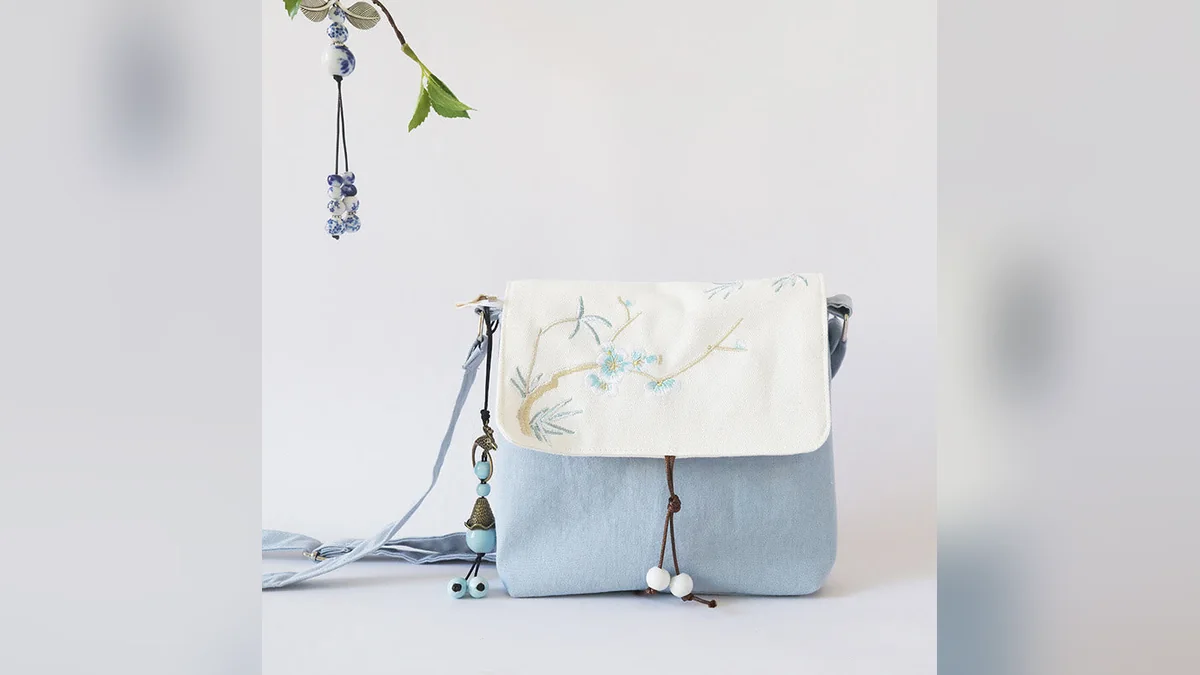
Our Handmade Embroidered Plum Flowers Canvas Crossbody Bag uses canvas fabric. The stated sizes are 17*19cm / 20*23cm, with a 63cm adjustable strap. It has one main pocket and one zipper pocket and weighs 200g. Some options name plum designs, including Brown Red Plum and Light Blue Plum Bamboo; the range also includes other motifs.
Canvas tote with zipper closure
The Pear Flower Plum Peach Blossom Bamboo Embroidery Canvas Tote Bag has Blue White Plum Bamboo and Dark Blue White Plum among its options. Materials are canvas fabric, polyester, and a nylon zipper. Its dimensions are 28-33*12*32cm(Length*Width*Height), and the tote strap length is 27cm. Non-adjustable straps and a zipper closure accompany one main pocket, one zipper interior pocket, two pockets, and one back zipper pocket. Its weight is 350g.
Long purse with card slots
The Plum Blossom Su Embroidery Long Purse Handbag is polyester and measures 20*10cm(Length*Width). Inside are one zippered pocket and multiple card slots. It closes with a magnetic buckle and weighs about 320g. Color options include Black, Champagne, Light Blue, Light Gray, and Purple.
Xiangyunsha silk bag with tassels
Our Plum Flower Bamboo Branches Embroidery Tassel Xiangyunsha Silk Shoulder Bag includes a Black Plum Bamboo Branches option. Its specified materials are Xiangyunsha silk, tassels, metal, a bamboo pendant, and bead accessories. The size is 16*16*16cm, Handle 15cm. It has a non-adjustable strap and magnetic clasp. Other option names describe branches, leaves, or flowers.
Let the Whole Design Guide the Meaning
A flowering branch, a repeated textile pattern, and a seasonal decoration give the plum different settings. Read the surrounding details before settling on one interpretation. The plum offers a traditional vocabulary for perseverance and renewal; the particular design determines which part of that vocabulary comes forward. We present these associations as cultural context, leaving your choice of motif personal.
Shop the story
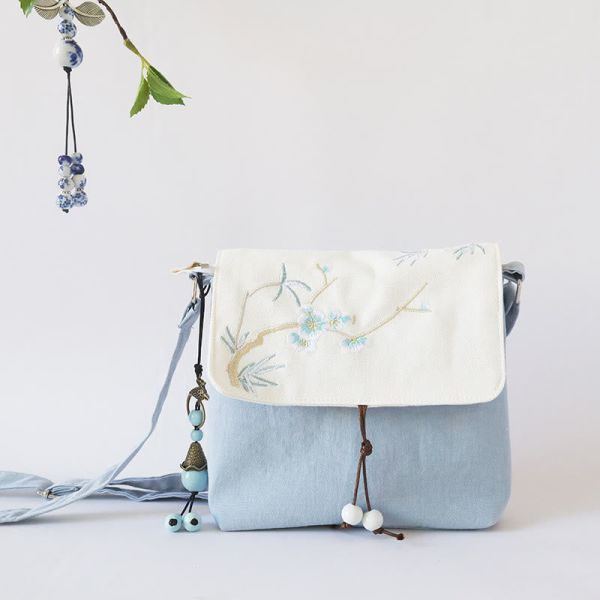 Buddha Stones Handmade Embroidered Plum Flowers Canvas Crossbody Bag Shoulder Bag HandbagAs low as $26.59 Regular Price $36.42
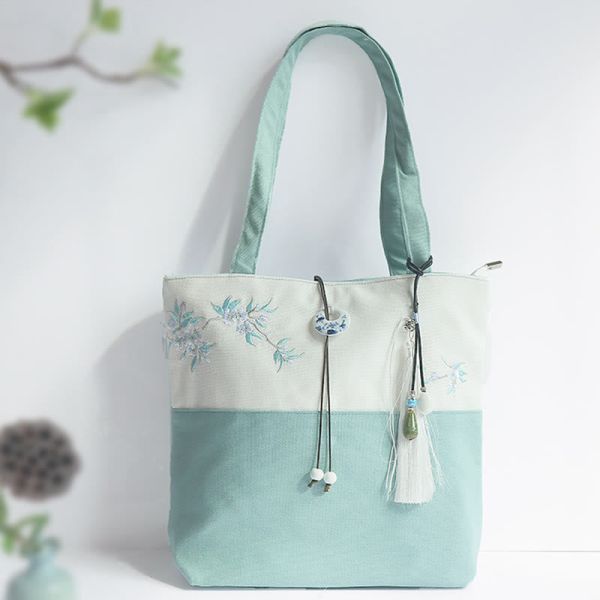 Buddha Stones Pear Flower Plum Peach Blossom Bamboo Embroidery Canvas Large Capacity Shoulder Bag Tote BagAs low as $46.59 Regular Price $65.62
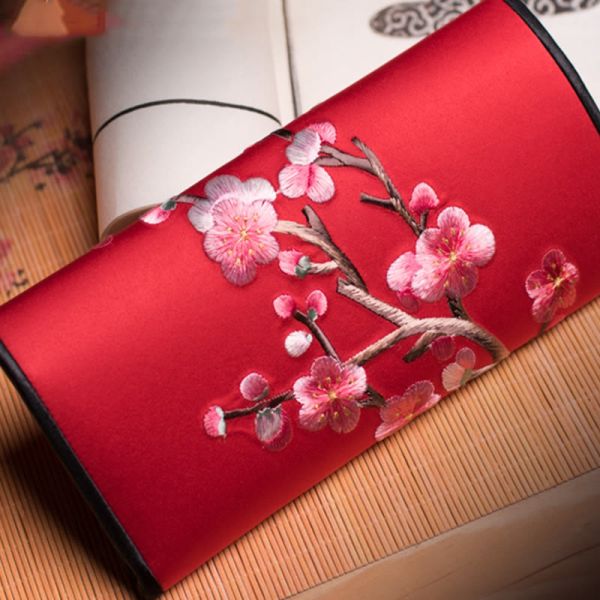 Buddha Stones Plum Bossom Su Embroidery Journey Shopping Long Purse HandbagAs low as $73.59 Regular Price $98.12
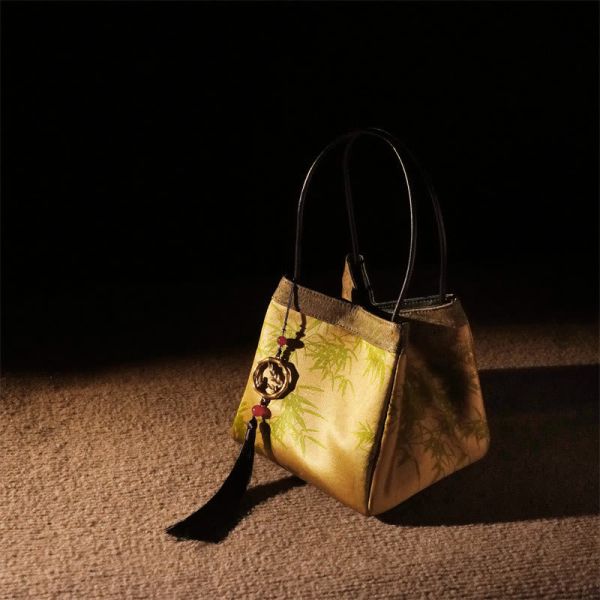 Buddha Stones Plum Flower Bamboo Branches Embroidery Tassel Xiangyunsha Silk Shoulder Bag HangbagsAs low as $229.59 Regular Price $306.12