
Pixiu Symbolism: A Visual Guide to the Winged Beast
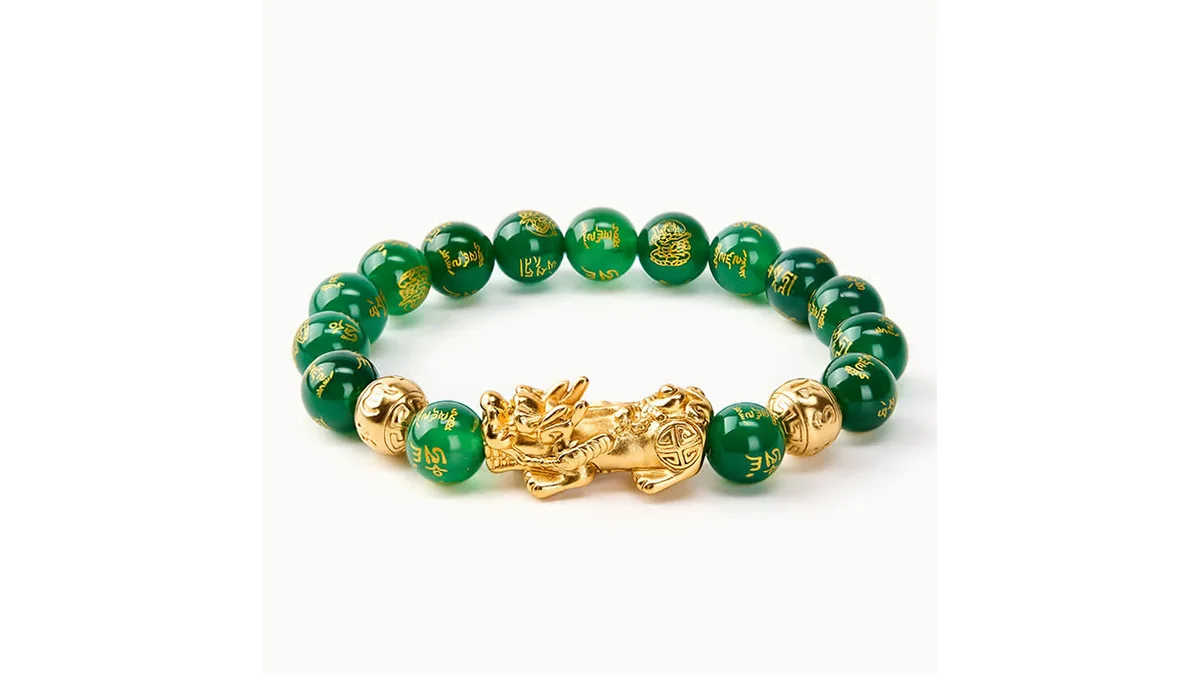
A broad muzzle, raised head, and wing tucked against a sturdy body give Pixiu its distinctive silhouette. In Chinese tradition, pixiu symbolism centers on wishes for wealth, good luck, and protection. These are cultural beliefs; a Pixiu motif cannot guarantee prosperity, safety, or any other result. This mythical creature appears in jewelry and decorative objects, but its small details can be easy to miss. Our field guide starts with the outline, then considers the meaning and the settings where you may encounter it.
How to recognize the motif
Begin with the whole animal before examining its smaller features. A tiny jewelry motif may compress the body, while a larger decorative figure can give the head, paws, and wings more room. Designs vary, so a combination of cues is more useful than a single feature.
- A dragonlike head: Look for a broad snout, prominent eyes, and an expressive open mouth. The head often appears large in relation to the body, making the face a useful starting point when the figure is small.
- A compact, lionlike body: Pixiu is commonly shown as a substantial four-legged creature. Its chest and haunches give it a solid outline, even when the pose suggests movement.
- Wings along the sides: A wing may appear as a raised shape or a series of featherlike lines behind the shoulder. Turn your attention to the side profile; a front view can conceal this detail.
- A horn or raised crest: Some representations include a conspicuous horn, while others simplify the top of the head. Treat this as one clue among several rather than a rule that every design must follow.
- Distinct paws and a curling tail: These smaller features help separate the animal from surrounding ornament. On a compact charm, the tail may curve close to the back and the paws may merge into the base.
Read those features together. A fierce face alone does not identify Pixiu, and a wing alone is not enough either. If the details remain ambiguous, the object's name or description can help confirm what the designer intended.
Pixiu symbolism in Chinese tradition
Pixiu belongs to Chinese myth and auspicious imagery. In popular tradition and feng shui practice, the creature represents wishes for prosperity and the safeguarding of possessions. Its watchful expression and substantial body support its familiar role as a symbolic guardian. That meaning describes a tradition, not an ability an object has been shown to possess.
The wealth association is often explained through stories of Pixiu gathering treasures and keeping them. Such stories give the motif a recognizable character: an eager collector paired with a vigilant keeper. Versions of the legend differ, so there is little value in treating one retelling as a technical description of every Pixiu design.
It also helps to keep neighboring symbols distinct. A Pixiu figure and a Buddhist mantra may appear in the name of the same piece of jewelry, but they have different cultural contexts. Pixiu is not a Buddha, and its presence does not make an object a Buddhist ritual instrument. At Buddha Stones, we describe these associations as traditions and symbolic wishes, without promises about what ownership or wear will accomplish.
Where the silhouette turns up
Scale changes which details you can see. Use this quick reference to decide where to look first, then return to the full outline.
| Where you see it | How it usually appears |
|---|---|
| Beaded bracelets | A compact animal motif among beads; the head and side profile are useful clues. |
| Pendants | A single figure presented as the main ornament, sometimes with the body arranged vertically. |
| Decorative figures | A freestanding animal whose paws, tail, and wings can be viewed from several angles. |
| Printed or painted designs | A flattened outline, with facial features and wings defined by lines or blocks of color. |
For a two-dimensional image, follow the contour before reading the interior decoration. For a freestanding figure, compare the front and side views. A frontal photograph can make a winged animal look surprisingly similar to another guardian creature because its wings sit behind the head and shoulders.
Four Pixiu bracelets, read through their details
Once you recognize the motif, compare the practical specifications separately from the symbolic names. Our bracelet category provides a broader setting for these designs. Below, the product details give you concrete points of comparison without assigning abilities to the materials.
Green agate with the Harmony name
The Buddha Stones Natural Green Agate Om Mani Padme Hum PiXiu Harmony Bracelet combines Green Agate and Copper Plated Gold. Its specifications give a bead size of 10mm and wrist circumference of 6.3–6.7 in (16–17 cm). The band uses Premium Elastic String, and the package contains 1 × Bracelet. The mantra and Pixiu both appear in the product name; they should be understood as distinct references.
A second green agate specification
The Buddha Stones Natural Green Agate Om Mani Padme Hum Color Change PiXiu Success Bracelet specifies Green Agate and Copper Alloy. Bead size is 10mm, wrist circumference is 6.3–6.7 in (16–17 cm), and the band is Premium Elastic String. Its package includes 1 × Bracelet. The material description is a useful distinction when comparing this option with the Harmony design above.
Cyan jade and a traditional guardian wish
The Buddha Stones Natural Cyan Jade Beaded PiXiu Protection Bracelet uses Cyan Jade and Copper Plated Gold, with 10mm beads. It has Premium Elastic String and a wrist circumference of 6.3–6.7 in (16–17 cm); 1 × Bracelet is included. Here, “Protection” expresses a traditional wish. The name offers no guarantee of personal safety or a protective result.
Pearl and strawberry quartz specifications
The Buddha Stones Natural Pearl Strawberry Quartz PiXiu Optimism Charm Bracelet identifies Pearl and Strawberry Quartz as its materials. Its beads measure 8mm, and its wrist circumference is 14-19cm. The band uses premium elastic string. Those measurements distinguish it from the 10mm options above. Compare bead size and wrist circumference separately: one describes the beads, while the other describes the intended fit.
For the two green agate designs and the cyan jade design, natural materials may produce slight variations in color, details, and overall appearance. Their specifications acknowledge these differences.
Keep the outline and the story together
Recognizing Pixiu begins with a group of visible clues: a dragonlike head, a sturdy animal body, wings, and smaller features that vary between designs. Its traditional meaning adds context, but it does not replace close observation. When comparing objects, keep three questions separate: what creature is represented, what wish the motif expresses, and what the product specifications actually say. That approach leaves room for cultural meaning while keeping your reading of the object clear.
Shop the story
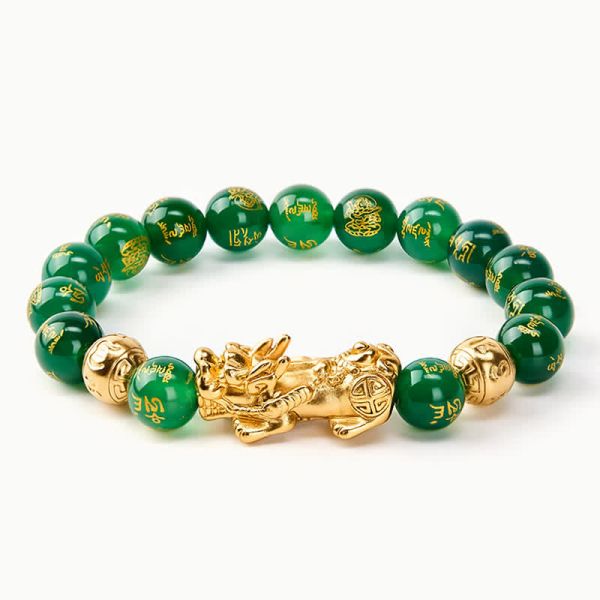 Buddha Stones Natural Green Agate Om Mani Padme Hum PiXiu Harmony BraceletSpecial Price $32.59 Regular Price $44.64
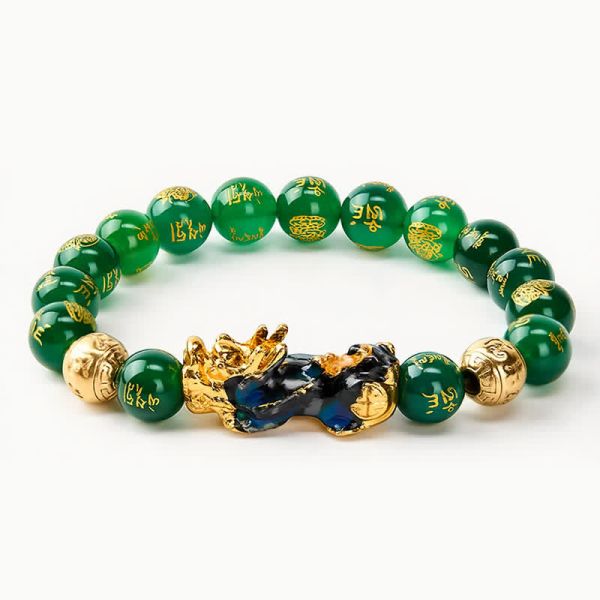 Buddha Stones Natural Green Agate Om Mani Padme Hum Color Change PiXiu Success BraceletSpecial Price $29.59 Regular Price $41.10
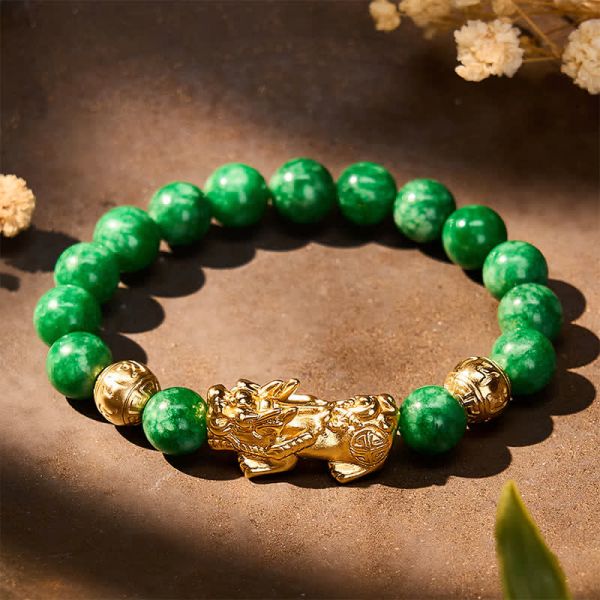 Buddha Stones Natural Cyan Jade Beaded PiXiu Protection BraceletSpecial Price $29.59 Regular Price $39.45
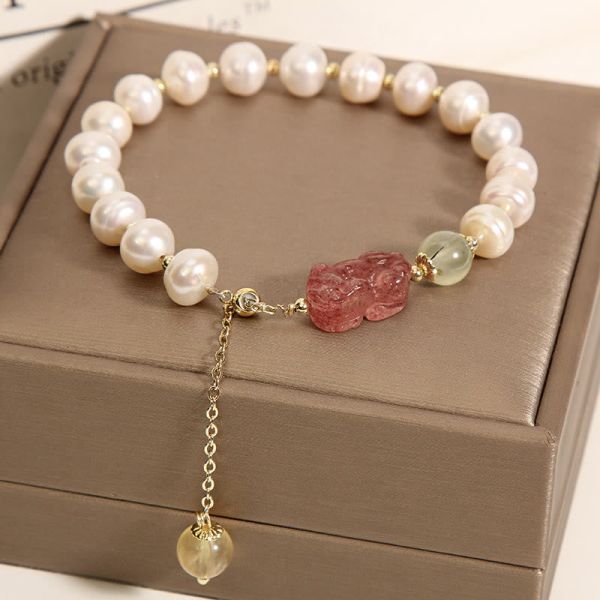 Buddha Stones Natural Pearl Strawberry Quartz PiXiu Optimism Charm BraceletSpecial Price $28.59 Regular Price $39.71