Phoenix Symbolism: From Ancient Fire to Daily Objects
The phoenix settles into a nest of aromatic branches. Fire consumes the nest, and a young bird rises from the ashes in a familiar version of the old legend. In Western tradition, phoenix symbolism centers on renewal, rebirth, and continuity through endings. Chinese traditions associate the distinct fenghuang with virtue and harmony. Associations with luck, wealth, or protection express cultural beliefs; these symbols cannot guarantee such results.
The ashes matter because they make the ending visible. The bird does not simply fly away before the fire reaches it. Its story carries an ending and a beginning within the same image, which helps explain why the phoenix remains a recognizable emblem of starting again.
There are different versions of the legend, and fire does not appear in all of them. Nor does every bird called a phoenix belong to the same tradition. At Buddha Stones, we keep that distinction clear: a shared English name can connect objects in a shop, but it should not flatten the stories behind them.
Phoenix symbolism beyond the burning nest
The phoenix of Greek and Roman storytelling is a singular bird whose life continues through a cycle of death and renewal. Later Western art and literature carried that association forward. An image of a bird emerging from flames can therefore suggest a new beginning without needing a long inscription beside it.
The Chinese fenghuang follows a different story. Often translated as “phoenix,” it is an auspicious bird associated with virtue and harmony, rather than a bird defined by burning and returning from ashes. Its appearance belongs to an ideal of good order. Treating it as simply the Chinese version of the firebird loses that distinction.
These meanings offer two ways to read a similar outline. Flames point toward the renewal legend; a long-tailed bird among flowers may belong to a Chinese decorative tradition. Context matters more than a label alone. A product name can identify a motif, while its cultural meaning still deserves a separate explanation.
Celebration stitched into cloth
Phoenix motifs appear in Chinese wedding decoration and embroidered ceremonial clothing, often alongside a dragon. In that setting, the pairing traditionally expresses marital harmony. It conveys a wish for the couple, rather than a prediction about their marriage. Wedding use also explains why two creatures may appear together on an object intended as a gift.
Embroidery gives the bird a different presence from the flame-filled Western image. Thread can follow a wing, separate the tail feathers, or place the figure among blossoms. The surrounding pattern becomes part of how the bird is read. A floral border and a dragon companion suggest different associations even when the central bird looks similar.
That is the useful connection between ceremonial textiles and an everyday embroidered bag: a familiar motif changes setting. Carrying it does not require reenacting a ceremony or claiming a particular belief. You can appreciate the pattern while recognizing that its meaning comes from a tradition larger than the object.
How the bird appears in modern jewelry
In modern jewelry, the phoenix often becomes a pendant, charm, brooch, or ring motif. A designer may emphasize an upward wing, a curling tail, or the outline of flames. Those choices can make the design read as an emblem of renewal, a reference to Chinese decorative art, or simply a bird-shaped ornament.
When choosing a phoenix design, look at the whole composition. Does it show a single bird or a dragon companion? Are flames central, or do flowers fill the space? These details offer clues, although a seller should explain the intended reference rather than ask you to infer everything from a photograph.
A gift can carry a personal wish, too. A phoenix pendant might acknowledge a new chapter, but the giver should leave room for the recipient’s own interpretation. A brief note explaining the intended symbolism says more than a promise that the jewelry will change someone’s circumstances. We describe symbolic meaning as a way to understand a design, never as a result an object can deliver.
Four phoenix options among our bags and burners
Our selected bags and incense burners offer another setting for the motif. Some options feature a phoenix; other options use flowers or different designs. Choose the named option carefully, since a product title can describe several available patterns.
A yellow bag with a phoenix option
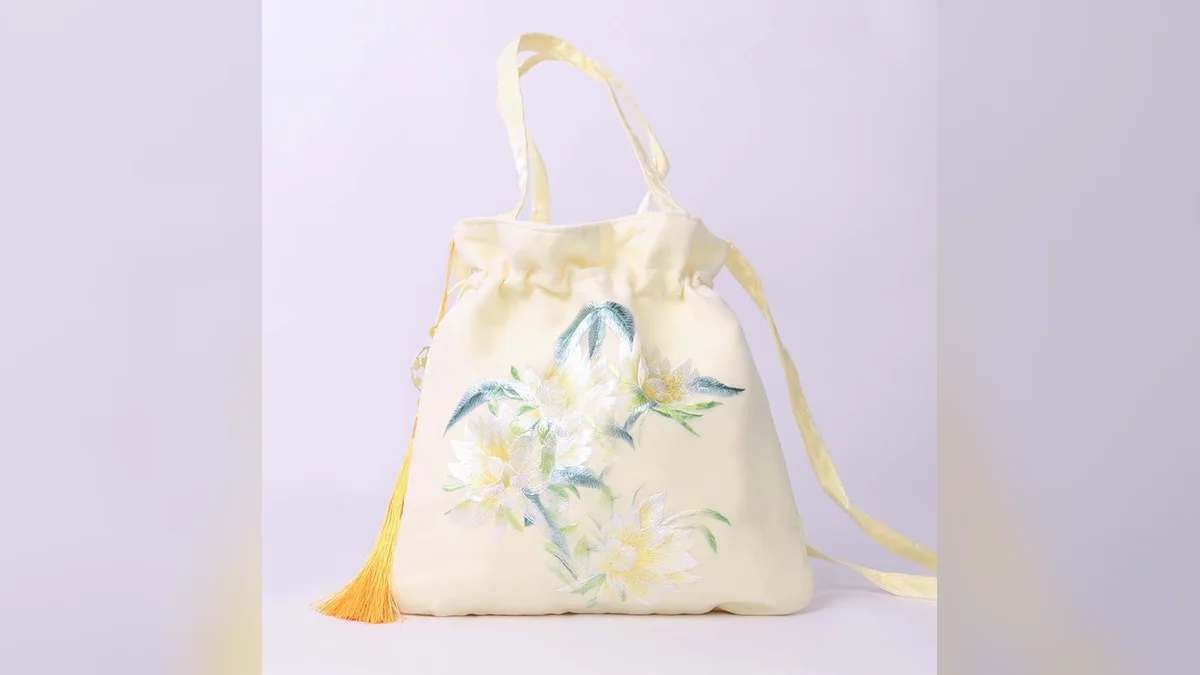
The Buddha Stones Suzhou Embroidery Cotton Linen Bag includes a Yellow Golden Phoenix 21*22cm option, alongside epiphyllum, lotus, and peony options. Its materials are cotton linen fabric and ceramic bead accessories. The bag measures 21*22cm, has one main pocket and a strap closure, and comes with an adjustable shoulder strap whose stated length is 130cm.
A double phoenix handbag option
The Buddha Stones Double-Sided Embroidery Cotton Canvas Handbag offers a Double Phoenix option among its floral and Chinese Money Tree choices. Cotton, canvas fabric, and polyester are the stated materials. Its size is 31*10.5*23cm(Length*Width*Height), with one main pocket, a zipper closure, and non-adjustable straps. The stated weight is 180g.
A round incense burner selection
The Buddha Stones Peach Wood Dragon Phoenix Round Bag Incense Burner has a Dragon Phoenix option. Made from peach wood and alloy, it supports stick, cone, and spiral incense. One burner is included; incense is not included. The word “Luck” in its full name expresses a traditional wish, with no promised result.
A square incense burner selection
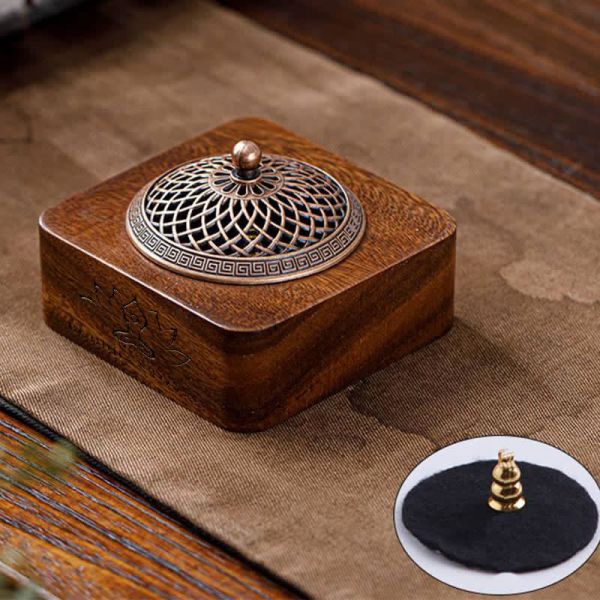
The Buddha Stones Peach Wood Dragon Phoenix Square Incense Burner also offers a Dragon Phoenix option. Its materials are peach wood and alloy, and it accommodates stick, cone, and spiral incense. The package contains one burner without incense. “Protection” in the full product name refers to a traditional wish and does not describe a guaranteed function.
The round and square burners share these stated dimensions: Approx. 10 cm × 10 cm × 4 cm (L × W × H) / 3.94 in × 3.94 in × 1.57 in (L × W × H). Their handmade nature means slight variations in color, shape, and size may occur.
FAQ: The phoenix and its meanings
Does every phoenix rise from ashes?
No. That image belongs to familiar versions of the Western legend. Other accounts differ, and the Chinese fenghuang is not defined by a cycle of burning and rebirth.
Is a phoenix always a religious symbol?
No. It also appears in literature, ceremonial decoration, and secular design. The surrounding imagery and the tradition being referenced help explain its meaning.
Can a phoenix motif suit an everyday gift?
Yes, if the recipient likes the design. Explain the meaning you intend, such as renewal or a traditional wish for harmony, and let the recipient decide what the bird means to them.
Shop the story
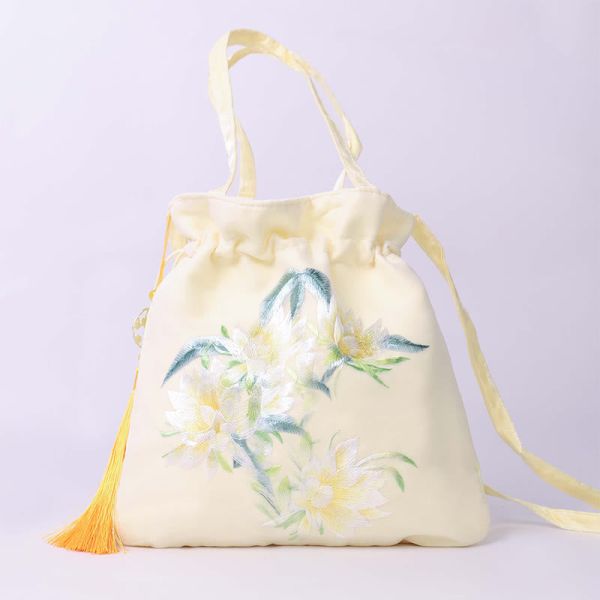 Buddha Stones Lotus Peony Epiphyllum Phoenix Suzhou Embroidery Cotton Linen Tote Crossbody Bag Shoulder Bag HandbagAs low as $22.59 Regular Price $32.27
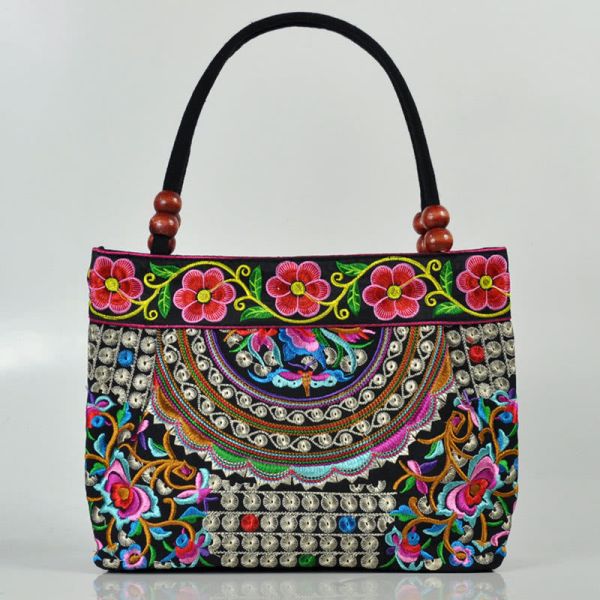 Buddha Stones Money Tree Peony Phoenix Apple Blossom Double-Sided Embroidery Cotton Canvas Shopping Purse HandbagAs low as $19.59 Regular Price $27.21
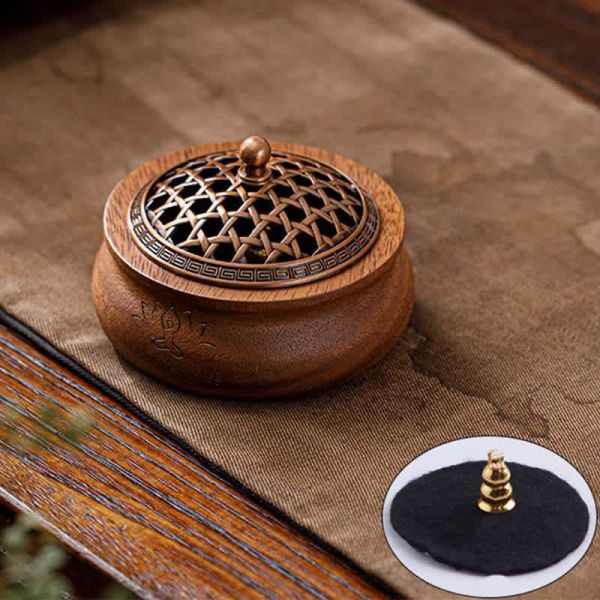 Buddha Stones Peach Wood Dragon Phoenix Luck Round Bag Incense BurnerAs low as $38.59 Regular Price $51.45