
Obsidian vs Onyx: How to Choose a Black Bracelet
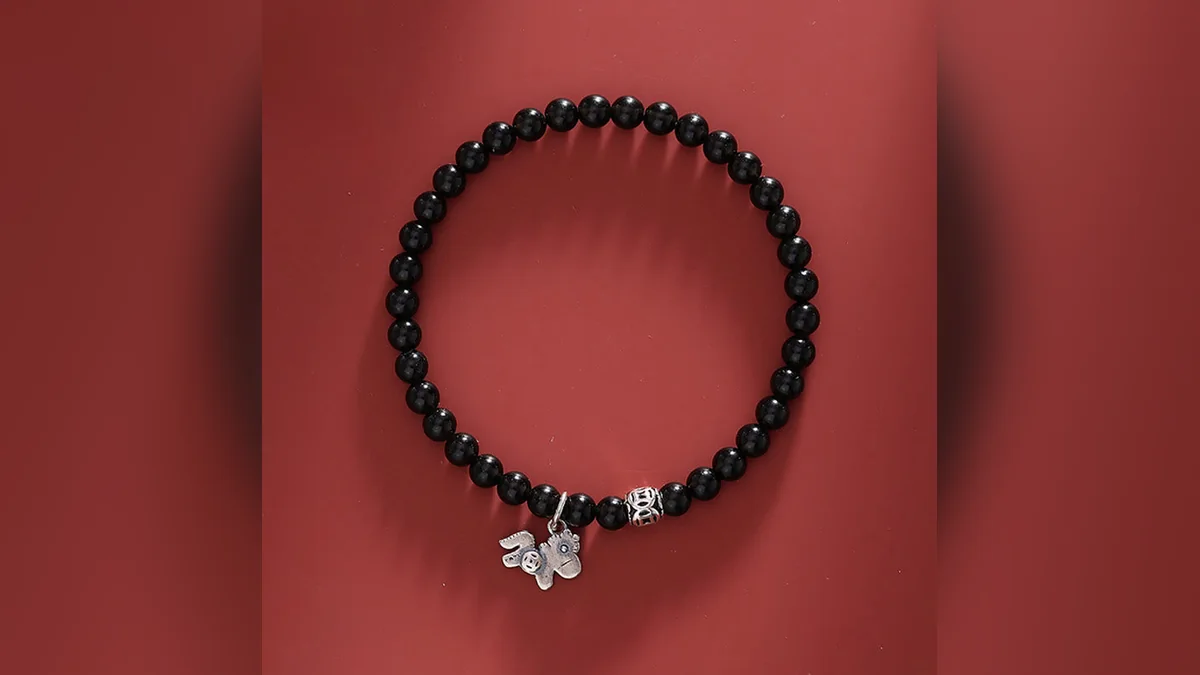
The material description comes first when you compare black bracelets. Obsidian vs onyx comes down first to what the beads are: obsidian is volcanic glass, while onyx is a variety of chalcedony, a form of quartz. Both can look glossy and black in jewelry. This guide shows you how to check the names, compare appearance without treating it as proof, consider care, and choose a bracelet that fits your preferences.
Step 1: Start your obsidian vs onyx comparison with the label
Separate the material name from the color description. “Black beads” describes appearance; it does not identify the substance. Look for an explicit material entry rather than relying on a photograph or a decorative product title.
Onyx refers to parallel-banded chalcedony, although jewelry sellers also use “black onyx” for uniformly black chalcedony. Black onyx may be dyed, so ask about treatment if natural color matters to your choice. A disclosed treatment is information to evaluate, rather than a reason by itself to dismiss the jewelry.
Obsidian and onyx are different materials, not interchangeable names for the same black stone. If a description switches between them without explanation, request clarification before choosing. Keep the material identification separate from any symbolic language attached to the design.
Step 2: Compare the finish without guessing the identity
Review photographs from several angles and, when available, under different lighting. Look at the overall color, surface polish, and any visible bands or sheen. Decide which appearance you prefer, but avoid turning a single visual detail into a verdict about authenticity.
A glossy surface does not prove that a bead is obsidian. An evenly black surface does not prove that it is onyx. Polishing and lighting can make different materials look similar, and banding may be difficult to see in finished jewelry. GIA discusses these identification challenges in its study of black opaque gem materials.
Use pictures to assess the design and written specifications to establish what is being offered. If the identity of an existing, unlabeled bracelet matters, consult a qualified gemologist. A home comparison with an online image cannot provide the same level of identification.
Step 3: Match your choice to the care you can provide
Consider scratching and impact separately. Onyx generally resists scratches better than obsidian, but either material can chip after a hard knock. A polished bead is still jewelry that deserves careful handling. Choose with your usual activities in mind, especially if bracelets frequently contact tools, countertops, or other hard surfaces.
Read care instructions for the complete bracelet. Metal components, resin details, cord, and elastic string may need different treatment from the main beads. A care method suitable for a loose stone may be unsuitable for an assembled bracelet.
For routine handling, avoid dropping the bracelet or leaving it loose among objects that can strike it. Check the seller’s instructions before using jewelry chemicals, soaking, or cleaning equipment. Keep care guidance with the product details so you can refer to it later.
Step 4: Check the bracelet construction and fit
Compare bead size, closure type, and the offered wrist measurements before deciding on a material. Larger beads take up more space around the wrist and create a different outline from smaller beads. Product photographs without a scale can make that difference difficult to judge.
Do not assume that elastic string makes a bracelet suitable for any wrist. Match your measurement to the seller’s fit information and confirm which option you have selected. An adjustable cord also has a specified fitting range; adjustment does not mean unlimited sizing.
Separate wrist circumference from bracelet length when reading specifications. They describe different measurements and should not be substituted for one another. Our bracelet selection guide offers broader guidance on choosing a style. For this comparison, keep fit and construction alongside material identity on your shortlist.
Step 5: Write down your selection criteria
Make a short checklist before comparing individual designs: material, treatment information, preferred appearance, bead size, band construction, and fit. Mark unanswered questions instead of filling the gaps with assumptions. This keeps an attractive photograph from outweighing details that matter to your purchase.
Choose obsidian if you specifically want volcanic glass and the available bracelet meets your design and fit requirements. Choose onyx if you prefer chalcedony and its greater scratch resistance suits your priorities. Neither material name tells you everything about the finished bracelet.
Mistakes to avoid when comparing black beads
- Buying by color alone. Several jewelry materials can look black. Confirm the named substance in the specifications.
- Trying scratch or break tests. These can permanently damage jewelry. Seek professional identification for an uncertain piece.
- Assuming a higher polish proves identity. Surface finish is an appearance detail, not a reliable identification method.
- Overlooking other components. Check the full material description, including decorative details and the band.
- Transferring measurements between options. A change in bead size may come with different wrist measurements. Read the selected option again.
Buddha Stones bracelets to compare by their specifications
Our product specifications let you compare these obsidian designs by their materials, bands, and fit details. Words such as Protection and Blessing in product names express traditional wishes; they do not guarantee safety, good fortune, or other results.
Horse design with sterling silver
The Year of the Horse Black Obsidian Strength Bracelet combines 925 Sterling Silver and Black Obsidian. Its band type is Premium Elastic String, and the wrist circumference is 5.11-6.69 in (13-17 cm). Use those measurements when comparing this design with your fit requirements.
Cat design with two color options
The Black Obsidian Big Eye Cat Bracelet has Black Cat and White Cat options. Materials are Black Obsidian, Luminous Stone, Copper Alloy, and Resin. It uses Premium Elastic String, with Approx. 8mm beads and wrist circumference of 5.9–6.3 in (15–16 cm). The package includes 1 × Bracelet.
Golden sheen obsidian with yin yang design
The Golden Sheen Obsidian Yin Yang Bracelet uses Golden Sheen Obsidian and Copper Alloy on Premium Elastic String. The 10mm option corresponds to 6.3–6.7 in (16–17 cm); the 12mm option corresponds to 6.7–7.1 in (17–18 cm). Confirm both bead size and fit when selecting an option.
Red string with round Bagua design
The Red String Black Obsidian Round Bagua Bracelet uses String and Black Obsidian, with an Adjustable Cord. Its wrist circumference is 5.9–6.7 in (15–17 cm). The package includes 1 × Bracelet. Natural material variations may affect its color, details, and overall appearance.
Finish your comparison by checking the exact option against your notes. A clear material description, an appearance you like, suitable construction, and matching fit information give you practical reasons for choosing. Keep those details together so your decision rests on the bracelet being offered.
Shop the story
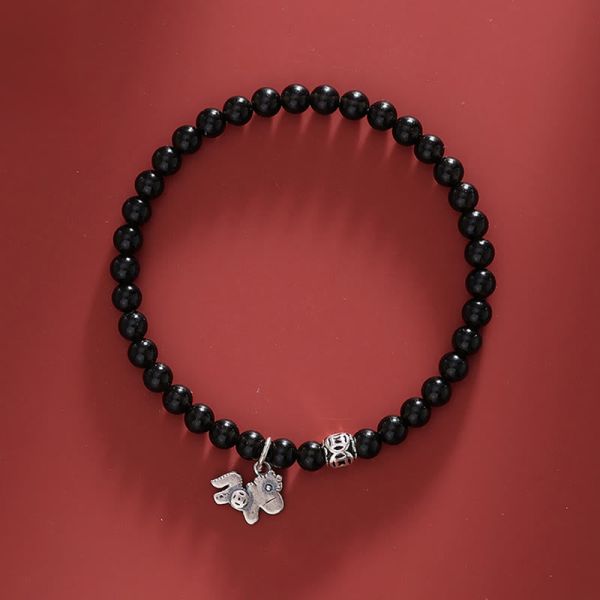 Buddha Stones Year Of The Horse 925 Sterling Silver Natural Black Obsidian Strength BraceletAs low as $67.59 Regular Price $93.88
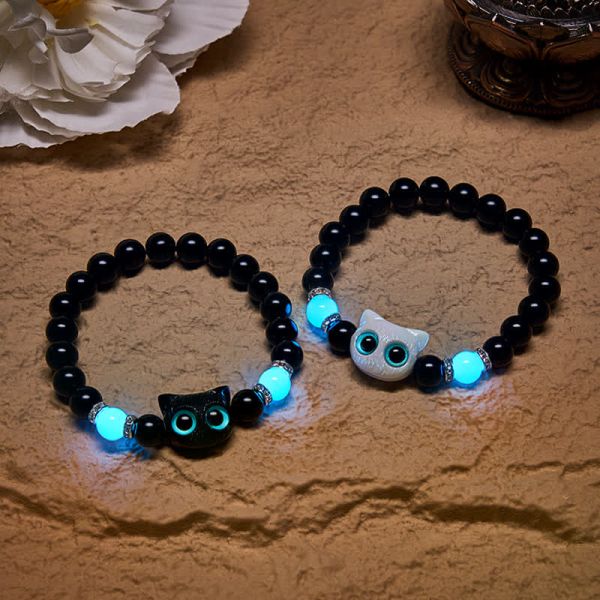 Buddha Stones Black Obsidian Cute Big Eye Cat Protection Beaded BraceletAs low as $25.59 Regular Price $36.04
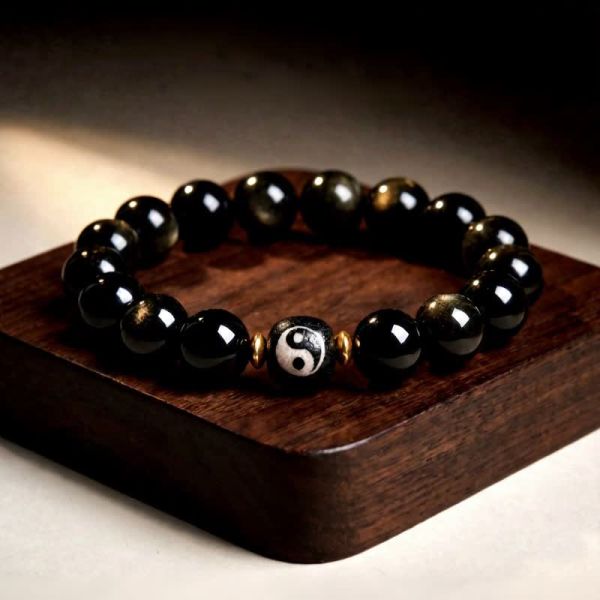 Buddha Stones Golden Sheen Obsidian Yin Yang Protection and Balance BraceletAs low as $25.59 Regular Price $34.58
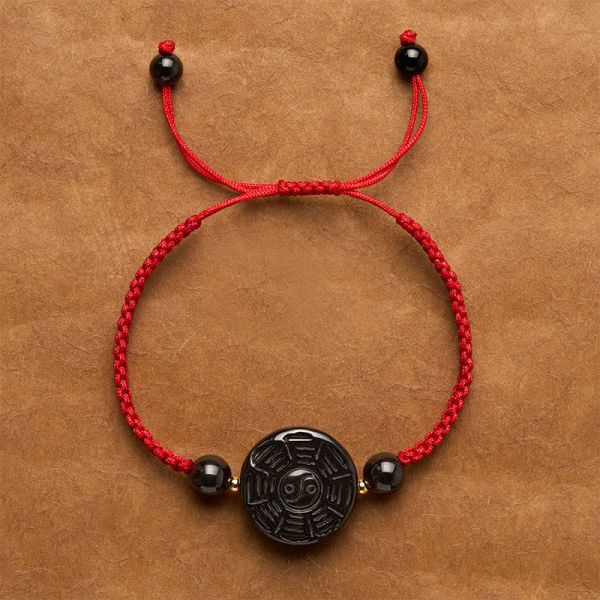 Buddha Stones Red String Black Obsidian Round Bagua Blessing BraceletAs low as $25.59 Regular Price $34.12