Oblong Scarf Guide: Care, Cleaning, and Daily Use
A scarf often shows wear first where it rubs against a coat collar. This oblong scarf guide explains how to inspect, wear, clean, dry, and store a rectangular scarf without pulling its edges or tangling its fringe. At Buddha Stones, we suggest starting with the care label: fiber content alone does not establish a finished item's washing instructions. Use the routine below as general guidance, and follow any label restrictions before applying water, detergent, or heat.
Tools and materials for a careful clean
Gather your supplies before wetting fabric so you can support it throughout the process. Keep the work surface clear of rough edges, exposed fasteners, and objects that could catch a thread.
- A clean basin, if the label permits hand washing.
- A mild laundry detergent suitable for the labeled fabric and washing method.
- Clean white cloths for checking color transfer and blotting marks.
- Clean towels and a flat drying surface large enough to support the fabric.
- A clean shelf or drawer with room for loose folds.
Read detergent directions as well as the scarf label. A small basin does not need the amount intended for a full laundry load. If the label is missing or unclear, ask a professional cleaner about the fabric and construction before attempting a full wash.
Your oblong scarf guide to routine care
1. Inspect the ends, edges, and contact points
Spread the dry scarf on a clean surface. Check the middle section, where it meets your collar, then examine hems, fringe attachments, and any knit loops. Look for marks, loose threads, thinning areas, and tangles. Undo knots slowly while supporting the surrounding fabric. A pulled loop needs a different response from an ordinary crease; do not tug it flat or cut it away.
2. Set up the drape before fastening your coat
Start with the scarf lying flat, then gather it loosely along its length if you need a narrower band. Place it around your neck and adjust the ends by lifting the fabric, rather than dragging it against a zipper. Keep any wrap loose enough to undo easily. Before closing a coat or shouldering a bag, move fringe and loose ends away from fasteners and straps.
With a broad rectangle, make loose lengthwise folds before arranging it. Avoid forcing a large amount of fabric into a tight knot. Remove the scarf near moving equipment, and keep hanging ends away from open flames and cooking surfaces.
3. Decide whether cleaning is necessary
After removal, open the folds and check for visible soil. An unmarked scarf may only need airing in a dry, shaded place before storage. Do not wash automatically after every brief wear. For a fresh spill, lift away any solid residue gently, then blot liquid with a clean white cloth. Rubbing can spread the mark and disturb the surface.
Spot treatment also depends on the care instructions. Where permitted, test the proposed solution on a concealed area first, then let that area dry before judging the result. Stop if color transfers or the surface changes.
4. Wash only by a permitted method
If hand washing is allowed, prepare water at the temperature specified on the label and mix in the directed amount of detergent before adding the scarf. Lower the fabric into the basin with both hands. Move it gently through the water; avoid scrubbing sections together or pulling on the ends. Do not leave it soaking unattended.
Rinse according to the detergent directions, handling the wet fabric with support underneath. If the label permits machine washing, follow its cycle and loading instructions. A mesh bag can help contain loose ends, but it does not make an unsuitable machine cycle acceptable.
5. Support the fabric while it dries
For a washable scarf, press out water gently without twisting. Lay it on a clean towel and roll the towel loosely to absorb moisture, provided the label allows this handling. Unroll, then arrange the scarf on a fresh dry surface with its weight supported. Ease the edges into position without stretching them to a target measurement.
Separate damp tassels with your fingers instead of combing them forcefully. Follow the label's drying instructions and keep fabric away from direct heat. Check beneath folds before storage: the underside must be dry too.
6. Fold loosely for storage
Lay the dry scarf flat and fold it into a shape that fits its storage space without compression. Bring fringe inside a fold so it cannot catch when you open the drawer. Avoid stacking heavy objects on top. If a crease repeatedly forms in one place, change the fold position occasionally. Store only clean, dry fabric in a dry location.
What not to do around delicate edges
- Do not pull a snag. Support the fabric and seek repair advice if the thread will not settle without force.
- Do not wring wet fabric. Twisting concentrates strain in narrow areas and at the ends.
- Do not improvise with bleach or stain mixtures. Use only treatments allowed by the care label.
- Do not assume ironing is permitted. Check the label before using an iron or steamer, including the allowed setting.
- Do not lift a wet scarf by its fringe. Support the main fabric with both hands.
Keep jewelry catches and bag hardware in mind when putting a scarf on or taking it off. If something catches, stop moving, release the fastener, and separate the fabric gently.
When repair or retirement makes sense
A loose hem, detached tassel, or isolated snag may be repairable. Set the scarf aside until the problem is assessed, especially if ordinary handling makes it worse. A repair professional can advise on securing an edge or knit loop without creating a bulky patch.
Consider retiring it from wear when holes keep spreading, the middle has become visibly thin, or an edge repeatedly unravels after repair. A permanent stain may simply change where you choose to wear it. Before donating, confirm that the recipient organization accepts its condition; damaged fabric may need a local textile collection route instead.
Products: compare our rectangular formats
The dimensions below distinguish long, narrow scarves from broader shawls. They describe the supplied formats, rather than a washing method; consult the item's care label separately.
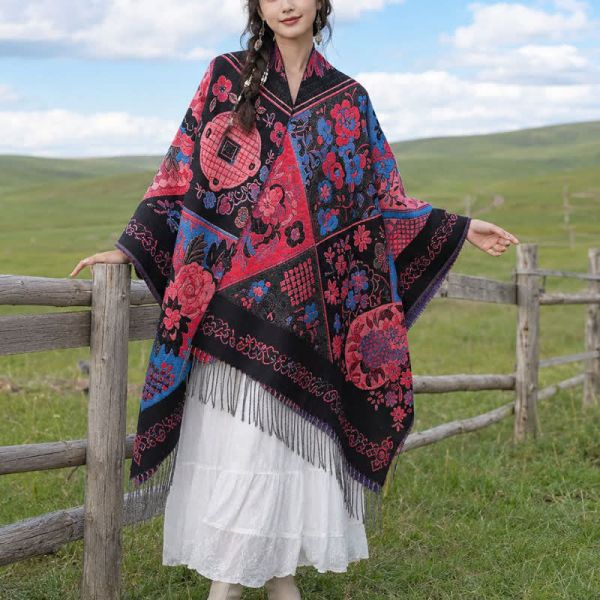
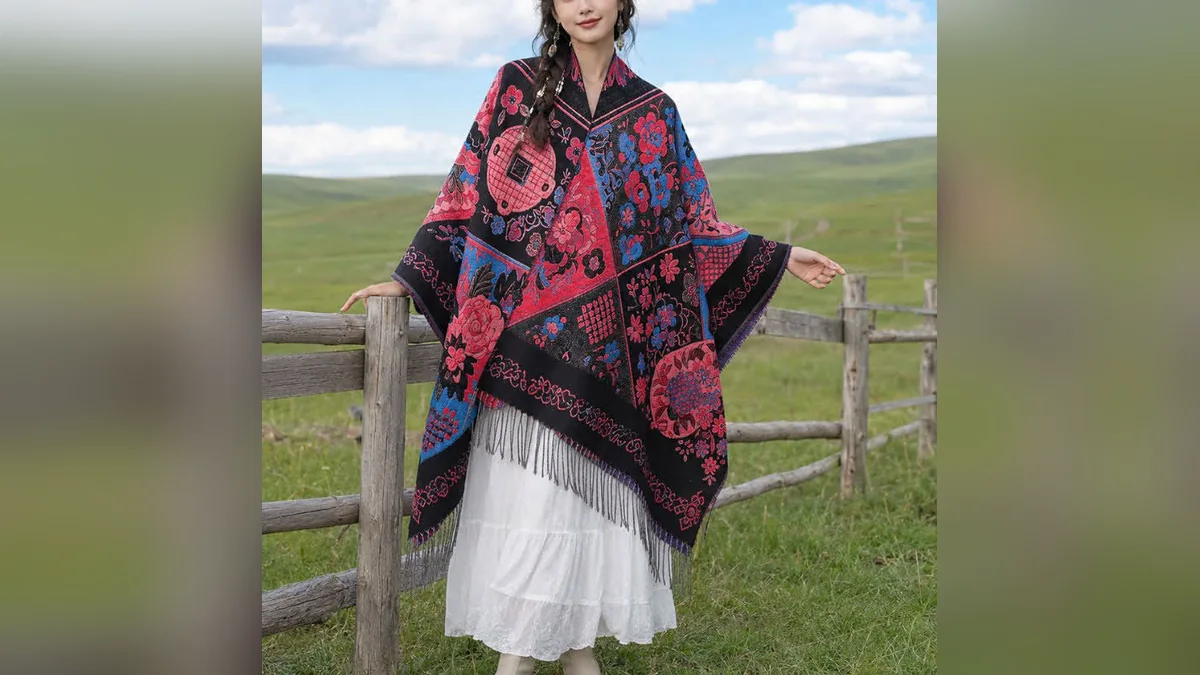
Floral patchwork tassel shawl
Our Fall Winter Boho Floral Patchwork Tassel Women's Shawl is polyester. Size: Approx. 140 cm × 160 cm / 55.1 in × 63.0 in. Color options are Black, DarkRed, Orange, and Tan. The package includes one shawl.
Wavy stripes tassel shawl
Our Fall Winter Boho Wavy Stripes Tassel Style Women's Shawl is polyester. Size: Approx. 51.2 in × 59.1 in / 130 × 150 cm. Options are Crimson, Khaki, RosyBrown, and Wheat. The package includes one shawl.
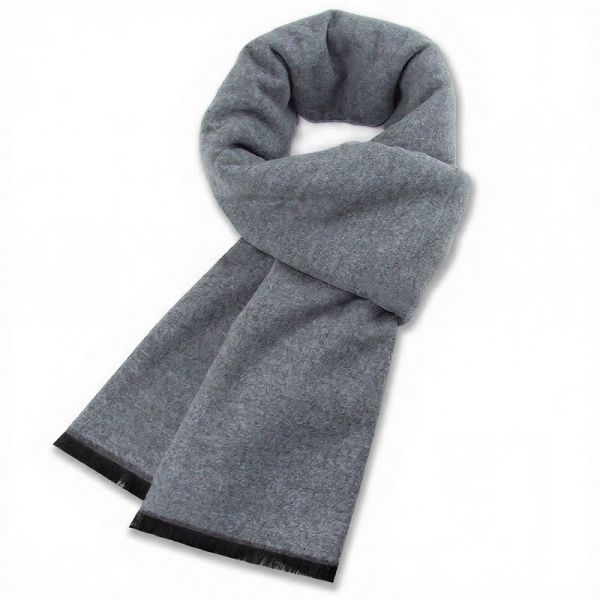
Classic gray plaid fringe scarf
Our Fall Winter Classic Grey Plaid Fringe Cozy Men's Scarf is viscose. Size: Approx. 32 cm × 180 cm / 12.5 in × 70.8 in. Some options include Black, Blue Gray Plaid, and Gray Blue. The package includes one scarf.
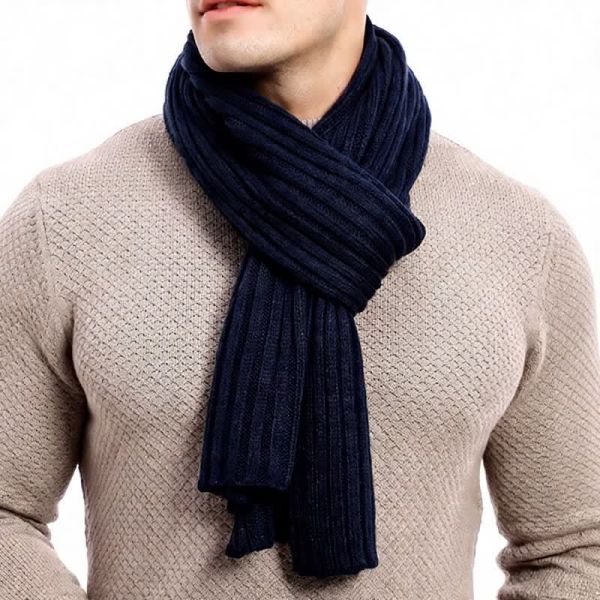
Long ribbed knit scarf
Our Fall Winter Classic Long Ribbed Knit Men's Scarf contains acrylic and polyester. Size: Approx. 180 cm × 30 cm / 70.8 in × 11.8 in. Some options include DimGray, MidnightBlue, and SaddleBrown. The package includes one scarf.
Finish with a check before folding
Before putting your scarf away, confirm that it is dry, its ends are untangled, and no new snag needs attention. Leave enough room to lift it out without pulling. Those small checks make the next wear straightforward and keep repair needs from disappearing into a folded pile.
Shop the story
 Buddha Stones Fall Winter Boho Wavy Stripes Tassel Style Women's ShawlAs low as $38.59 Regular Price $53.60
 Buddha Stones Fall Winter Classic Grey Plaid Fringe Cozy Men's ScarfAs low as $22.59 Regular Price $30.95
 Buddha Stones Fall Winter Classic Long Ribbed Knit Men's ScarfAs low as $24.59 Regular Price $32.79