
Necklace Length Guide: Measure Your Fit in 6 Steps
Flexible measuring tape helps you choose where a necklace will sit. This necklace length guide explains how to measure a comfortable loop, compare it with a necklace you already own, and check the position against your neckline and pendant. The aim is a usable measurement for your clothes and preferred placement. A stated length describes the necklace, but it does not promise the same position on everyone.
1. Start your necklace length guide with a measurement
Gather a flexible tape, a ruler, and a length of nonstretch string. Use the tape to measure around the base of your neck, keeping it level and resting gently against the skin. Record that measurement as a reference. Do not treat it as the length to order: a necklace needs room to follow the curve you want.
Next, arrange the string as a loose loop around your neck. Hold the ends together where the fastening would sit and adjust the loop until its lowest point reaches your preferred position. Keep the string loose enough to remove easily; never tie it tightly. Lay it flat beside the ruler and record the length between the points you held.
2. Compare your loop with an existing necklace
Use a necklace whose position you already like as a second reference. Open its clasp, lay it straight without pulling, and measure from the fastening at one end to the fastening point at the other. Include the clasp when measuring the complete wearable length. For an adjustable necklace, record the particular fastening point you use.
Check that your ruler and the product description use the same units. Keep the original product measurement in your notes, especially when it is marked approximate. A necklace that cannot open into a straight line can be measured with flexible tape around its full loop. Avoid stretching elastic strands, since a pulled measurement will not represent their resting length.
3. Place the pendant before settling on a length
Separate two decisions: where the chain or strand ends, and where the bottom of the pendant reaches. A pendant hangs below its attachment point, so chain length alone cannot describe the entire outline. Check the pendant dimensions as well as the necklace length. Do not assume the stated length includes the pendant unless the description makes that clear.
Use a paper outline to compare a pendant's stated size with the area where you want it to sit. Hold the outline near the lowest point of your string loop without fastening anything heavy to the string. Treat this as an approximate visual check. Pendant attachments, chain shape, and the way a strand hangs can change the final position.
4. Check the placement against your neckline
Put on the kind of top you plan to wear with the necklace, then repeat the string check. Decide whether you want the pendant above the fabric edge or resting fully over it. Placement directly on a neckline can leave the pendant partly hidden or allow it to slip behind the fabric as you move.
For an open collar, check the space between the collar points. For a high neckline, compare the necklace against the fabric rather than relying on a bare-neck measurement. Look from the front and side, then sit down and turn your head normally. Adjust the string if the neckline catches it or the intended position changes more than you want.
5. Plan the spacing if you want layers
Measure the shortest intended necklace first, then position another string loop beneath it. Leave enough visible space for the pendant or beads to remain distinct. There is no single spacing rule: the outlines of the pieces and the available area above your neckline matter more than a fixed gap.
Check the lowest point of both loops, rather than comparing their total lengths alone. Two necklaces with different lengths can still overlap when one carries a longer pendant. Write down the separate measurements and intended order. Treat the string arrangement as a starting layout; actual necklaces may shift or cross during wear.
6. Read the length details before choosing
Find the base length, any stated adjustment, and the pendant dimensions on the product page. An adjustment range adds flexibility only within its specified limits. Do not assume a chain has an extender, a removable pendant, or an opening clasp when those details are absent. An elastic strand also needs a different comparison from a chain with several fastening positions.
For a gift, use a known preferred necklace length if that information is available. Avoid guessing placement from gender labels or a photograph alone. That comparison gives you a clearer basis for choosing than a length label by itself.
Mistakes to avoid when comparing necklace lengths
- Ordering your neck circumference: use that measurement as a reference, then measure the loose loop you actually want.
- Pulling the measuring string taut: let it follow the intended curve before reading its length.
- Mixing pendant size with chain length: note these separately so you can judge both placement and overall drop.
- Assuming adjustment is included: use only the extra length expressly provided in the specifications.
- Copying a photographed fit: compare the stated dimensions with your own reference and clothing.
Compare four Buddha Stones designs by their stated dimensions
The following details give you measurements to compare with your notes. Words such as lucky, blessing, fortune, and protection in product names express traditional wishes. They carry no guarantee of a particular outcome.
A 108-bead elastic option
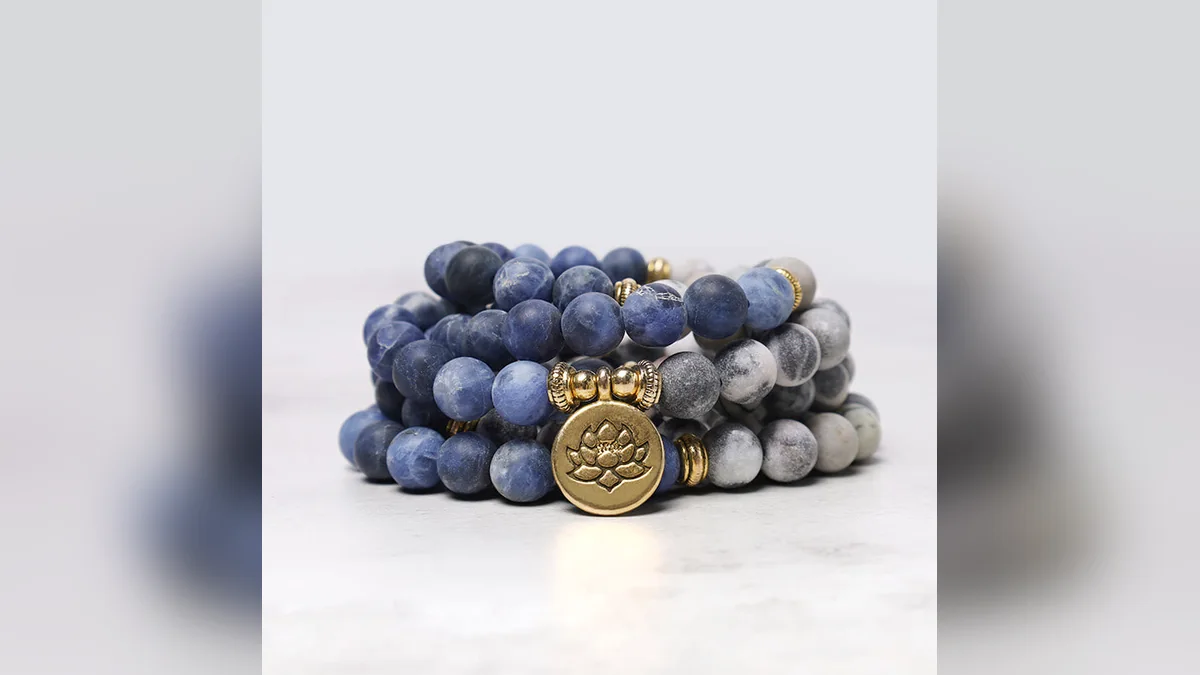
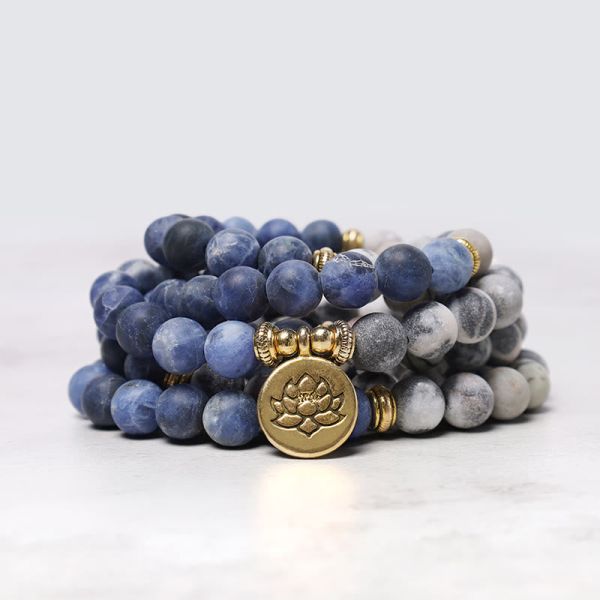
Our 108 Natural Stone Mala Bead Lotus Pendant Bracelet measures 23.6 inches (60 cm), with 108 beads in a 6mm size. Its material is Picasso Jasper, its bracelet style is elastic, and its item types are Bracelet, Necklaces, and Mala. It is unisex. Compare the stated length with your loose loop without adding an assumed adjustment range.
A zodiac pendant at 46cm
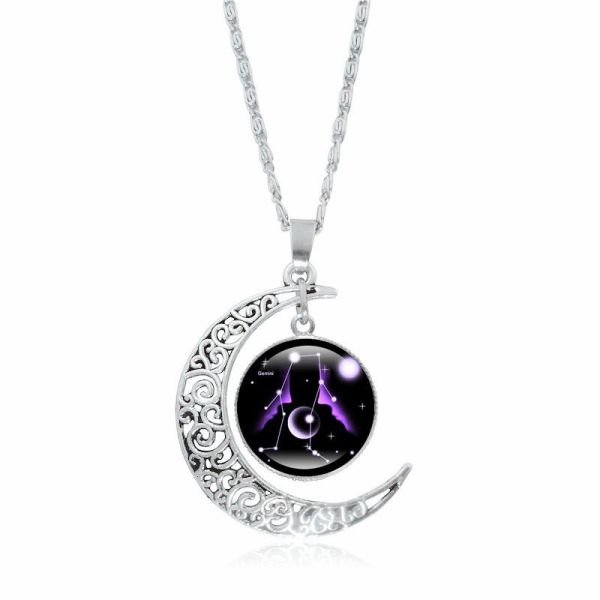
Our 12 Constellations Zodiac Moon Necklace has a length of 46cm and a pendant size of 40mm*20mm. The materials are Copper and Alloy, and the design is unisex. Record the necklace length and pendant dimensions separately when checking its potential placement.
An elephant necklace with stated adjustment
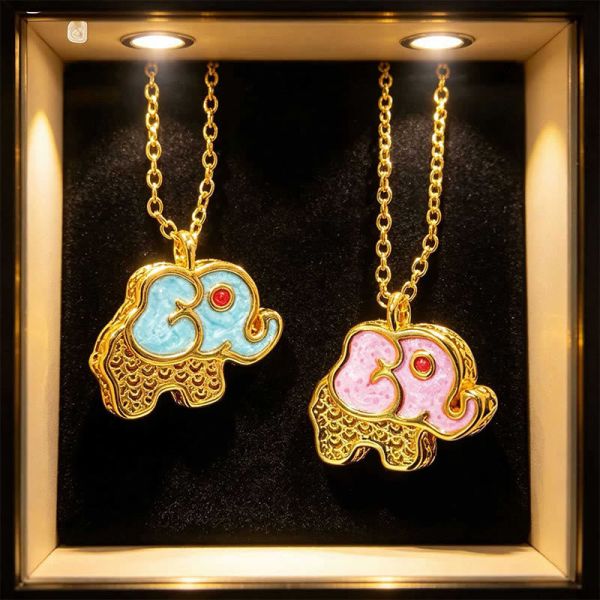
Our 24K Gold Plated Copper Lucky Elephant Hollow Pendant Necklace has a necklace length of Approx. 16.3 in / 41.5 cm and an adjustable length of +0–1.6 in / +0–4 cm. The pendant measures Approx. 0.8 in / 19.8 mm. Materials are Copper and Copper Plated With 24k Gold. Green and Pink options are offered; the package includes 1 × Necklace.
A jade elephant necklace at 45cm
Our 925 Sterling Silver Jade Elephant Blessing Fortune Necklace measures 45cm. Its size is 19mm*10mm (Width*Height), and its materials are Jade and 925 Sterling Silver Gold Plated. It is unisex. Use the width and height labels when making your paper outline so the pendant's proportions remain clear.
Keep your preferred loop measurement, neckline notes, and pendant dimensions together. Those three references make a future comparison easier and help you choose a length for the placement you actually want.
Shop the story
 Buddha Stones 108 Natural Stone Mala Bead Lotus Pendant BraceletSpecial Price $28.59 Regular Price $38.12
 Buddha Stones 12 Constellations of the Zodiac Moon Protection Necklace Chain PendantAs low as $21.59 Regular Price $30.41
 Buddha Stones 24K Gold Plated Copper Lucky Elephant Hollow Pendant NecklaceAs low as $25.59 Regular Price $36.04
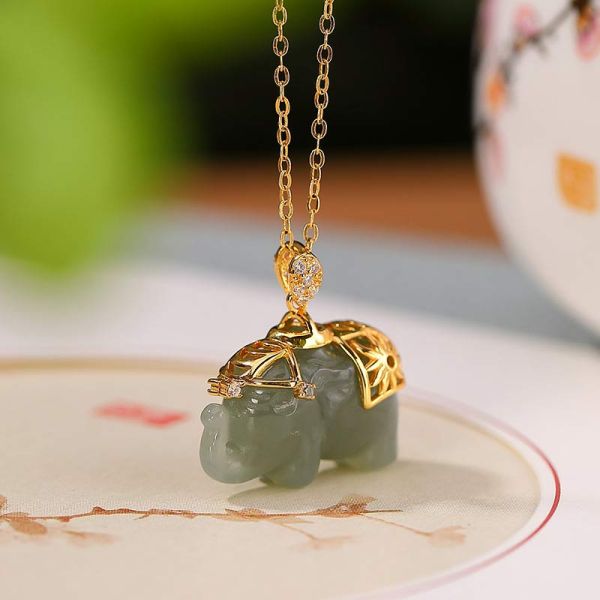 Buddha Stones 925 Sterling Silver Jade Elephant Blessing Fortune Necklace Chain PendantSpecial Price $69.59 Regular Price $92.79