
Malachite Meaning: Green Bands, History, and Care
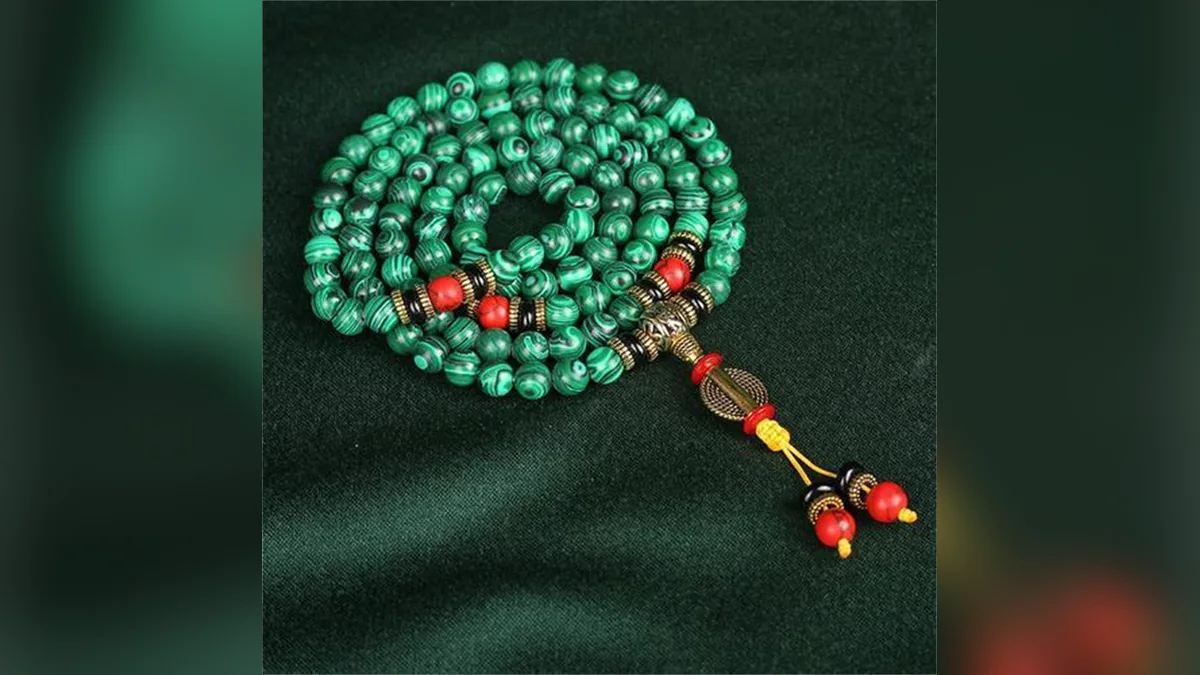
Malachite is a green copper carbonate mineral known for bands of light and dark green. For readers asking about malachite meaning, modern crystal culture calls it a stone of transformation and associates it with protection and change. These are beliefs and symbolic associations, not promises; wearing malachite does not guarantee protection or any other result. Those meanings sit beside the stone’s physical character: copper gives it its color, polishing reveals its patterns, and its softness shapes how it should be handled.
- At a glance: Mineral group: carbonate; color: green; hardness: about 3.5 to 4 on the Mohs scale; typical look: bands and eye-like rings; care: wipe with a soft dry or barely damp cloth.
Where the bands come from
Malachite forms where copper deposits weather, often alongside the blue copper mineral azurite. Its green color comes from copper. The mineral can build up in layers, producing the alternating shades that make a polished surface so recognizable. Those layers belong to the stone’s formation; they are not painted lines or decoration added afterward.
Cutting across layered material can reveal curves, stripes, and eye-like rings. The direction of the cut helps determine which part of that pattern appears on the finished surface. A curved layer may look like a sweeping band in one section and a rounded ring in another. Polishing makes these differences easier to see.
This is why pattern matters as much as color when looking at malachite. Broad bands create a different appearance from closely spaced rings, even when both are green. A photograph of one surface shows only that view of the material, so it helps to look at the arrangement of the lines as well as the overall shade.
Malachite through history
Long before its place in modern crystal culture, malachite was valued as a source of green pigment. It was ground into pigment in ancient Egypt and elsewhere. In that form, the stone supplied color rather than a display of bands: grinding broke up the visible pattern that a polished piece preserves.
Malachite also became a decorative material on a much larger scale. In 19th-century Russia, palaces used it for columns and vases. These objects presented its green patterns across expansive surfaces, far removed in scale from a bead on a bracelet. The same mineral could serve a painter as color and an interior as ornament.
Those uses give useful context without assigning a single meaning to everyone who valued the stone. A pigment, a palace vase, and a contemporary bracelet belong to different settings. We can appreciate that history while keeping later symbolic interpretations separate from the physical material and its documented uses.
What it means to people today
In modern crystal culture, transformation is the central association. People may choose malachite to symbolize a change they have decided to make, a new chapter, or a commitment they want to mark. The meaning comes from that personal interpretation. The mineral does not cause the change or determine what follows.
Protection is another commonly stated belief. Here, it is a symbolic wish, rather than a property that can be promised to someone wearing a bead. We use the same distinction when traditional wishes appear in jewelry names: words such as Luck or Protection describe an intention, not an assured result.
The green bands can also offer a visual way to express change. One shade meets another, and a line continues around a curve. Reading those patterns as a symbol is a personal choice, not a geological explanation. Someone else may simply like the color and wear the stone without giving it a symbolic role.
Malachite does not need one shared interpretation to be meaningful. For a gift, a brief note explaining why you chose its color or symbolism can say more than a list of promised outcomes. Keep the message about your wish for the recipient and the occasion you are marking.
Living with a soft stone
Malachite has a hardness of about 3.5 to 4 on the Mohs scale and scratches easily. For jewelry, that makes contact with abrasive surfaces worth avoiding. Remove a malachite bracelet before tasks that could drag the beads across rough material, and give it a separate pouch or lined compartment when it is put away.
For routine care, a dry, soft cloth is enough for wiping. If needed, use a barely damp cloth, then dry the stone gently. Avoid soaking it, and keep it away from acids, household cleaners, perfume, and heat. A longer wash or a stronger cleaning product is not a useful substitute for gentle handling.
Put perfume on before putting on the jewelry, and leave the piece aside while washing. Check that the place where you set it down is free of grit. These are modest habits, but they address the practical demands of a material that is softer than many familiar jewelry stones.
Malachite dust should not be inhaled when cutting or sanding. This is a handling concern for lapidaries working the material; it concerns dust from those processes, rather than wearing a finished bead.
Malachite meaning in jewelry
Our malachite options include different bead sizes and combinations of materials. Begin with the listed dimensions and band details, then consider the look you prefer. Symbolism can be part of that choice, while the specifications give you concrete points to compare.
Fine beads with red rope
Our Natural Ultra-fine Malachite Beads Braided Red Rope Bracelet pairs malachite with string on an adjustable cord sized for wrists of 5.9–6.7 in / 15–17 cm, and has beads approximately 2-3mm in size. For the cord’s separate cultural associations, our red string bracelet meaning post provides context. The Luck and Protection wording in the full product name expresses traditional wishes.
A single-stone malachite bracelet
The Natural Malachite Bracelet lists malachite as its material, on premium elastic string. Bead sizes of 6, 8, 10, and 12 mm are offered, it fits wrists of 15–20 cm, and it is listed as unisex. The Protection and Calmness wording in its full name expresses traditional wishes. Comparing bead sizes here shows how much of the banding each bead can display.
A mala format
Our Tibetan 108 Mala Malachite Beads Bracelet Necklace is listed in three item categories: bracelet, necklace, and mala. The stated material is malachite, and the bead size is 0.31 in / 8 mm. The mala format is another detail to consider alongside bead size when deciding which kind of jewelry you prefer.
Malachite with red agate
The Natural Malachite Red Agate Charm Bracelet lists malachite and red agate, with 7mm beads and a unisex designation. Its photos also show a green disc charm and a white drop bead, so check the photos for the full design. Protection in its full name is a symbolic wish. If the combination appeals to you, let that preference stand alongside any personal meaning you give the stone. Its 7mm beads fall between the approximately 2-3mm beads of the red rope design and the larger beads of the mala and bracelet described above.
Shop the story
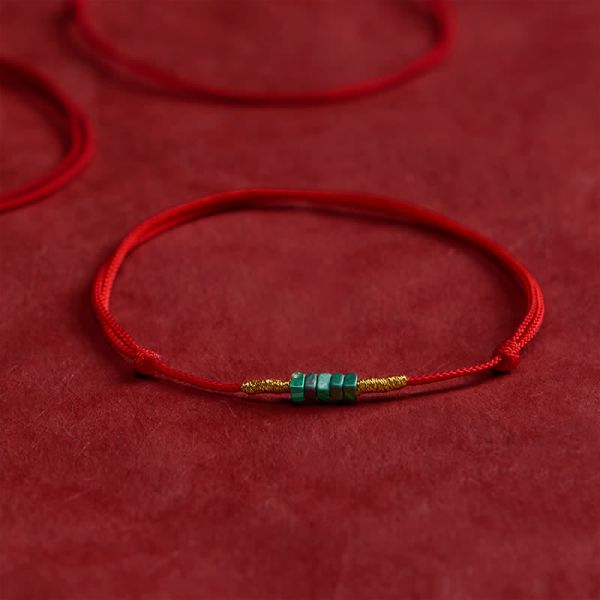 Buddha Stones Natural Ultra-fine Malachite Beads Luck Protection Braided Red Rope BraceletSpecial Price $25.59 Regular Price $34.58
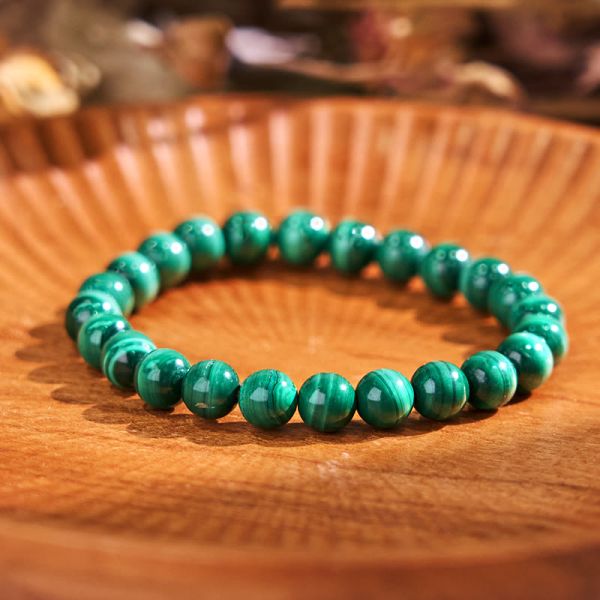 Buddha Stones Natural Malachite Protection Calmness BraceletAs low as $32.59 Regular Price $45.90
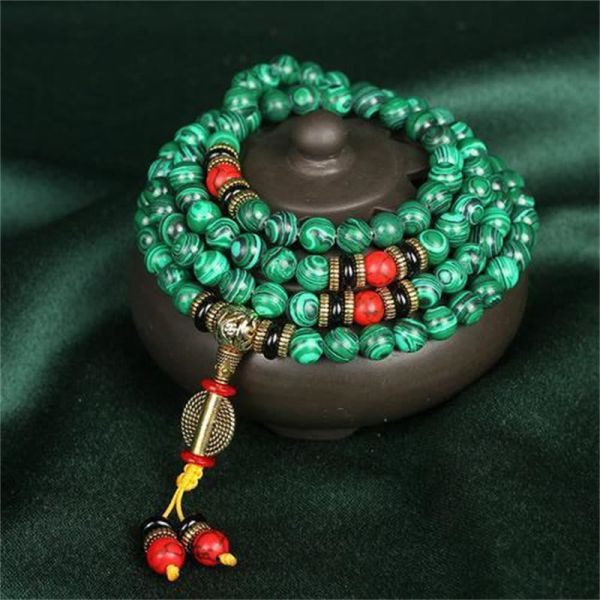 Buddha Stones Tibetan 108 Mala Malachite Beads Bracelet NecklaceSpecial Price $31.59 Regular Price $42.12
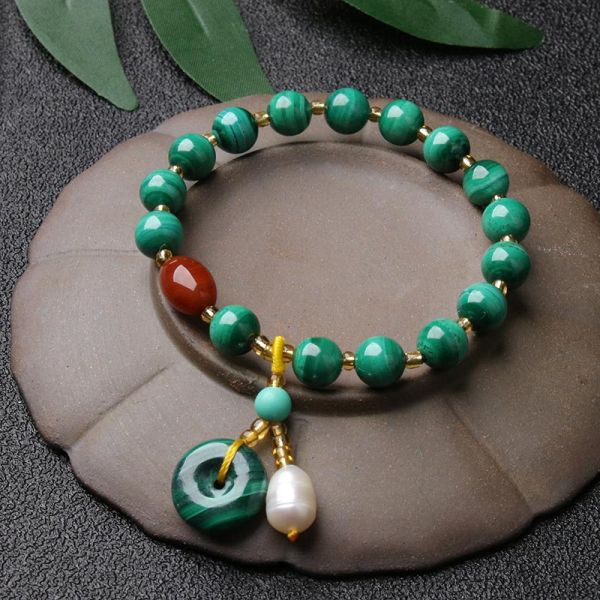 Natural Malachite Red Agate Bead Protection Charm BraceletSpecial Price $41.59 Regular Price $58.58