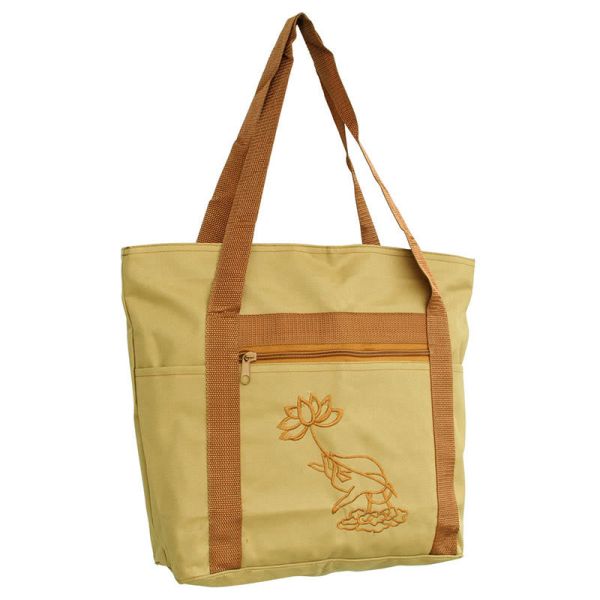
Lotus Care Tips for Embroidered Bags and Daily Use
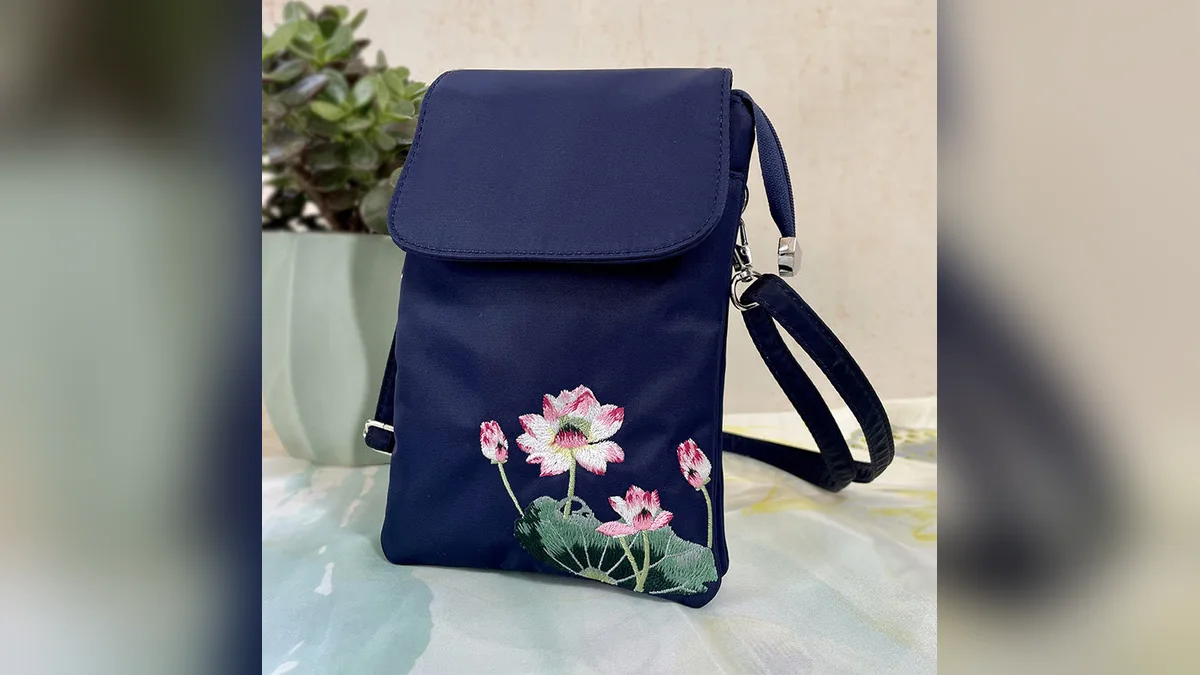
Dust often gathers around a bag’s zipper before the rest of the fabric looks dirty. These lotus care tips explain how to inspect, spot-clean, carry, dry, and store lotus-pattern fabric bags while avoiding unnecessary wear on embroidery and closures. At Buddha Stones, we recommend starting with the care label attached to your bag. Fabric names alone do not establish that a finished bag can be machine-washed, soaked, or treated with a stain remover.
Prepare your tools and materials
Work on a clean, dry surface where you can open the bag fully and see the stitching. Keep cleaning supplies separate from anything that could leave oil, ink, or grit on the fabric.
- A clean, soft, white cloth for lifting loose dust and checking for color transfer.
- A soft brush for gently loosening dry debris around seams, away from raised embroidery.
- Plain water and, only where washing instructions allow it, a mild liquid detergent suitable for the fabric.
- A clean towel for supporting a damp bag during drying.
- Plain, unprinted tissue for lightly supporting the shape during storage.
Avoid assembling a stronger cleaning mixture simply because a mark is stubborn. If the label is missing or unclear, begin with dry care. Ask a textile-cleaning professional about a persistent stain before adding moisture or another cleaning product.
Lotus care tips: a routine from emptying to storage
- Empty the bag completely. Open the pockets and remove loose items. Check corners for crumbs, pen caps, and small objects that could press against the fabric. Hold the opening over a wastebasket and gently tip out debris; avoid vigorous shaking or turning a structured bag inside out.
- Inspect before cleaning. Look at the strap attachments, seams, embroidery, and closure. If a thread has lifted, leave it alone while removing nearby dust. A loose stitch or splitting seam needs attention before further carrying or wet cleaning.
- Remove dry dirt gently. Use the cloth with light pressure. Brush ordinary fabric only where needed, directing debris away from the embroidery. Do not drag a brush across raised threads. Work around zipper teeth without forcing the slider through trapped fabric.
- Check instructions and test first. If the care label permits spot-cleaning, test the allowed method on a small hidden area. Let that area dry fully before proceeding. Stop if color transfers to the cloth or the fabric changes appearance, texture, or shape.
- Treat the mark locally. Use a barely damp cloth and the permitted cleaning solution. Dab gently from the edge of the mark inward, supporting the fabric underneath. Avoid saturating embroidery, seams, or accessories. Remove detergent residue with another barely damp cloth rather than rinsing the entire bag without instructions.
- Dry without heat or strain. Blot excess moisture with a towel; do not wring. Arrange the bag in its usual shape on a clean towel, with pockets open where practical. Allow it to air-dry away from direct sunlight and heaters. Wait until the interior, seams, and straps are dry before filling it.
- Repack and store thoughtfully. Return clean, dry belongings to the appropriate pockets. For storage, empty the bag again, add loose tissue if it helps support the shape, and place it in a dry cupboard with room around it. Avoid pressing embroidery against rough surfaces.
Between cleaning sessions, check the base and strap attachments when you empty the bag. Carry pens capped, close liquid containers securely, and keep pointed items in a separate pouch. Distribute contents so that a hard corner does not continually rub the same patch of fabric.
Adjust an adjustable strap before loading the bag. With fixed straps, use the intended carrying arrangement without knotting or twisting them to change their length. If a zipper resists, remove pressure from the opening and check for trapped cloth before trying again.
Habits that put fabric and embroidery at risk
Do not assume a material name is a washing instruction. Nylon, canvas, polyester, and cotton linen identify fabrics, but the finished construction also matters. A product title containing “Waterproof” does not establish that its embroidery, seams, pockets, and closures can withstand immersion.
- Do not machine-wash, tumble-dry, bleach, steam, or iron a bag unless its own care instructions permit the method.
- Do not scrub an embroidered flower to remove a spot. Repeated rubbing can catch or abrade the threads.
- Do not pull a snag, cut an unidentified loose thread, or glue embroidery back into place as a quick repair.
- Do not force bulky contents into a small opening or lift a loaded bag by its decorative accessories.
- Do not store a damp bag in a sealed container or leave it flattened beneath heavy objects.
Keep cleaning products intended for metal jewelry away from fabric bags. A lotus motif does not determine a cleaning method; the material, construction, and care instructions do.
Decide when to repair or retire a bag
Fading or a small surface mark does not automatically require replacement. Focus on whether the bag can still hold its contents securely. Pause use if a strap attachment is separating, a seam is opening, a closure no longer works, or fabric around a load-bearing point has become thin or torn.
A repair professional can assess a loose seam, damaged strap, or zipper. Keep a detached accessory with the bag for that assessment. If repair cannot restore secure carrying, retire the bag from that role. A dry bag with sound fabric but an unsuitable strap may still serve as stationary storage for light items, provided its condition allows it.
Match the routine to our lotus-pattern bags
Nylon lotus crossbody bag
Our embroidered lotus flowers crossbody bag uses Nylon Fabric and measures 20*13cm. It has an adjustable strap, a stated strap length of 120cm, and buckle and zipper closures. The interior has one main pocket, two interior compartments, and one pocket. Blue Four Lotus and Blue Lotus Dragonfly are among the options. Check both closures during your inspection.
Canvas lotus shoulder tote
The Spiritual Mind Practice lotus canvas tote uses Canvas Fabric. Its size is 31*12*31CM (Length*Width*Height), with non-adjustable straps measuring 68*6cm (Length*Width). It has a zipper closure, one main pocket, one interior zipper pocket, one front zipper pocket, and one back zipper pocket. Empty those separate pockets before cleaning.
Lotus and koi Hanfu bag
Our lotus and koi embroidery Hanfu bag uses Polyester, with a strap length of 100-110cm and a stated weight of 77.6g. Koi Fish Lotus is among the options. The size entry specifically reads “Summer Lotus 22.3*16cm”; confirm dimensions for your selected option. “Luck” in the full product name expresses a traditional wish; results are never guaranteed.
Cotton linen bag with ceramic accessories
The butterfly lotus cotton linen bag combines Cotton Linen Fabric with Ceramic Bead Accessories. It measures 20*20*7cm and has an adjustable strap with a shoulder bag strap length of 130cm. Its structure includes one main pocket and one back zipper pocket, with a strap closure. Options include Light Blue Butterfly Lotus and Green Koi Fish Lotus. Handle the ceramic accessories carefully during cleaning and storage.
Make the next inspection simple
Put the bag away empty and dry, with its straps untwisted and embroidery free from pressure. Before carrying it again, check the closure and strap attachments. Small, regular checks give you a clear point at which to clean, arrange a repair, or stop using the bag.
Shop the story
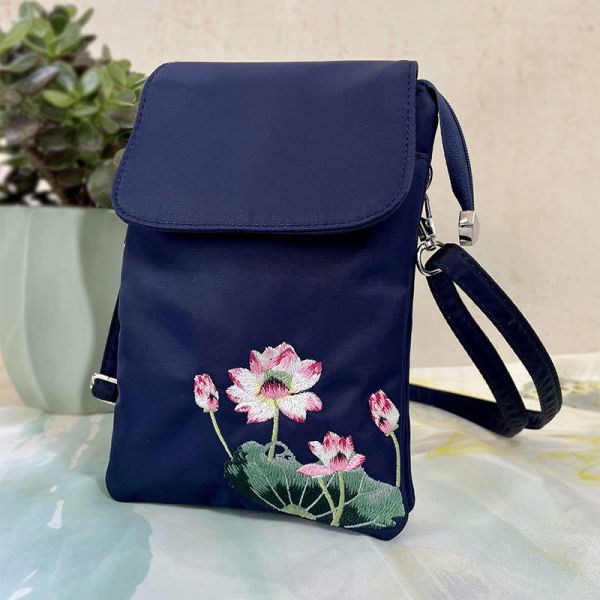 Buddha Stones Waterproof Handmade Embroidered Lotus Flowers Crossbody Bag Shoulder Bag Cellphone BagAs low as $25.59 Regular Price $34.12
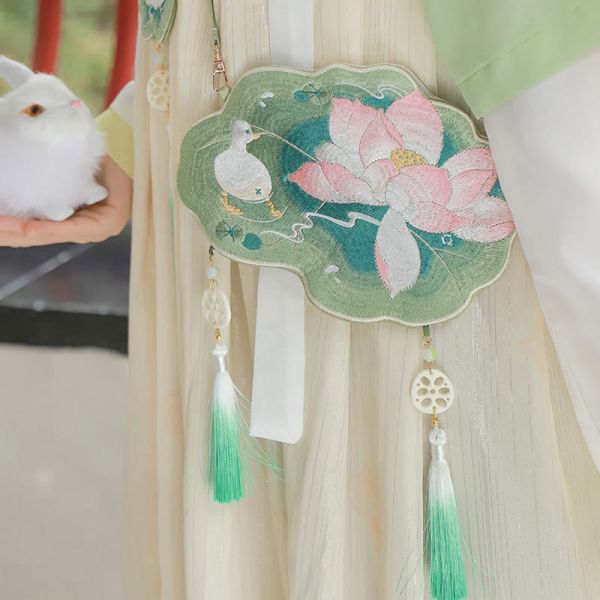 Buddha Stones Luck Embroidery Lotus Koi Fish Rabbit Flower Hanfu Bag Crossbody Bag Shoulder BagAs low as $29.59 Regular Price $39.45
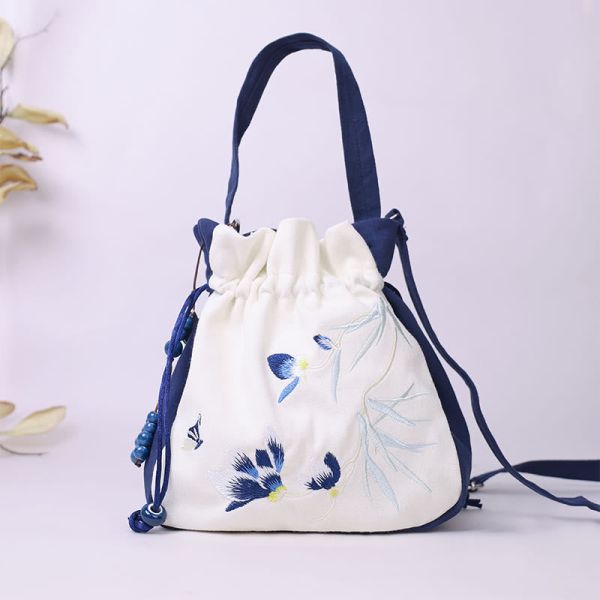 Buddha Stones Embroidered Butterfly Lotus Magnolia Cotton Linen Tote Crossbody Bag Shoulder Bag HandbagAs low as $25.59 Regular Price $35.05