Layering Necklaces Guide: Length, Spacing, and Pendants
A focal necklace gives the other layers a starting point. This layering necklaces guide shows you how to place a focal pendant, separate necklace lengths, coordinate materials, and check the arrangement against your neckline. Begin with two pieces and add another only if the pendants remain distinct. At Buddha Stones, we suggest making these practical decisions before choosing additional jewelry: where the necklaces sit matters as much as how they look individually.
1. Layering necklaces guide: choose your focal piece
Select the necklace you want to notice first. It might have a larger pendant, a clear outline, or a color that stands apart from your clothing. Give that necklace a position where its main detail remains visible, then choose a quieter companion.
A focal pendant does not have to occupy the lowest position. A small pendant near the neckline can lead the arrangement when the longer necklace has fewer details. Decide which piece leads before adding competing shapes.
Lay your choices flat beside the top you plan to wear. Remove one necklace if you cannot tell which pendant should draw attention. This is a useful editing step before you work out the lengths.
2. Separate the lengths and check pendant reach
Choose different necklace lengths to create distinct levels. A shorter strand establishes the upper line; a longer one provides room below it. Leave enough visible space that the pendants do not rest against one another.
Read necklace length and pendant size separately. The strand measurement alone does not tell you where the bottom of a pendant will fall. A broad or tall pendant may need more open space than a small one, even when the necklace lengths differ.
Use a flexible measuring tape to check the intended position around your neck. Treat product measurements as a starting point because your neck, clothing, and pendant shape affect placement. If two fixed lengths crowd the same area, choose a different pairing. Do not assume a cord is adjustable unless that feature is stated.
3. Give the neckline a clear role
Check the necklaces with the actual garment you intend to wear. A pendant balanced on a hanger may sit against a seam, button, or neckline once the clothing is on your body.
For a V-neck, arrange the pendants within the opening or place the longer necklace clearly below it. Avoid letting the lowest pendant catch at the point of the V. With a crew neck, decide whether the necklace should sit above the edge or hang over the fabric.
A patterned shirt already carries visual detail. Try fewer necklaces or clearer separation so the pendant shapes remain readable. A plain top gives you more room to combine different outlines.
4. Connect the materials without matching everything
Choose one visual connection between the necklaces. You might repeat a color, pair similar cord thicknesses, or combine pendants with related outlines. One connection is enough; matching every detail can make the selection unnecessarily restrictive.
Then check contrast. A slim chain and a substantial cord can share an arrangement, but their pendants still need separate space. Two strongly detailed necklaces may work better on different days if neither has room to stand out.
Keep symbolic choices personal and deliberate. You can select a motif because of its traditional meaning without building a collection of matching symbols around it. Practical fit and clear placement remain the main decisions in layering.
5. Check movement before adding another necklace
Put on the shorter necklace, then add the longer one. Check the front and back to make sure the strands are not already crossed. Turn your head, sit down, and lean forward slightly to see whether the pendants overlap or catch on clothing.
If the necklaces repeatedly cross, remove one and reconsider the pairing. Different lengths can help, but they cannot ensure that strands will never tangle. Avoid joining separate necklaces with improvised knots, which can change their placement and complicate removal.
Add a third necklace only after the first two sit as intended. Leave it out if it fills the space that keeps the main pendants separate.
Mistakes to avoid when arranging your layers
- Choosing length alone: Include pendant height and width when deciding how much space a necklace needs.
- Stacking similar positions: Two necklaces of the same stated length may place their pendants close together. Check their placement before planning a combination.
- Ignoring the fabric: Buttons, open knits, and neckline edges can interrupt the arrangement or catch a pendant.
- Adding detail everywhere: Reconsider a third necklace when the first two already have prominent pendants.
- Assuming shared care needs: Follow the instructions for the specific materials, and take layered necklaces off individually to avoid pulling them together.
Four Buddha Stones necklaces: dimensions and options
Luck, abundance, and protection in product names express traditional wishes. Jewelry does not guarantee these results. The details below distinguish the stated materials and measurements from option names.
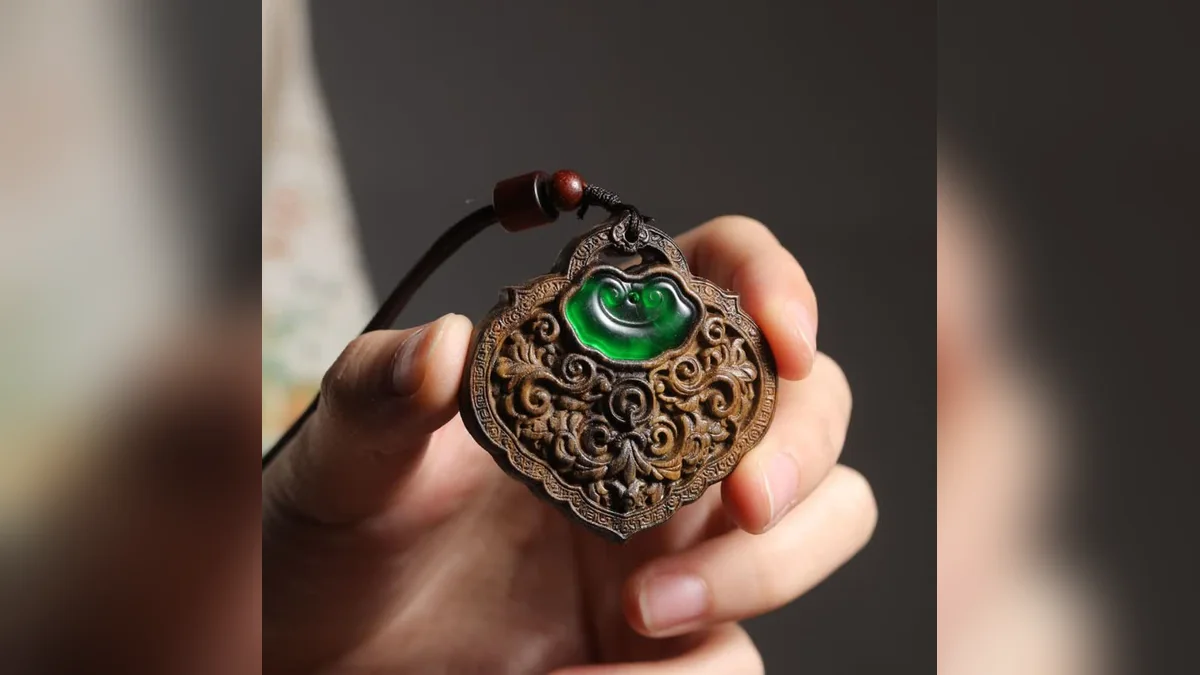
Sappanwood and green agate lock necklace
Our Sappanwood Carved Green Agate Lock of Good Wishes Necklace combines Sappanwood, Teak, Green Agate, and Rope. Necklace length: Approx. 22 in / 56 cm. Pendant size: Approx. 1.95*1.96*0.39 in / 49.6*50*10mm.
Natural materials may vary slightly in color, details, and overall appearance. The wood may show differences in grain and color and develop a richer patina over time. Avoid water exposure.
Natural stone double pendant necklace
The Natural Stone Opal Double Pendant Necklace has options including Amethyst, Black Onyx, Blue Turquoise, Clear Quartz, Goldstone, Green Aventurine, Lapis Lazuli, and Opal. Other option names include Red Jasper, Rhodonite, Rose Quartz, Snowflake Obsidian, Sodalite, Tiger Eye, Turquoise, Unakite, and White Turquoise.
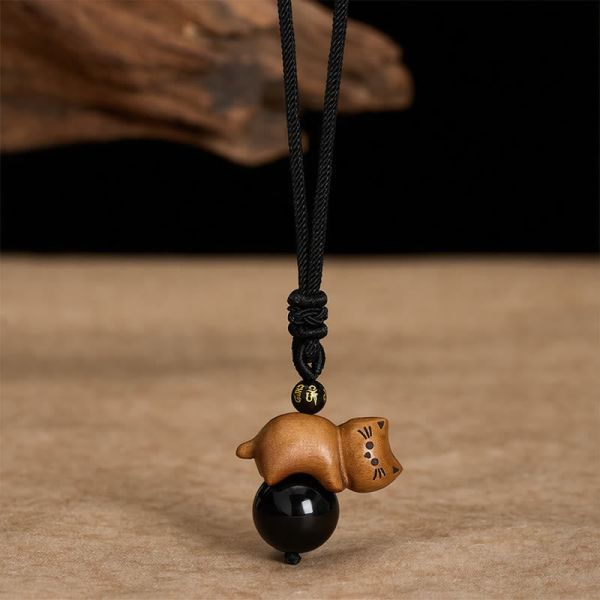
Sandalwood cat and black obsidian necklace
The Sandalwood Cat Black Obsidian Om Mani Padme Hum Rope Necklace uses Sandalwood, Black Obsidian, and Rope. Necklace length: Approx. 18 in / 45 cm. Pendant size: Approx. 1.18 × 1.30 in / 3 × 3.3 cm. Bead size: Approx. 0.63 in / 16mm.
Sandalwood may have grain and color variations and develop a richer patina over time. Avoid water exposure.
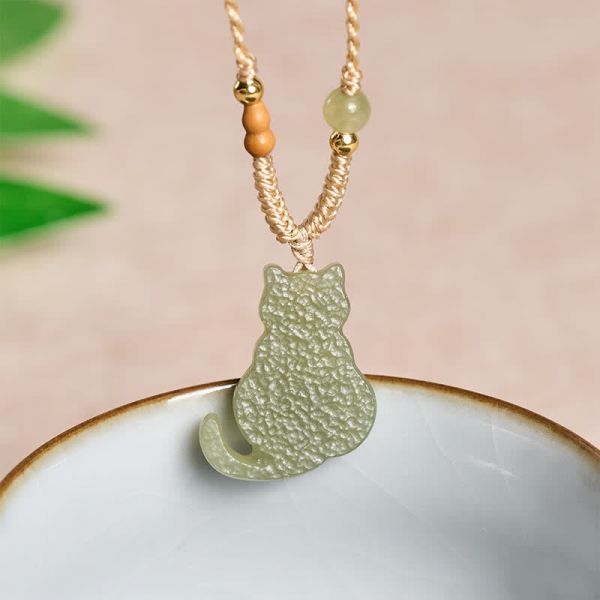
Jade cat pendant necklace
The Jade Cat Braided Cord Pendant Necklace uses Hetian Jade and Cord. Necklace length: Approx. 18 in / 45 cm. Pendant size: Approx. 0.71 × 0.83 in / 18 × 21 mm. Natural materials may produce slight differences in color, details, and overall appearance.
Keep the final arrangement easy to read
Finish by checking three things: a clear focal pendant, visible space between layers, and a neckline that leaves the arrangement unobstructed. Remove any necklace that crowds another. A considered pair gives you a useful starting combination that you can change with your clothing.
Shop the story
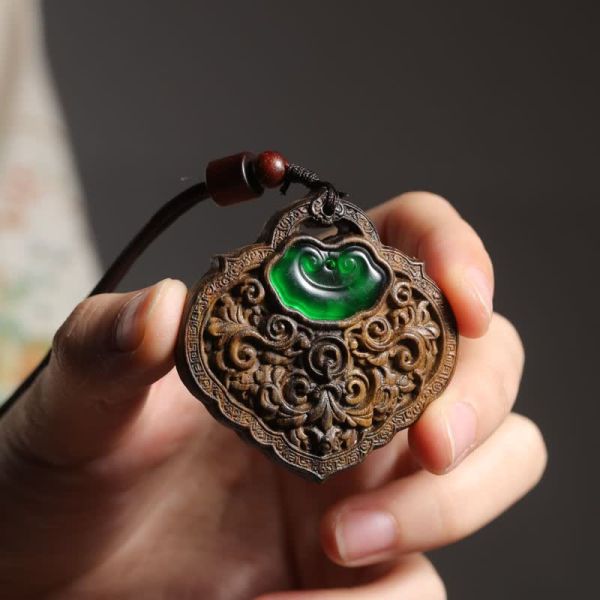 Buddha Stones Sappanwood Carved Green Agate Luck Lock of Good Wishes NecklaceSpecial Price $25.59 Regular Price $34.58
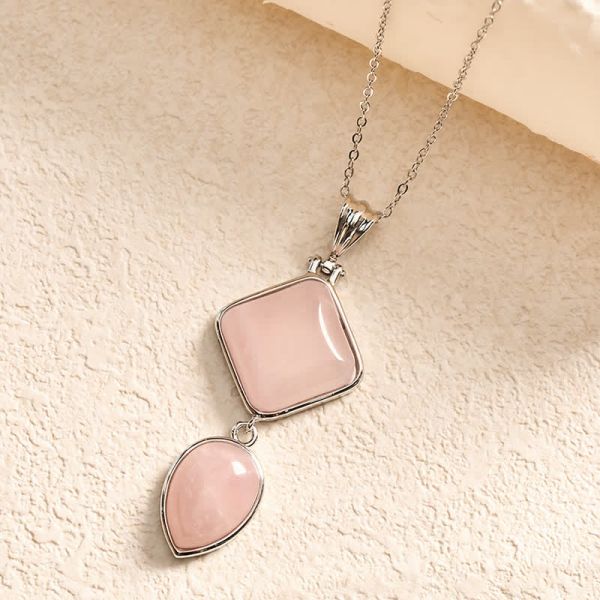 Buddha Stones Natural Stone Opal Double Pendant Calm NecklaceAs low as $25.59 Regular Price $35.54
 Buddha Stones Jade Cat Braided Cord Pendant Abundance NecklaceSpecial Price $29.59 Regular Price $41.10