
The Jianzhan Teacup: History, Glazes, and What to Buy
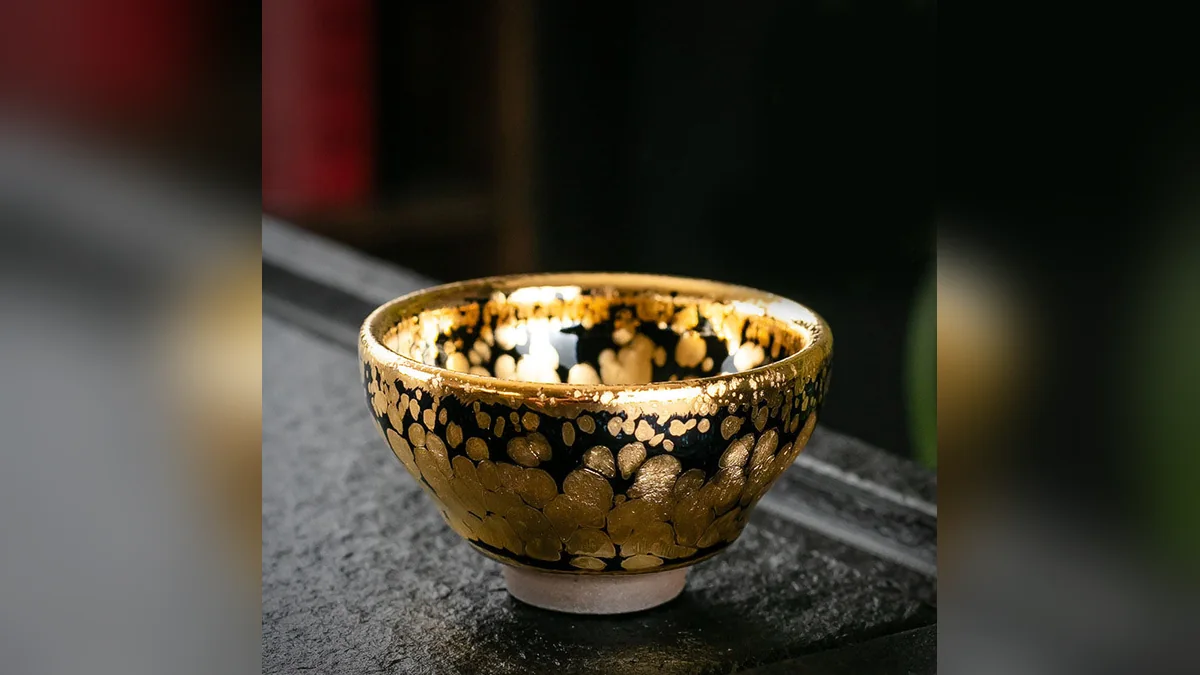
Set a dark, heavy little bowl on the table and the first thing you notice is the glaze: streaks running like fur, or flecks scattered across a surface so dark it reads almost black. This is a jianzhan teacup, the traditional Chinese tea bowl made in the kiln tradition of Jianyang, in Fujian province. The clay there carries an unusually high iron content, and so does the glaze, so when the two are fired together at very high heat, the iron crystallizes into patterns that no potter can fully plan or repeat. Pick one up and the pattern in your hand will not exist anywhere else, which is part of why collectors and casual tea drinkers alike keep coming back to this particular bowl.
Before it became a collector's object, this little bowl had a job to do. Its story runs through several very different periods of Chinese tea culture, and knowing that story makes the bowl in front of you a little less mysterious and a lot more interesting to hold.
A short history of the jianzhan teacup
The timeline below skips exact dates on purpose — kiln production stretched across long periods, and what matters more here is the shift in how people actually drank their tea.
- Song dynasty: tea was ground into powder and whisked into a froth, and tea drinkers held contests, called doucha, to judge whose foam held longest and looked whitest against the bowl. A dark bowl made that white foam easy to see, which is why Jian ware became the bowl of choice at these gatherings.
- Song dynasty, glaze naming: this same period produced the glaze names still used today — hare's fur, oil spot, and partridge feather, each describing a different pattern born from the same iron-rich glaze and the same kiln conditions.
- Song into Yuan: Japanese monks studying at Chinese monasteries carried these bowls home with them, where the ware became known as tenmoku, a name still used for dark iron-glazed tea bowls in Japan today.
- Ming dynasty: whisked powdered tea fell out of favor as loose-leaf steeping became the common method, and demand for thick dark bowls dropped along with it. Production slowed for a long stretch afterward, and many kilns went quiet.
- Modern period: interest in Jian ware revived, with kilns in Jianyang firing jianzhan again for a new generation of tea drinkers, both inside China and well beyond its borders.
Glaze effects you will hear about
Shop for one of these bowls for more than a few minutes and the same three terms keep coming up. They describe the pattern, not the shape or the size, and they are worth knowing before you compare pieces side by side.
- Hare's fur: fine streaks running down the bowl, usually in one direction, the way fur lies when an animal has just been stroked.
- Oil spot: small round or oval marks scattered across the glaze, sometimes with a slight metallic sheen, like droplets of oil resting on dark water.
- Kiln change: this one is less a fixed pattern than a description of unpredictability. During firing, shifts in temperature, airflow, and the exact chemistry of the glaze can send the color in directions the potter never planned. No two kiln-change pieces come out the same, even when they sit side by side in the same kiln through the same firing.
Because of kiln change, no listing photo can promise you the exact piece you will receive. What it can promise is the general family of color and pattern, with some natural variation expected inside that family. That variation is part of the appeal rather than a defect to worry about.
Four cups, four sizes
Jianzhan teacups are made in a range of sizes, and the right one depends mostly on how you drink. For a small, formal presentation with a matching box, the 24K Gold Spot Pattern jianzhan holds 70 ml in a 7.2 by 4.1 cm body made of ceramic with 24K gold, and comes with its own gift box. For a slightly larger everyday cup, the Multicolored Kiln Change jianzhan is ceramic, measures 6.5 by 6 cm, and holds 110 ml. The Cracked Ice Texture jianzhan is also ceramic and comes in two close sizes, 7.5 by 6 cm at 100 ml or 8 by 6 cm at 110 ml. For a small cup built around a single sip, the Small Koi Fish Kiln Change jianzhan holds 60 ml, in either a 7.3 by 4 cm or 6.6 by 4.2 cm body. If you are assembling a full setup, our tea collection has other pieces worth pairing with any of these four.
A buyer's checklist
- Match the capacity to your brewing style. A 60 ml cup suits quick, concentrated gongfu-style pours where you refill often and want the tea to stay hot between rounds. A 110 ml cup suits a slower, single cup of tea that you sip over a longer stretch of time.
- Check the weight and the foot ring. A heavier cup with a defined foot ring tends to sit more steadily on a tea tray, which matters if you are pouring often during a session and setting the cup down between pours.
- Expect glaze variation as normal, not a flaw. Because of kiln change, your cup will not look exactly like the photo, and no two cups from the same run will match each other either.
- Rinse with warm water rather than heavy scrubbing. A soft rinse is usually enough; there is no need for soap-heavy scrubbing on the glaze, which can dull its surface over time.
- Let the cup dry fully before you put it away. Stacking or boxing a damp cup can trap moisture against the glaze or against other pieces stored nearby.
- Avoid sudden temperature shocks. Moving a cup straight from boiling water to a cold rinse, or the reverse, puts unnecessary stress on the glaze and the ceramic body underneath it.
- Think about whether it is a gift. If you are giving the cup rather than keeping it, a version that already comes with a gift box saves you a separate wrapping step.
- Decide if you want a set or a single piece. Some people keep one cup for themselves and use it daily; others collect several sizes and patterns for different occasions or for guests.
Sizes above are manufacturer measurements and may vary slightly piece to piece, which is typical for kiln-fired ceramics.
Shop the story
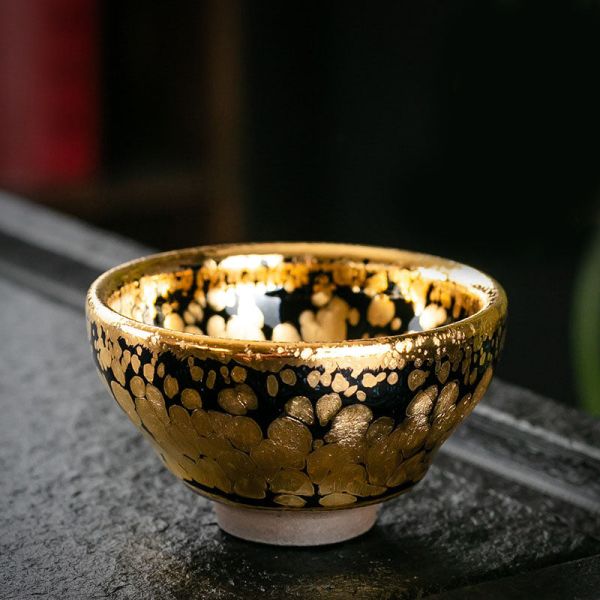 Buddha Stones 24K Gold Spot Pattern Chinese Jianzhan Ceramic Teacup Kung Fu Tea Cup Bowl With Gift BoxSpecial Price $83.59 Regular Price $117.73
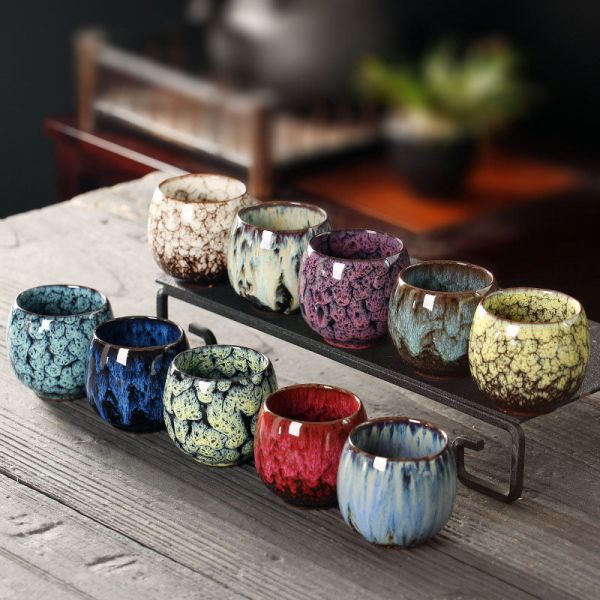 Buddha Stones Simple Multicolored Kiln Change Chinese Jianzhan Ceramic Teacup Kung Fu Tea Cup 110mlAs low as $22.59 Regular Price $31.82
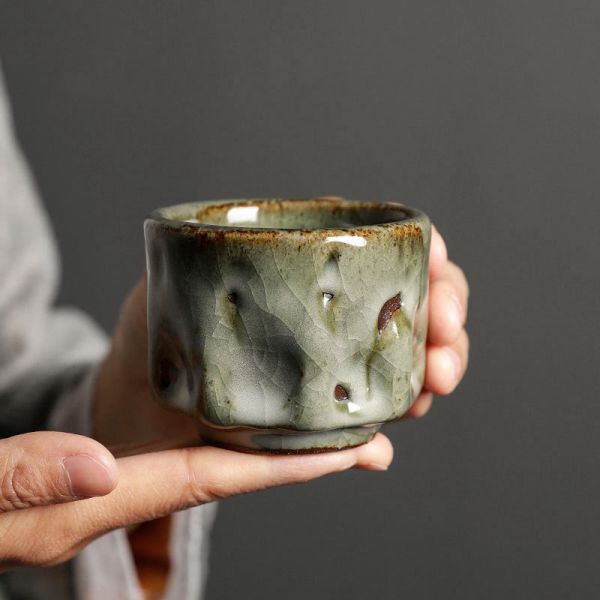 Buddha Stones Handcrafted Simple Cracked Ice Texture Chinese Jianzhan Ceramic Teacup Kung Fu Tea CupAs low as $63.59 Regular Price $84.79
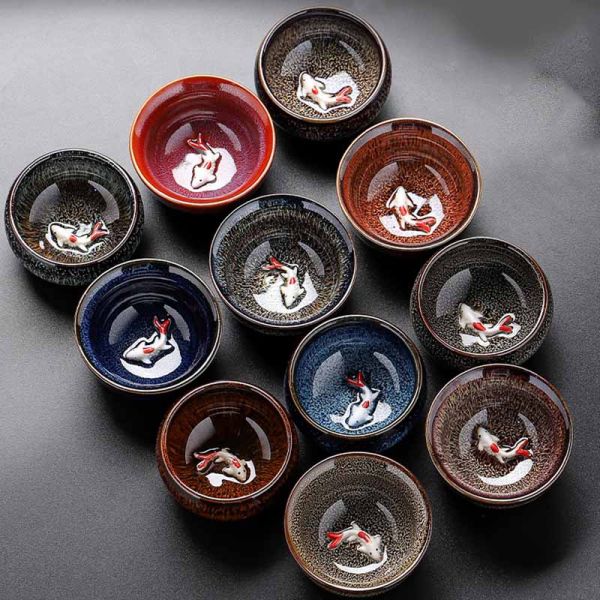 Buddha Stones Small Koi Fish Kiln Change Chinese Jianzhan Ceramic Teacup Kung Fu Tea Cup 60mlAs low as $26.59 Regular Price $37.45