Jadeite vs Nephrite: A Practical Bracelet Care Manual
A jade bracelet can collect soap residue around its beads and cord knots. Jadeite and nephrite are the two gem materials commonly called jade: jadeite is a pyroxene mineral, while nephrite consists of interlocking amphibole crystals. For jadeite vs nephrite, the practical care lesson is that both need gentle cleaning, careful drying, and protection from knocks. This manual shows you how to clean the stone, look after adjoining materials, and recognize when a bracelet needs repair.
Begin with the material description supplied with your piece. Color alone cannot establish which kind of jade you have or whether it has been treated. If the description says only “jade,” leave its identity open and choose a cautious routine.
Tools and materials for jadeite vs nephrite care
We recommend a small cleaning kit that lets you control moisture and pressure. Work over a folded towel on a clear surface, away from an open sink drain.
- Two clean, lint-free cloths: one for wiping and one for drying.
- A small bowl of lukewarm water, used to dampen the cloth.
- A little mild soap, only when plain water does not remove surface dirt and the care instructions permit it.
- A soft brush for accessible stone surfaces, used gently and kept away from fraying cords.
- A separate pouch or a divided jewelry box for storage after drying.
For jewelry containing cord, plated details, or an unidentified treatment, start with a barely damp cloth. The stone is only one part of the cleaning decision. A method suitable for loose jade may be unsuitable for the assembled bracelet.
A step-by-step routine from removal to storage
- Remove the bracelet before wet or messy tasks. Take it off before washing dishes, swimming, applying lotions, or using household cleaners. Set it on a stable surface where it cannot roll off. Do not pull an adjustable bracelet over your hand while its cord is still tightened.
- Inspect it before adding water. Look at bead holes, knots, cord ends, and connections between materials. Check for loose parts, thinning string, rough edges, or a newly visible crack. If anything has shifted or broken, set the bracelet aside for assessment instead of continuing to clean it.
- Wipe away loose dirt. Use the dry cloth first, without pressing grit into the surface. Then dampen a clean section of cloth with lukewarm water and wipe the stone gently. Support a bead or pendant while wiping it so the cord does not take the pulling force.
- Use soap sparingly if needed. When permitted by the piece’s care instructions, add a small amount of mild soap to the water and dampen the cloth. Work on the dirty stone surface without saturating the knots. If residue remains in an accessible groove, try a light pass with the soft brush; stop if reaching it requires force.
- Remove residue and dry the assembly. Wipe again with a separate cloth dampened with plain water. Blot the stone, fittings, and cord gently. Leave the bracelet on a clean towel at room temperature until the cord and knots are dry. Turn it over so damp areas are not trapped against the towel.
- Check the adjustment before wearing. Move an adjustable knot gently and confirm that it holds. Avoid tightening until the cord presses hard against the wrist. Put the dry bracelet in its own compartment when it is off your wrist, keeping loose chains and other jewelry from rubbing against it.
Use a quick dry wipe after ordinary wear, and reserve damp cleaning for visible residue. You do not need a calendar-based washing schedule. If a stain remains after gentle cleaning, stop and ask a jeweler familiar with jade and mixed-material jewelry to assess it.
What not to do when a surface looks dull
Dullness does not automatically mean the stone needs polishing. Soap film, dirt, surface wear, and treatments can affect appearance, and they need different responses. Avoid trying increasingly aggressive methods until the surface changes.
- Skip ultrasonic and steam cleaners. Unknown treatments, cracks, cords, and fittings make these unsuitable choices for a home routine.
- Keep abrasive products away. Toothpaste, scouring powders, and polishing compounds can scratch surfaces or wear finishes.
- Do not soak the whole bracelet. Prolonged wetting can affect cord and adjoining materials. A controlled wipe is easier to manage.
- Avoid heat and sudden temperature changes. Do not dry jewelry with a hair dryer, on a radiator, or in strong sunlight.
- Never test jade by scratching, striking, or heating it. Home damage tests can ruin a piece without reliably identifying it.
Do not apply oils or waxes to imitate a polished appearance. Leave decisions about refinishing or treatment to a qualified professional.
When to replace a cord or retire a piece
Stop wearing a bracelet if a cord has broken strands, a knot slides unexpectedly, a fitting is loose, or a stone develops a sharp edge. A small change near a bead hole deserves attention because that area touches the string during movement.
A worn cord may be replaceable while the stone remains suitable for use. Ask a repairer to check the holes and fittings before restringing. Do not cover a crack with household glue or keep tightening a failing knot.
If a damaged stone cannot be repaired for secure wear, retire it from the wrist. Keep it in a labeled container if you want to retain it. Differences in color or pattern alone are not reasons to discard jade; compare a suspected change with an earlier photograph when one is available.
Our jade bracelets: match care to the materials
The following descriptions identify the materials relevant to care. Luck and Protection in product names express traditional wishes. They do not guarantee luck, protection, or any other outcome.
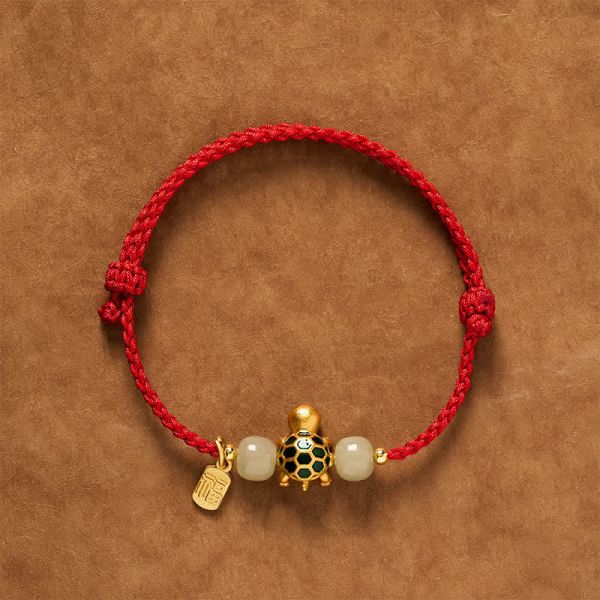
Copper Turtle Hetian Jade bracelet
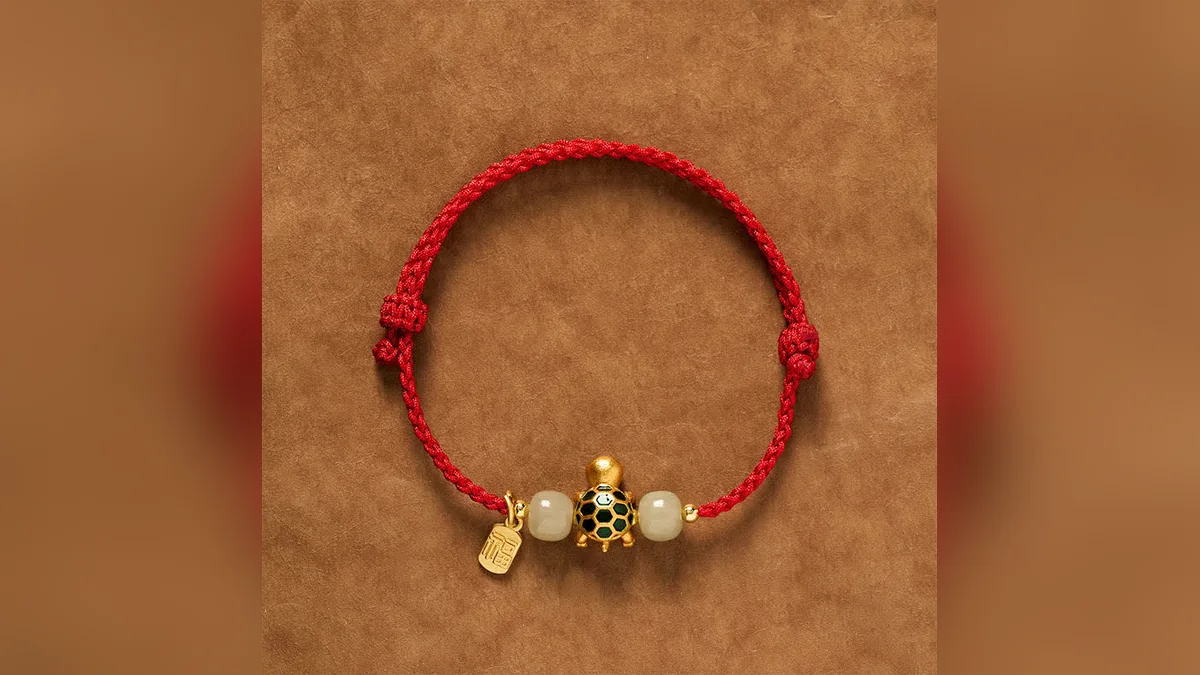
Our Copper Turtle Hetian Jade Fu Character bracelet combines Red String, Hetian Jade, and Copper Alloy with an adjustable cord. Wrist Circumference: 5.5–7.1 in (14-18 cm). Green and Red options are available. Keep cleaning moisture controlled around the cord and metal. Its natural jade may show slight differences in color, details, and overall appearance.
Hand-Woven Pink String bracelet
The Hand-Woven Jade Beads Pink String bracelet has Pink With Jade Beads and Pink Without Accessory options. The specifications give String and Jade, an adjustable cord, and Wrist Circumference: 5.9-7.1 in / 15-18cm. Choose the option deliberately rather than assuming both include beads. Cord color tone, shade, and pattern distribution may vary between batches.
Koi Fish Fu Character rope bracelet
Our Hand-Woven Koi Fish Fu Character Jade Beads bracelet uses String, Hetian Jade, Copper Alloy, and a Copper Plated Gold Bead. Dark Red and Red options have an adjustable cord. Wrist Circumference: 5.9–8.3 in / 15–21 cm. Avoid abrasive rubbing on the plated component, and support the adjoining parts while wiping.
Hand-Woven Abacus Jade bracelet
The Hand-Woven Abacus Jade Beads String bracelet comes in Green and Red options with an adjustable cord. Its materials are String and Jade. Wrist Circumference: 5.9-7.5 in / 15-19cm. Cord colors and pattern distribution may differ between batches. Check the string where it meets the beads, and let damp knots dry before storage.
Keep the routine gentle and repeatable
Let the condition of the complete bracelet guide your care. Read its material description, wipe only as needed, dry it thoroughly, and pause wear when a connection becomes unreliable. Knowing the jade type is useful; maintaining the cord and fittings is just as necessary for continued use.
Shop the story
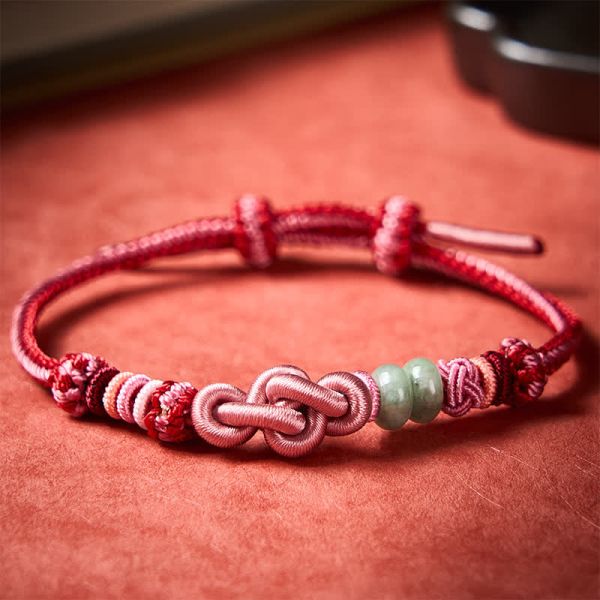 Buddha Stones Hand-Woven Jade Beads Luck Pink String BraceletAs low as $25.59 Regular Price $36.04
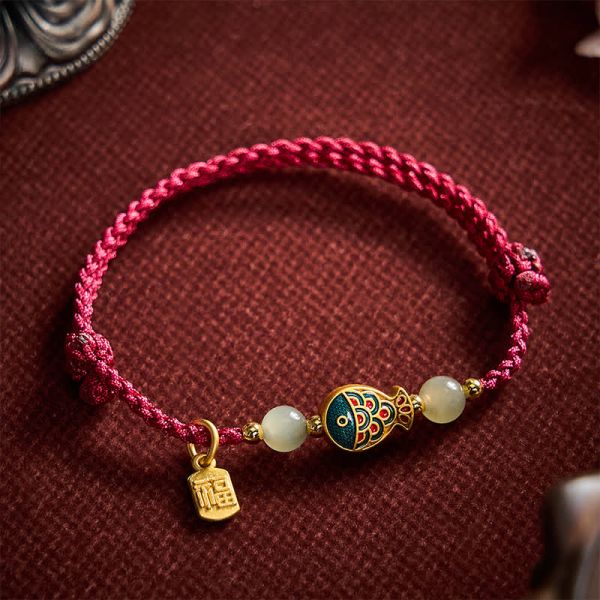 Buddha Stones Hand-Woven Koi Fish Fu Character Jade Beads Protection Rope BraceletAs low as $25.59 Regular Price $34.12
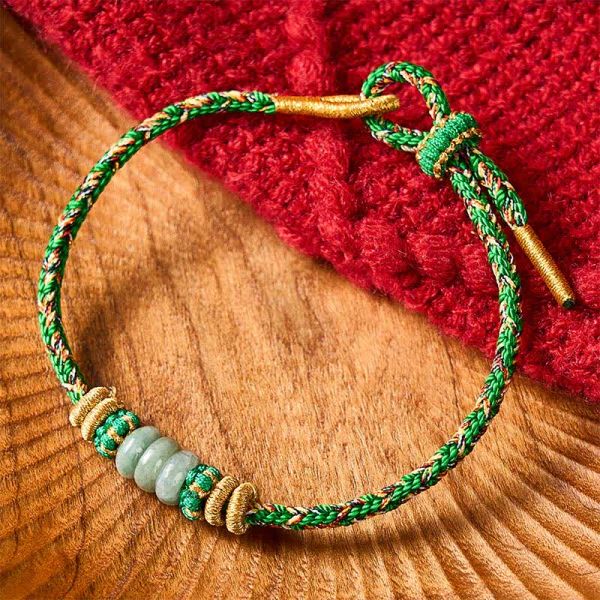 Buddha Stones Hand-Woven Luck Abacus Jade Beads String BraceletAs low as $25.59 Regular Price $34.58