Jade Symbolism: From Courtly Virtue to Woven Cord
Ancient Chinese nobles wore jade pendants at their belts during formal occasions. The stone belonged to a public language of rank, ceremony, and proper conduct. Jade symbolism grew around ideals of virtue, integrity, and lasting value; in popular traditions, it also came to express wishes for luck, wealth, and protection. These are cultural beliefs, and jade cannot guarantee those outcomes.
That older association with conduct gives the stone a meaning beyond good fortune. A valuable ornament could express something about the person wearing it: a standard to uphold, a relationship to honor, or respect for inherited customs. Following jade from ceremonial dress to a woven bracelet reveals how these meanings change with the object while retaining a connection to the past.
Jade symbolism at the workbench and festival table
Jade has long appeared in Chinese ornaments and ceremonial objects. In Confucian tradition, its qualities were compared with human virtues. The comparison connected a material people could see and handle with ideals that required daily practice. An ornament could therefore carry an ethical meaning alongside its beauty and value.
The craft itself helps explain this association with patient effort. Traditional jade working relies on abrasion: tools and abrasive materials gradually shape and polish the stone. A finished surface conceals much of that labor. The result may be a pendant, a vessel, an animal form, or a bead. Each form requires close attention to the material.
Design adds another layer. A plain form leaves the stone prominent, while a written character or familiar motif gives the object a more specific message. The material and the design should be read together. Jade does not make every image mean the same thing, and a familiar symbol can have different associations across families and settings.
At Lunar New Year, wishes become visible through household decorations, greetings, and gifts. The Fu character, often displayed on red paper, belongs to this seasonal vocabulary of good fortune. When it appears alongside jade in jewelry, the combination carries a related wish into a smaller, wearable form. This does not mean jade jewelry is required for the festival.
A gift can also mark an occasion without following a fixed ritual. The giver might choose jade for its association with integrity or lasting regard. A short explanation makes that choice clearer: the stone represents a quality the giver admires or a hope for the recipient. There is no need to present the gift as a prediction.
From ceremonial ornament to personal jewelry
Modern jade jewelry places those inherited meanings in ordinary settings. A cord bracelet can accompany everyday clothing; a pendant can be chosen for a particular neckline or occasion. The change in setting does not erase the history, but it gives the wearer more room to decide which part of that history matters.
You might value the connection with good conduct, enjoy the combination of stone and cord, or choose a design that expresses a family wish. These reasons can coexist. There is no requirement to adopt a belief about fortune in order to appreciate jade, and no single interpretation covers everyone who wears it.
At Buddha Stones, we separate symbolic language from the practical details that help you choose jewelry. A name can express a traditional hope; the materials, options, and measurements describe the item. Keeping those kinds of information distinct allows the cultural meaning to remain meaningful without turning it into a promise.
For an adjustable cord design, compare your wrist measurement with the dimensions provided for that particular bracelet. Adjustable does not mean unlimited. When choosing a gift, consider the recipient's preferred colors and interest in the motifs as well as fit. A clear explanation of the symbolism can accompany the gift without telling someone what they must believe.
Jade, cord, and four ways to carry a wish
These selections bring jade into designs with cord, characters, or named motifs. The words “Luck” and “Protection” in their full product names express traditional wishes only. They describe neither a promised result nor a function of the materials.
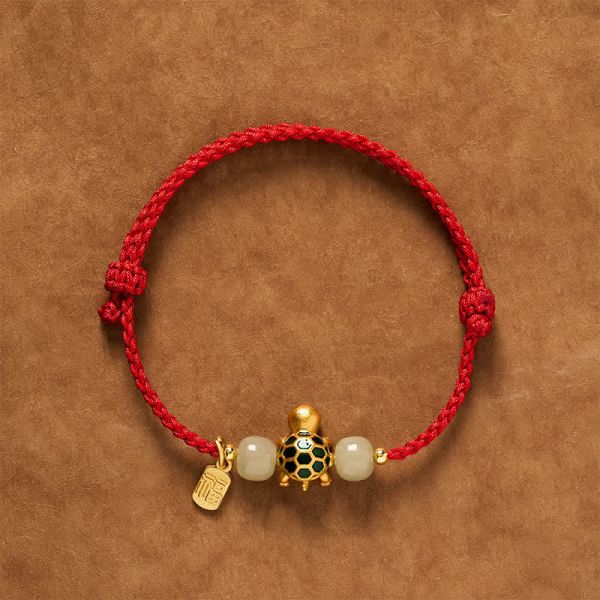
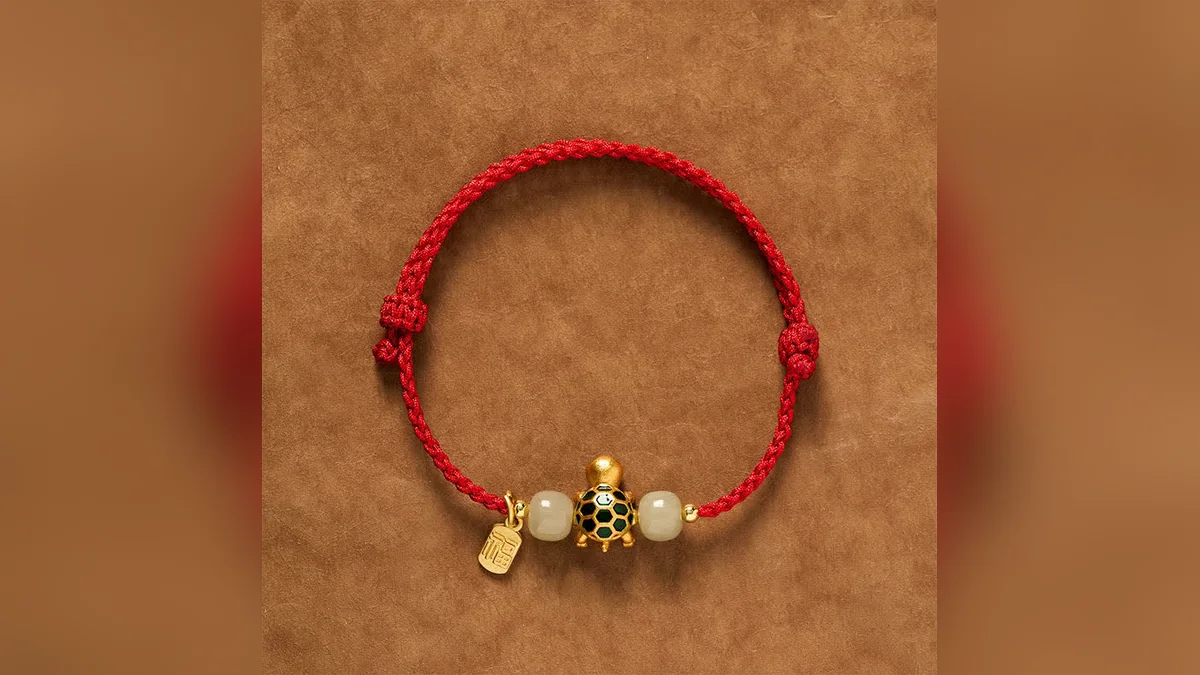
Our Copper Turtle Hetian Jade Fu Character Bracelet combines red string, Hetian jade, and copper alloy. It has an adjustable cord and comes in Green and Red options. Its wrist circumference specification is 5.5–7.1 in (14-18 cm). The turtle and Fu character named in the design place jade within a group of recognizable symbols, giving the ornament more than one point of cultural reference.
The Hand-Woven Jade Beads Pink String Bracelet has two options: Pink With Jade Beads and Pink Without Accessory. Choose the option carefully if jade is central to your selection. The specifications give string and jade as materials, an adjustable cord, and wrist dimensions of 5.9-7.1 in / 15-18cm. Its handcrafted cord colors may differ slightly between batches in tone, shade, and pattern distribution.
Our Hand-Woven Koi Fish Fu Character Jade Beads Bracelet comes in Dark Red and Red options. The materials are string, Hetian jade, copper alloy, and a copper plated gold bead. Its adjustable cord accommodates the specified wrist circumference of 5.9–8.3 in / 15–21 cm. Here, jade shares the design's vocabulary with the koi fish and Fu character identified in its name.
The Hand-Woven Abacus Jade Beads String Bracelet offers Green and Red options, with string and jade as its materials. The band is an adjustable cord, and the wrist dimensions are 5.9-7.5 in / 15-19cm. The abacus reference gives this selection a different theme. Its handcrafted cord colors can vary slightly between batches, including differences in shade and pattern distribution.
Our descriptions for these bracelets allow for slight differences in jade color, details, and overall appearance. For the pink design, remember that the accessory choice determines whether you are selecting the option with jade beads. A product name alone is not a substitute for checking the selected option.
FAQ: Reading the stone's meaning
What does jade traditionally represent?
In Chinese traditions, jade often represents virtue, integrity, and lasting value. Popular associations also include wishes for good fortune and protection. The meaning depends partly on the object's design and cultural setting.
Is jade symbolism always religious?
No. Jade has ceremonial, ethical, decorative, and personal associations. Its use in jewelry does not establish that an item belongs to a particular religious practice.
Does jade guarantee good fortune?
No. Luck and prosperity are traditional associations, not results a stone can ensure. A jade gift can express a sincere hope while leaving the future open.
Shop the story
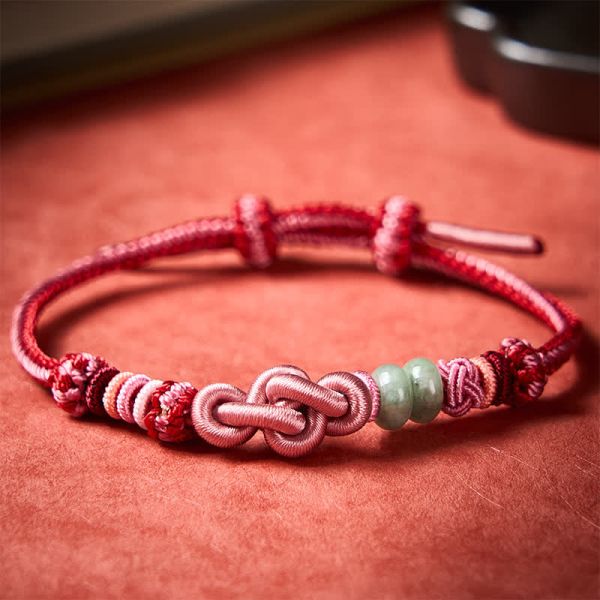 Buddha Stones Hand-Woven Jade Beads Luck Pink String BraceletAs low as $25.59 Regular Price $36.04
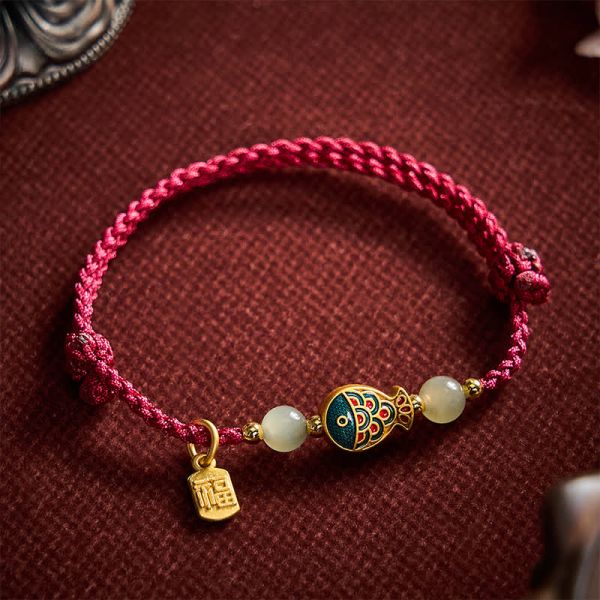 Buddha Stones Hand-Woven Koi Fish Fu Character Jade Beads Protection Rope BraceletAs low as $25.59 Regular Price $34.12
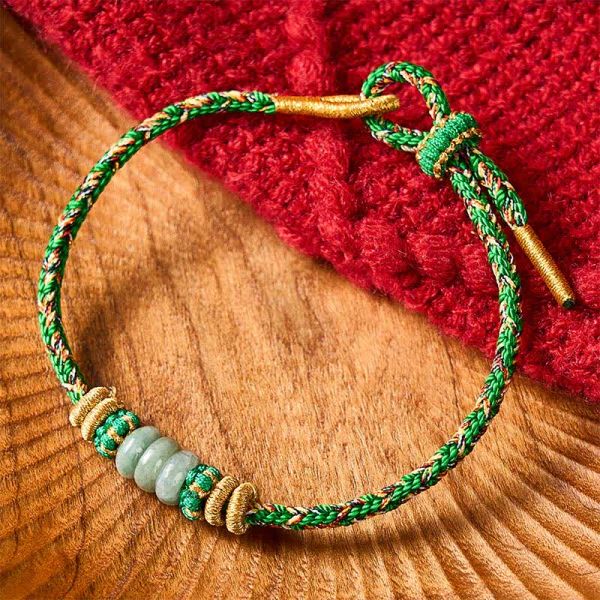 Buddha Stones Hand-Woven Luck Abacus Jade Beads String BraceletAs low as $25.59 Regular Price $34.58