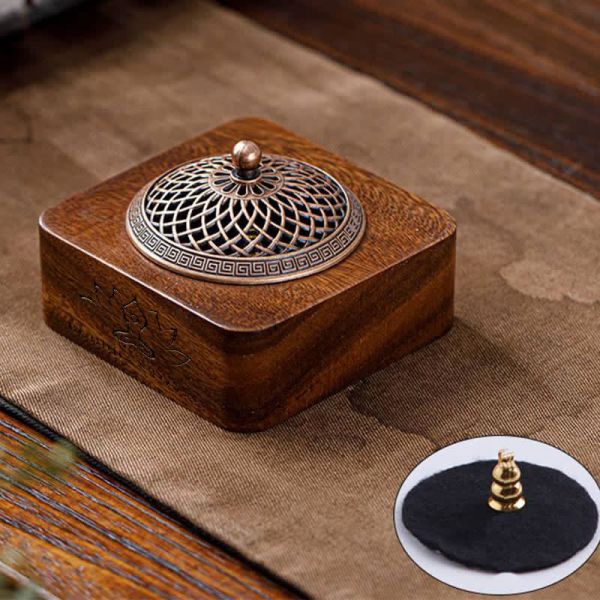
Incense Burner Materials: A Practical Care Manual
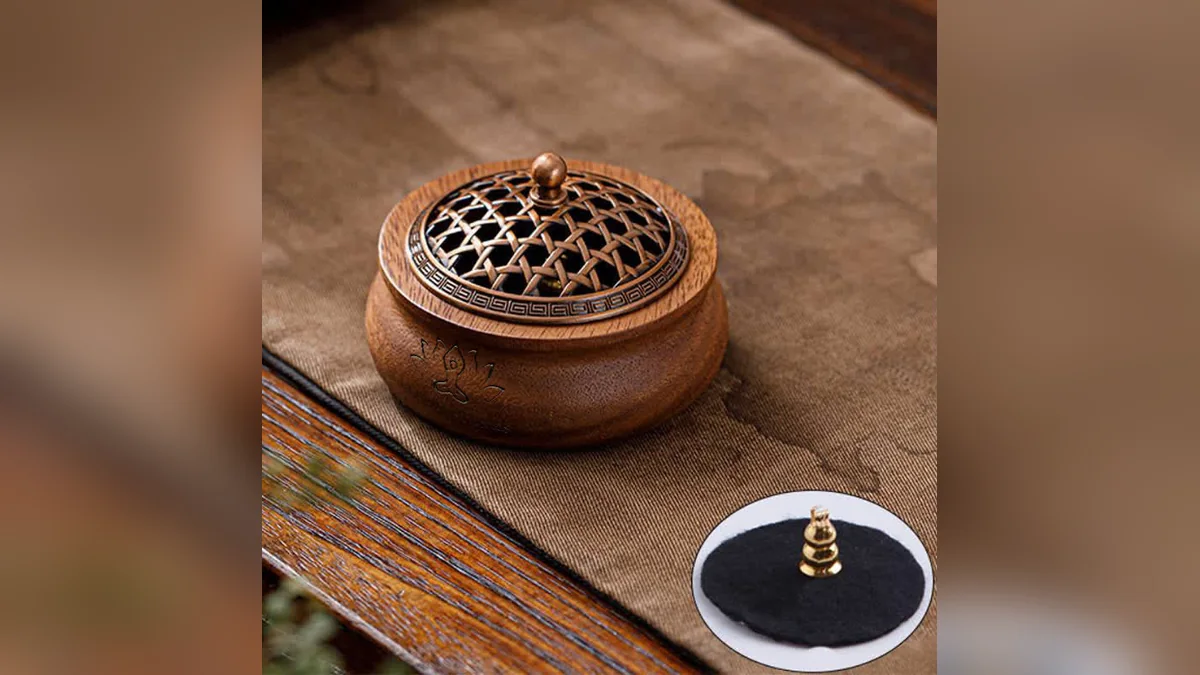
Ash often collects around the rim before a burner needs a thorough cleaning. Incense burner materials determine how you remove that ash, handle residue, and check for damage: wood needs limited moisture, iron needs prompt drying, and mixed materials need attention to their separate surfaces. In this manual, we explain how to prepare your tools, clean a cooled burner, and decide when a piece should leave active use.
Incense burner materials and the tools to care for them
Start with the material information supplied with your burner. A metal-colored surface does not identify a particular metal, and a dark coating does not tell you whether it tolerates water or polish. When the finish is unspecified, begin with dry cleaning.
- A soft brush for moving loose ash out of corners.
- Two lint-free cloths: one for wiping and one kept dry.
- A noncombustible container for fully cooled ash.
- A stable, heat-resistant surface for inspecting and using the burner.
- Water and mild dish soap only where the maker permits wet cleaning.
Keep cleaning tools separate from utensils used for food. Collect ash without blowing it into the room.
Match the method to the surface
Wood: Brush first, then wipe gently. Avoid soaking, which can swell wood or disturb joints and finishes. For a wood-and-metal piece, keep moisture away from seams.
Iron: Remove dry ash regularly and keep the surface dry. Rust deserves inspection before further use. Avoid abrasive pads, oils, and rust removers on an unknown coating.
Ceramic or glass: Check for cracks before cleaning. Let the piece cool completely before introducing water, and follow its care directions rather than assuming it is dishwasher-safe.
A step-by-step routine after the burner cools
- Wait until everything is out and cold. Keep the burner on its heat-resistant surface while it cools. Ash can hide a glowing fragment, so never judge readiness by the absence of smoke alone. Leave it undisturbed if there is any doubt.
- Inspect before emptying. Look at the base, rim, incense support, and visible joins. Note loose parts, fresh scorch marks, cracks, or a change in how the burner sits. A problem found here may mean stopping before the next use.
- Collect loose ash gently. Tip a cold burner carefully over your ash container, then brush the corners. Do not strike the rim against a bin. Leave fixed components in place unless the supplied instructions explain how to remove them.
- Wipe the exterior. Begin with a dry cloth. If damp wiping is permitted, use a barely damp cloth on the appropriate surface and follow with the dry one. Keep water out of wooden joints and areas you cannot dry afterward.
- Assess residue without forcing it. Do not dig at a stubborn deposit with a blade. If residue blocks an incense support or prevents a part from fitting properly, set the burner aside until you have suitable care instructions.
- Dry and recheck. Let damp-cleaned surfaces dry fully before reassembly or storage. Confirm that the burner rests steadily and its support holds the intended incense securely. Check without lighting anything.
Before the next use, arrange the holder so falling ash stays within the intended collection area. Keep burning tips and embers away from exposed wood. Compatibility with an incense shape does not mean every length or arrangement will fit safely. Do not improvise by balancing incense across the rim.
Use a clear area away from curtains, paper, and shelf edges. Provide ventilation, keep children and pets away, and remain present while incense burns. Check the surface underneath; a decorative tray is not automatically suitable for heat.
What not to do during cleaning or use
- Do not cool a hot burner under running water. Wait for it to cool before cleaning.
- Do not soak a mixed-material burner. Water can reach joints or remain trapped beyond a cloth's reach.
- Do not use a dishwasher, bleach, or metal polish without approval for that surface. A cleaner intended for one material may damage another component or finish.
- Do not add charcoal or another fuel based on appearance. A bowl-shaped cavity alone does not establish suitability.
- Do not burn incense to remove a deposit. Clean only after cooling, using an appropriate method.
A darkened area does not always require polishing. Remove loose debris, inspect the underlying surface, and stop if cleaning starts lifting a coating or roughening the wood.
When to replace a part or retire a piece
Color changes and surface stains call for inspection, not automatic replacement. The practical question is whether the burner remains stable and keeps burning material where it belongs.
Stop using a piece with a cracked base, a loose incense support, deep rust damage, or wood that is charred, splitting, or repeatedly scorching. A new wobble also needs attention. Do not fill a crack with household glue and return the piece to heat.
Replace a component only when a suitable replacement is available and its installation is supported by the maker's instructions. Otherwise, retire the burner from burning use. If you keep it as decor, remove incense and store it apart from active burners so its purpose is clear.
Our burners: material details to check before use
Our Peach Wood Dragon Phoenix Luck Round Bag Incense Burner combines peach wood and alloy. Its size is Approx. 10 cm × 10 cm × 4 cm (L × W × H) / 3.94 in × 3.94 in × 1.57 in (L × W × H). Options include Bowl-shaped, Jar-shaped, and Lotus Design.
The Peach Wood Dragon Phoenix Protection Square Incense Burners also use peach wood and alloy. Options include Dragon Phoenix, Green Woven Design, Lotus Design, and Woven Design. The package contains one incense burner; incense is not included.
Our Peach Wood Dragon Phoenix Strength Round Incense Burner uses peach wood and alloy and is compatible with stick, cone, and spiral incense. Incense is not included. Its handmade nature means slight variations in color, shape, and size may occur.
The Cast Iron Cauldron Prayer Altar has iron as its specified material. Some options include Small Pentagram, Medium Triple Moon Goddess, and Large Incense Burner. Check the selected option when comparing dimensions; the available sizes differ.
Luck and Protection in these product names express traditional wishes. We do not guarantee those outcomes.
Finish with a dry, stable burner
Keep your routine simple: cool completely, remove loose ash, inspect, and dry before putting the burner away. Understanding incense burner materials helps you choose an appropriate cleaning method. Before lighting incense again, check the support and the space around it. Stop using the piece whenever damage makes its stability or separation from burning material uncertain.
Shop the story
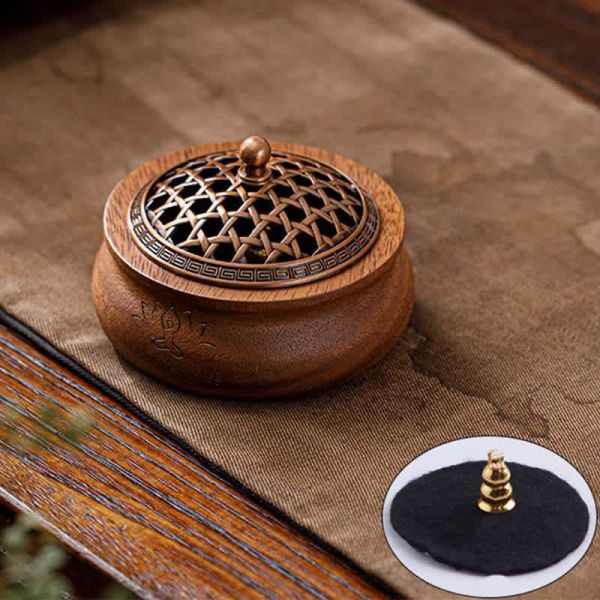 Buddha Stones Peach Wood Dragon Phoenix Luck Round Bag Incense BurnerAs low as $38.59 Regular Price $51.45
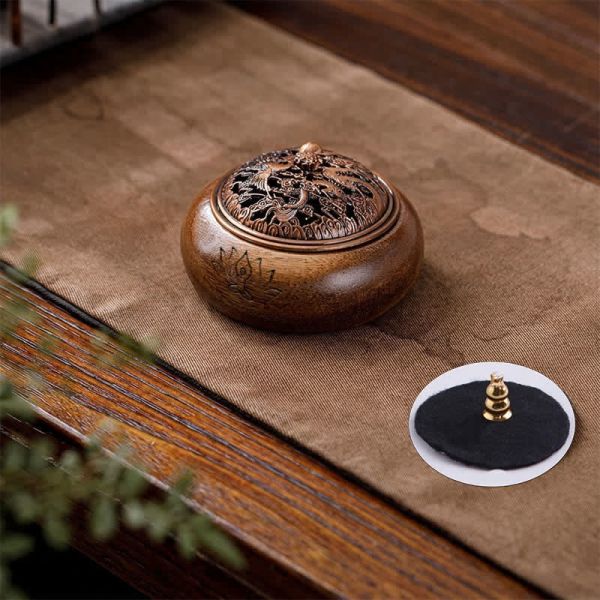 Buddha Stones Peach Wood Dragon Phoenix Strength Round Incense BurnerAs low as $37.59 Regular Price $51.49
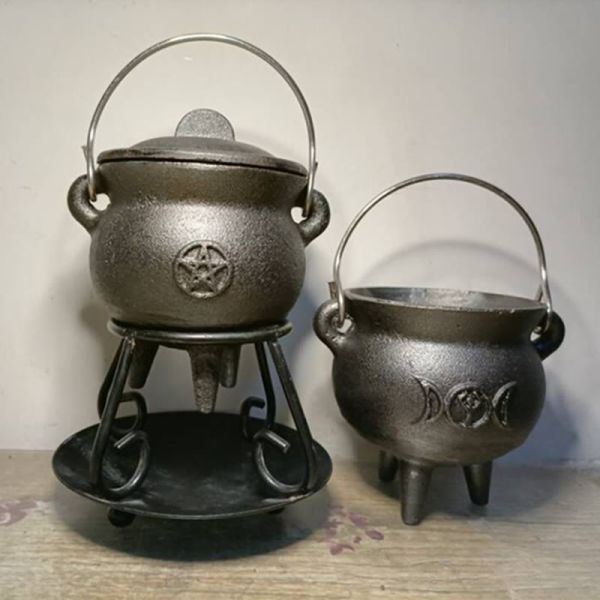 Buddha Stones Cast Iron Cauldron Prayer Altar Burning Holder Incense Sage Smudging Rituals Use ItemsAs low as $42.59 Regular Price $56.79