How to Wear Turtle Jewelry: Fit, Direction, and Style
A turtle bracelet starts with a comfortable fit. Learning how to wear turtle jewelry means choosing a suitable band, placing the turtle where it sits comfortably, and coordinating it with your sleeves and other accessories. You can use the steps below for a beaded bracelet or an adjustable cord design. Begin with the bracelet on its own so you can check its position before adding a watch or another piece of jewelry. We recommend making fit and everyday movement your first checks.
1. Start with fit when deciding how to wear turtle jewelry
Check the bracelet's circumference information before choosing a design. An elastic string and an adjustable cord work differently: elastic stretches to pass over your hand, while a cord design lets you change its fit within the specified limits. Do not assume that stretching an elastic bracelet makes it suitable for a larger wrist.
Once the bracelet is on, open and close your hand, bend your wrist, and turn your palm upward. The band should sit without pinching, and the turtle should not press into your wrist when it bends. If the bracelet slides far down onto your hand or leaves the motif hanging against your palm, reconsider the fit. Use the product measurements as your starting point, then check how the design sits during ordinary movement.
2. Choose your wrist around the tasks you do
Try the wrist that gives the bracelet room during writing, typing, and handling clothing. Your less active hand may be convenient, but there is no need to make that a fixed rule. A watch, a close cuff, or the way you hold a pen can make the other wrist more practical. Assess the arrangement with your usual accessories in place.
Put an elastic bracelet on gently, easing it over your hand without pulling hard on the turtle or a single bead. For an adjustable cord bracelet, loosen the band enough to pass over your hand, then adjust it gradually. Follow any supplied fastening instructions rather than forcing a knot or pulling an unfamiliar closure. Stop adjusting when the bracelet sits securely without squeezing.
3. Set the turtle's direction for a clear view
Place the turtle on top of your wrist first, where its shape is easy to see. Turn your hand naturally and check whether the motif catches beneath your wrist or meets the edge of a sleeve. Shift the bracelet slightly if the turtle rests directly at the wrist crease.
You can point the turtle's head toward your fingers or toward your forearm according to how you want to view the design. For ordinary styling, treat this as a visual choice. If you follow a particular cultural or religious practice, use guidance specific to that practice. A direction chosen for appearance should not be presented as a promise of luck or another result.
4. Build the outfit around the visible motif
Start with one bracelet and check how much of the turtle remains visible below your sleeve. A plain cuff gives a detailed motif space; a patterned sleeve may work better when the bracelet sits clear of its edge. Avoid pushing a bracelet beneath a tight cuff just to keep it in one place.
If you want to add another accessory, introduce one at a time. A watch can go on the opposite wrist if its case repeatedly meets the turtle. With bracelets on the same wrist, leave enough room for movement and check for repeated rubbing. Coordinate colors with one part of your outfit, such as a shirt or scarf, instead of trying to match every accessory.
5. Make removal part of your wearing routine
Take the bracelet off before activities that could catch the cord or strike the turtle against a hard surface. Remove jewelry before washing, swimming, applying lotion, or doing household cleaning. These habits limit contact with water, products, and rough handling without requiring a special wearing ritual.
Support the bracelet as you remove it. Loosen an adjustable cord first, and ease an elastic design over your hand without a sharp tug. Set it in a jewelry tray or pouch where the turtle will not be caught under other objects. Before wearing it again, look for a fraying cord, stretched string, or loose component.
Mistakes to avoid with a turtle bracelet
- Choosing appearance before fit. A color you like cannot compensate for a band that pinches or a motif that interferes with wrist movement.
- Forcing the turtle to stay centered. Some movement is normal for wrist jewelry. Do not tighten a cord excessively to hold the motif still.
- Overcrowding the wrist. Repeated contact between a turtle motif, watch case, and neighboring bracelets can make the arrangement impractical.
- Assuming one direction is compulsory. Separate your styling preference from instructions belonging to a specific tradition.
- Reading a product name as a promise. Words such as Luck express traditional wishes in jewelry names. There is no guarantee that wearing a bracelet will produce the wished-for result.
Four turtle bracelets: compare the details before choosing
Our options below include elastic string and adjustable cord designs. Compare the circumference information for the particular bracelet you are considering; the cord designs have different measurements. Keep the material names distinct, too: one specifies Hetian Jade, while another specifies Jade.
Blue crackle agate with premium elastic string
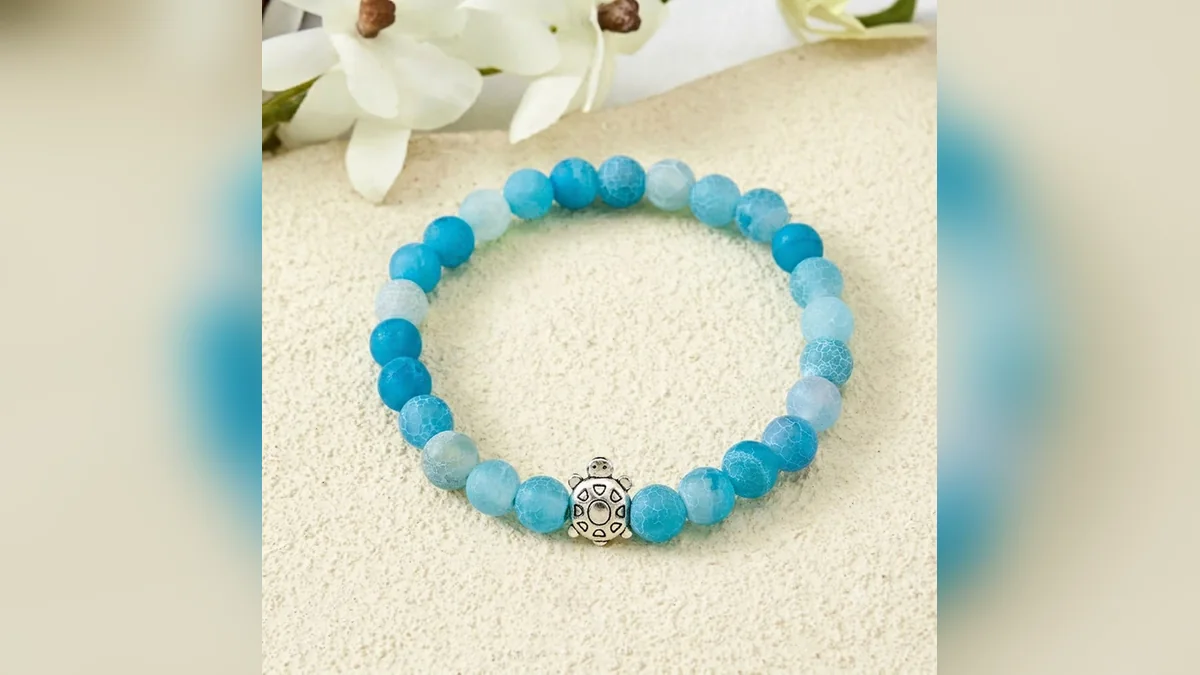
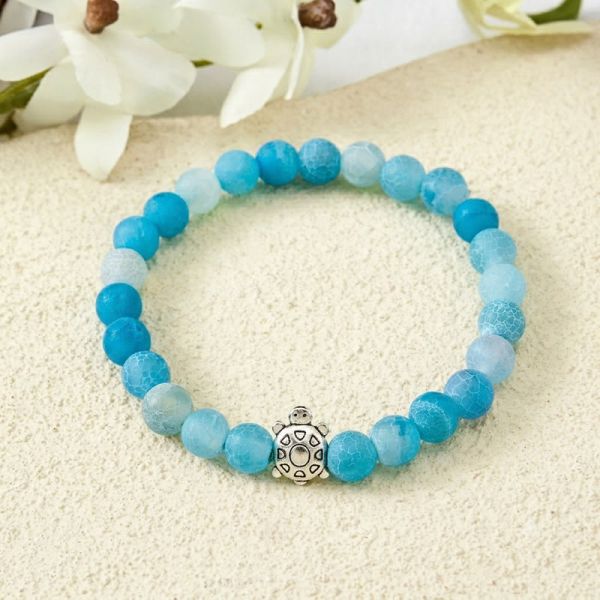
The Buddha Stones Blue Crackle Agate Turtle Beaded Bracelet combines Blue Crackle Agate and Copper Alloy. It uses Premium Elastic String and 8 mm beads. Its wrist circumference specification is Approx. 5.9–6.3 in (15–16 cm). Color, details, and overall appearance may vary slightly because of the natural materials. Use this size information when deciding whether the elastic design suits your wrist.
Green agate and green aventurine beads
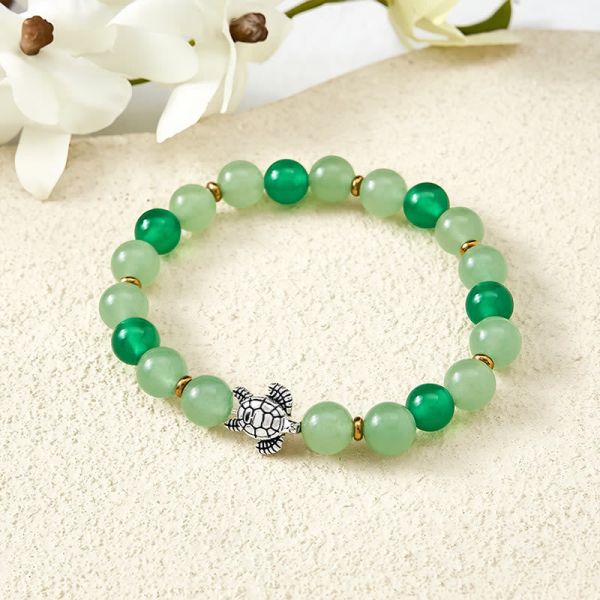
The Buddha Stones Natural Green Agate Green Aventurine Turtle Design Beaded Bracelet uses premium elastic string. Its materials are Green Agate, Green Aventurine, and Copper Alloy, with 8mm Green Agate and 8mm Green Aventurine beads. The wrist circumference is 5.9–6.3 in (15–16 cm). Natural materials may produce slight differences in color, details, and overall appearance.
Hetian jade with an adjustable cord
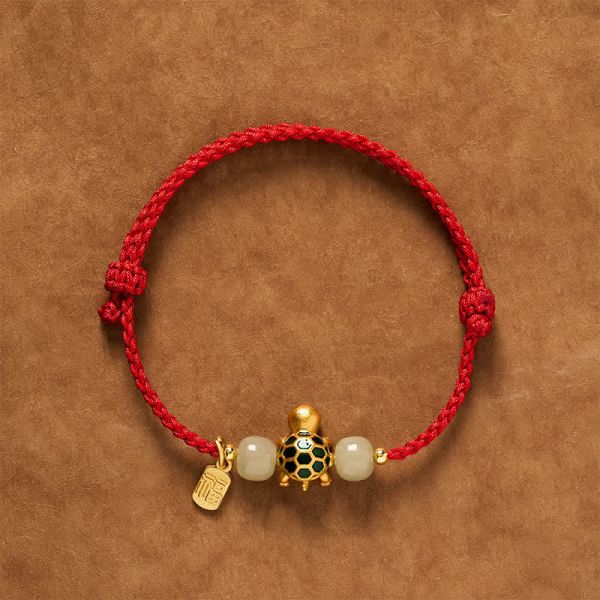
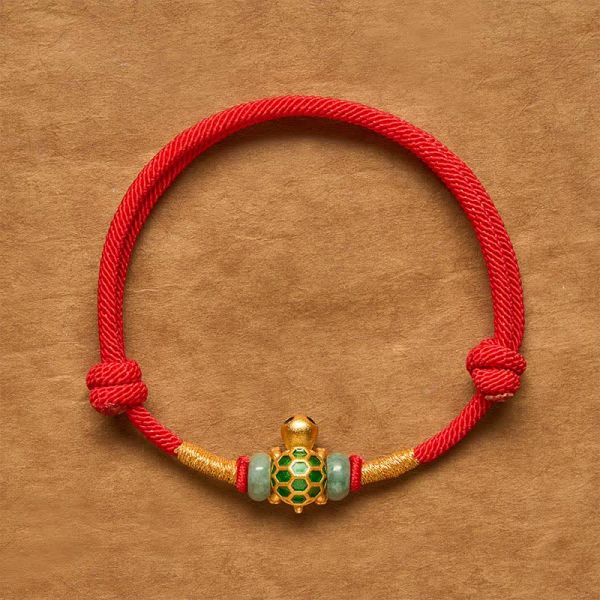
The Buddha Stones Copper Turtle Hetian Jade Fu Character Luck Red String Bracelet has an Adjustable Cord and specifies Red String, Hetian Jade, and Copper Alloy. Its wrist circumference is 5.5–7.1 in (14-18 cm). Green and Red options are available. Natural jade may vary slightly in color, details, and overall appearance. The word Luck in the name refers to a traditional wish.
Jade with a different cord size specification
The Buddha Stones Copper Turtle Jade Fu Character Luck Red String Bracelet uses an Adjustable Cord, with a wrist circumference of 6.3–7.1 in (16-18 cm). Its materials are Red String, Jade, and Copper Alloy. Natural jade can show slight variations in color, details, and overall appearance. Check this bracelet's measurements independently of the Hetian jade option.
Finish by checking your wrist with your hand relaxed and your usual sleeve in place. Keep the turtle visible if that is your preference, leave room for movement, and remove the bracelet gently. A suitable fit and a deliberate arrangement give you a clear basis for wearing the design.
Shop the story
 Buddha Stones Blue Crackle Agate Turtle Calm Beaded BraceletSpecial Price $25.59 Regular Price $34.12
 Buddha Stones Natural Green Agate Green Aventurine Turtle Design Success Beaded BraceletSpecial Price $25.59 Regular Price $35.54
 Buddha Stones Copper Turtle Jade Fu Character Luck Red String BraceletSpecial Price $25.59 Regular Price $35.05