
How to Wear Turquoise: A Guide to Color and Fit
A bracelet can match your shirt and still catch beneath a fitted cuff. Color is only one part of choosing how to wear turquoise: give it a clear place in your outfit, select a bracelet that suits your wrist and sleeves, and check its materials before deciding how to care for it. We recommend making those decisions in that order. This guide helps you choose between a single accent and a small stack, compare bead sizes, and read fit details before buying.
Start with these questions
- What should draw attention? Choose turquoise as your main jewelry accent, or let it sit alongside another focal piece.
- What colors do you already wear? Begin with familiar shirts, jackets, and shoes so the bracelet has a clear place in your wardrobe.
- Will your sleeves cover it? Consider cuff openings and the space available for beads.
- Which closure suits you? Compare an adjustable cord with an elastic string construction.
- What does the material description say? Check for synthetic turquoise, other beads, and metal components before choosing a care routine.
How to wear turquoise with your everyday clothes
For an easy starting point, use a plain white, cream, gray, or navy top. A simple background gives blue or blue-green jewelry a clear outline. Denim also offers a familiar pairing. Choose a sleeve length that leaves the bracelet visible without requiring constant adjustment.
If your outfit already includes a strong print, look for one color you can repeat in your jewelry. A small turquoise accent can connect with a blue detail in a scarf or shirt. Alternatively, keep the clothing pattern separate and limit the rest of your jewelry to a simple metal finish.
Decide how much contrast you want. Pale clothing can make dark companion beads more noticeable; dark clothing can emphasize lighter beads. White turquoise options offer a different styling direction from the blue-green color often associated with the word turquoise, so inspect the selected option carefully.
Begin with one bracelet. To build a stack, add one piece at a time and check whether the bracelets crowd your cuff or knock against your watch. Leave enough space for the pieces to move without continually rubbing together.
Read the materials before choosing a look
Use the product name to find a design, then use its specifications to understand its components. A mixed bracelet may include turquoise alongside other stones, cord, or metal. Those details affect both its appearance and the care it needs.
Some options below explicitly identify their turquoise as synthetic. Keep that description attached to your choice, particularly when selecting a gift. A title containing the word natural should never replace reading the full material information for a mixed piece.
Our white turquoise bracelet has its own material description. Avoid assuming that every product using the turquoise name has the same composition or blue-green appearance. For styling, start with the selected option’s photo and description, then decide which clothes you want to pair with it.
Choose bead size and fit around your sleeves
Bead diameter changes how much space a bracelet occupies beneath a cuff. When comparing 8mm and 10mm beads, consider the opening of your usual sleeves as well as the appearance you prefer. Larger beads create a more prominent outline; smaller beads can be easier to combine with other jewelry.
Before selecting a size, compare your wrist measurement with the product’s published circumference information. Check the units carefully. Avoid treating the stretch of elastic as extra sizing allowance: the bracelet should suit your wrist without relying on continuous tension.
An adjustable cord provides a different way to set the fit. Check that the published adjustment limits cover your measurement, then consider where loose cord ends will sit beside sleeves or a watch.
Once a bracelet is available to fit, bend your wrist and pull your usual cuff over it. Check for catching, excessive sliding, or pressure from tightly packed beads. For a stack, assess the combined space the bracelets occupy.
Plan care around the complete bracelet
Put jewelry on after lotions, perfume, and other personal care products have dried. Remove it before bathing, swimming, washing dishes, or using household cleaners. This gives you a straightforward routine for jewelry combining beads, string, and metal components.
For routine surface care, begin with a dry, soft cloth and wipe gently. Avoid soaking mixed-material bracelets or applying a jewelry cleaner without checking its suitability for every component. Do not assume a method intended for metal jewelry will suit turquoise or cord.
Keep bracelets in separate compartments or individual pouches so beads and fittings do not rub together. Protect them from prolonged direct sunlight and heat. Before wearing an elastic or cord bracelet, inspect the string and fastening areas for visible wear. Pull gently when putting it on, and avoid stretching it farther than necessary.
Choose a bracelet by the decision that matters to you
The following designs offer different combinations of materials, bead sizes, and band types. Words such as Luck and Protection in product names express traditional wishes. They do not guarantee luck, protection, or other outcomes.
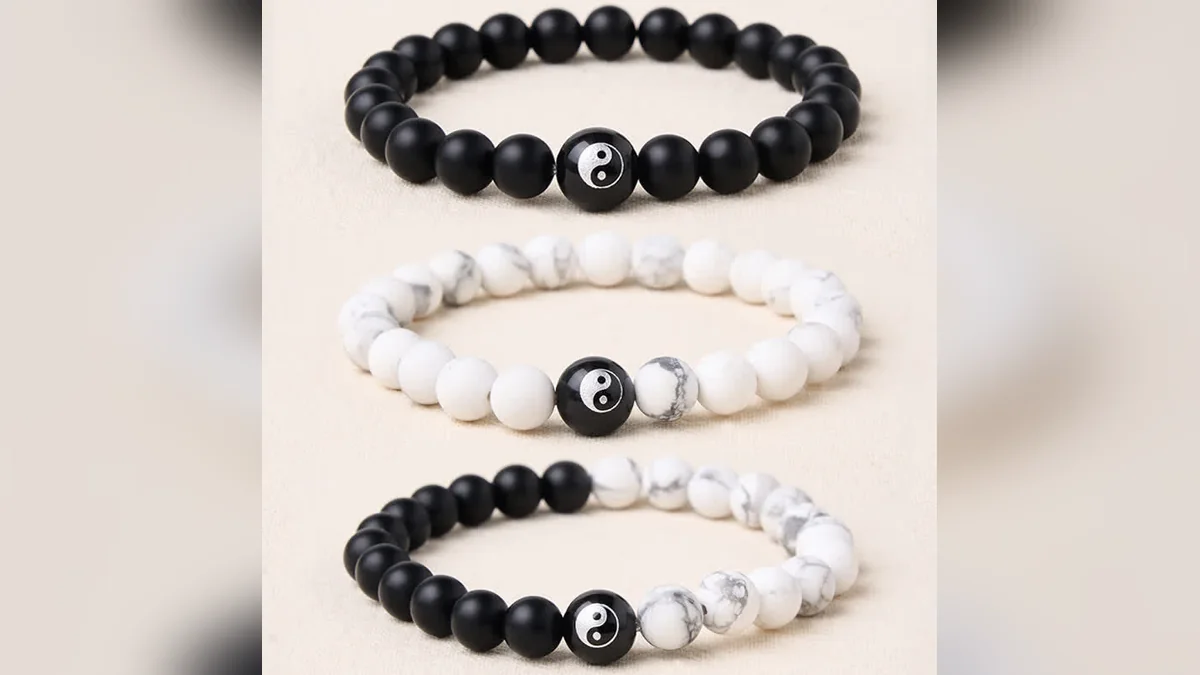
For black and white options: Our Black Onyx White Turquoise Yin Yang Bracelet offers Black Onyx, Black Onyx And White Turquoise, and White Turquoise options. Its specifications include Black Onyx, White Turquoise, and Black Obsidian, premium elastic string, and 8mm and 10mm bead sizes. The published wrist circumference is 5.9–6.3 in (15–16 cm). Check your chosen option before ordering; natural materials may vary slightly in color, details, and appearance.
For adjustable cord: Our Hand-Woven Turquoise Turtle Fu Character Jade Bracelet comes in Dark Red and Red options. Its adjustable cord accommodates a wrist circumference of 5.9–8.3 in / 15–21 cm. Materials include string, Hetian Jade, synthetic turquoise, copper alloy, and a copper plated gold bead. Choose it when cord adjustment is a priority, and allow for slight variations in the jade’s color, details, and appearance.
For an 8mm mixed-bead design: Our Picture Jasper Turquoise Tiger Eye Bracelet combines Picture Jasper, synthetic turquoise, and Tiger Eye. It uses premium elastic string, with 8mm beads and a wrist circumference of 15-17cm. Compare that sizing with your measurement before choosing it for a single bracelet or a stack.
For a Tiger Eye and Cyan Jade combination: Our Tiger Eye Cyan Jade Turquoise Bracelet contains Tiger Eye, Cyan Jade, and Turquoise. Its specifications give 8mm beads, premium elastic string, and a wrist circumference of 5.9–6.3 in (15–16 cm). Natural materials may show slight differences in color, details, and overall appearance.
FAQ
Which wrist should I choose?
For everyday styling, choose the wrist that works with your watch, sleeves, and usual activities. If a watch and bracelet repeatedly touch, move the bracelet to the other wrist. Any personal or traditional preference can also guide your choice.
Can I pair turquoise with gold or silver jewelry?
Either color can work. Start by repeating the metal color already present in your watch, rings, or earrings. If you prefer mixed metals, keep the number of accompanying pieces small while deciding how much visual detail you want.
Can I wear a turquoise bracelet every day?
You can plan it into everyday outfits while removing it for water, cleaners, and activities that could catch or strike the beads. Choose a fit that works with your regular sleeves, and inspect the cord or elastic periodically. Daily styling still calls for regular care.
Shop the story
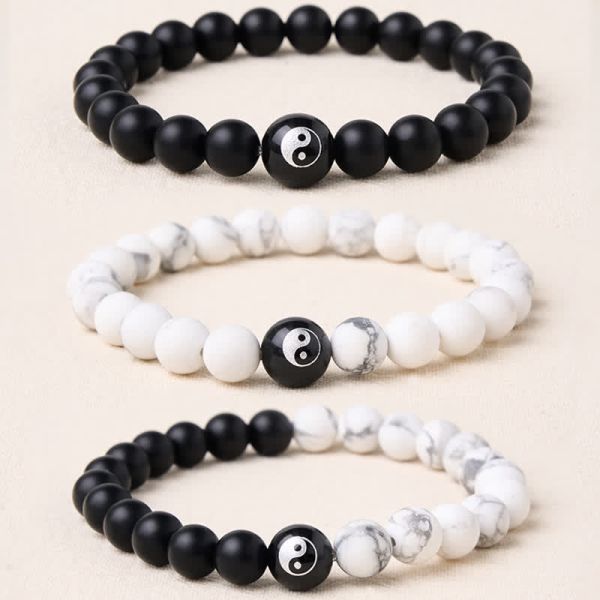 Buddha Stones Black Onyx White Turquoise Yin Yang Black Obsidian Round Bead Balance BraceletAs low as $25.59 Regular Price $35.05
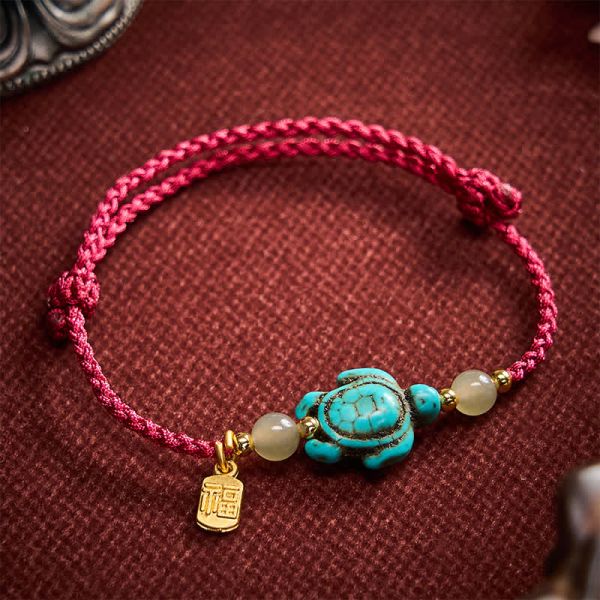 Buddha Stones Hand-Woven Turquoise Turtle Fu Character Jade Beads Luck Rope BraceletAs low as $25.59 Regular Price $34.58
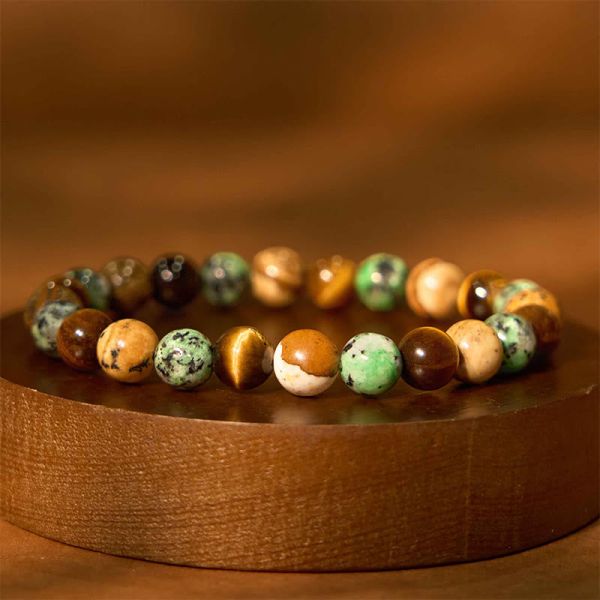 Buddha Stones Natural Picture Jasper Turquoise Tiger Eye Mix And Match Beads Protection BraceletSpecial Price $25.59 Regular Price $36.04
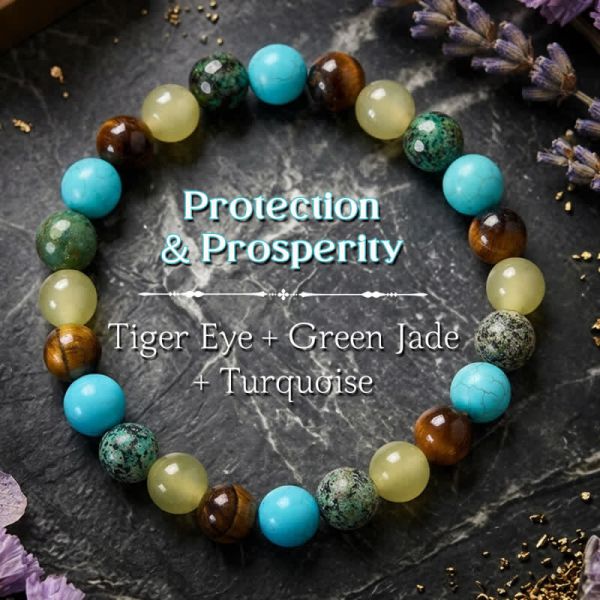 Buddha Stones Natural Tiger Eye Cyan Jade Turquoise Beaded Protection BraceletSpecial Price $25.59 Regular Price $36.04