How to Play a Steel Tongue Drum: A Beginner's Guide
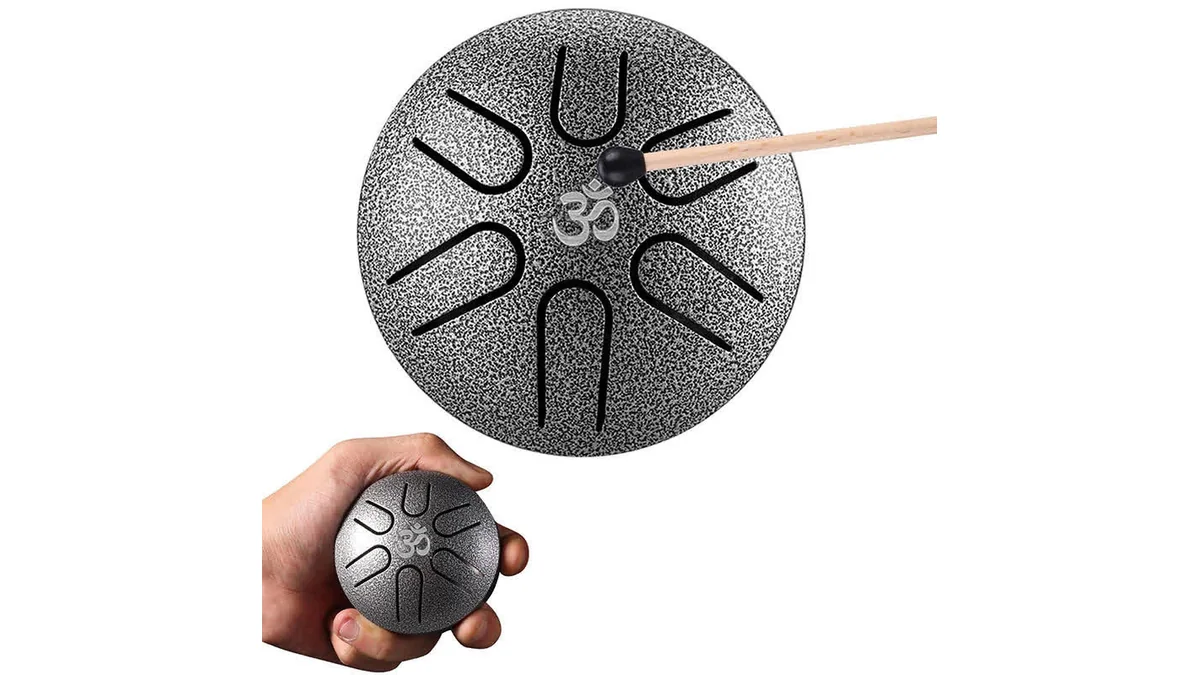
A new steel tongue drum rarely comes with instructions stamped into the metal, so the moment it is out of the bag, most beginners pause before the first strike, unsure which of the cut tongues to touch and how hard to hit it. Learning how to play a steel tongue drum is less about music theory and more about getting comfortable with where to strike, how to let the note ring, and how to follow the simple numbered guide that ships with the drum. This guide walks through that first session, from unpacking to your first slow pattern.
What a Steel Tongue Drum Actually Is
At its simplest, a steel tongue drum is a sealed steel body with a set of tongue-shaped slots cut into the top. Each tongue is tuned to one note, so striking a tongue near its center or tip produces that note on its own — there is no fretting, no fingering pattern to memorize, and no wrong key to hit. The body acts as a resonating chamber, so the sound carries and sustains for a few seconds after each strike. That is really the whole instrument: a handful of notes laid out around a circle, each one ready whenever you touch it.
Unpacking: What Comes in the Box
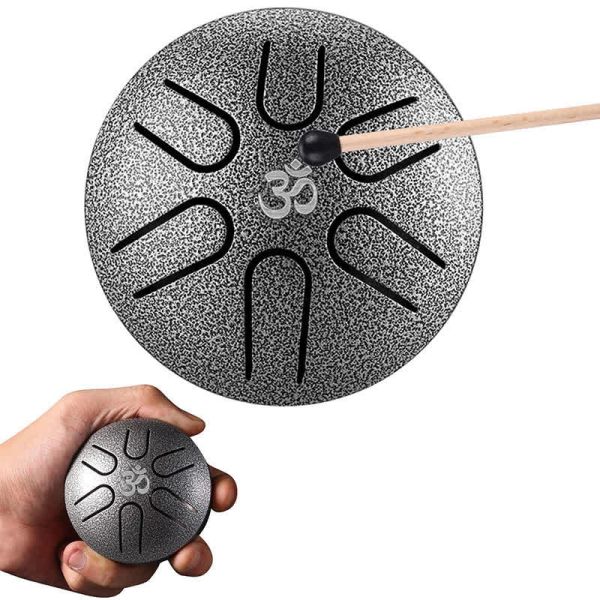
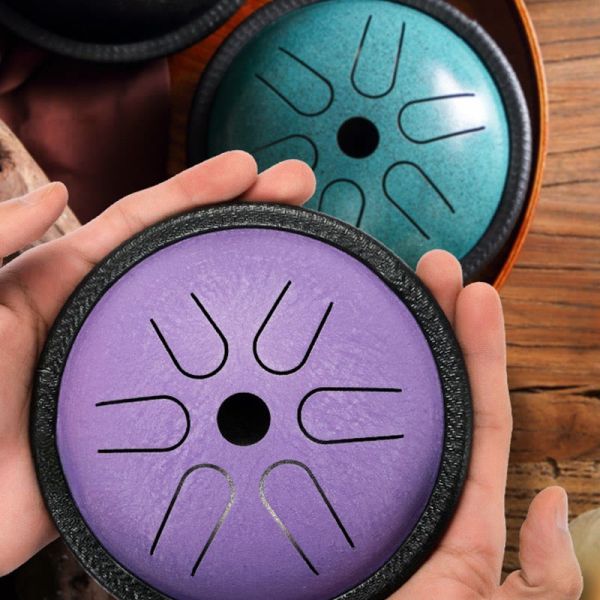
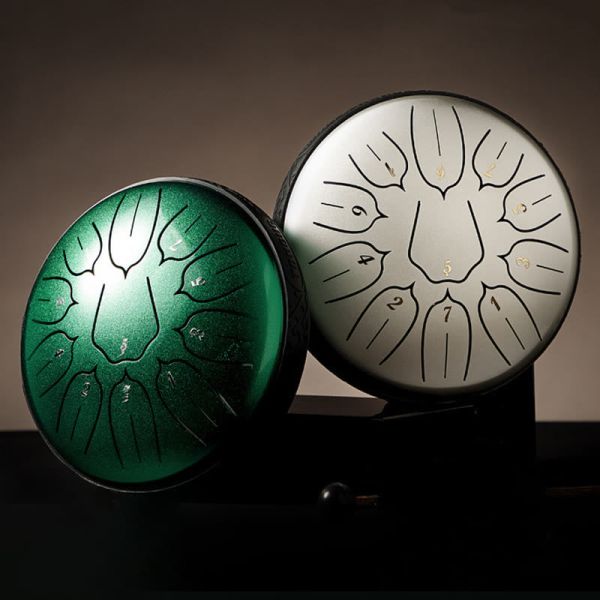
What ships alongside the drum itself varies by model, so it is worth laying everything out before you sit down to play. A compact drum like the 3-inch mini drum includes a music book, a scale sticker, and a single stick. Larger kits add more: the 5.5-inch, 6-note drum comes with a manual, a scale sticker, two sticks, a carrying bag, and a pair of finger picks, while the 6-inch lotus drum adds a small tray and four finger picks to that same list. The 12-inch, 13-note drum is packaged with two sticks, a bag, a piece of hand-woven rattan, a music score, a scale sticker, and two finger picks. Check what is listed for your specific drum rather than assuming every kit matches — the table further down lists each one side by side.
How to Play a Steel Tongue Drum: Fingers or Mallets
You can play with the included sticks, with finger picks, or with bare fingers — each gives a different tone. Sticks and mallets bring out a brighter, more resonant sound and are easier to control at first because the tip is small and precise. Fingers and finger picks produce a softer, rounder tone and let you feel the tongue’s response directly, which some players prefer once they know the layout.
Whichever you use, the technique stays the same. Strike near the tip or center of a tongue, not the base where it joins the body, and lift away immediately after contact. A strike that lingers on the metal muffles the note before it has a chance to ring. Light, quick taps work better than hard hits — the drum is sensitive, and a firm tap at the right spot sounds louder and clearer than a heavy one that presses down.
Reading the Scale Sticker and Score
Every drum ships with a scale sticker that labels each tongue with a number, matching the numbered notation in the included music book or score. You do not need to read standard sheet music to use it: find the number on the drum, find the same number in the score, and play them in the order they are written. Start by picking out one line of a simple piece at a slow pace before trying to keep time with it.
Your First Exercise
Before following any score, spend a few minutes just finding the notes:
- Play every tongue once, moving from the lowest note to the highest, letting each one ring out before striking the next.
- Reverse the order, moving from the highest note back down to the lowest.
- Choose two neighboring tongues and alternate between them slowly, keeping an even beat.
- Open the scale sticker or score and play through the first few numbered notes only, repeating them until the movement feels familiar.
This is enough for one sitting. The point is not to complete a song but to build a sense of where each note lives without looking down every time you strike.
Lap, Table, or Tray
Smaller drums rest comfortably on the lap, held steady with one hand while the other strikes, which works well for the 3-inch mini. Larger drums are easier to manage set on a table, a cushion, or the tray or rattan piece that ships with some kits, since reaching across a drum balanced on your knees gets awkward once the diameter grows. A steel tongue drum is commonly played seated quietly during meditation or yoga practice, set within easy reach on a low table or tray so both hands stay free to move across the tongues without holding the body of the drum in place. If you want to pair it with other sound tools, our sound healing collection has other instruments that are played the same seated way.
Choosing a Size by Notes and Diameter
Drum size and note count go together: more tongues generally means a larger body to fit them. A smaller drum with fewer notes is simpler to learn on and easier to carry, while a larger drum with more notes gives you more range to build out a tune once you are comfortable finding notes by feel.
| Drum | Notes | Size | In the box | Price* |
|---|---|---|---|---|
| 3-inch mini drum | 6 | 3 in (9.5 x 4 cm) | Music book, scale sticker, drum stick | $39.59 |
| 5.5-inch drum | 6 | 5.5 in (14.5 x 7 cm) | Manual, scale sticker, 2 drum sticks, bag, 2 finger picks | $97.59 |
| 6-inch lotus drum | 11 | 6 in (14.5 x 7 cm) | Manual, scale sticker, 2 drum sticks, tray, bag, 4 finger picks | $119.59 |
| 12-inch drum | 13 | 12 in (30 cm) | 2 drum sticks, bag, hand-woven rattan, music score, scale sticker, 2 finger picks | $395.59 |
Prices shown are as of November 1, 2026 and may change.
If you are deciding between sizes, our tongue drum selection lists the range together, which makes it easier to compare note count and size before you pick one.
Once the basic strike feels natural, practicing for a few minutes a day is enough to keep the layout familiar. There is no set routine to follow — running through the low-to-high pattern, then picking out a short line from the score, is enough to keep the notes under your fingers. Over time, the hesitation you felt taking the drum out of the bag for the first time gives way to knowing where each tongue sits without looking down, which is really the only milestone that matters with this instrument. If you want to build a short seated practice around it, our meditation page has other instruments and objects that pair well with a slow, steady drum session.
Shop the story
 Mini Steel Tongue Drum 3 Inch Sound Healing Drum KitAs low as $39.59 Regular Price $52.79
 Buddha Stones Steel Tongue Drum Sound Healing Meditation Yoga Drum Kit 6 Note 5.5 InchAs low as $97.59 Regular Price $130.12
 Buddha Stones Steel Tongue Drum Sound Healing Meditation Yoga Lotus Drum Kit 11 Note 6 InchAs low as $119.59 Regular Price $159.45