How to Clean Turtle Jewelry: A Care Decision Guide
The fastening matters as much as the turtle motif when you compare bracelets: elastic string and adjustable cord need gentle handling. If you are wondering how to clean turtle jewelry, start with a dry, soft cloth, then use a barely damp wipe only where needed and dry promptly. Here, “turtle” refers to a jewelry motif. We explain how to choose a cleaning method for mixed materials, check bracelet fit, and recognize when further cleaning could cause damage.
Start with these questions
- What materials are identified? Check the stone, metal, and string or cord before choosing a cleaner.
- What needs removing? Loose dust calls for less intervention than residue caught beside a bead or turtle detail.
- Is anything loose or worn? Examine the string, knots, and metal connections before applying pressure.
- Does the bracelet fit your wrist? Compare your measurement with the specific product dimensions instead of judging by bead size.
- Do you need elastic string or adjustable cord? Choose the fastening you can handle gently when putting the bracelet on and taking it off.
Let the mixed materials set the method
A stone bead does not determine the cleaning method for the whole bracelet. Metal details, string, and knots also need consideration. A treatment suitable for an unmounted stone may be unsuitable for an assembled piece of jewelry. When finishes or stone treatments are unspecified, keep your method conservative.
For agate, aventurine, or jade combined with copper alloy, begin with surface wiping. Avoid abrasive powders, toothpaste, and rough cloths. Do not apply copper polish to an assembled bracelet unless care instructions specifically permit it; it may contact neighboring materials and leave residue around connections.
Keep elastic string and adjustable cord out of soaking water. A bowl of water makes it difficult to control which parts become wet, and moisture can remain between components. Steam and ultrasonic equipment are also poor default choices when you lack instructions covering the complete bracelet.
Match the fastening and measurements to your wrist
Use a flexible measuring tape around the place you intend to wear the bracelet. Read it without pulling it tightly into your skin. Compare that measurement with the product information, keeping inches and centimeters consistent. Bead diameter describes the beads; it does not replace a wrist measurement.
Elastic string stretches for putting a bracelet on, but that does not make a smaller size suitable for any wrist. Avoid choosing a size that requires constant tension. With adjustable cord, check that your measurement falls within the published limits and leave the adjustment mechanism intact.
If your measurement falls outside a product’s dimensions, choose another size or design. Do not plan to compensate by stretching the string repeatedly or undoing knots. For gifts, ask for the recipient’s wrist measurement before selecting a fastening.
How to clean turtle jewelry without soaking it
Use this sequence for routine surface care. Stop if the bracelet has a loose component, damaged string, or a surface that flakes or transfers color. Those conditions need assessment before further cleaning.
- Prepare a clear work area. Lay down a clean towel so beads and metal details have a cushioned surface. Work away from an open sink drain.
- Remove loose dust. Support the bracelet in your hand or on the towel. Wipe exposed surfaces gently with a clean, dry, lint-free cloth. Do not stretch the string to reach between beads.
- Address remaining marks locally. Lightly dampen a fresh part of the cloth with plain lukewarm water and wring it out thoroughly. Wipe only the marked surface, avoiding knots and the string path as much as possible.
- Dry as you go. Follow the damp cloth with a dry one. Blot around the turtle detail and bead edges without pulling or twisting components.
- Allow remaining moisture to evaporate. Leave the bracelet on a dry towel at room temperature before storing it. Avoid radiators, hair dryers, and direct heat.
If a mark remains after gentle wiping, resist increasing pressure or reaching for a stronger household cleaner. Darkening on copper alloy is not necessarily removable dirt. Without information about the finish, trying to restore a bright appearance may alter the surface.
Between cleanings, remove jewelry before washing, swimming, or applying lotions. Let personal care products dry before putting it on. Keep the bracelet in its own compartment or pouch, away from items that could snag the cord. Check for dampness before closing the storage container.
Four turtle bracelets to compare by construction
Our product specifications provide the details below. Choose by material, fastening, and measurements rather than reading a product name as a promised result.
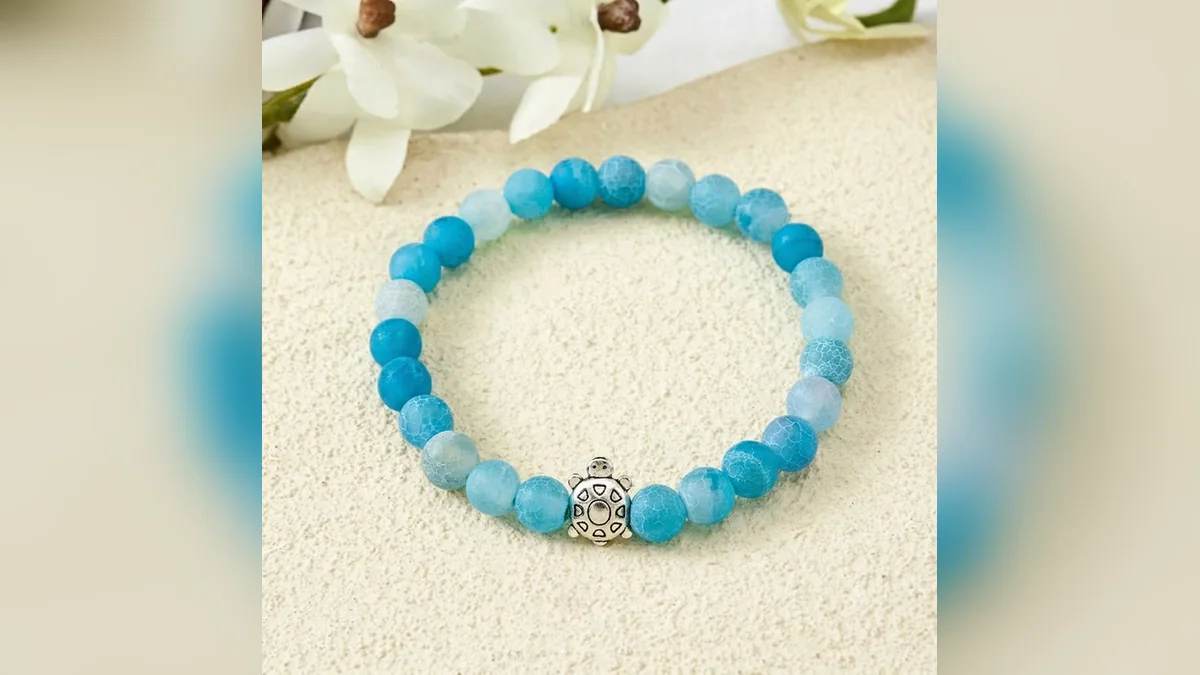
The Blue Crackle Agate Turtle Beaded Bracelet combines Blue Crackle Agate and Copper Alloy with Premium Elastic String. Its bead size is 8 mm, and its wrist circumference is Approx. 5.9–6.3 in (15–16 cm). Choose it if those measurements suit your wrist and you prefer an elastic string design.
The Natural Green Agate Green Aventurine Turtle Design Beaded Bracelet uses Green Agate, Green Aventurine, and Copper Alloy on premium elastic string. Bead sizes are 8mm Green Agate and 8mm Green Aventurine; wrist circumference is 5.9–6.3 in (15–16 cm). Its two named stone materials distinguish it from the blue agate option.
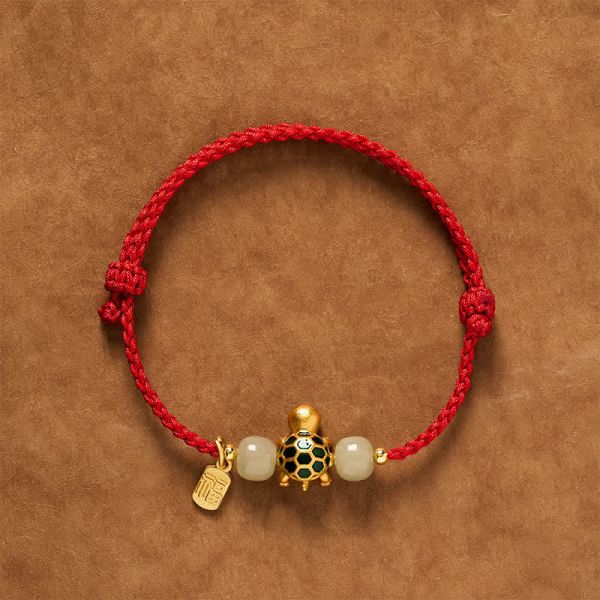
The Copper Turtle Hetian Jade Fu Character Luck Red String Bracelet has Adjustable Cord and a wrist circumference of 5.5–7.1 in (14-18 cm). Materials are Red String, Hetian Jade, and Copper Alloy. Green and Red options are available. Consider this design when you want cord adjustment and your wrist measurement fits its limits.
The Copper Turtle Jade Fu Character Luck Red String Bracelet combines Red String, Jade, and Copper Alloy with Adjustable Cord. Its wrist circumference is 6.3–7.1 in (16-18 cm). Compare that lower limit carefully with the Hetian jade design; the two cord bracelets have different size specifications.
“Luck” in the Fu character bracelet names expresses a traditional wish. Jewelry cannot guarantee luck or other outcomes. The product information allows for slight variations in color, details, and appearance associated with the natural materials or jade.
FAQ
Can I clean the turtle detail with vinegar or lemon juice?
Avoid acidic household cleaners on mixed-material jewelry. They can contact the stone and cord as well as the metal. Use the gentle wiping sequence above; persistent discoloration is a reason to seek material-specific advice before continuing.
How often should I wipe a turtle bracelet?
Base cleaning on visible dust, fingerprints, or residue. A dry wipe may be enough after wear. Damp wiping should serve a specific need, followed by drying, rather than becoming an automatic soaking routine.
Should I remove the beads or undo the cord to clean it?
Keep the bracelet assembled for routine care. Pulling components apart can disturb knots and string tension. If dirt is trapped somewhere you cannot reach without force, leave that area alone and arrange suitable jewelry care.
Shop the story
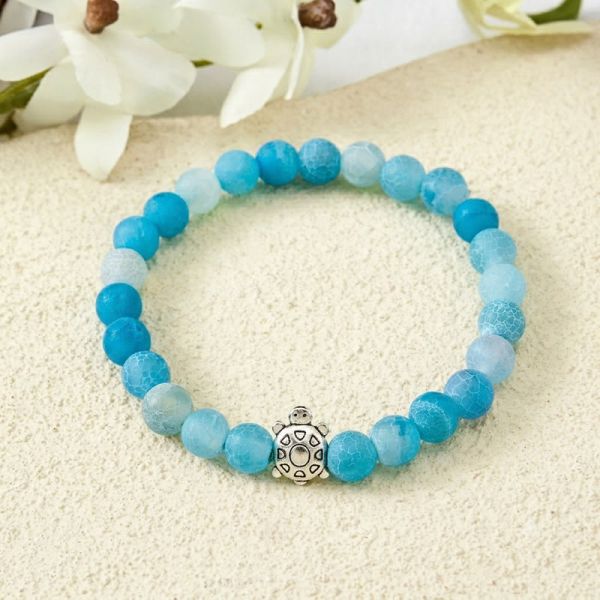 Buddha Stones Blue Crackle Agate Turtle Calm Beaded BraceletSpecial Price $25.59 Regular Price $34.12
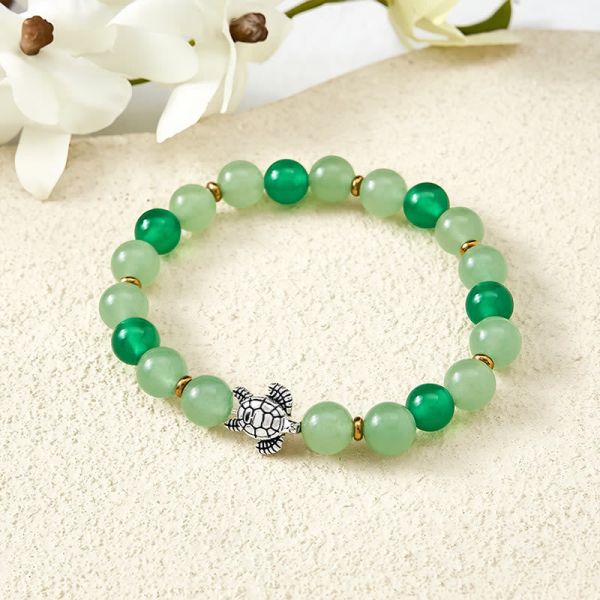 Buddha Stones Natural Green Agate Green Aventurine Turtle Design Success Beaded BraceletSpecial Price $25.59 Regular Price $35.54
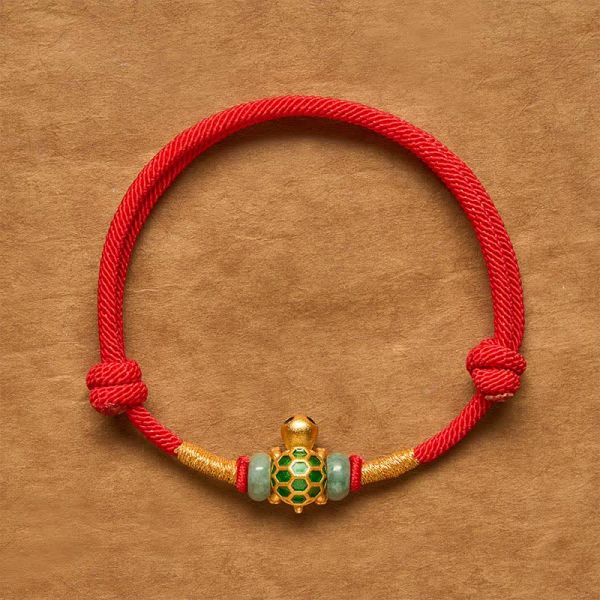 Buddha Stones Copper Turtle Jade Fu Character Luck Red String BraceletSpecial Price $25.59 Regular Price $35.05