How to Clean Sandalwood: A Care Manual for Daily Use
Dust can gather around a sandalwood bead opening while the surface becomes smoother from handling. If you are wondering how to clean sandalwood, start with dry methods: lift loose dust with a soft brush, wipe gently with a clean cloth, and inspect the cord and fittings. This routine removes surface dirt without soaking the wood or adding polish. At Buddha Stones, we recommend checking the care instructions for your particular item before treating a stubborn mark. A change in color or sheen does not automatically mean the wood needs cleaning.
Tools and materials for gentle surface care
Prepare a clear workspace with good light so you can see dust, worn cord, and small gaps around fittings. Place the item on a clean cloth to keep it from sliding while you work.
- A soft, lint-free cloth: Choose one that is clean, dry, and free of furniture polish or cleaning residue.
- A soft brush: Use a small brush with flexible bristles for openings, shallow recesses, and spaces between components.
- A second dry cloth: Keep this available for blotting accidental moisture or supporting the item during inspection.
- A separate storage pouch or compartment: Choose a clean, dry place that limits rubbing against keys or other objects.
Keep liquids off the work surface. You do not need a bowl of water, detergent, or an oil treatment for routine dust removal.
How to clean sandalwood step by step
- Check the whole item before wiping. Look for splits, lifted wood fibers, loose fittings, and frayed cord. Support any damaged area instead of pulling on it. If a fitting moves unexpectedly, stop using the item until the connection can be assessed.
- Brush away loose dust. Work lightly across the surface and toward the edges of recesses. Let the bristles lift debris rather than pressing it deeper into a hole. Avoid pushing a brush through a bead opening where it could catch the cord.
- Wipe the wood gently. Use a clean section of your dry cloth and light pressure. Support a pendant from underneath; hold a keychain by the wooden component while cleaning that component. Do not use the rope or cord as a handle for vigorous rubbing.
- Attend to neighboring components. Use another clean section of cloth on accessible beads and metal fittings. Keep the assembled item dry. A cleaning method suitable for an isolated metal part may be unsuitable when that part sits against wood or cord.
- Inspect the result and stop when appropriate. Check under the same light. If loose dirt is gone but a smooth, darker area remains, leave it alone. Repeated rubbing to make older wood match a lighter area can create uneven wear.
Clean according to visible dust and handling residue rather than an inflexible calendar. A brief inspection before use can reveal a cord problem sooner than a longer cleaning session performed only occasionally.
If the item gets splashed, blot it promptly without scrubbing. Leave it on a dry cloth in a shaded, ventilated place, with damp cord exposed to the air. Wait until the entire item is dry before putting it away. Do not accelerate drying with heat.
What not to do when marks remain
Do not soak or rinse the assembled item. Water can reach openings and remain around cord or fittings. Several of our product care notes specifically instruct you to avoid water exposure. A quick rinse is still water exposure.
Avoid alcohol wipes, household cleaners, abrasive pastes, and metal polishing solutions on the wood. Do not scrub with a stiff brush, scrape with a blade, or sand away a mark. Those methods remove or alter the surface rather than simply lifting dirt.
Skip cooking oils, essential oils, perfume, and wax unless the maker provides instructions for that particular finish. Adding scent is not a cleaning step. Keep jewelry clear of freshly applied lotions and sprays, and remove it before washing.
Do not leave the item on a sunny windowsill, radiator, or hot dashboard. For sticky residue that does not lift with gentle dry wiping, seek finish-specific advice before trying another treatment.
When to repair, replace, or retire a piece
Separate appearance changes from failures that affect use. A smooth patina, a deeper color, or visible grain differences may be part of the wood's appearance over time. These changes alone do not require replacement.
- Arrange repair before further use if a cord is thinning, a knot is slipping, or an attachment no longer holds securely.
- Retire the item from daily handling if the wood has a sharp split, loose fragments, or a rough edge that catches fabric.
- Consider replacement if essential connections cannot be repaired reliably or repeated breakage makes continued use impractical.
You can keep a retired piece as a stored keepsake without continuing to carry it. Before any repair, record how the components connect. Do not glue a loose fitting or seal a crack without knowing whether the adhesive suits the materials and intended repair.
Our sandalwood products and their care details
Use the details for the particular design you own. Names referring to fortune, blessing, or protection express traditional wishes; they do not guarantee results.
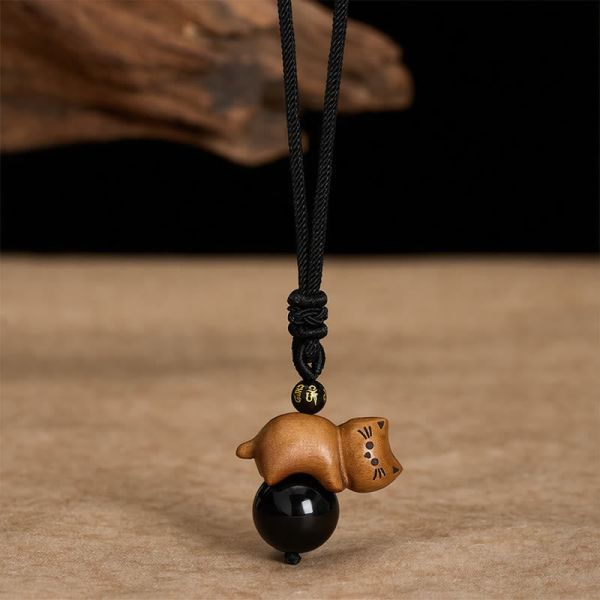
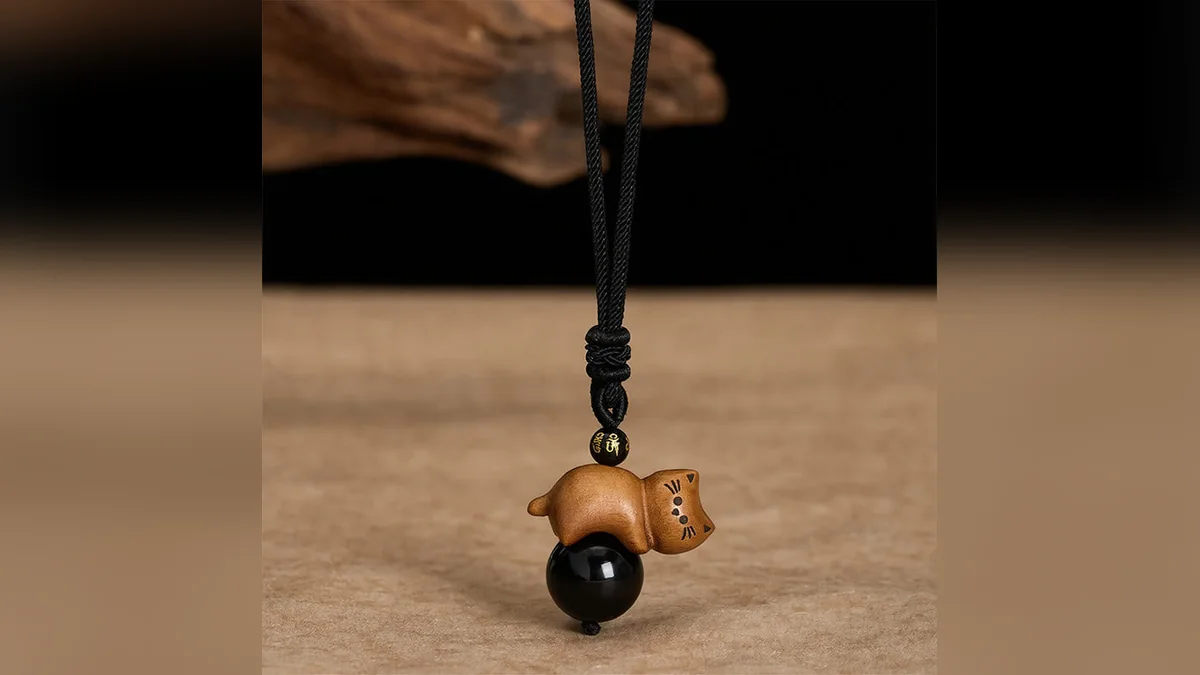
Sandalwood cat and black obsidian necklace
Our Sandalwood Cat Black Obsidian Rope Necklace combines sandalwood, black obsidian, and rope. The necklace length is Approx. 18 in / 45 cm. Its care note describes possible grain and color variations and a richer patina developing over time, and directs you to avoid water exposure. Support the pendant while wiping around the adjoining components.
Coin and money bag keychain options
The Sandalwood Coin and Money Bag Keychains include red sandalwood, green sandalwood, and sandalwood choices, with keychain and phone-hanging options. The care note explains that green sandalwood may gradually shift from yellow to green with light exposure. It also advises avoiding water and prolonged sun exposure. Do not use deliberate sun exposure as a color treatment.
Red sandalwood money bag keychains
Our Red Sandalwood Money Bag Keychains come in Money Bag Tassel and Simple Money Bag options. Materials are red sandalwood, cord, and copper alloy. The wood may show grain and color variation and develop a patina with wear. Avoid water exposure, as specified in the care note, and inspect the cord during cleaning.
Red sandalwood yuanbao keychains
The Red Sandalwood Yuanbao Keychains offer Simple Yuanbao and Tassel Yuanbao options. Materials are red sandalwood and rope. The product note says the wood may vary in color and grain and deepen over time with wear. A darker surface alone is therefore not a reason to scrub harder or attempt to restore an earlier shade.
Finish with a careful storage check
Put the item away only when it is dry, with its cord resting loosely rather than pulled tight. Keep it away from damp surfaces and objects that can scrape it. For your next cleaning, return to the same simple sequence: inspect, brush, wipe, and check the connections. Stop once loose dirt is removed, allowing the wood's changing appearance to remain part of the piece.
Shop the story
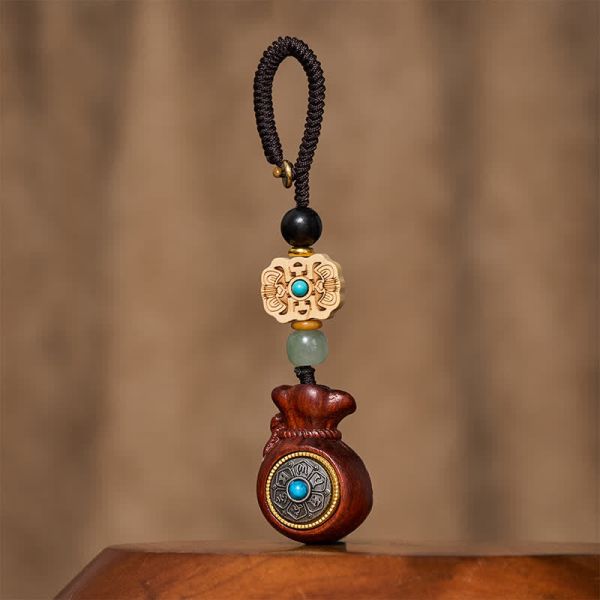 Buddha Stones Red Sandalwood Green Sandalwood Om Mani Padme Hum Blessing Chinese Coin Money Bag Design Serenity KeychainsAs low as $25.59 Regular Price $34.58
 Buddha Stones Red Sandalwood Money Bag Om Mani Padme Hum Wisdom Fortune KeychainsAs low as $25.59 Regular Price $35.54
 Buddha Stones Red Sandalwood Om Mani Padme Hum Yuanbao Wisdom KeychainsAs low as $25.59 Regular Price $36.04