
How to Clean Quartz: A Gentle Jewelry Care Manual

Quartz beads can collect a dull film where they touch skin. Learning how to clean quartz means removing surface dust and residue with a soft cloth, using a little mild soapy water only when the whole piece can tolerate it, and drying it thoroughly. This manual covers the tools, cleaning sequence, storage habits, and wear checks that help you care for quartz jewelry. At Buddha Stones, we recommend choosing your method around the most delicate material in a bracelet, including its string and metal details.
Gather Your Tools and Materials
Start at a clear table with a folded towel underneath your work. It gives loose beads somewhere to land and keeps jewelry away from a hard countertop. Use good light so you can see residue around bead holes without pulling the string apart.
- Two clean, soft cloths: one for wiping and one kept dry for finishing. Plain, lint-free cloths work well.
- Lukewarm water: place a small amount in a bowl so you can dampen a corner of the cloth.
- Mild liquid soap: reserve a small amount for suitable quartz surfaces; skip abrasive or strongly scented formulas.
- A padded tray or clean towel: use this to support the piece during cleaning and drying.
A treated jewelry polishing cloth may contain polishing compounds. Choose an untreated cloth for this routine, particularly when different beads and metal details share one strand. You do not need specialized machinery for ordinary surface dirt.
How to Clean Quartz, Step by Step
1. Identify the whole piece before adding water
Read the material information first. A quartz bead may sit beside a pearl, another stone, a metal spacer, or a knot. A cleaning method suitable for loose quartz may be unsuitable for the assembled bracelet. If a coating, treatment, or component is uncertain, begin with dry wiping and seek material-specific advice before doing more.
Look for chipped bead holes, loose fittings, stretched string, and existing cracks. Set aside damaged jewelry for assessment. Cleaning should not involve stretching a bracelet to reach hidden surfaces.
2. Lift dust with a dry cloth
Support the bracelet in your palm or on the towel. Fold the cloth around one bead and turn the bead gently within the available slack. Work around the strand without tugging. For a loose quartz piece, wipe accessible surfaces while supporting its weight.
Use light pressure. If a grain of grit is visible, lift it away with a clean cloth corner instead of rubbing it repeatedly across the surface.
3. Spot-wipe only where needed
If dry wiping leaves residue, dampen a cloth corner with lukewarm water and wring it out thoroughly. It should feel barely damp, without dripping. Wipe the affected surface, then use the dry cloth immediately. Keep moisture away from knots, bead holes, glued areas, and metal joins as far as practical.
For an intact, untreated quartz piece without other components, a little mild soap in the water can help remove surface film. Follow with a separate cloth dampened with plain water to remove soap. On mixed-material jewelry, follow the care requirements of the more delicate component; do not assume soap is suitable throughout.
4. Dry, inspect, and put away
Blot remaining moisture and leave the piece supported on a clean towel at room temperature. Wait until the surfaces and gaps are dry before storing it. Do not use heat to speed this up.
Check the result in ordinary light. If a mark remains inside a bead rather than on its surface, stop rubbing. Internal features will not wipe away. Keep jewelry in separate fabric compartments or pouches so pieces do not knock against one another.
Cleaning Shortcuts to Leave Out
More force or a stronger cleaner can create a new problem without removing the original mark. Avoid these methods for routine home care:
- Salt scrubs and abrasive pastes: gritty mixtures and toothpaste are unsuitable for mixed jewelry surfaces.
- Vinegar, bleach, and household sprays: keep them away from beads, string, and metal details.
- Long soaking: do not submerge an assembled bracelet to reach dirt between beads.
- Boiling water, steam, and sudden temperature changes: use room-temperature drying and gentle handling instead.
- Ultrasonic machines: leave machine cleaning to a professional who can assess the materials, treatments, and condition.
Do not leave quartz jewelry in strong sunlight as a drying method. Some colored varieties can fade with prolonged exposure. Remove bracelets before washing, swimming, applying lotions, or using cleaning products. Let cosmetics dry before putting jewelry on, and wipe away visible residue afterward.
A symbolic practice does not replace physical cleaning. Dust and soap film still need to be removed with a method suitable for the actual materials.
When Repair or Retirement Makes Sense
Inspect string and bead holes regularly, especially before putting a bracelet on. Elastic that stays stretched, shows fraying, or exposes a loose knot needs attention. Stop wearing the bracelet until it can be restrung or assessed. Gather any loose beads in a small container instead of threading them onto improvised wire.
A sharp chip, a crack reaching a bead hole, or a loose fitting is also a reason to pause use. A jeweler can help determine whether a component can remain in service or needs replacement.
Retire a damaged piece from wear if repair is impractical. Sound beads may be suitable for restringing, while damaged components should be kept out of regular handling. A change in color or an internal inclusion alone does not establish that a bead is broken.
Four Buddha Stones Bracelets to Plan Care Around
The quartz in a bracelet is only part of its care needs. Our product specifications identify companion materials and string types so you can choose a cautious cleaning approach.
Citrine, tiger eye, and green strawberry quartz
Our Citrine Tiger Eye Green Strawberry Quartz Bracelet combines citrine, tiger eye, green strawberry quartz, and copper. It has 8mm beads and Premium Elastic String, with a wrist circumference of 5.9–6.3 in (15–16 cm). Start with dry wiping; keep damp cleaning localized around the beads and dry the copper promptly.
White cat's eye and rutilated quartz
The White Cat's Eye Moonstone Black Rutilated Quartz Bracelet has 8mm beads, copper, and Premium Elastic String. Its material specifications also include White Cat's Eye, Moonstone Black, and Rutilated Quartz. Support the strand while wiping so cleaning does not put tension on the string.
Pearl and strawberry quartz
Our Natural Pearl Strawberry Quartz PiXiu Bracelet pairs pearl and strawberry quartz, with 8mm beads, premium elastic string, and a wrist circumference of 14-19cm. Treat the pearl as a reason to keep the routine gentle: begin with a dry cloth, avoid soaking, and use only a barely damp cloth when needed.
Rose quartz with several companion materials
The Prehnite Rose Quartz Blue Chalcedony Lucky Clover Bracelet includes rose quartz, blue chalcedony, prehnite, white cat's eye, fluorite, and copper alloy. Its Premium Elastic String accompanies a wrist circumference of 5.5–5.9 in (14–15 cm). Choose surface wiping over immersion. “Lucky” expresses a traditional wish; it does not guarantee luck or another result.
Keep the Routine Simple Between Cleanings
Clean when you see dust or residue rather than following an aggressive schedule. A brief dry wipe after wear can keep surface film from building up. Put the piece away only when dry, and check its string before the next use. The aim is a clean surface and a sound assembly. If a mark resists gentle wiping, stop and identify it before changing methods.
Shop the story
 Buddha Stones Citrine Tiger Eye Green Strawberry Quartz Beads Happiness BraceletSpecial Price $25.59 Regular Price $34.12
 Buddha Stones White Cat's Eye Moonstone Black Rutilated Quartz Beads Abundance BraceletSpecial Price $25.59 Regular Price $34.58
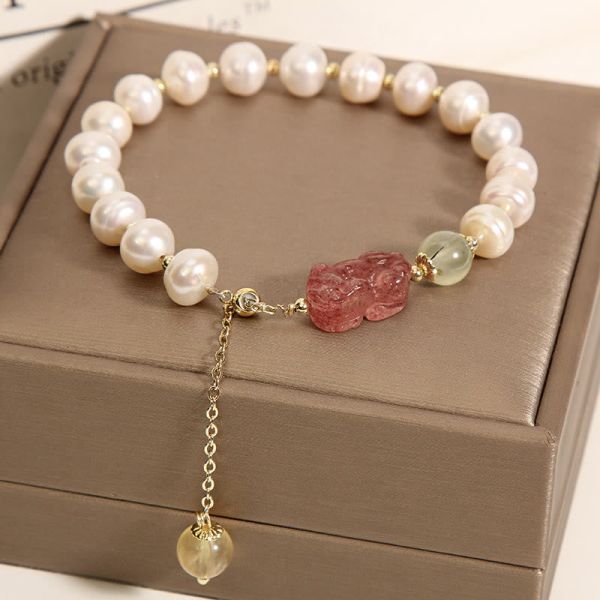 Buddha Stones Natural Pearl Strawberry Quartz PiXiu Optimism Charm BraceletSpecial Price $28.59 Regular Price $39.71
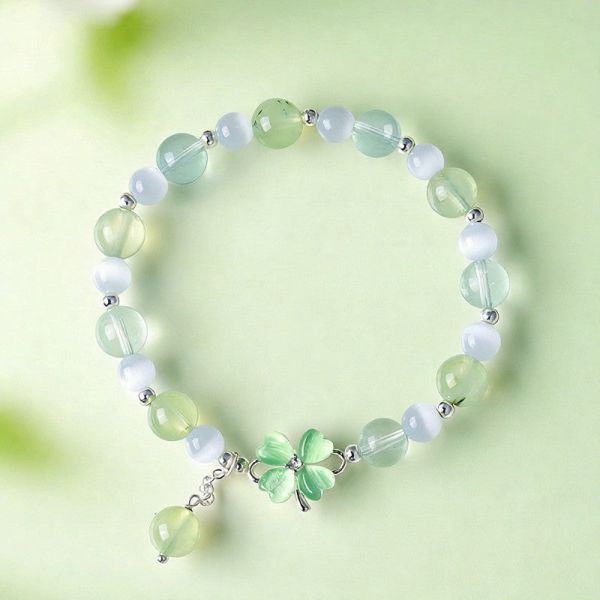 Buddha Stones Prehnite Rose Quartz Blue Chalcedony Lucky Clover Love BraceletAs low as $25.59 Regular Price $35.05