
How to Clean Plum Blossom Bags Without Harsh Washing
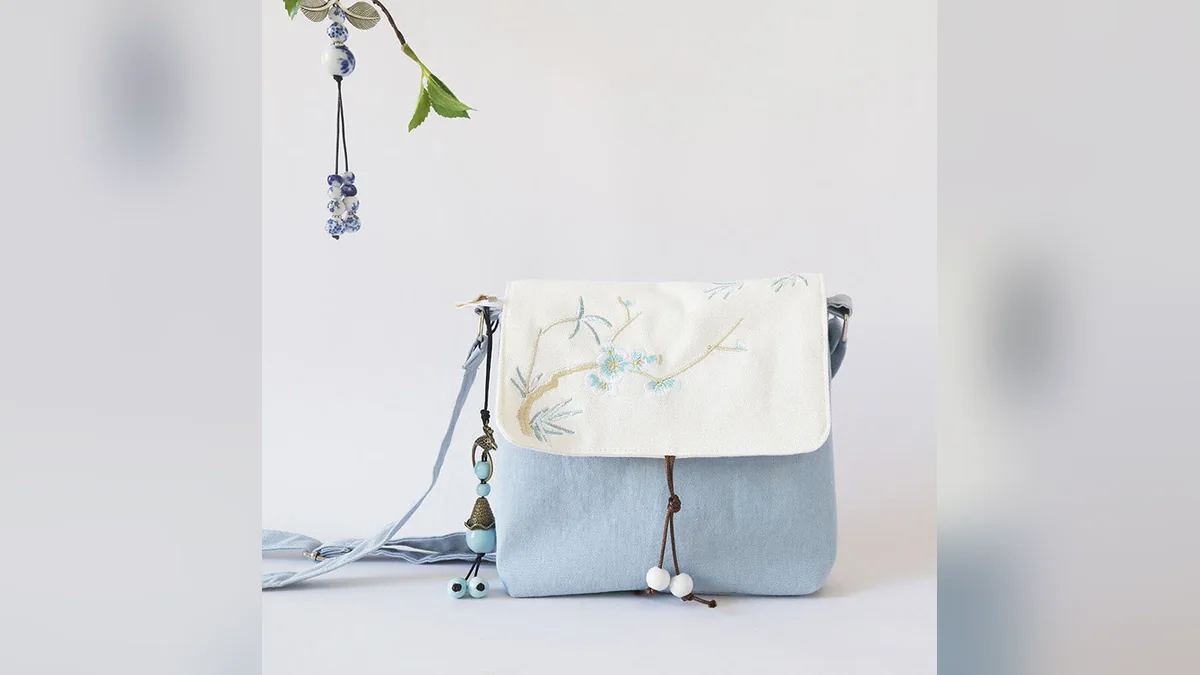
Empty your plum blossom bag before you begin cleaning. This guide explains how to clean plum blossom bags by removing loose dirt, checking care instructions, and treating small marks according to the fabric. Embroidered canvas, polyester, and silk need different handling, so the material and any care label should guide your next step. We recommend starting with dry care and using moisture only when the instructions allow it.
1. Choose how to clean plum blossom bags by fabric
Look for a care label inside the bag, then check the product description for its material. A fabric name alone does not establish that a finished bag can be washed. Embroidery, lining, closures, and decorative attachments also matter. Follow any care restrictions supplied with the bag, even if you have washed another canvas or polyester item before.
Identify what needs attention: loose dust, a fresh spill, a dried mark, or widespread soiling. Dry dust usually calls for a different approach from a liquid stain. If you cannot identify the material or find cleaning instructions, limit home care to gentle dust removal and ask a professional textile cleaner about further treatment.
2. Remove loose dirt without catching the stitches
Open the compartments and remove receipts, cards, and other contents. Hold the opening over a clean surface and gently tip out loose debris. Avoid turning a structured bag inside out or pulling its lining outward if it resists.
Support the fabric with one hand while lightly lifting surface dust with a clean, soft brush. Keep the bristles away from loose threads, tassels, and raised embroidery. A smooth, dry cloth can lift dust from plain fabric, but avoid dragging it over stitches that might snag. Do not pick at a dried deposit with a fingernail or scrape it with a blade.
Check pockets and seams before moving on. Removing loose particles first helps keep them from spreading across a larger area when moisture is introduced.
3. Test any permitted cleaner in a hidden area
Prepare a clean white cloth, a dry towel, and any cleaning product allowed by the care instructions. Choose an inconspicuous area of the same fabric, away from embroidery and hardware. A test on plain fabric does not establish that colored stitching will respond the same way.
Apply a small amount using the method you plan to use on the mark. Keep the cloth barely damp rather than wet. Let the test area dry completely, then inspect it for color transfer, a visible ring, stiffness, or a change in texture.
Stop if the cloth picks up dye or the fabric changes appearance. Do not move to a stronger cleaner to compensate. If the care instructions prohibit water, skip a damp test and leave stain treatment to a professional.
4. Blot small marks on washable fabric sections
Proceed only if the care instructions permit spot cleaning and the test has dried without a visible change. Dampen a white cloth with cool water and the permitted cleaner, following its directions. Press gently against the mark, lift the cloth, and repeat with a clean section. Work from the outer edge toward the center to limit spreading.
Use as little moisture as possible. Avoid rubbing back and forth, which can disturb stitching and spread the mark. Keep liquid away from closures and decorative attachments. Do not treat the whole bag simply because one small area is dirty.
If the cleaner requires removal, use another barely damp cloth as directed, then blot with a dry towel. Pause if the mark spreads or the fabric starts to change. Persistent stains deserve an assessment before repeated cleaning makes a larger patch.
5. Handle silk, embroidery, and hanging details carefully
Reserve silk stain treatment for a method specifically permitted by the care instructions. If those instructions are unavailable, use gentle dry dust removal and consult a cleaner who handles silk and embroidered accessories. Do not assume a method suitable for canvas will suit silk.
Support embroidered areas instead of stretching the fabric flat under tension. Leave loose stitches in place; pulling or trimming them can unravel more of the design. Separate hanging details gently with your fingers rather than tugging them apart.
Blot a fresh spill promptly with a clean, dry white cloth. Press and lift without scrubbing. Tell a professional cleaner what spilled and what treatment, if any, you already applied. That information is more useful than trying several household remedies first.
6. Dry fully before refilling and storing
After permitted spot cleaning, reshape the bag gently and support it on a clean, dry towel. Keep it away from direct sunlight, radiators, and hot air. Leave compartments open where the construction allows, and avoid hanging a damp bag by its straps.
Wait until the treated area and interior are completely dry before replacing contents. If you use paper to support the shape, choose clean, unprinted paper and avoid packing it tightly. Store the bag in a dry place with space around embroidery and hanging decorations so they are not pressed under other belongings.
Mistakes that can turn a small mark into damage
- Soaking without permission: A washable fabric does not make the assembled bag suitable for immersion.
- Skipping the test: Check the fabric you intend to treat and inspect it again after drying.
- Using bleach or strong stain removers: Do not substitute an aggressive product for an approved care method.
- Scrubbing embroidered flowers: Repeated friction can catch threads and distort stitching.
- Applying heat to hurry drying: Keep hair dryers, irons, and heated drying equipment away unless care instructions expressly allow them.
- Repeating unsuccessful treatment: Stop when a mark spreads, dye transfers, or the surface changes.
Our plum blossom bags: materials and construction
These product details identify the materials and fittings to consider when checking care instructions.
Embroidered canvas crossbody bag
Our Handmade Embroidered Plum Flowers Canvas Crossbody Bag uses canvas fabric. Sizes are 17*19cm / 20*23cm, with an adjustable strap and a stated strap length of 63cm. The interior has one main pocket and one zipper pocket. Options include Brown Red Plum 17*19cm and Dark Blue Plum 17*19cm.
Canvas shoulder tote
The Pear Flower Plum Peach Blossom Bamboo Embroidery Canvas Tote Bag combines canvas fabric, polyester, and a nylon zipper. Its size is 28-33*12*32cm(Length*Width*Height), and the non-adjustable straps have a stated length of 27cm. Compartments include one main pocket, one zipper interior pocket, two pockets, and one back zipper pocket.
Polyester long purse
Our Plum Bossom Su Embroidery Long Purse is polyester and measures 20*10cm(Length*Width). It has one zippered pocket, multiple card slots, and a magnetic buckle. Color options include Black, Champagne, Light Blue, and Light Gray. Its care note specifically says the bag cannot be soaked for cleaning.
Xiangyunsha silk shoulder bag
The Plum Flower Bamboo Branches Embroidery Tassel Xiangyunsha Silk Shoulder Bag has Xiangyunsha silk, tassels, metal, a bamboo pendant, and bead accessories. Its size is 16*16*16cm, Handle 15cm. It has a non-adjustable strap and a magnetic clasp. Black Plum Bamboo Branches is one available option.
Let the care instructions set the limits for cleaning. Remove loose dirt gently, test permitted treatments, and stop when the fabric changes. Careful handling of the surface, stitching, and fittings keeps the cleaning process focused on the area that needs attention.
Shop the story
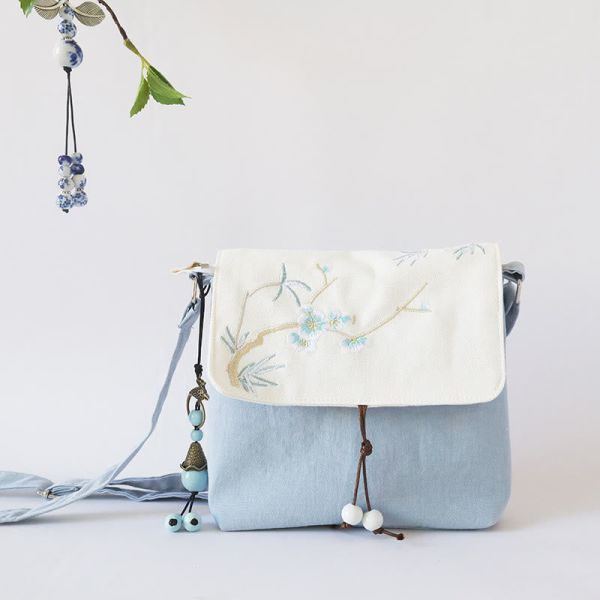 Buddha Stones Handmade Embroidered Plum Flowers Canvas Crossbody Bag Shoulder Bag HandbagAs low as $26.59 Regular Price $36.42
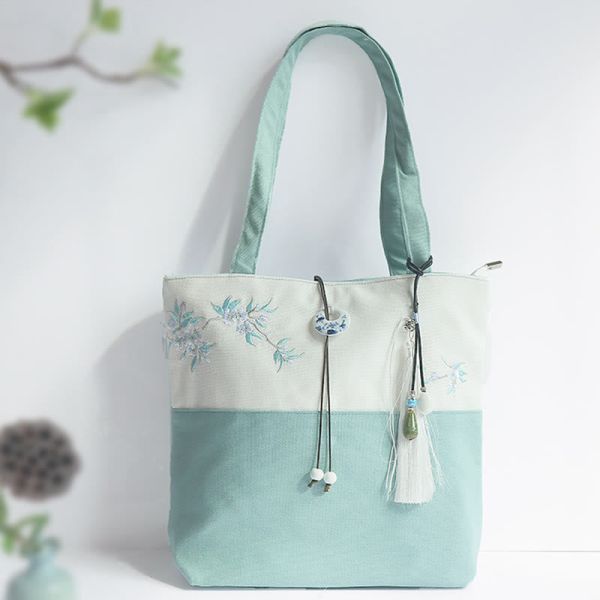 Buddha Stones Pear Flower Plum Peach Blossom Bamboo Embroidery Canvas Large Capacity Shoulder Bag Tote BagAs low as $46.59 Regular Price $65.62
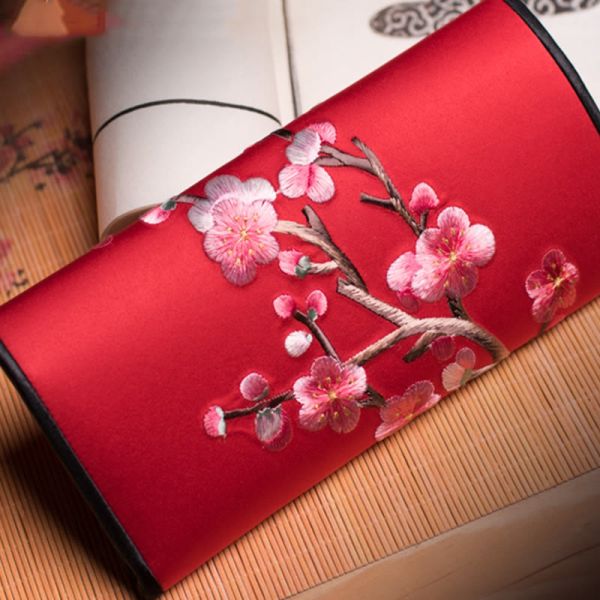 Buddha Stones Plum Bossom Su Embroidery Journey Shopping Long Purse HandbagAs low as $73.59 Regular Price $98.12
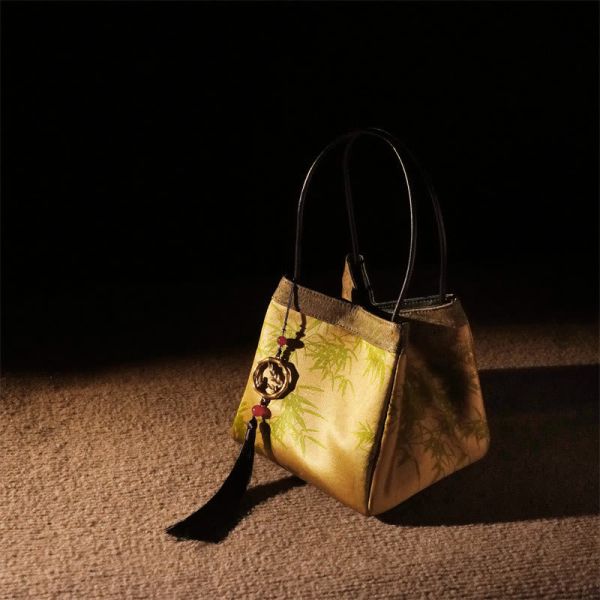 Buddha Stones Plum Flower Bamboo Branches Embroidery Tassel Xiangyunsha Silk Shoulder Bag HangbagsAs low as $229.59 Regular Price $306.12