
How to Clean Peony Embroidery on Fabric Handbags
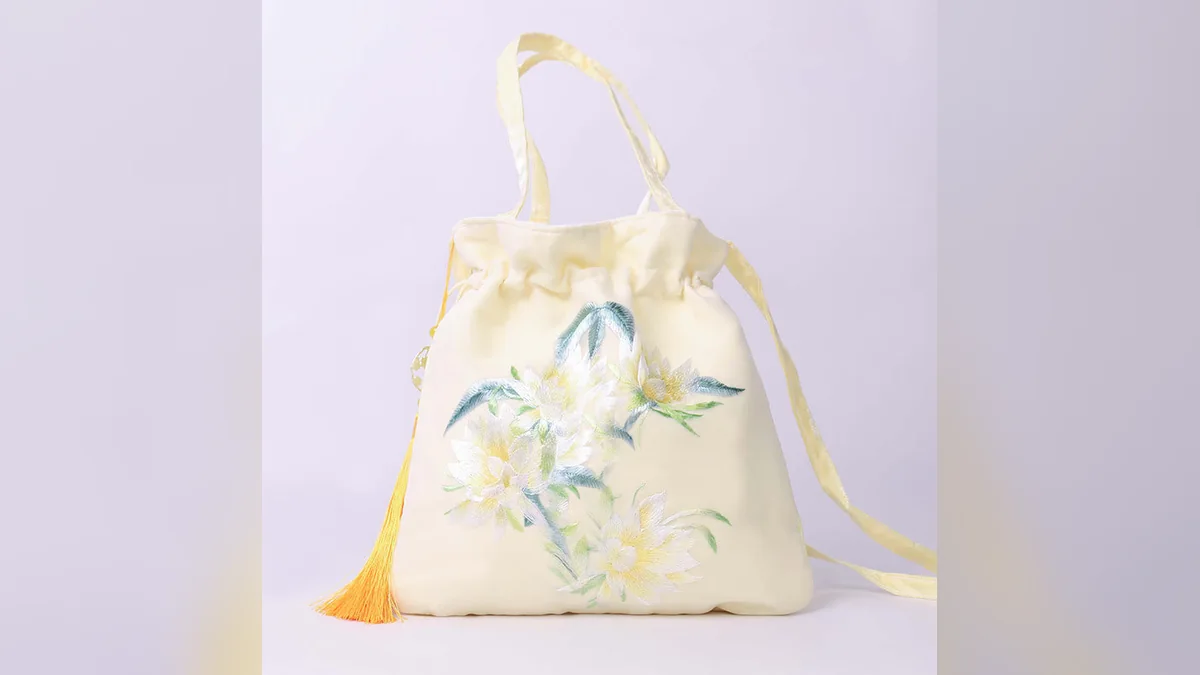
Dust gathers along a fabric bag's opening and around raised stitching. This guide explains how to clean peony embroidery on cotton linen and silk bags: remove loose dust, assess marks, and use moisture only when the care instructions permit it. Here, peony refers to the floral motif on the bag. At Buddha Stones, we recommend inspecting the fabric, embroidery, straps, and ceramic bead accessories separately before choosing a cleaning method.
A material description does not establish washability. Follow any care label supplied with your bag, and treat the steps below as cautious general textile care.
Tools and Materials for Careful Fabric Care
Prepare a clean, dry surface away from food, drinks, and direct sunlight. Put down a white towel so you can support the bag without dragging its decoration across a tabletop.
- Soft white cloths: Choose clean, lint-free cloths for dusting, blotting, and checking for color transfer.
- A very soft brush: Reserve it for loose dust on accessible, undecorated fabric. Keep bristles away from raised threads and loose stitching.
- A white absorbent towel: Use it beneath the area being cleaned and to support the bag during drying.
- Cool water: Set this aside only if the care instructions allow local wet cleaning.
- A permitted detergent: Use a small amount only when the care instructions authorize it. For silk, the product must also be suitable for silk.
Keep cleaning products capped until you have inspected the bag. A dry treatment may be enough for surface dust.
How to Clean Peony Embroidery Step by Step
- Empty the bag completely. Open its compartments and remove loose contents. Check corners before gently tipping out crumbs. Avoid turning the bag inside out if doing so would strain its seams, closure, or decoration.
- Inspect before touching a mark. Look for loose threads, separated seams, discoloration, and damaged accessories. Identify whether the mark sits on plain fabric, embroidered petals, a strap, or a bead. Stop if the fabric appears fragile or the stitching is coming away.
- Remove loose dust first. Support the fabric from beneath. Lightly lift dust from plain areas with the dry cloth or soft brush. Around embroidery, use careful dabbing with the cloth and avoid catching thread loops. Do not try to brush dried residue through the stitches.
- Check permission for moisture. Read the care label before proceeding. If it prohibits washing, gives instructions you cannot follow, or provides no clear basis for wet cleaning, keep home care dry. Ask a textile cleaning professional about remaining marks, especially on silk or embroidery.
- Test an inconspicuous area if wet cleaning is permitted. Use a barely damp white cloth and the authorized cleaning solution. Choose an area of the same fabric, away from the visible motif. Let it dry completely, then check for transferred color, rings, stiffness, or a changed surface. A successful test does not establish that every thread color is colorfast.
- Blot a small mark cautiously. Place the towel beneath it and touch the mark with the barely damp cloth. Work from its edge inward, using a clean part of the cloth as soil transfers. Do not scrub. Stop if color moves, the mark spreads, or the surface changes. Do not continue onto embroidery unless the care instructions expressly permit that treatment.
- Remove permitted detergent residue. If detergent was used, follow its directions and the bag's care instructions for removing it. Avoid soaking the surrounding fabric. If residue cannot be removed without broader wetting, stop and seek professional advice.
- Dry with full support. Blot excess moisture without twisting. Rest the bag on a clean towel in a shaded, ventilated place, with its opening unobstructed. Keep the strap supported. Return contents only after the fabric, seams, and interior are completely dry.
For a fresh spill, lift liquid with a dry white cloth before deciding on further treatment. Record what spilled and what you applied; that information can help a professional choose an appropriate approach.
What Not to Do Around Petals, Threads, and Straps
Do not assume cotton linen permits machine washing or that silk permits home handwashing. A finished bag combines components that may respond differently to water and detergent.
- Avoid soaking and wringing. These actions can distort a bag and place strain on seams and decoration.
- Skip abrasive tools. Stiff brushes, scouring pads, and vigorous rubbing can snag embroidery.
- Keep heat away. Do not use a hair dryer, radiator, tumble dryer, or direct sunlight to hurry drying.
- Avoid improvised stain mixtures. Bleach, alcohol, vinegar, and baking soda are not substitutes for care instructions.
- Leave loose threads attached. Pulling or casually trimming them may unravel stitching. Have the area assessed for repair.
Keep ceramic bead accessories from knocking against the work surface. Use a dry cloth for loose dust, and avoid introducing liquid into their attachments.
When to Repair, Replace, or Retire a Bag
A remaining stain alone does not mean a bag must be discarded. Consider professional cleaning or a textile repair assessment before making that decision.
Pause carrying the bag if a strap attachment is separating, a seam is opening, or an accessory has cracked and developed a sharp edge. Empty it before moving it for assessment. Do not test a weakened strap by adding weight.
If repairs cannot restore dependable carrying use, retire the bag from that role. An intact, clean section may suit a supported display, but avoid hanging a damaged bag by its strap. Replacement becomes practical when the structure can no longer hold its intended contents.
Our Peony Bag Products: Fabric and Pocket Details
The following specifications help identify the bag you are caring for. They describe construction and options; they do not provide washing instructions.
Yellow Golden Peony in Cotton Linen
Our Lotus Peony Epiphyllum Phoenix Suzhou Embroidery Cotton Linen Bag includes a Yellow Golden Peony option. Its materials are cotton linen fabric and ceramic bead accessories. The size is 21*22cm, with one main pocket, an adjustable strap, and a strap closure. The shoulder bag strap length is 130cm.
White Peony in Cotton Linen
A White Peony option appears in our Suzhou Embroidery Lotus Deer Epiphyllum Peony Rabbit Cotton Linen Bag. This bag measures 21*22cm and uses cotton linen fabric with ceramic bead accessories. It has one main pocket and a strap closure. Its adjustable shoulder strap has a stated length of 130cm.
Golden Peony in Silk
The Suzhou Embroidery Rabbit Lotus Epiphyllum Peony Magnolia Silk Bag offers a Light Green Golden Peony option. Silk fabric and ceramic bead accessories make up its specified materials. At 20*20*7cm, it contains one main pocket and one zipper interior pocket. It has a strap closure and an adjustable shoulder strap measuring 130cm.
Light Blue Peony in Silk
Our Suzhou Embroidery Camellia Magnolia Peony Lotus Silk Bag includes Light Blue Peony among its options. Its 20*20*7cm size contains one main pocket and one zipper interior pocket. The materials are silk fabric and ceramic bead accessories, with a strap closure and an adjustable 130cm shoulder strap.
Between Uses, Keep the Embroidery Supported
Empty crumbs promptly, handle the bag with clean, dry hands, and keep uncapped pens or leaking cosmetics away from its interior. Avoid overfilling it or forcing the closure.
Before storage, check that the bag is dry. Rest it without crushing the embroidered face, tuck the strap loosely beside it, and keep sharp objects away from exposed threads. A brief inspection before carrying can catch a loose attachment before it becomes a larger repair.
Shop the story
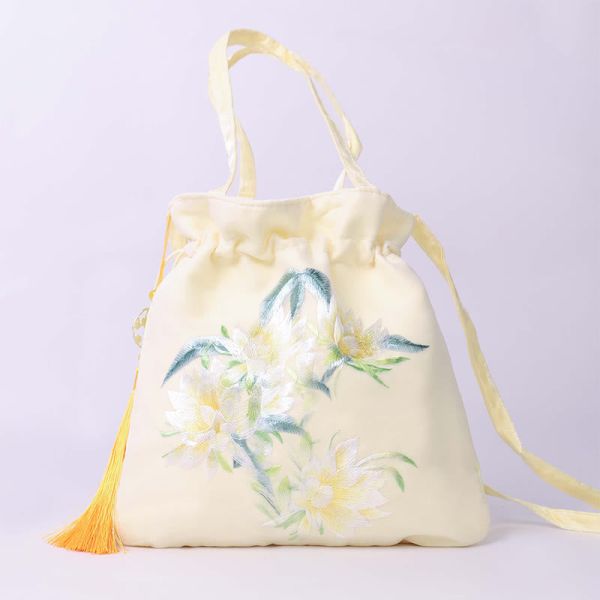 Buddha Stones Lotus Peony Epiphyllum Phoenix Suzhou Embroidery Cotton Linen Tote Crossbody Bag Shoulder Bag HandbagAs low as $22.59 Regular Price $32.27
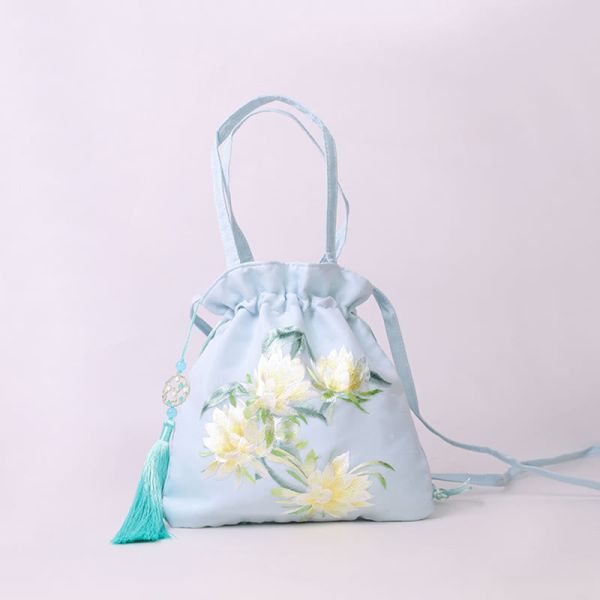 Buddha Stones Suzhou Embroidery Lotus Deer Epiphyllum Peony Rabbit Cotton Linen Tote Crossbody Bag Shoulder Bag HandbagAs low as $22.59 Regular Price $31.82
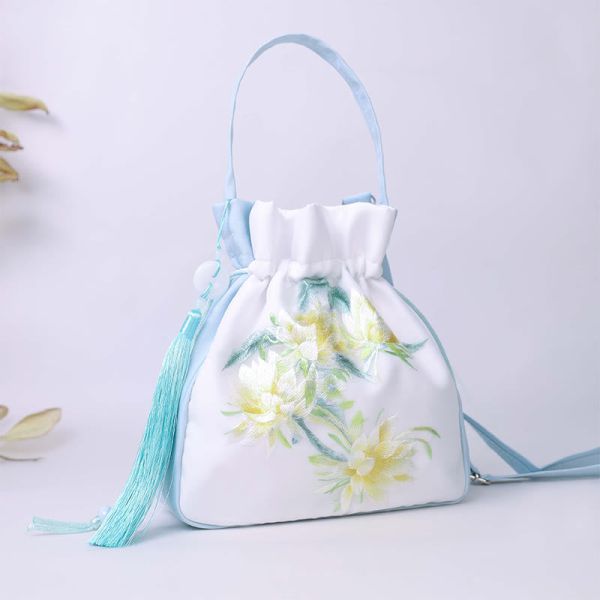 Buddha Stones Suzhou Embroidery Rabbit Lotus Epiphyllum Peony Magnolia Silk Tote Crossbody Bag Shoulder Bag HandbagAs low as $26.59 Regular Price $36.93
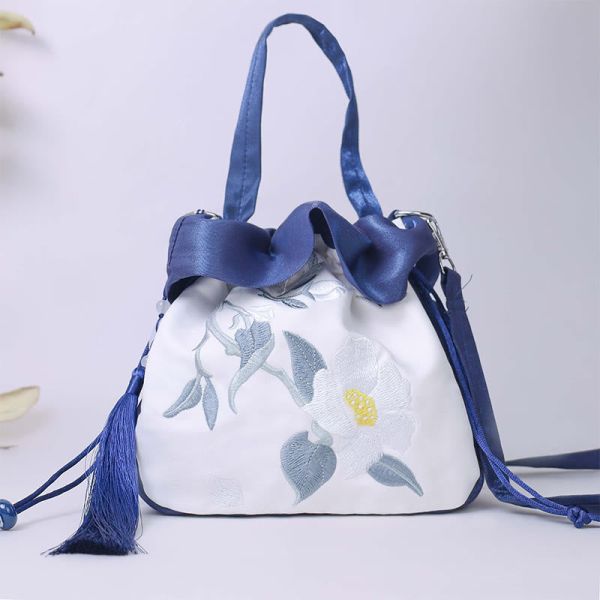 Buddha Stones Suzhou Embroidery Camellia Magnolia Peony Lotus Silk Tote Crossbody Bag Shoulder Bag HandbagAs low as $22.59 Regular Price $30.95