Hair Stick Care: Choosing Pieces You Can Look After
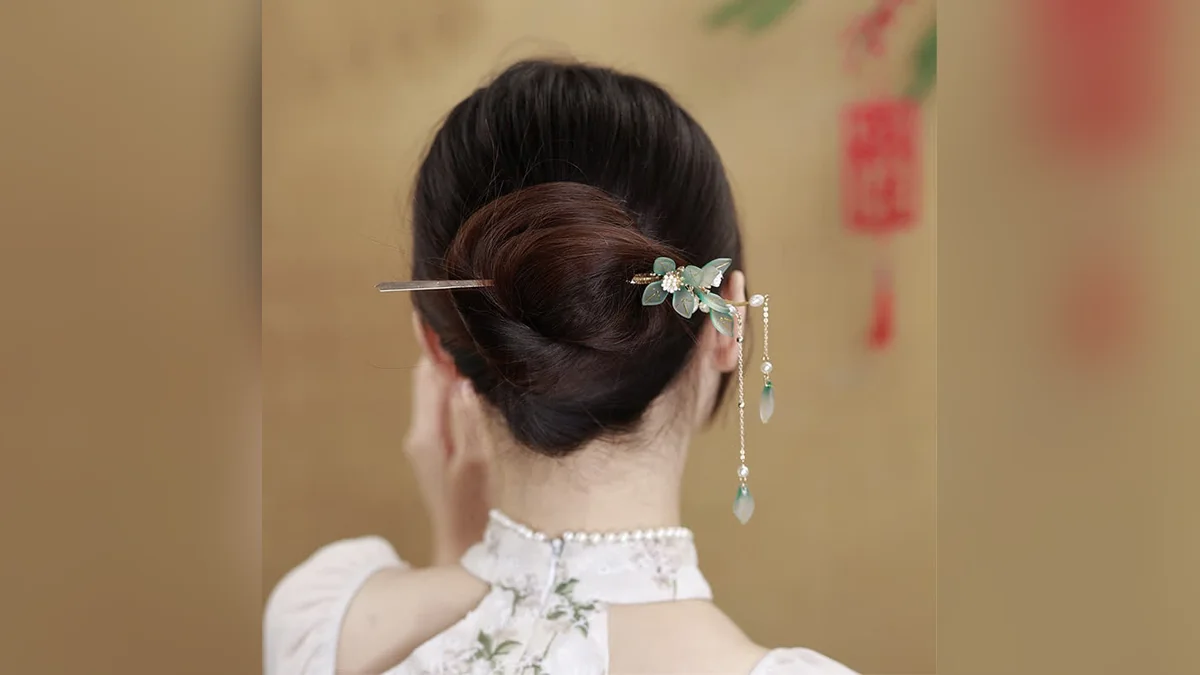
A 21cm hairpin takes up more space in a storage box than a 17.2cm one, and a hanging tassel needs room of its own. Those differences matter before you buy. Hair stick care means choosing a cleaning and storage routine that suits the material, shape, and decoration. Here, we explain how to compare accessories, check their fit, remove everyday residue gently, and put them away without straining their details.
Start by deciding how much handling you want your accessory to require. A plain shaft, a hanging ornament, and a flower comb present different care decisions, even when they serve a similar decorative purpose.
Start with these questions
- Which materials are specified? Use the material information to choose a cleaning method, especially when several materials share one accessory.
- Do you need hold, decoration, or both? Do not assume that an ornamental hairpin can support an entire hairstyle.
- How much length suits your hairstyle? Consider the portion extending beyond your hair as well as the space occupied by decoration.
- Will hanging details meet clothing? Think about collars, scarves, and places where a tassel could catch.
- Where will you keep it? Allow room for the shaft, comb teeth, flowers, or tassel without pressing them flat.
Let the material determine the cleaning method
For wood, keep routine cleaning restrained. Begin with a clean, dry cloth and avoid soaking. If residue remains, use a barely damp cloth on the affected area, then dry it promptly. Do not apply furniture polish, household oil, or an abrasive cleaner without instructions confirming that it suits the accessory and its finish.
Mixed materials call for extra attention. A cleaner intended for metal may be unsuitable for a neighboring pearl, acrylic detail, or decorative attachment. Work around connections gently rather than rubbing across them with force. A dry wipe is a useful starting point when you do not know how a finish will respond.
Fabric flowers and shaped wire details need a different approach from a smooth shaft. Lift loose dust gently and support the decoration underneath while handling it. Avoid scrubbing, wringing, or trying to reshape an unfamiliar construction. If the material information is incomplete, keep cleaning minimal until you have suitable instructions.
Read length and weight as separate buying decisions
Overall length does not necessarily tell you how much usable shaft an accessory has. Decorative sections may occupy part of that measurement. For a comb, its stated length also does not establish the depth of its teeth or how much hair they can hold. Keep those distinctions in mind when comparing product descriptions.
Use a ruler beside your intended hairstyle to estimate the space an accessory would occupy. Keep the ruler outside the hair. Check the clearance near a collar and the area behind your head where a protruding end might meet a chair. This helps you judge placement without treating length as a promise of hold.
Weight is another comparison point when provided, but it cannot establish suitability by itself. Hair texture, hairstyle structure, and placement also matter. If an accessory slips or requires force to stay in position, reconsider its role rather than bending it to compensate.
Hair stick care: choose the gentlest routine
Remove an accessory before washing your hair, showering, or going to bed. Apply styling sprays and perfume before putting it in, and allow them to dry. This limits direct residue and avoids having to clean around small decorative parts unnecessarily.
- Inspect before wiping. Look for caught hairs, loose connections, rough edges, and bent teeth. Remove trapped strands carefully instead of pulling them through an ornament.
- Support the main structure. Hold a hairpin by its shaft or a comb by its base. Do not use a flower, pearl detail, or tassel as a handle.
- Clean only as much as needed. Start dry. Where appropriate for the material, address a small mark with minimal moisture rather than wetting the whole accessory.
- Dry before putting away. Leave the accessory in a shaded, ventilated place until any moisture has gone. Avoid a hair dryer, radiator, or direct sun as a shortcut.
Give a tassel room to lie without tangling around neighboring objects. Arrange it gently instead of pulling it straight under tension. For combs and flower decorations, choose a compartment that prevents other belongings from pressing on the details. A pouch alone may not prevent crushing inside a tightly packed bag.
If you find a crack, a sharp edge, or a loose attachment, set the accessory aside. Repeated bending or improvised glue repairs can make later repair more difficult.
Compare these accessories by their care requirements
Our product specifications provide useful starting points for choosing size and materials. Match those details to the handling and storage space you can provide.
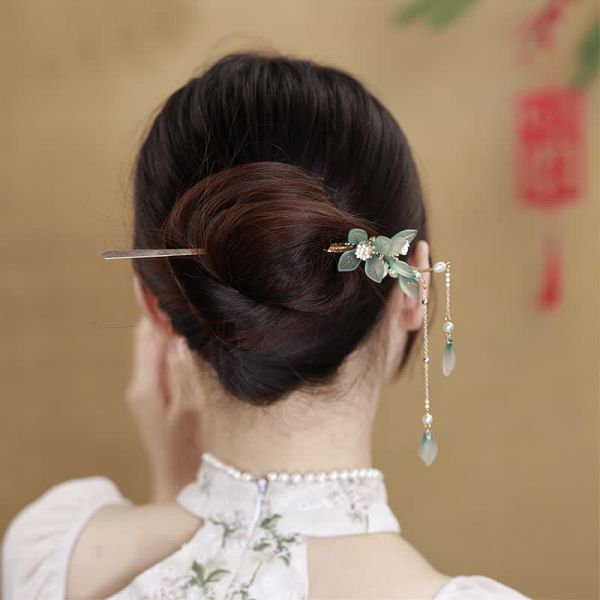
For a tassel design: the Flower Leaf Pearl Peace Tassel Hairpin has a hairpin length of 21cm, a tassel length of 9.5cm, and a weight of 35.2g. Its materials are Alloy, Acrylic, Pearl. Consider both measurements when planning storage; avoid choosing a compartment solely around the shaft.
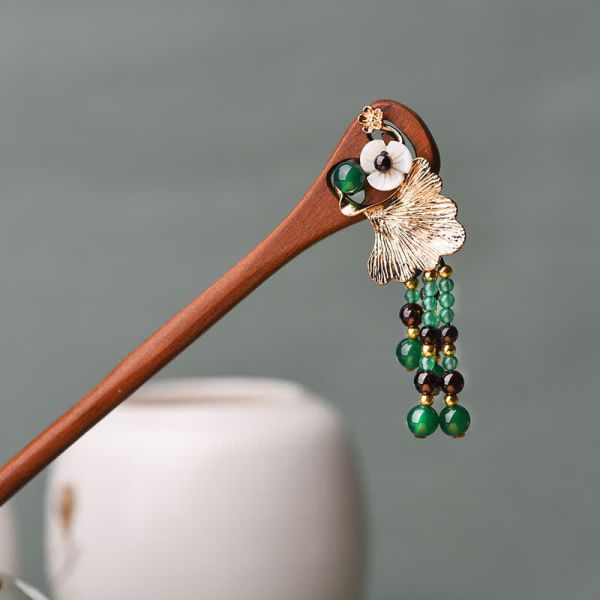
For a wood and stone combination: the Red Sandalwood Green Agate Ginkgo Leaf Protection Hairpin measures 17.2cm and weighs 15g. Its materials are Red Sandalwood, Green Agate. Keep cleaning restrained around the different materials. Protection in its name expresses a traditional wish, and there is no guarantee of protection or any other result.
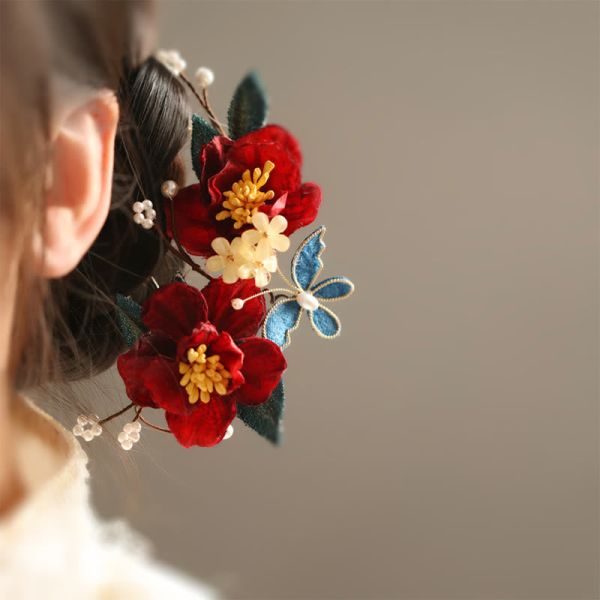
For a choice of accessory types: the Chinese Style Red Camellia Butterfly Hair Accessories include clip, comb, and hairpin options. The stated lengths are Hair Clip About 9cm, Hair Comb About 13cm, and Hairpin About 7-10cm. Confirm the selected option before using those measurements to plan its placement or storage.
For a flower comb: the Chinese Wedding Red Flower Butterfly Hair Comb has a length of Hair Comb About 12cm. Its materials are Polyester, Plastic, Copper Wire, Alloy. Allow space around the decoration, and support the comb base when removing caught hairs.
Frequently asked questions
Can I rinse a hairpin under the faucet?
Avoid making rinsing your default method. Water can reach connections and areas that are difficult to dry, while mixed materials may need different treatment. Start with a dry wipe, then use a small amount of moisture only where appropriate. Do not soak an accessory to loosen styling residue.
Should I oil a wooden hair stick?
Do not assume that wood needs oil. The appropriate treatment depends on its finish and any attached decoration. Unless suitable instructions recommend a particular treatment, use restrained cleaning and keep it away from prolonged dampness and direct heat.
What should I do if a hairpin starts catching hair?
Stop using it and inspect the shaft, tip, and attachments under good light. A caught strand, rough surface, or damaged connection may need attention. Avoid sanding a decorated accessory or repeatedly bending a comb tooth; set it aside until the cause can be assessed.
Shop the story
 Red Sandalwood Green Agate Ginkgo Leaf Protection HairpinSpecial Price $31.59 Regular Price $43.88
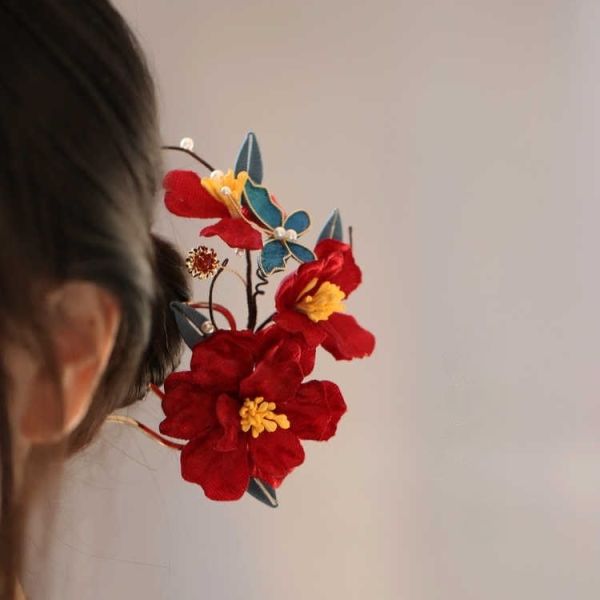 Buddha Stones Chinese Wedding Red Flower Butterfly Hair Comb Hairpin BarretteSpecial Price $27.59 Regular Price $38.32