
Gaiwan vs Teapot Brewing: Choose Your Tea Vessel
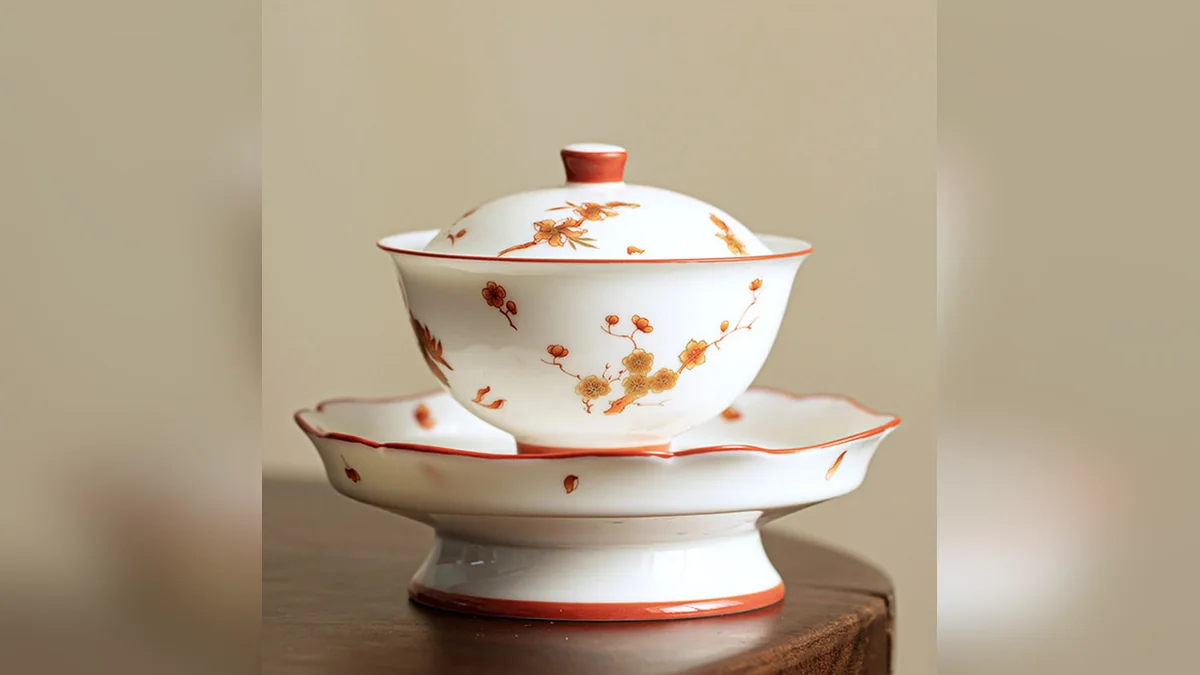
A capacity label can tell you more than a styled tea-table photo: a serving cup and a brewing gaiwan may appear together but be sold as different options. In gaiwan vs teapot brewing, the practical difference is how you hold the vessel and separate tea from leaves. A gaiwan uses a lid opening for pouring; a teapot directs tea through a spout. We recommend choosing by serving volume, handling, and cleanup. This guide helps you decide which shape suits your tea routine before you choose a pattern.
Start with these questions
- How much tea will you serve at once? Count the cups you want to fill from one infusion, then compare their combined volume with the brewing vessel.
- Which grip suits your hands? A gaiwan needs control of the rim and lid; a teapot offers a handle, whose shape also matters.
- How often will you change teas? Consider a glazed interior if you want one vessel for several tea styles.
- Will you make short infusions or a larger batch? Both vessels can support either approach when their capacity and pouring behavior suit the task.
- How much cleanup will you accept? Compare an open bowl with a pot that has a spout, filter holes, or a removable infuser.
Gaiwan vs teapot brewing: choose the pouring style
A gaiwan gives you a broad opening for adding and removing leaves. You adjust the lid gap to let liquid pass while holding back larger leaves. Small fragments may still escape, so consider a separate strainer if that matters to your serving setup.
A teapot channels the pour through its spout. Depending on its design, leaves may be retained by holes inside the pot or by an infuser. A teapot handle can suit someone who prefers to keep their fingers away from the bowl itself, but handle clearance and lid security deserve attention.
Neither vessel determines the brewing method by itself. Small teapots can make repeated short infusions, and gaiwans vary in capacity. Choose the pouring arrangement you can manage steadily.
Separate material from decoration
For general shopping, distinguish glazed ceramic, glass, and unglazed clay. A glazed interior is usually straightforward to rinse between different teas. Glass lets you see the leaves during brewing. Unglazed clay can retain aromas, so it calls for more thought if you regularly switch between strongly scented and delicate teas.
Do not assume that every ceramic vessel has the same finish or thermal behavior. Wall thickness, shape, and glaze coverage matter too. If those details are unavailable, leave them out of your comparison instead of guessing from a photograph.
Our featured product specifications identify ceramic as the material. A floral name or a traditional motif does not establish glaze coverage, clay composition, or firing method. Choose decoration separately from the functional details you can confirm.
Match capacity and dimensions to your hands and cups
Start with the tea you want to pour. Advertised capacity is a reference point, not a promise of the amount reaching your cups. Leaves take up space, and you need room below the rim for comfortable handling. A vessel filled to its stated capacity may be too full for a controlled pour.
For solo brewing with repeated infusions, consider a smaller vessel first. For several cups served together, compare a larger vessel with the combined cup volume. Cup count alone is misleading when one cup holds much more than another.
Then check dimensions independently of capacity. A saucer measurement does not tell you how far your fingers must reach across the bowl. Likewise, a teapot's volume does not reveal the space inside its handle.
When assessing a vessel in person, use it empty and cool first. Check that you can support it securely without forcing your fingers into an awkward position. Hot water adds weight, and a full vessel may handle differently from an empty one.
Let cleanup influence the purchase
An open gaiwan bowl gives you direct access when removing wet leaves. A teapot may need more attention around the spout and any internal straining holes. Removable infusers add another part to wash, though they can make leaf disposal convenient.
For routine care, empty leaves after brewing, rinse away residue, and let components dry before storing. Avoid abrasive pads on decorated surfaces. Follow the maker's guidance for detergent, dishwashers, and special finishes rather than assuming one cleaning method suits every vessel.
Avoid sudden temperature changes, such as pouring boiling water into a vessel straight from a cold storage area. Inspect the rim and lid for chips before use.
Four Buddha Stones gaiwan options to compare
For a smaller brewing option: our White Porcelain Flowers Ceramic Gaiwan has a Gaiwan Teacup option of 12.7cm*9.5cm*110ml. The ceramic range also offers Cup 5cm*4.5cm*50ml, Cup 9.1cm*5.2cm*150ml, and Gaiwan Teacup Set options. Read the option name carefully so you select a brewing vessel when that is your intention. Other accessories used to stage the photo do not come with the cup.
For a 190-milliliter reference: the Retro Plum Blossom Pine Bamboo Phoenix Kirin Ceramic Gaiwan offers Kirin, Phoenix, and Plum Blossom Pine Bamboo options. The stated size is 10cm*9.7cm*190ml, and the material is ceramic. Use that capacity as your starting point when comparing a larger pour with the smaller options here.
For two stated sizes: the Hand Painted Pomegranate Hibiscus Pine Lotus Ceramic Gaiwan has size options of 13*9cm*200ml and 9*10cm*170ml. Its material is ceramic, and the named design options include Hibiscus, Lotus, Pine, and Pomegranate. Check your size and design selections separately; the specifications do not assign a particular capacity to a particular motif.
For a 100-milliliter reference: the Red Crane Ceramic Gaiwan is ceramic, with the stated size 12.4cm*8.8cm*100ml(Tea Cup 8.4*8.8cm, Saucer 12.4cm). Distinguishing the tea cup measurement from the saucer measurement helps you compare the bowl and its table footprint separately.
FAQ
Is a gaiwan or a teapot easier for beginners?
A teapot may be more familiar if you prefer a handle. A gaiwan requires coordinating the lid and bowl during pouring. Start with a manageable size, and check the grip with cool water before brewing hot tea.
Does the same tea need the same brewing time in both?
Not necessarily. Leaf quantity, water temperature, vessel capacity, and pouring speed affect the result. Use the tea's brewing guidance as a starting point. When comparing vessels, keep your leaf and water amounts consistent, then adjust one variable at a time.
Should I buy a larger vessel for flexibility?
Only if you regularly need the extra tea. Partially filling a larger vessel changes the water level and may change handling. Choose a capacity that suits your usual serving amount, then use dimensions and grip to make the final decision.
Shop the story
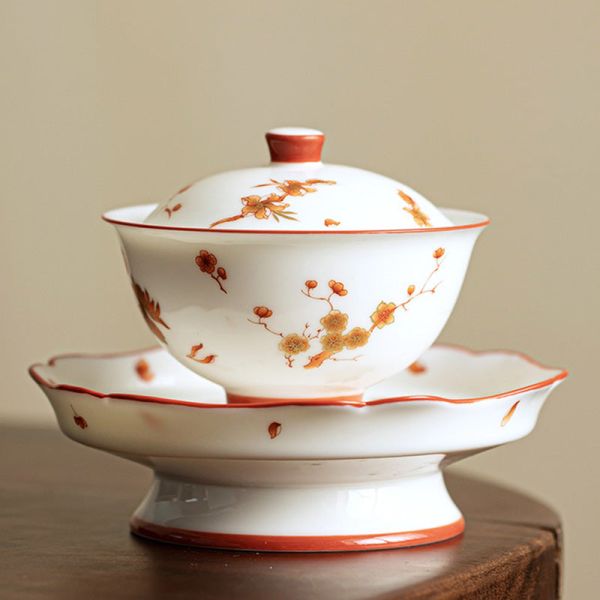 Buddha Stones White Porcelain Flowers Ceramic Gaiwan Sancai Teacup Kung Fu Tea Cup And Saucer With LidAs low as $28.59 Regular Price $38.12
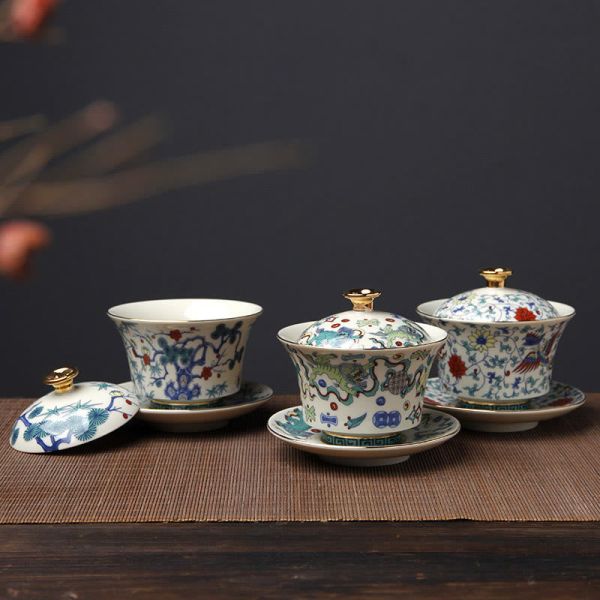 Buddha Stones Retro Plum Blossom Pine Bamboo Phoenix Kirin Ceramic Gaiwan Sancai Teacup Kung Fu Tea Cup and Saucer with LidAs low as $41.59 Regular Price $56.20
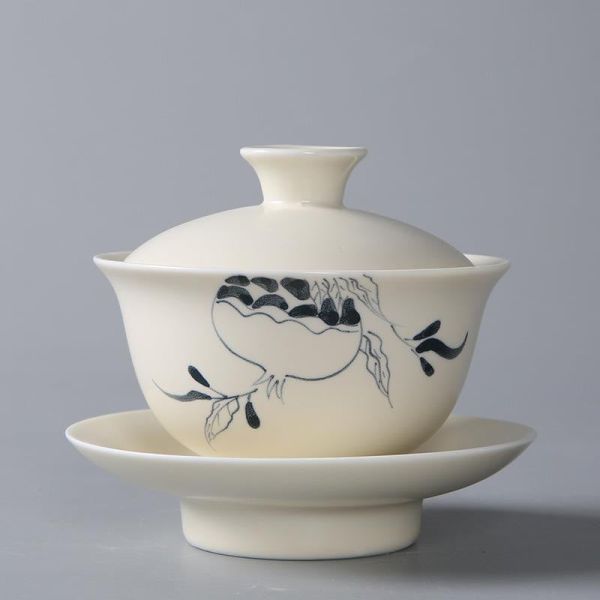 Buddha Stones Hand Painted Pomegranate Hibiscus Pine Lotus Ceramic Gaiwan Sancai Teacup Kung Fu Tea Cup And Saucer With LidAs low as $58.59 Regular Price $81.38
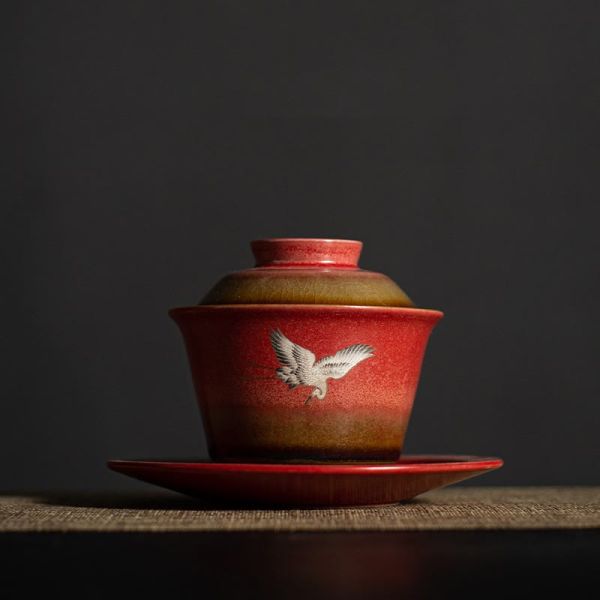 Buddha Stones Red Auspicious Crane Ceramic Gaiwan Sancai Teacup Kung Fu Tea Cup And Saucer With LidSpecial Price $47.59 Regular Price $64.31