
Evil Eye Meaning: A Cross-Cultural Guide to the Symbol
Blue-and-white eye beads hang in a doorway above a Mediterranean street, their round centers repeated in the glass. The evil eye meaning begins with a very old, widespread belief: an envious or admiring glare can cause misfortune. The blue eye charm, called nazar boncuğu in Turkish and often shortened to nazar, is a traditional amulet meant to “look back” at that glare. This is a matter of belief and custom, with different expressions across the Mediterranean, Middle East, South Asia, and Latin America.
Evil eye meaning around the Mediterranean
Around the Mediterranean, an eye bead may hang near an entrance, appear on jewelry, or dangle from a car mirror. These placements put the symbol where people and their attention pass. The eye represents a response to the gaze described in local folklore; it should not be confused with the harmful glance itself.
The familiar blue-and-white glass eye is strongly associated with Turkey, but the broader belief reaches beyond one country or one religion. Names, gestures, and preferred amulets differ between communities. An eye charm bought as a souvenir can therefore share a shape with an object that carries family or religious significance for someone else.
Why blue? A common explanation points to glassmaking traditions and local color customs. Blue glass became a familiar form for the eye bead, but there is no single explanation that accounts for every community. It is better to recognize that association than to assign one universal meaning to the color.
Some folklore holds that a cracked bead has “done its job.” That interpretation belongs to the tradition; a crack is not evidence that the bead intercepted a harmful glance. Damaged glass should be handled carefully, whatever meaning a household gives it.
The Middle East and North Africa: an eye in the palm
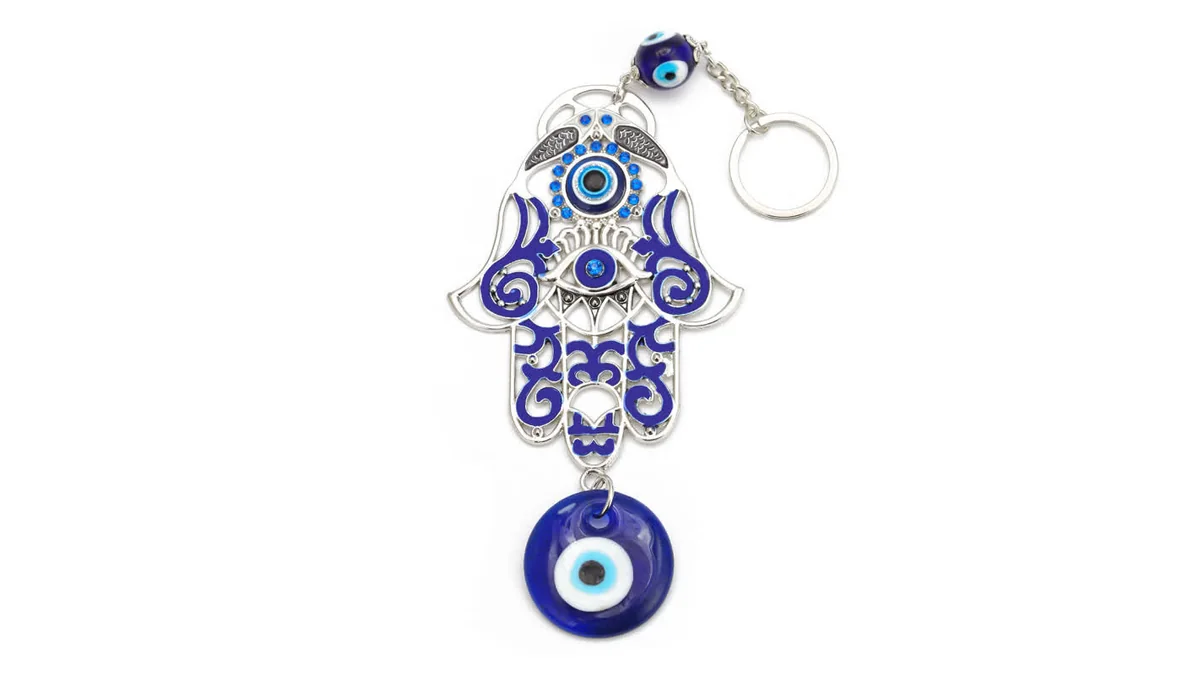
Across parts of the Middle East and North Africa, the eye also appears inside a hand. The hamsa is a palm-shaped amulet found in Jewish and Muslim traditions in these regions, often with an eye at its center. It is traditionally believed to offer protection against the evil eye, though its associations and uses vary.
The hand and eye are related symbols, but they are not interchangeable. A hamsa can appear without an eye, while a nazar bead does not need a hand around it. Recognizing those differences makes it easier to describe a pendant or household ornament accurately.
Shared imagery does not mean identical practice. Families may understand a hand-shaped amulet through religion, inherited custom, decoration, or a combination of these. We describe those meanings as traditions, without suggesting that one explanation represents every Jewish or Muslim household. A symbol can travel widely while retaining particular meanings in the communities that use it.
South Asia: the customs surrounding a compliment
In South Asia, nazar is also a familiar word in beliefs about the gaze. Here the subject extends beyond a blue bead to everyday speech and family customs. Concern about admiration may accompany praise of a child, someone's appearance, or a valued possession. The details differ by region, religion, language, and household.
In some communities, a compliment is followed by a blessing or a phrase acknowledging divine care. Within that custom, the words express goodwill while addressing the traditional concern about an admiring gaze. There is no need to assume that the person offering praise intended harm.
This distinction helps explain why the belief includes admiration as well as envy. A warm compliment and a feared glance can occupy the same folk account. When discussing these customs, describe what a family believes or practices instead of treating a glance as a demonstrated cause of misfortune.
Latin America: mal de ojo and family tradition
In many Spanish-speaking communities, the belief is known as mal de ojo, often translated as “evil eye.” Across Latin America, customs associated with it differ between places and families. The shared name does not indicate one standard amulet, ceremony, or explanation.
As in other regions, admiration and envy may both figure in the belief. Blessings and meaningful objects can form part of family custom, but a Turkish blue eye bead should not stand in for every Latin American expression of mal de ojo. Similar concerns can take distinct local forms.
Following the symbol across regions reveals connections without erasing those differences. A doorway ornament, a hand-shaped pendant, and words spoken after praise may belong to related traditions, yet each needs its own context. Cultural symbolism offers a way to understand an object, not a guarantee of protection, luck, or any other outcome.
Questions about wearing the symbol
Is wearing an evil eye respectful if it is not from my culture?
Eye charms are widely sold and gifted across cultures. Learning their meaning and wearing them thoughtfully is a respectful starting point. Recognize the traditions behind the design, avoid claiming authority over someone else's customs, and listen when a person explains what the symbol means in their community. Giving one with a short explanation can also keep its cultural context visible.
Which wrist should an evil eye bracelet go on?
Customs vary, and there is no fixed rule shared across these regions. A family tradition may favor one wrist; another wearer may choose according to fit or convenience. Neither choice establishes whether a charm will produce an outcome. For everyday wear, follow the bracelet's stated sizing information and choose a comfortable fit.
Does the color matter?
Color can matter within particular customs, but modern sellers also assign separate meanings to different charm colors. Those standardized color charts are largely a modern retail convention, not a single inherited tradition. Blue has a longstanding association with the familiar glass nazar; a detailed chart promising a different result for every shade should not be treated as universal cultural guidance.
Eye and hamsa designs at Buddha Stones
Our Evil Eye bracelet is made of copper, with an adjustable length of 26 cm and a 1.4 × 1.9 cm charm. The photos show a gold-tone box chain with a slider bead and a hamsa-hand charm set with a blue eye. A bracelet places the eye motif at the wrist, one of the wearable settings associated with the symbol.
The Evil Eye copper alloy ring is adjustable, with a width of 0.7 cm and an inner diameter of approximately 17 mm.
For a household setting, our Hamsa Symbol Evil Eye home decoration is made of electroplated alloy and weighs 60 g. It is decor to hang or display, bringing the hand-and-eye motif into a domestic setting.
Our Titanium Steel Lotus Hamsa necklace is made of titanium steel and comes in Gold or Steel options. Its length is approximately 15.7 in / 40 cm, with an additional 0–2 in / 0–5 cm adjustment. The pendant measures approximately 0.4 × 0.6 in / 1.1 × 1.75 cm. When choosing or gifting a symbolic design, a few words about its tradition can accompany the object without promising what it will do.
Shop the story
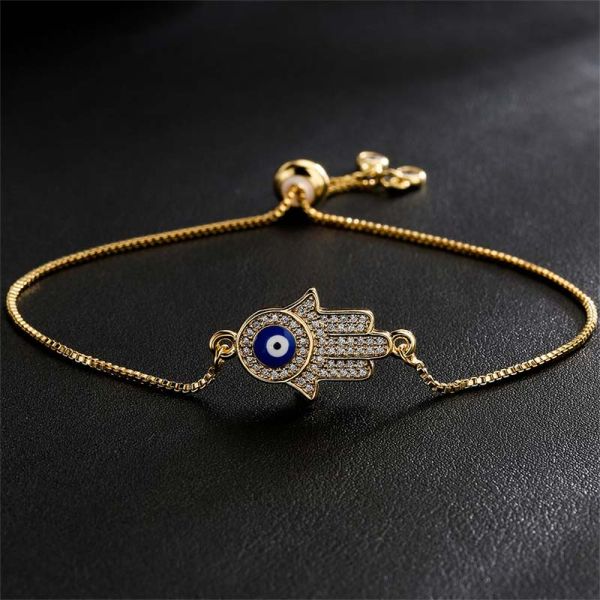 Buddha Stones Evil Eye Protection Courage BraceletSpecial Price $23.59 Regular Price $33.23
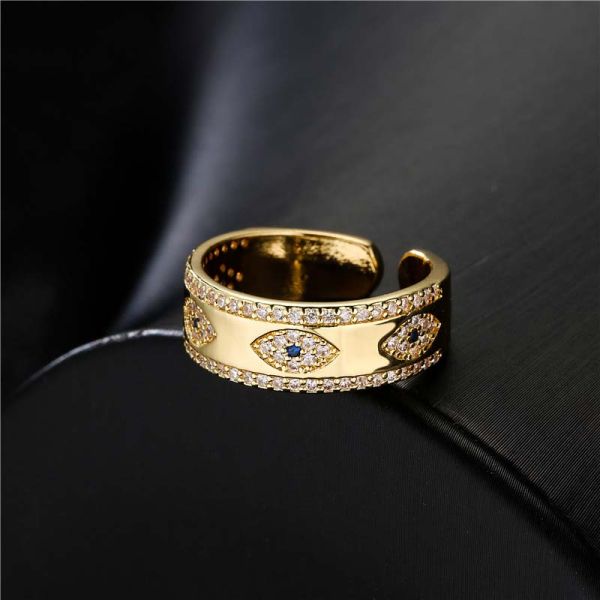 Buddha Stones Evil Eye Luck Blessing Copper Alloy RingSpecial Price $25.59 Regular Price $36.04
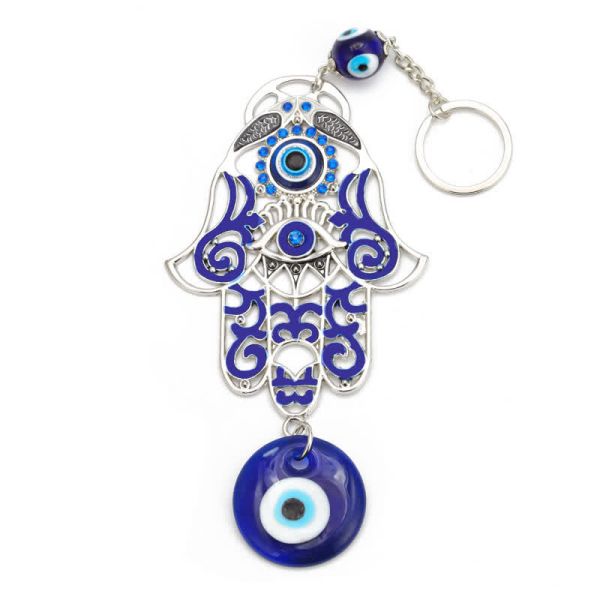 Buddha Stones Hamsa Symbol Evil Eye Protection Prosperity Home DecorationSpecial Price $25.59 Regular Price $35.05
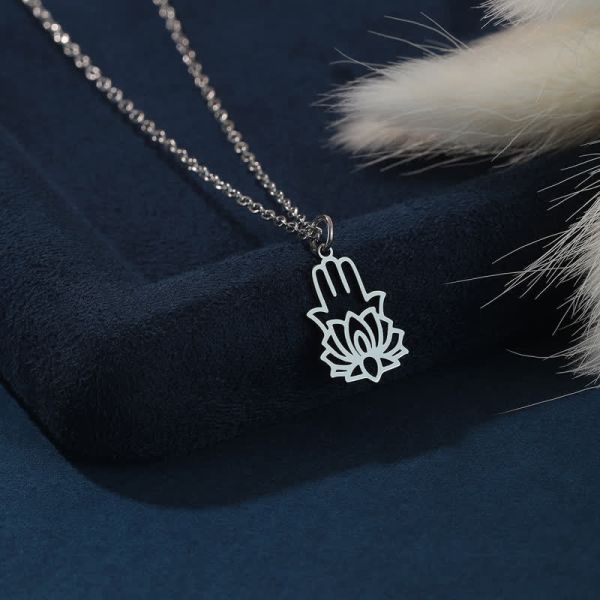 Buddha Stones Titanium Steel Lotus Hamsa Hand Protection NecklaceAs low as $25.59 Regular Price $34.12