Chinese Embroidery Bag Guide: Choose, Fit, and Care
Bag attachment points determine which replacement straps you can use. This chinese embroidery bag guide explains how to inspect decorative stitching, check your bag and strap measurements, coordinate patterns, and plan appropriate care. Start by deciding whether you need a complete bag or a replacement strap: these are separate purchases. the four products covered below are bag straps, with one strap included per package. Their names describe Bohemian embroidery designs; they do not establish a particular Chinese regional embroidery tradition.
1. Identify the bag and embroidery you need
Write down what the bag needs to carry before choosing its decoration. Compare the interior space, opening, closure, and pockets with those requirements. An embroidered panel can draw attention, but it does not tell you whether a notebook fits inside or whether the opening allows easy access.
Next, examine close photographs of the stitching. Embroidery adds stitches to a fabric base; a printed pattern alone is not embroidery. Look for loose ends, interrupted lines, and areas where stitching appears caught or pulled. Ask for clarification when photographs do not show enough detail.
Keep construction and cultural attribution separate. Flowers and geometric shapes appear in many decorative traditions. A motif alone cannot confirm where a bag was made, which embroidery method was used, or who produced it. Use explicit product information for those details.
2. Measure before choosing a replacement strap
Check whether the existing strap can be removed without altering the bag. Some straps detach; others are sewn into the bag. Examine the attachment points and establish what connector shape and opening they require. A strap described as adjustable is not automatically compatible with every bag.
Measure a suitable existing strap from end to end, including its connectors, and record how you took the measurement. Compare that figure with the replacement strap's stated range. If a listing does not explain its measurement method, clarify that detail before relying on a close match.
Distinguish total strap length from strap drop. Drop describes the distance between the top of the strap and the bag when suspended; it is not interchangeable with the full length. Compare width separately, too. Width affects the visible proportions of the strap against the bag, while connector fit requires its own check.
3. Set the length and check the attachment
Attach a replacement strap only after confirming that its connectors fit the bag's attachment points. Work over a clear surface with the bag empty. Keep the strap flat, check both ends, and make sure the attachment mechanism closes completely. Do not force an oversized connector through a narrow opening.
Adjust the length in small increments. Check the bag's position for the intended shoulder or crossbody arrangement, then try opening and closing it. The bag should remain accessible without the strap crossing its opening or catching the closure.
Add the contents you intend to carry and check the setup again. Look for twisting, slipping at the adjustment point, or strain around the bag's attachments. Follow any stated load limits. If compatibility remains uncertain, pause and obtain the missing information rather than modifying the connector or attachment point.
4. Coordinate pattern, color, and placement
Choose one visual feature to lead: the bag's embroidery or the replacement strap's pattern. A plain bag gives a patterned strap more visual space. With an embroidered bag, start by matching one visible color rather than trying to repeat every shape.
Compare the scale of the designs. Closely spaced details on both bag and strap can compete, while a broader pattern beside finer stitching creates a clearer distinction. Lay the items together, if available, before making the final pairing.
Check pattern placement as well as color. The position of the pattern is random on the four straps described below, so a particular flower or geometric detail may not occupy the same spot shown in a product photograph. Avoid planning a pairing around one precisely positioned motif.
5. Plan care around the complete bag
Read the care instructions for the bag, lining, decorative stitching, and detachable strap separately. A strap's material does not establish how to wash the bag it attaches to. Likewise, identifying the base fabric does not identify every thread, backing, or trim.
Empty the bag before inspecting it for dust or marks. Remove loose surface dust gently, without scrubbing raised stitches. Avoid pulling a loose thread or cutting it close to the surface; first determine whether it belongs to the embroidery or a structural seam.
Follow the maker's directions for any cleaning beyond surface dust removal. Do not assume machine washing is suitable. Let damp components dry fully before storage, and arrange the strap so its connectors cannot catch the embroidered surface. Avoid sharp folds through dense stitching.
Mistakes to avoid when pairing bags and straps
- Buying from the photograph alone. Check the item type and package contents so a pictured bag does not become an assumed inclusion.
- Checking length but ignoring attachments. A suitable adjustment range cannot resolve incompatible connectors.
- Treating decoration as proof of origin. Floral or geometric stitching does not establish a regional embroidery tradition.
- Expecting identical motif placement. Random pattern positioning makes precise photographic alignment an unreliable selection criterion.
- Applying one care method to everything. The bag, embroidery, lining, and replacement strap may require different handling.
- Leaving the strap twisted. Flatten it before adjusting, then inspect the attachment points again.
Compare our four embroidery replacement straps
Use these stated specifications to narrow your choice. Connector dimensions and load limits are not supplied in the facts below, so confirm those details separately when they determine compatibility.
Brown Beige Flower Geometric Embroidery Strap
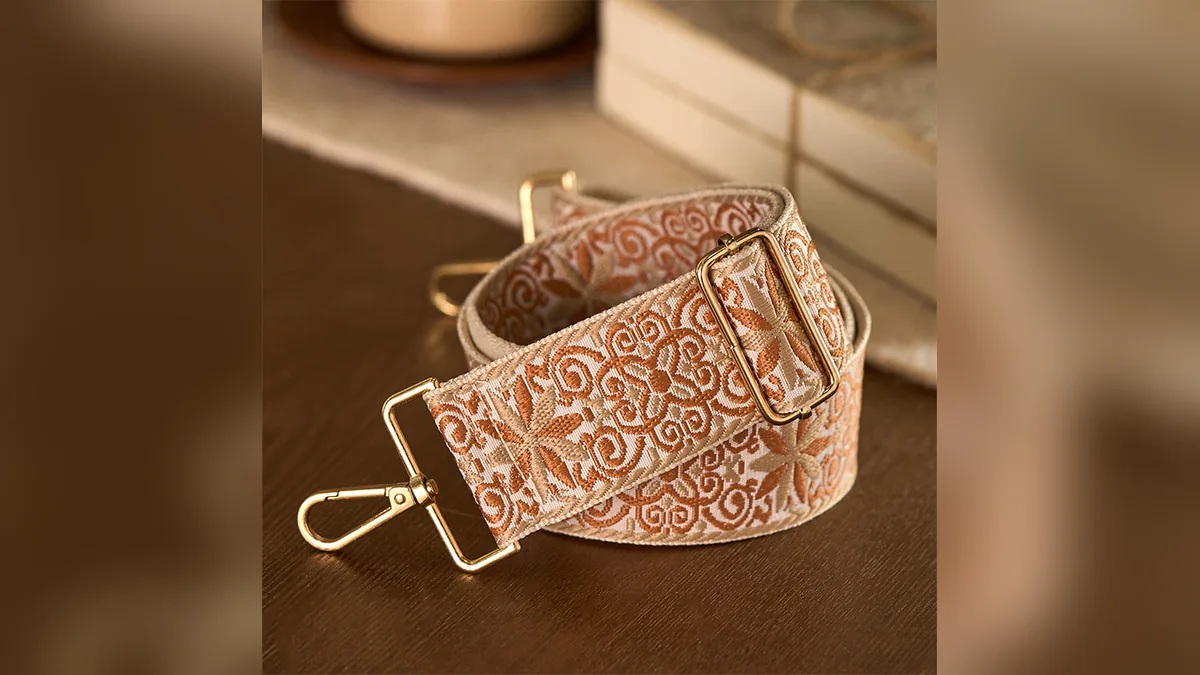
Our Buddha Stones Brown Beige Flower Geometric Embroidery Strap is a polyester adjustable bag strap, SKU BS17200F7E6C2. Strap length: About 29.92-53.54 in (76-136 cm). Strap width: About 1.97 in (5 cm). The package contains 1 Pc Bag Strap. Pattern position is random.
Flower Geometric Embroidery Strap
The Buddha Stones Flower Geometric Embroidery Strap, SKU BSP-BS171886C4472, comes in Beige, Black Khaki, Brown Blue, Khaki, Pink, and SteelBlue options. This polyester adjustable bag strap has a strap length of About 29.53-53.15 in (75-135 cm) and a strap width of About 1.97 in (5 cm). Included: 1 Pc Bag Strap. The pattern's position is random.
Flower Geometric Stripes Embroidery Strap
Our Buddha Stones Flower Geometric Stripes Embroidery Strap carries SKU BSP-BS17199332C49. Its options are Blue 76-136cm*5cm, Pink Blue 76-136cm*5cm, and Red 76-136cm*5cm. Material: Polyester. Strap type: Adjustable Strap. Strap length: About 29.92-53.54 in (76-136 cm). Strap width: About 1.97 in (5 cm). Package contents: 1 Pc Bag Strap. Pattern placement is random.
Flower Vine Geometric Embroidery Strap
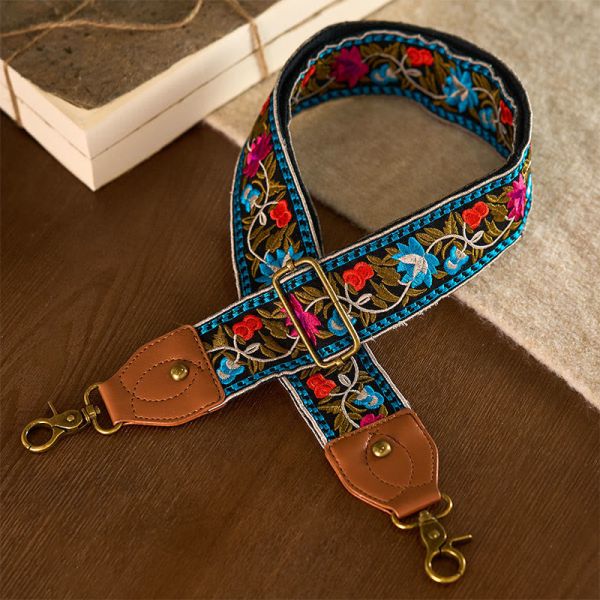
The Buddha Stones Flower Vine Geometric Embroidery Strap, SKU BSP-BS17189A2B147, offers Black Blue, Black Pink Green, Black Pink Purple, and Yellow Brown options. It is a polyester adjustable bag strap. Strap length: 29.53-53.15 in (75-135 cm). Strap width: About 1.97 in (5 cm). One package includes 1 Pc Bag Strap, and pattern positioning is random.
Keep your bag measurements, attachment requirements, and care instructions together. Those details make future strap comparisons easier. Finish by checking the complete setup: a flat strap, fully closed attachments, an accessible opening, and embroidery kept clear of anything that could snag it.
Shop the story
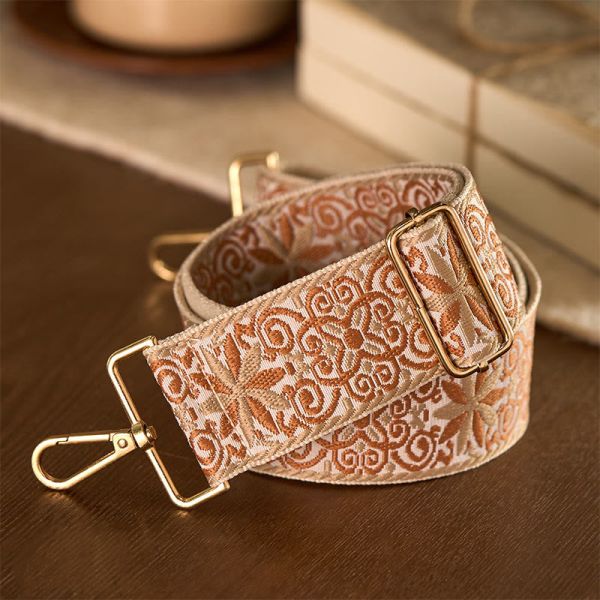 Buddha Stones Bohemian Brown Beige Flower Geometric Embroidery Adjustable Handbags Crossbody Shoulder Bag Purse Straps ReplacementSpecial Price $19.59 Regular Price $26.12
 Buddha Stones Bohemian Flower Geometric Embroidery Adjustable Handbags Crossbody Shoulder Bag Purse Straps ReplacementAs low as $21.59 Regular Price $30.41
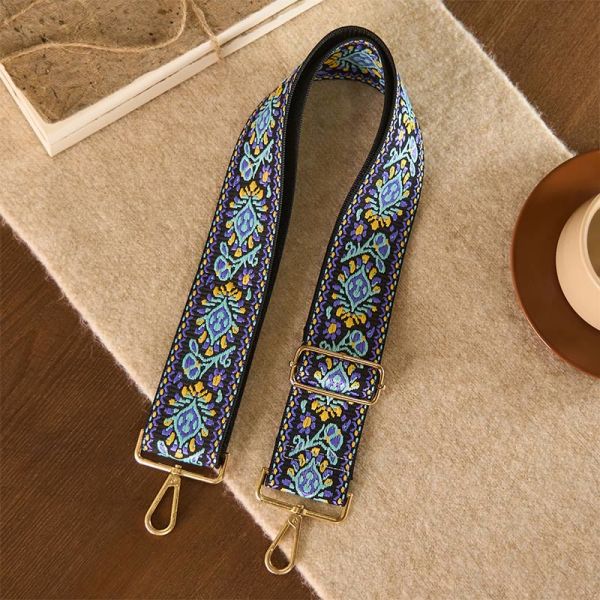 Buddha Stones Bohemian Flower Geometric Stripes Embroidery Adjustable Handbags Crossbody Shoulder Bag Purse Straps ReplacementAs low as $19.59 Regular Price $27.59