
Dragon Symbolism Across Art, Dress, and Daily Objects
A long, scaled body curves between clouds and curling waves. Dragon symbolism traditionally expresses strength, authority, and a connection with rain and water in Chinese culture. Associations with luck, wealth, and protection belong to cultural belief; a dragon motif cannot guarantee these outcomes. Its meaning also changes with its setting: a creature on an imperial robe speaks differently from one carried through a festival or worn as jewelry.
At Buddha Stones, we read the surrounding details as part of the symbol. The creature’s pose, its companions, and the object bearing it help explain which tradition a design draws upon.
Dragon symbolism begins with the setting
The familiar Chinese dragon has a long, serpentine body, claws, horns, and whiskers. It is often shown moving through clouds or rising above waves without the broad wings common in European dragon imagery. These differences matter because the English word “dragon” covers creatures from several traditions, rather than one figure with a single meaning.
Chinese legends associate dragons with rivers, seas, and rainfall. Stories of Dragon Kings describe rulers of watery realms, giving the motif a place in traditions concerned with rain and the agricultural calendar. There is no single origin story that explains every dragon image. The figure developed across many forms of storytelling, ritual, and visual art.
Many European stories instead cast a dragon as a dangerous opponent or a guardian of treasure. That contrast is useful, but it is not an absolute division: dragons can be threatening, protective, or authoritative within different stories. Begin with the cultural setting before assigning a meaning to the creature’s shape.
Four places the motif takes on different roles
Art and architecture: water, movement, and authority
In paintings, ceramics, and architectural decoration, clouds and waves often place a dragon within its traditional watery realm. A body that loops across a surface lets an artist connect separate areas of a composition. The creature can fill a narrow border, circle a vessel, or extend across a broad wall.
Palace imagery adds another layer. Dragons served as emblems of imperial authority in China, so the same animal can carry political meaning as well as mythological associations. A museum object’s description may identify its intended wearer, location, or ceremonial purpose. Those details are more reliable than assuming that every dragon represents an emperor.
Textiles: the wearer and the occasion
A dragon woven or embroidered into a robe belongs to the larger arrangement of that garment. Its position, accompanying motifs, and the robe’s historical use all contribute to the reading. Claw counts sometimes help identify conventions of rank, but they should not be treated as a universal code across every period and region.
On contemporary clothing and accessories, a dragon may simply be a decorative subject or an expression of cultural affiliation. A modern pattern does not automatically reproduce the status rules of court dress. Look for an identified historical reference before drawing that connection.
Jewelry: a symbol carried at a smaller scale
Jewelry brings the dragon into a personal context. A wearer may choose it for a zodiac association, a traditional wish for good fortune, or an appreciation of its shape. These are different reasons for wearing the same motif, and none needs to be presented as a prediction.
Scale also changes what you can read. A small pendant may emphasize an outline, while a larger design may allow more surrounding details. Avoid assigning a specific legend to an unfamiliar piece unless its description actually identifies one.
Festivals: a creature made through coordinated movement
A dragon dance gives the motif a moving, public form. Performers support sections of a long dragon and coordinate its turns, rises, and dips. The activity is associated with festive occasions, including Lunar New Year, and traditional wishes for an auspicious year.
This is distinct from a lion dance, which uses a different creature and costume structure. Dragon boats offer another setting: their dragon heads connect the image with water and organized team paddling. A dance dragon, a boat, and a pendant share a motif, but their uses are different.
What a dragon’s companions can tell you
A dragon and a phoenix: This pairing is traditionally associated with harmony and marriage, especially in wedding decoration. It can express a wish for a harmonious union. The pairing has a particular cultural use; it does not mean that every image of either creature concerns marriage.
A dragon and a pearl: A rounded jewel appears in many dragon compositions, sometimes surrounded by flame-like forms. It is commonly called a flaming pearl. Its interpretation depends on the artistic and religious setting. Calling every round object a literal ball, sun, or moon can make a design seem more certain than the evidence allows.
Two dragons: When two dragons face a central pearl, their shared focus organizes the composition. Notice the whole arrangement before interpreting either animal separately. The repeated forms may belong to a ceremonial or decorative design rather than a scene from a particular story.
A dragon and a tiger: These animals can appear as complementary counterparts in Chinese imagery. Their relationship is often interpreted through yin and yang. That reading concerns a traditional relationship between symbols, rather than an effect produced by displaying or wearing them.
Dragon pieces in our product selection
Our product details below identify materials and any supplied measurements or options. In product names, words such as Luck, Wealth, and Protection express traditional wishes, rather than promised results.
Gold plated copper and Hetian jade necklace
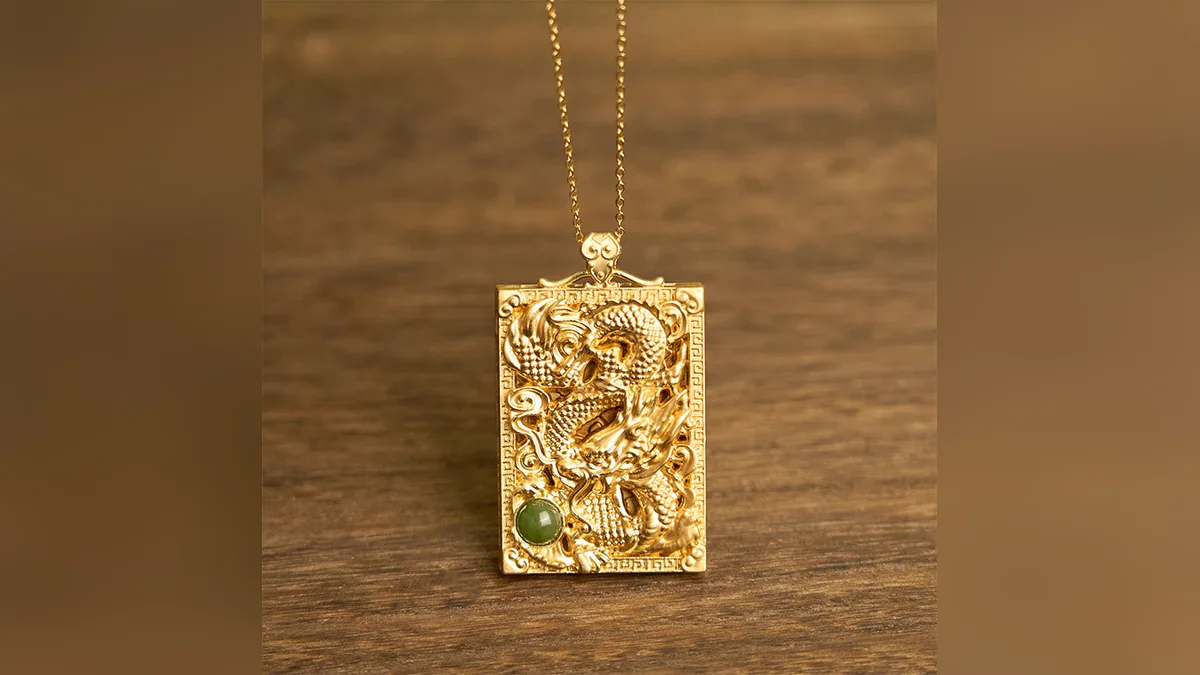
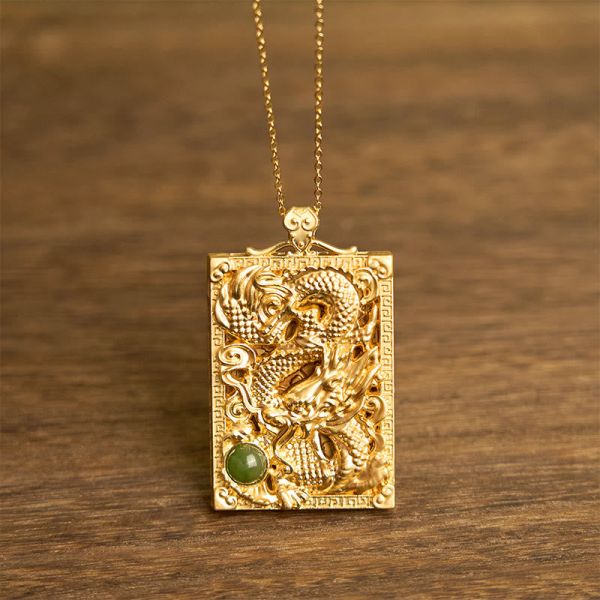
Our Dragon Gold Plated Copper Hetian Jade Strength Necklace Pendant is a necklace made with Gold Plated Copper and Hetian Jade. Its pendant size is 56*37mm, and its bead size is 7mm.
Zodiac pendant with a Dragon option
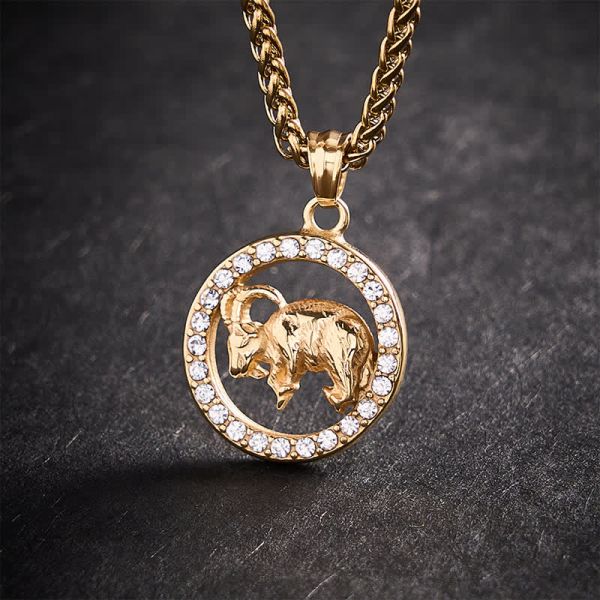
The Titanium Steel Chinese Zodiac Pendant Necklace offers Dragon, Goat, Ox, and Tiger options. Its materials are Titanium Steel and Stainless Steel. Necklace length is Approx. 24 in / 60 cm, and pendant size is Approx. 0.9 in / 23 mm. The package contains 1 × Necklace.
Dragon Bone Peace Pattern bracelet
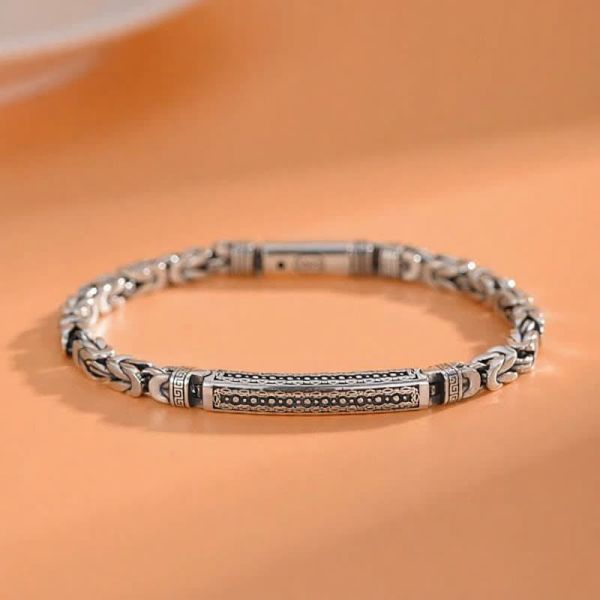
Our Copper Dragon Bone Peace Pattern Chain Protection Bracelet uses Copper Alloy and weighs Approx. 50g. Wrist circumference options are 6.3–6.7 in/16–17 cm, 7.1–7.5 in/18–19 cm, and 7.9–8.3 in/20–21 cm. The package contains 1 × Bracelet.
Braided round keychain
The Copper Dragon Wealth Braided Round Keychains has Five Emperor Coins and White Bead Cord options. Its materials are Copper Alloy and Braided Cord. The item type is Keychain, and the package contains 1 × Keychain.
Let the surrounding details guide the reading
A dragon becomes easier to understand when you consider where it appears and what accompanies it. Clouds suggest one setting, a ceremonial robe another, and a festival performance another still. We approach these designs as cultural symbols whose meanings deserve context. You can appreciate the image, recognize a traditional wish, and leave the outcome open.
Shop the story
 Buddha Stones Dragon Gold Plated Copper Hetian Jade Strength Necklace PendantSpecial Price $27.59 Regular Price $37.79
 Buddha Stones Titanium Steel Chinese Zodiac Goat Dragon Tiger Ox Luck Pendant NecklaceAs low as $25.59 Regular Price $35.54
 Buddha Stones Copper Dragon Bone Peace Pattern Chain Protection BraceletAs low as $25.59 Regular Price $35.93
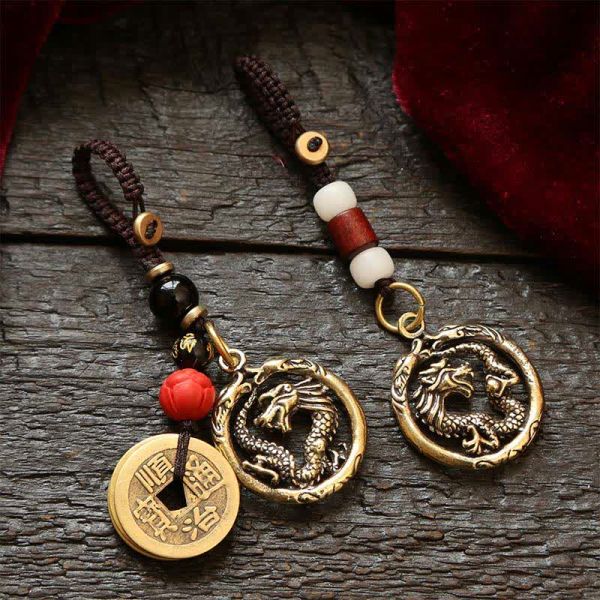 Buddha Stones Copper Dragon Wealth Braided Round KeychainsAs low as $25.59 Regular Price $35.54