
Deer Symbolism: A Visual Guide to Traditional Motifs
Branching antlers rise above a slender animal beside a flowering stem. In Chinese decorative tradition, deer symbolism often expresses wishes for long life and prosperity; in Buddhist imagery, deer can refer to the Buddha's first teaching at Deer Park. Associations with wealth or luck belong to cultural belief, and a motif cannot guarantee either. At Buddha Stones, we read the animal together with its surroundings. A wheel, a second deer, or a cluster of flowers gives you more to work with than the animal alone.
How to recognize the motif
Start with the outline, then examine the smaller marks and neighboring shapes. Artists simplify animals to suit fabric patterns, pendants, and decorative objects, so a deer may appear as a detailed figure or just a few recognizable lines.
- Branching antlers: Antlers commonly spread into several pointed branches. They are a useful clue, although their absence does not rule out a deer, especially in a simplified design.
- A slender body: Look for a narrow neck, long legs, and small hooves. A standing or turning pose often makes the neck and leg shapes easier to distinguish.
- Large, upright ears: The ears can help identify a small deer figure when there is little room for detail. Read them together with the muzzle and body proportions.
- A spotted coat: Pale spots sometimes identify a sika deer in Chinese decorative art. Spots are a supporting clue, rather than a requirement for recognizing the motif.
- Companion symbols: Notice a wheel between two deer, or plants and other animals surrounding one. These details help you distinguish a Buddhist emblem from a broader decorative scene.
Check the whole composition before naming it. An antlered head alone offers less context than a complete scene. A creature with a horn, scales, and an unfamiliar body may belong to another symbolic tradition, so antlers by themselves are not enough.
Deer symbolism in Chinese and Buddhist tradition
Long life and prosperity in Chinese decoration
In Chinese art, the deer has longstanding associations with longevity. It may appear with pine trees or other motifs connected with long life. Together, those elements can express a wish for many years, particularly in a decorative or gift setting. The meaning comes from an established visual vocabulary, not from a claimed property of the object carrying it.
Another association comes through language. The Chinese word for deer, lu, sounds like a word for an official's salary or emolument. This wordplay helps explain why deer appear in designs connected with prosperity and advancement. Translating the animal simply as “money” misses that connection to livelihood and official rank.
A flower beside a deer can add another layer, but avoid assigning a fixed message without identifying the flower. Sometimes the surrounding plants establish a garden setting or balance the pattern. A decorative combination does not always function as a sentence with one exact translation.
Deer beside the Dharma wheel
In Buddhist imagery, two deer flanking a Dharma wheel recall the Buddha's first teaching at Deer Park in Sarnath. The wheel refers to the Dharma, or Buddhist teaching. The deer help identify the setting and the familiar emblem, rather than serving as a general prosperity sign.
Keep the distinction between settings in view. A deer on a floral bag is not automatically a Buddhist emblem, and a deer beside a Dharma wheel should be understood through that religious context. We describe these meanings as traditions and references; ownership of a deer design does not confer a promised result.
Where the deer appears: a quick visual map
Use this map to decide which details deserve a closer look. The setting gives you a starting point, while the complete arrangement helps narrow the interpretation.
| Where you see it | How it usually appears |
|---|---|
| Buddhist temple imagery | Two deer flank a Dharma wheel, linking the arrangement to the first teaching at Deer Park. |
| Chinese decorative landscapes | A deer stands among trees, rocks, or plants; companion motifs may support a traditional longevity reading. |
| Bags and patterned textiles | Deer share space with flowers or other animals, sometimes within a repeated pattern rather than a single scene. |
| Small hanging decorations | The animal becomes a compact figure, with its ears, legs, and antlers doing much of the identifying work. |
Deer motifs among our bags and decorations
For these selections, begin with the named design option, then compare dimensions and closures. A product title can group several animals or flowers together, so the option name matters when you want a deer motif.
A lotus-and-deer option in cotton linen
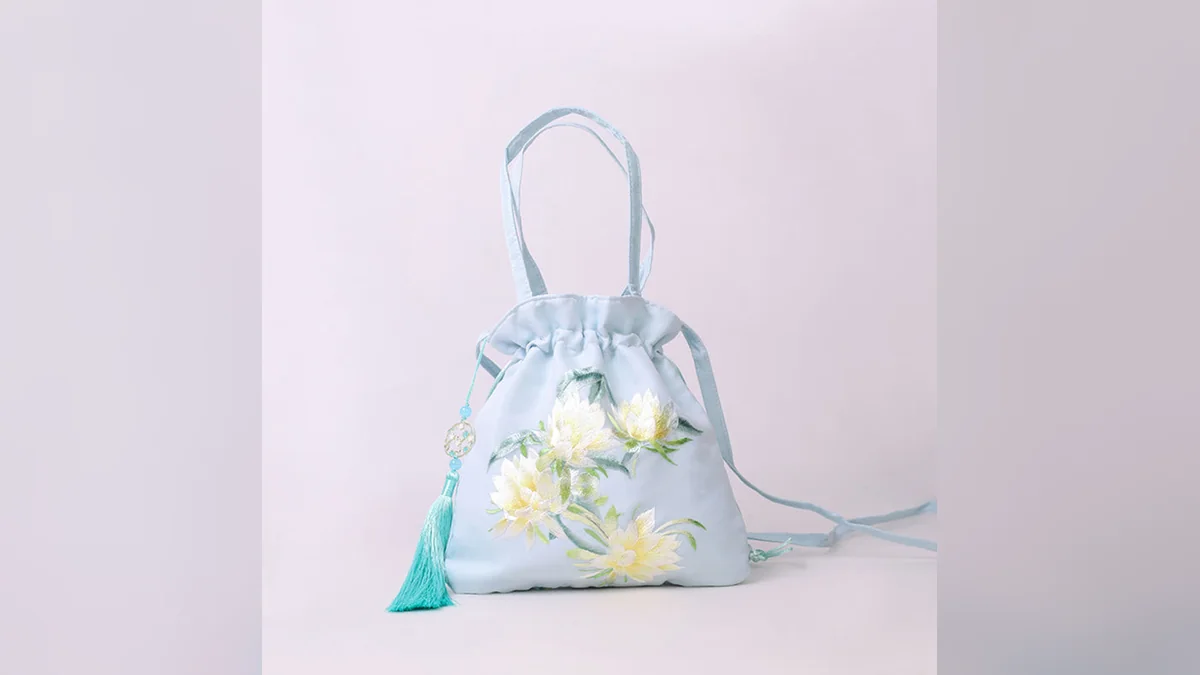
Our Suzhou Embroidery cotton linen bag includes a Light Purple Lotus Fairy Deer option. Its size is 21*22cm. The materials are cotton linen fabric and ceramic bead accessories, with one main pocket, a strap closure, and an adjustable shoulder strap measuring 130cm.
The other named options include epiphyllum, cherry blossoms, strawberry rabbit, nine-tailed fox, and peony designs. Select the Lotus Fairy Deer option specifically if the deer is your focus.
A crane-and-deer brocade bag
The Retro Crane Deer Song Brocade crossbody bag measures 15*10*16cm. Its stated materials are mulberry silk, Song brocade, cow split leather, and metal. It has a drawstring closure and an adjustable strap with a stated length of 105cm.
The specification gives about 20 momme and a seven-day pre-sale period. Treat the crane-and-deer title as the design reference; the title alone does not establish a particular religious scene.
Flower-and-deer or crane-and-deer options
The Handmade Flower Crane Deer Butterfly Song Brocade bag offers LightSkyBlue Deer Flowers and SteelBlue Crane Deer options, alongside Black Butterfly. The size is 29*23*12cm, with a magnetic clasp and an adjustable strap measuring 100cm.
Materials are mulberry silk, Song brocade, top-grain leather, and alloy metal. The specification gives about 38 momme and a seven-day pre-sale period. Choose between the two deer options by their named companion motifs and colors.
A small deer hanging decoration
Our sandalwood animal phone hanging decorations include Green Sandalwood Deer 3*2.3cm, Green Sandalwood Deer Decoration, and Red Sandalwood Deer Decoration options. The 3*2.3cm dimension belongs to the specifically sized green sandalwood deer option; no dimensions are supplied for the other two deer options.
“Prosperity” in the full product name expresses a traditional wish. It is not a promise of financial gain. Keep that symbolic wording separate from the material and option details when comparing decorations.
Read the animal, then its surroundings
A useful reading begins with three observations: identify the deer, name its companions, and consider the setting. That sequence leaves room for religious meaning, traditional wishes, and decorative choices without treating them as interchangeable. You can appreciate a floral deer pattern for its composition while understanding the associations behind it. The surrounding details are what turn a familiar animal into a more specific visual reference.
Shop the story
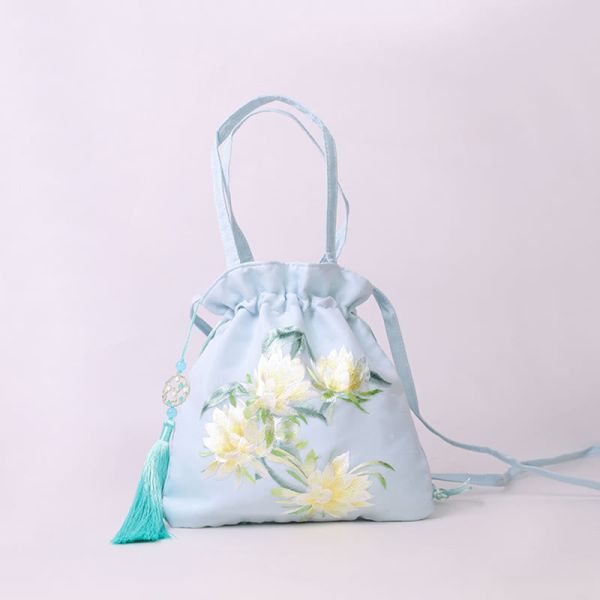 Buddha Stones Suzhou Embroidery Lotus Deer Epiphyllum Peony Rabbit Cotton Linen Tote Crossbody Bag Shoulder Bag HandbagAs low as $22.59 Regular Price $31.82
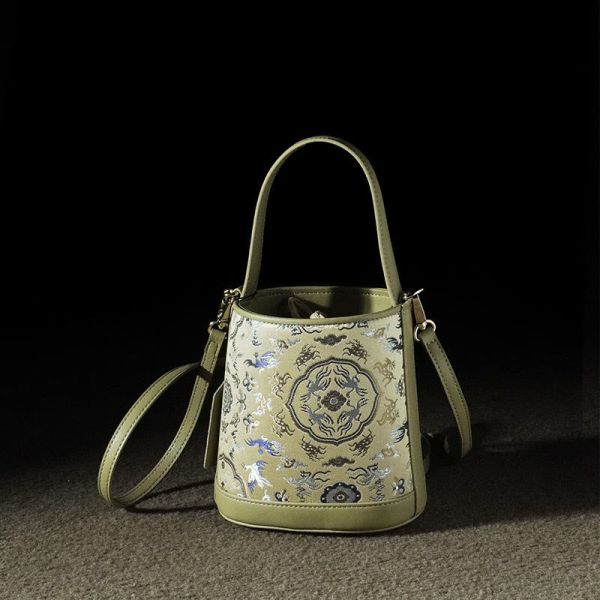 Buddha Stones Retro Crane Deer Song Brocade Crossbody Bag HangbagsSpecial Price $198.59 Regular Price $264.79
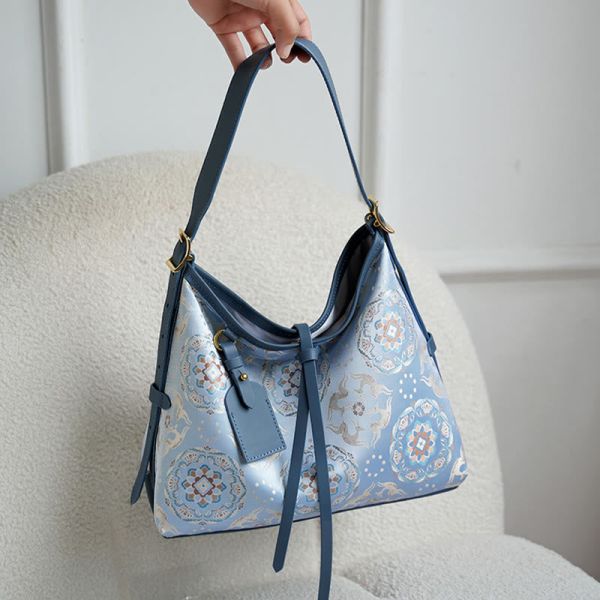 Buddha Stones Handmade Flower Crane Deer Butterfly Song Brocade Crossbody Bag HangbagsAs low as $459.59 Regular Price $629.58
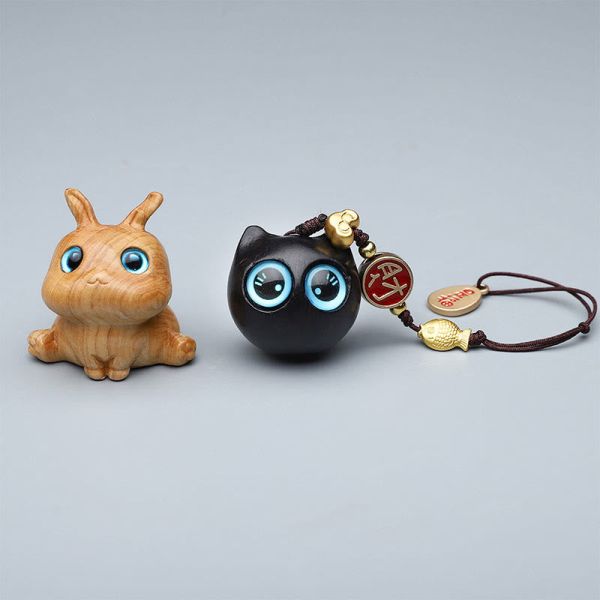 Buddha Stones Green Sandalwood Mini Cute Animal Rabbit Cat Deer Whale Prosperity Phone Hanging DecorationsAs low as $25.59 Regular Price $34.12