
Cuff Bracelet Guide: Choose Your Shape and Fit
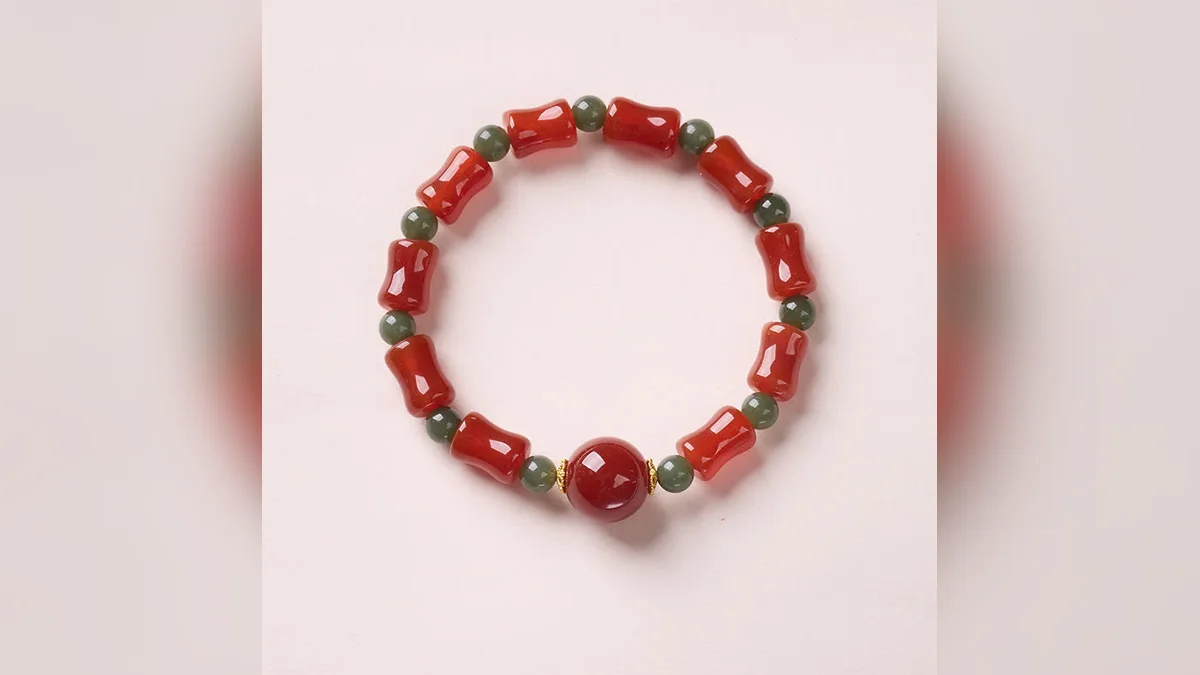
A bracelet can look narrow in a photo yet catch on a shirt cuff because its band rises farther from the wrist than expected. Shape matters as much as decoration. This cuff bracelet guide explains how to choose an open-ended bracelet by construction, material, size, and fit, then care for it appropriately. We also compare four of our elastic-string and adjustable-cord bracelets, so you can decide if a different construction suits your needs.
Start with these questions
- Do you want a firm band or a flexible bracelet? A cuff holds its shape; beads on string or cord move differently around your wrist.
- How will you put it on? Consider an open gap, a hinge, elastic string, or an adjustable cord before comparing decoration.
- Where will you wear it? Check clearance beneath sleeves and space beside a watch.
- What size information is available? Wrist circumference, internal dimensions, opening width, and band width describe different things.
- How much care can you give it? Choose a construction whose cleaning and storage instructions fit your routine.
A cuff bracelet guide begins with construction
A cuff usually has a firm, open-ended band. A bangle forms a closed circle, while a chain bracelet commonly uses a clasp. These differences determine how a bracelet goes on and what measurements matter. An open cuff does not need to pass over your knuckles like a closed bangle, but its gap must still allow you to put it on as intended.
Check whether the cuff has a fixed shape, a hinge, or explicit adjustment instructions. An opening alone does not mean the band is adjustable. Do not assume you can bend a bracelet simply because it is metal. If the product information does not explain adjustment, choose by its existing dimensions.
Choose materials with the whole bracelet in mind
For a metal cuff, look for the actual metal description and any information about plating or surface finishes. Color alone cannot establish composition: a silver-colored surface does not tell you which metal lies underneath. If you need to avoid a particular metal, an incomplete description is not enough to confirm suitability.
Also inspect the shape of the edges and the placement of decorative elements. Raised details need more clearance beneath a fitted sleeve. A broad band covers more wrist area than a narrow one, even when their internal measurements match.
For beaded alternatives, consider the supporting string or cord as well as the beads. Stone names do not tell you how the bracelet fastens, adjusts, or fits.
Read size and fit as separate decisions
Use your wrist measurement as a starting point, then compare it with the sizing information for that particular construction. Avoid transferring a size from an elastic bracelet directly to a rigid cuff. They sit and move differently, and their sizing descriptions may use different measurements.
For an open cuff, look for internal dimensions and opening width alongside any recommended wrist size. Internal width is not the same as circumference. Band width describes how much space the cuff occupies along your arm; it does not describe the space inside it. If a necessary measurement is missing, do not estimate it from the photograph.
When trying on a cuff, follow its fastening instructions and check the fit with your hand relaxed, then gently bend your wrist. The edges should not pinch, and the bracelet should stay in place without needing repeated bending. Check it beside your watch and beneath the sleeve you intend to wear.
For elastic and cord styles, use the published wrist guidance rather than treating stretch or adjustment as unlimited. Bead size is a separate detail and cannot substitute for wrist sizing.
Care for the band, finish, and fastening
Choose a cleaning method that suits every component, including the fastening and any surface finish. When care instructions are incomplete, avoid soaking, abrasive powders, polishing dips, and ultrasonic cleaning. A dry, clean, soft cloth is a cautious starting point for surface dust.
Remove bracelets before washing, swimming, or tasks that could catch them. Put an elastic bracelet on gently instead of pulling it wide, and use a cord bracelet's adjustment mechanism rather than tugging its decoration. For cuffs, avoid repeatedly opening and closing the band unless that movement is part of its intended design.
Keep bracelets in separate compartments or pouches to limit rubbing. Before wearing one, check for a damaged fastening, loose component, or fraying string.
Four bracelet alternatives to compare
The following designs use elastic string or adjustable cord; they are not rigid cuffs. At Buddha Stones, we recommend comparing their construction and published wrist sizes before choosing by motif or color.
Red agate and Hetian jade with a bamboo design
The Buddha Stones Red Agate Bamboo Design Bracelet combines red agate and Hetian jade on Premium Elastic String. Its wrist guidance is 5.5–6.3 in (14–16 cm). Bead sizes are 6mm Jade and 8*12mm Red Agate. Compare this option if your wrist falls within that interval and you prefer an elastic construction. Its natural gemstone materials may vary slightly in color, details, and overall appearance.
Blue candy agate with a butterfly design
The Buddha Stones Blue Candy Agate Butterfly Layered Bracelet uses candy agate and copper alloy, with 8mm beads and Premium Elastic String. The recommended wrist circumference is 5.9–6.3 in (15–16 cm). Choose between this and another elastic style by the stated size and design rather than assuming that stretch makes either suitable for a larger wrist.
White agate and copper on adjustable cord
The Buddha Stones White Agate Copper Pi Xiu Hand-Woven Bracelet offers Black and Brown options. Its materials are string, white agate, and copper, with an Adjustable Cord and wrist guidance of 5.9–7.5 in (15–19 cm). Consider it if you want cord adjustment. Auspicious associations attached to Pi Xiu belong to tradition; they do not guarantee luck, wealth, or protection.
White chalcedony and agate with a floral drop
The Buddha Stones White Chalcedony Black Agate Floral Drop Bracelet has Black Onyx, Red Agate, and Yellow Agate options. Its specifications name white chalcedony, black agate, jade, red agate, and yellow agate, without assigning the full combination to every option. It uses Premium Elastic String, has 8mm beads, and gives wrist guidance of 5.9–6.3 in (15–16 cm). Protection in an option name expresses a traditional wish, not a promised result.
FAQ
Should a cuff bracelet turn around your wrist?
A little movement can be normal, but a cuff should not repeatedly slip toward its opening or need constant repositioning. Check the shape and opening as well as the overall size. Tightening the gap yourself is not a substitute for choosing a suitable fit.
Can you resize any metal cuff?
No. Construction, decoration, and finish can limit adjustment. Only change the shape when the maker explicitly permits it, and follow those instructions. If resizing is not addressed, choose another size or construction rather than forcing the band.
Which measurement matters for the featured bead bracelets?
Start with the published wrist circumference, then consider bead size and fastening. The wrist guidance describes intended fit; bead dimensions describe individual components. For a gift, obtain the recipient's wrist size rather than guessing from a bracelet photograph.
Shop the story
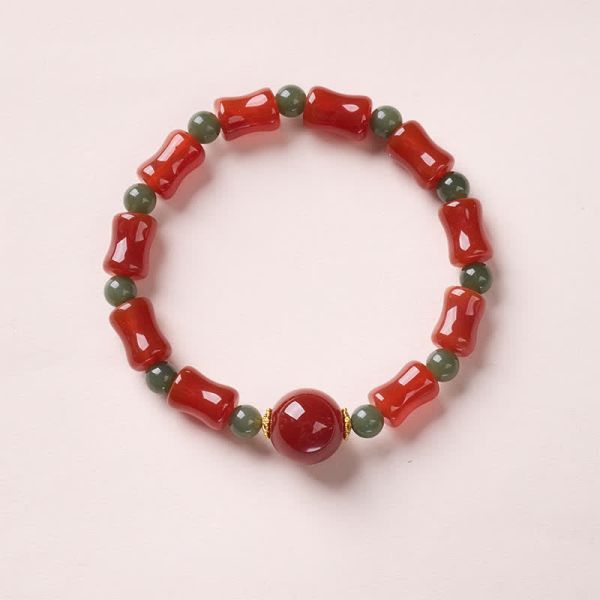 Buddha Stones New Chinese Red Agate Bamboo Design Growth BraceletSpecial Price $32.59 Regular Price $45.90
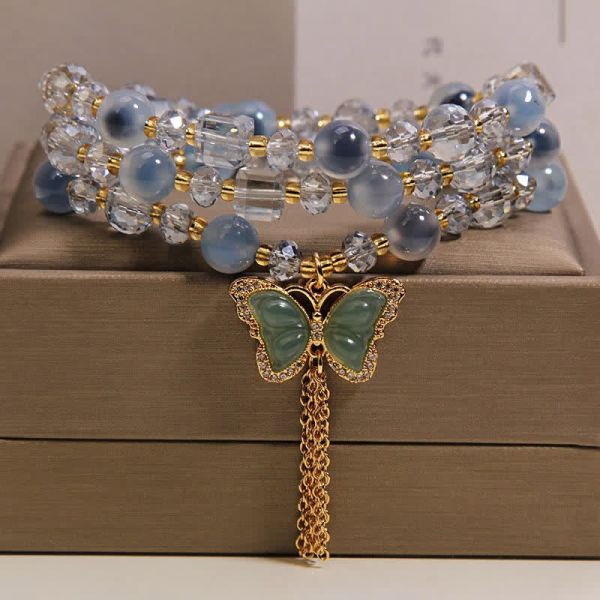 Buddha Stones Blue Candy Agate Butterfly Confidence Layered BraceletSpecial Price $33.59 Regular Price $46.65
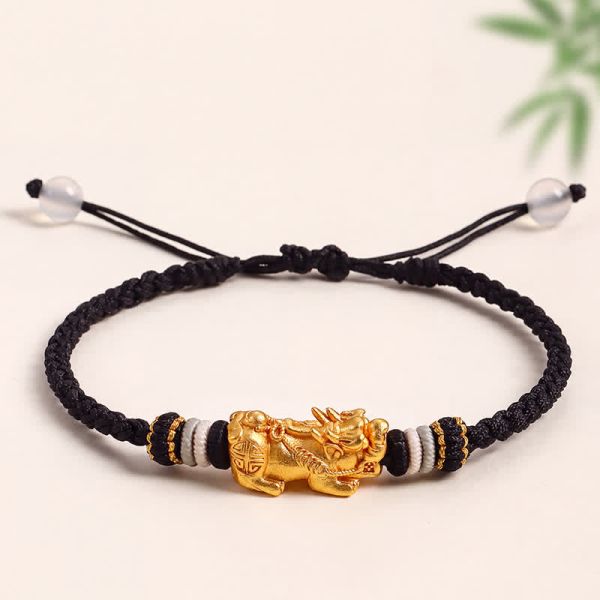 Buddha Stones White Agate Copper Pi Xiu Auspicioisness Hand-Woven BraceletAs low as $25.59 Regular Price $34.58
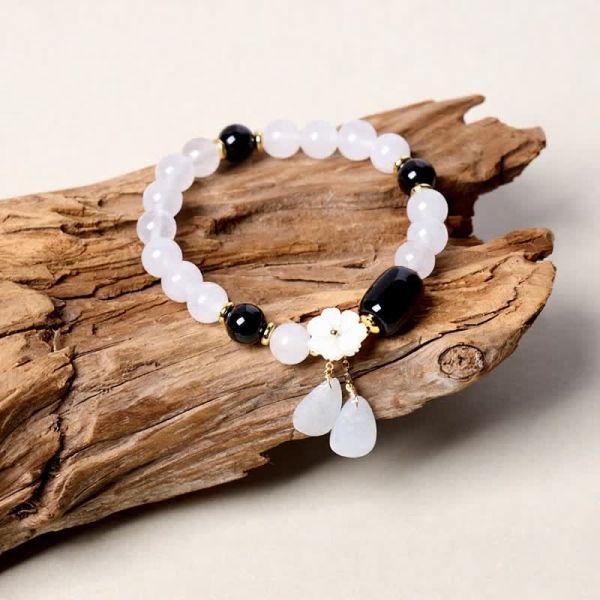 Buddha Stones Elegant White Chalcedony Black Agate Floral Drop BraceletAs low as $25.59 Regular Price $34.58