
Chrysanthemum Symbolism: Flowers, Festivals, and Art
Long, narrow petals spread outward from a chrysanthemum’s dense center. Chrysanthemum symbolism traditionally centers on longevity, autumn, and the dignity of remaining true to oneself, especially in Chinese art and literature. Its late flowering made it a fitting emblem of endurance as the growing season drew toward its close. Associations with luck, wealth, or protection belong to cultural belief; a flower or its image cannot guarantee those outcomes. At Buddha Stones, we understand the motif through its setting: a scholar’s painting, a festival display, a textile, or a familiar household object can give the same bloom a different emphasis.
Chrysanthemum Symbolism Begins with Context
A chrysanthemum carries different messages across cultures and occasions. In Chinese decorative traditions, it often expresses a wish for long life or evokes an honorable life away from public ambition. Autumn is central to that reading. The flower appears when many other garden blooms have finished, giving artists a seasonal image for persistence and maturity.
Other settings change the emphasis. Japan associates the chrysanthemum with the imperial institution, while Japanese flower exhibitions also celebrate its cultivated forms. White chrysanthemums can convey mourning in East Asian funeral settings, and chrysanthemums are familiar cemetery flowers in several European countries. A motif suited to an autumn painting may therefore need more thought when chosen for a bouquet or gift.
The occasion, neighboring symbols, and recipient’s customs help establish the meaning. Color associations also vary, so a chart assigning a single message to every shade can miss the local context.
The Poet Behind the Garden Association
The Chinese poet Tao Yuanming is closely associated with chrysanthemums and withdrawal from official life. His writing connects the flower with a quieter existence shaped by farming, reading, and the surrounding landscape. Later readers and artists made the chrysanthemum part of the visual language of the scholar who values personal integrity over status.
This literary association helps explain why the flower can suggest modest living without suggesting insignificance. A small cluster beside a fence can carry as much meaning as a large, formal bloom. Its setting evokes a choice about how to live. Appreciating that association requires no belief that owning the image will change someone’s circumstances.
The chrysanthemum also belongs to the Four Gentlemen of Chinese painting, alongside plum blossom, orchid, and bamboo. These plants serve as subjects through which painters express admired qualities and the changing seasons. Within that group, the chrysanthemum represents autumn. Its role here belongs to an artistic and ethical tradition.
How the Flower Changes Across Different Surfaces
Paintings and decorative art
Chinese flower painting may present chrysanthemums with leaves, rocks, or a garden fence. Such details establish a setting for the bloom and can strengthen its association with autumn or a scholar’s retreat. A full flower head offers a different visual rhythm from a spare stem, but neither arrangement needs an additional promise attached to it.
On ceramics and other decorative objects, the flower can become a repeated border, a central medallion, or part of a larger seasonal composition. Identifying the surrounding motifs helps you read the whole design.
Textiles and jewelry
Textile patterns can spread chrysanthemum heads across fabric or gather them into sprays with other flowers. Repetition may make the motif primarily decorative, while a seasonal grouping gives it a more specific cultural setting. The design’s arrangement matters as much as the presence of the flower itself.
Jewelry reduces the motif to a smaller surface. Petal outlines or a rounded floral center may suggest a chrysanthemum, although stylized flowers can be difficult to identify. A product name or clear design description can help confirm the subject. Wearing a floral motif can express an appreciation of its traditional meaning without implying any promised result.
Autumn festivals and remembrance
Chrysanthemums are associated with the Double Ninth Festival in China, observed on the ninth day of the ninth lunar month. Viewing the flowers belongs to its autumn customs. The festival’s associations with longevity and respect for older people give the bloom a social setting beyond paintings and household decoration.
Chrysanthemum displays in Japan likewise make the flower part of public autumn celebrations. These festive settings coexist with funerary uses elsewhere. Before giving fresh flowers, consider the local occasion and the recipient’s traditions. A meaning familiar in one country can change across borders.
Reading the Motifs Beside the Bloom
Pairings add context, but they do not work like a rigid code. A chrysanthemum beside plum blossom, orchid, and bamboo points toward the Four Gentlemen. A composition of several seasonal flowers may instead emphasize the passing year. Look at the complete arrangement before assigning a message to one detail.
A crane and chrysanthemum can reinforce a traditional wish for longevity, since both have that association in Chinese decorative art. A peony introduces a different emphasis: its customary associations include wealth and honor. Together, the flowers may express several wishes within one composition. These remain symbolic wishes, not assurances of long life or financial success.
A phoenix creates another context through its traditional associations with auspiciousness and distinguished status. When it appears beside a chrysanthemum, recognize the bird and flower separately before drawing a broader interpretation. A modern design may combine familiar motifs for their appearance without claiming a particular historical formula.
Chrysanthemum Motifs Among Our Product Options
An alloy incense burner
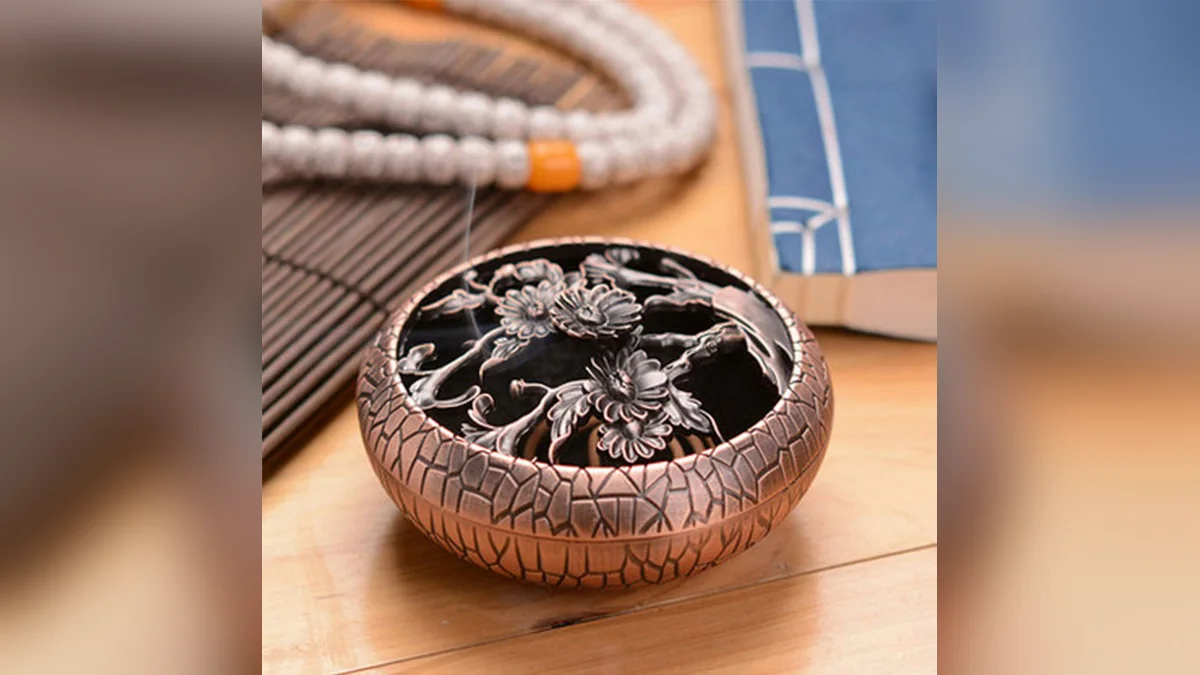
Our Plum Flower Orchid Chrysanthemum Pattern Incense Burner has Chrysanthemum, Orchid, and Plum Flower options. Its material is alloy, and its weight is 300g. The item is described as a decoration, ornament, and incense burner. The package contains one incense burner; incense is excluded.
A bag with a Phoenix Chrysanthemum option
The Galsang floral canvas shoulder bag includes a Phoenix Chrysanthemum option alongside other floral and bird designs. Materials are canvas fabric and polyester. Its size is 36*9*34cm(Length*Width*Height), and it weighs 245g. The bag has one main pocket, one interior pouch, a zipper closure, and nonadjustable straps. One bag is included.
Ceramic cups in four sizes
The Vintage Lotus Peony Plum Blossom Chrysanthemum Ceramic Teacups are ceramic, with capacities of 65-140 milliliters. The size options are 5.8cm*4cm*65ml, 5.8cm*6.1cm*95ml, 7.5cm*5cm*140ml, and 7.8cm*5cm*120ml. These options are identified by size and capacity.
A 60-milliliter chrysanthemum cup option
Our Vintage Plum Orchid Bamboo Chrysanthemum Lotus Koi Fish Ceramic Teacups include a Chrysanthemum option. The material is ceramic, the size is 8.5cm*3.5cm*60ml, and the capacity is 60 milliliters. Other options include Bamboo, Lotus, and several designs combining lotus and fish. Accessories appearing beside the cup in photographs are excluded.
A Flower Read Through Its Setting
The chrysanthemum’s meaning becomes clearer when you connect the bloom to its season, companions, and purpose. An autumn subject, a wish for longevity, and a remembrance flower can share the same petals. We value that range: understanding the context lets you appreciate the design while respecting the traditions that give it meaning.
Shop the story
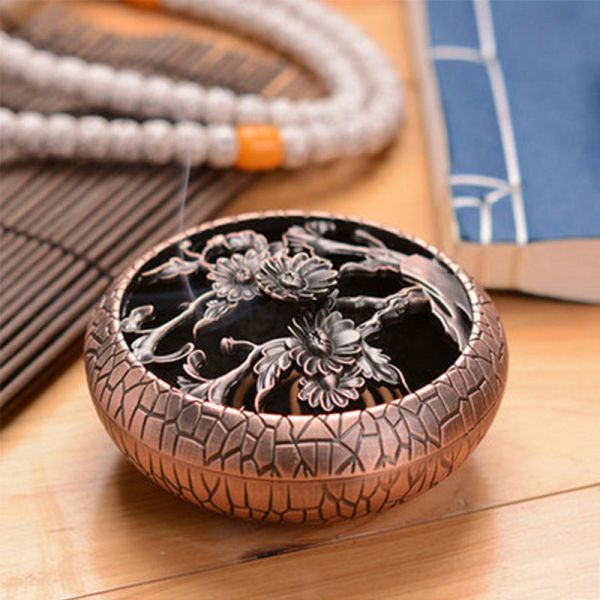 Plum Flower Orchid Chrysanthemum Pattern Peace Incense Burner DecorationAs low as $50.59 Regular Price $70.26
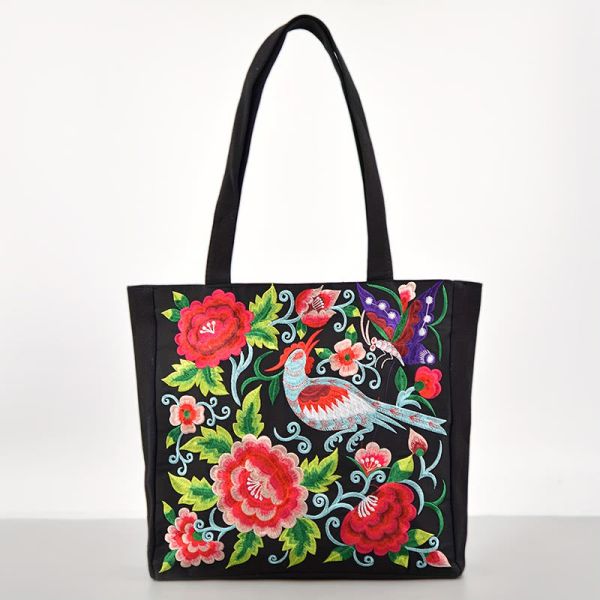 Buddha Stones Galsang Magpie Peony Camellia Chrysanthemum Embroidery Canvas Shopping Purse Handbag Shoulder BagAs low as $23.59 Regular Price $32.32
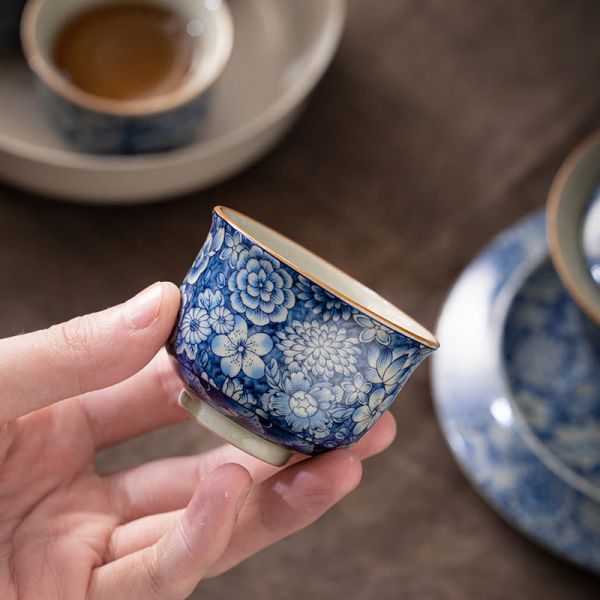 Buddha Stones Vintage Lotus Peony Plum Blossom Chrysanthemum Ceramic Teacup Tea CupsAs low as $21.59 Regular Price $29.58
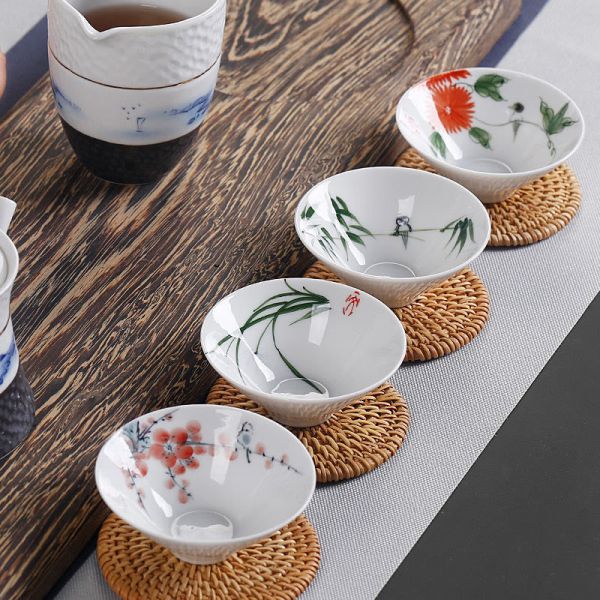 Buddha Stones Vintage Plum Orchid Bamboo Chrysanthemum Lotus Koi Fish Ceramic Teacup Kung Fu Tea CupsAs low as $21.59 Regular Price $30.41