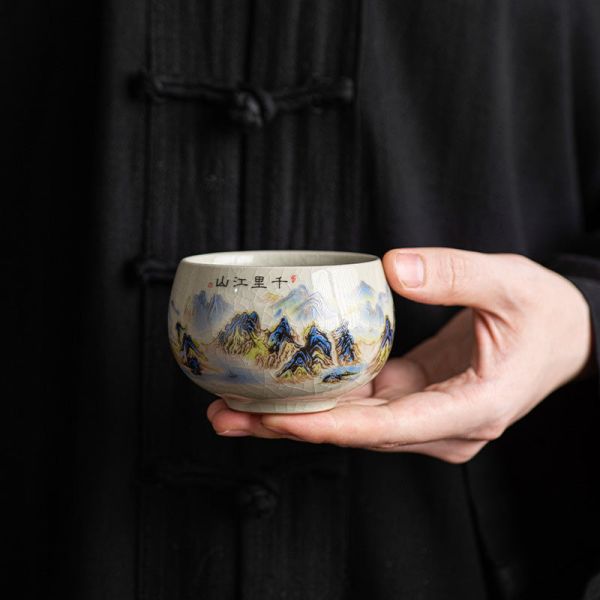
Chinese Tea Cups Guide: Set Up a Table for Serving
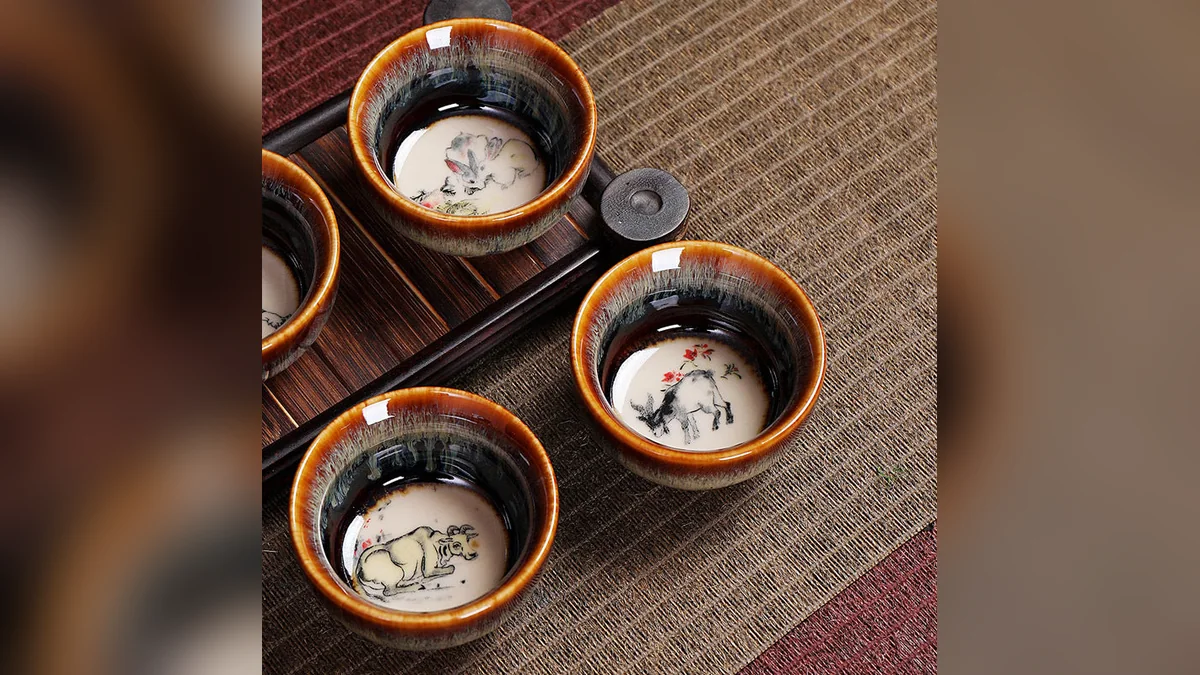
Tea flows from a serving pitcher into cups arranged near the table’s edge. Space between the cups leaves room to lift one without disturbing its neighbor. This chinese tea cups guide explains how to choose capacity, arrange your table, and serve successive infusions. In many gongfu tea settings, drinking cups sit in front of the brewing vessel, positioned within easy reach of guests. Start with a stable surface, enough cups for the people drinking, and a clear route from the brewer to the cups.
Step 1: Clear a Working Area for Brewing and Serving
Choose a level table with room for your brewing vessel, drinking cups, and a place to collect discarded water. A tea tray can contain spills, but you can also arrange teaware on a suitable waterproof surface. Keep a cloth nearby for drips, away from the cups’ rims.
Place the brewing vessel toward the server’s side and the drinking cups toward the people receiving tea. Keep the kettle where its cord and pouring path will not cross a guest’s reach. Traditional tea arrangements vary by household and region; there is no single compulsory layout. Practical placement gives the server room to pour and guests room to lift their cups.
Step 2: Use This Chinese Tea Cups Guide to Match Capacity
Decide how you intend to serve before choosing a cup size. Gongfu brewing commonly uses repeated infusions divided into modest servings. A larger cup can suit a longer pour, but it still needs to match the amount of tea available from the brewing vessel.
Compare the combined capacity of your drinking cups with the tea you expect to decant. Leave space below the rims rather than planning to fill every cup completely. If the brewed amount will not fill the cups equally, serve smaller portions. You do not need to change the entire setting simply because another person joins.
For a mixed group of cup sizes, agree on a similar serving level or portion. Equal-looking fills in differently shaped cups will not necessarily contain equal amounts.
Step 3: Rinse and Arrange the Cups Before Brewing
Wash new cups before their first use. For a regular session, check that the interiors and rims are clean and that no detergent remains. Inspect for cracks or chips before adding hot liquid.
Warm ceramic cups gradually with warm water, then empty them before serving tea. Avoid taking a cold cup straight into contact with very hot water. Do this preparation while the drinking area is clear, so rinse water does not spill across cups already holding tea.
Return the cups to their serving positions with enough space for fingers around their sides. Keep used rinse water separate from the tea intended for drinking.
Step 4: Divide the Tea Before Passing Cups
A serving pitcher, often called a gong dao bei, lets you collect an infusion before dividing it among drinking cups. This makes portions easier to compare and combines tea that leaves the brewing vessel at different points during the pour.
Without a pitcher, move between the cups in short rounds instead of filling one completely before starting another. Keep the spout close enough to control the stream, without touching the cup rims. Stop below the brim so the cup can be lifted without an immediate spill.
Place a filled cup within the recipient’s reach rather than passing it over the kettle or brewing vessel. Handle cups below the drinking rim. Let hot tea cool as needed, and avoid arranging the next pour where someone is already reaching.
Step 5: Wash, Dry, and Put the Setting Away
Empty remaining tea after serving. Allow hot cups to cool before washing, and use a soft sponge with mild dish soap. Rinse thoroughly, especially around the foot and rim, where residue can remain. Avoid abrasive pads and sudden changes in water temperature.
Dry the cups fully before placing them in a cupboard or closed box. Leave space between pieces during storage rather than pressing rims together. A gift box is packaging; check its internal arrangement before assuming it is suitable for storing damp cups or repeatedly transporting a set. Keep cups where they cannot be knocked by frequently moved kitchen tools.
Common Mistakes That Complicate Tea Service
- Choosing by pattern alone: Check capacity against your brewing vessel and the number of people you plan to serve.
- Crowding the tray: Leave room to lift cups without brushing the brewer, pitcher, or neighboring rims.
- Filling to the edge: Keep headroom for carrying the cup and setting it down.
- Mixing rinse water with a serving: Empty warming water before pouring the brewed tea.
- Assuming photographs show the full package: Read the stated contents before planning your setup around surrounding accessories.
- Packing cups while damp: Let washed pieces dry completely before closing a storage box.
Our Chinese Tea Cups for Different Serving Plans
These options provide different cup sizes and quantities for planning your table.12 Chinese Zodiac Pattern Ceramic Teacup, 73ml has a stated size of 6.8cm*3.6cm*73ml and is made of ceramic. Its zodiac options include Dog, Dragon, Goat, Horse, Monkey, Ox, Pig, Rabbit, Rat, Rooster, Snake, and Tiger. Use the 73ml capacity when calculating how much tea to divide among your drinking cups.
2Pcs Dragon Phoenix Ceramic Teacups provides two ceramic cups. The options are 7.2cm*5.7cm*110ml, 7.6cm*5.3cm*150ml, and 8.3cm*5.3cm*150ml. Check the selected option carefully: the pair is offered with either 110ml or 150ml cup capacity, and the two 150ml options have different dimensions.
6Pcs Plum Blossom or Petal Pattern Jianzhan Ceramic Cups With Gift Box includes six cups and a gift box. Petal cup options measure 9cm*5.4cm*80ml; plum blossom cup options measure 8cm*5.2cm*90ml. Blue and red gift box options are available. The specified material is ceramic with a dark iron body and unique glaze.
A Panorama of Rivers and Mountains Ceramic Teacup, 150ml is ceramic, with a stated size of 7cm*5.4cm*150ml. Its capacity is 150 milliliters. Compare that amount with your usual infusion volume before deciding how many cups to place on the table.
Additional accessories appearing in photos of the zodiac cup, dragon and phoenix pair, and Panorama cup are display items excluded from those purchases.
FAQ: Planning Your Tea Cup Setting
How many Chinese tea cups should I put out?
Begin with one drinking cup per person. Add a spare only if your table has room for it without crowding the pouring area. The number of cups should follow the people being served, while portion size follows the amount of brewed tea available.
Do Chinese tea cups need a particular compass direction?
Ordinary tea service does not require a universal compass direction. Arrange cups for access, stable placement, and a clear pouring route. A household or formal tea practice may follow its own conventions, but those customs do not make a particular direction necessary for everyday serving.
Can I use different cup sizes at the same table?
Yes. Divide the infusion into appropriate portions and leave space below the rims. A serving pitcher helps you distribute tea without trying to fill differently sized cups to identical heights. Return cups to consistent positions between rounds so everyone can identify their own cup.
Shop the story
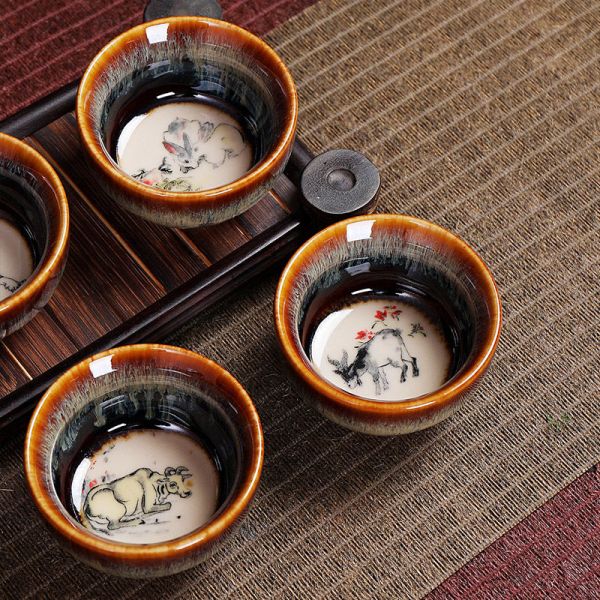 Buddha Stones 12 Chinese Zodiac Pattern Ceramic Teacup Kung Fu Jian Chinese Zhan Tea Cup 73mlAs low as $25.59 Regular Price $34.12
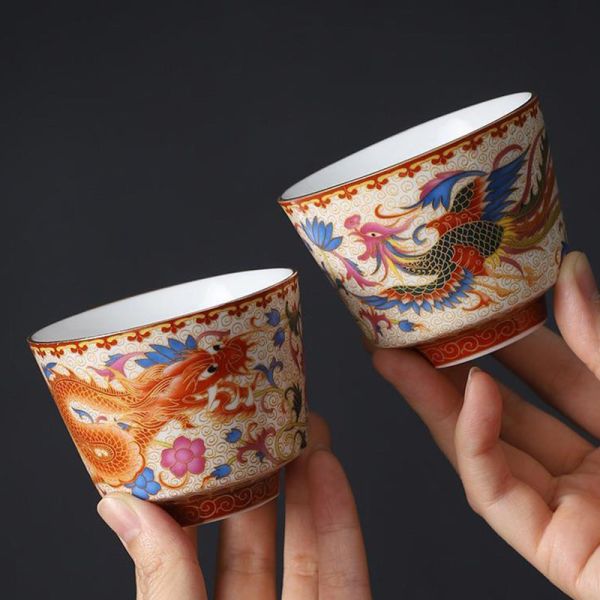 Buddha Stones 2Pcs Dragon Phoenix Ceramic Teacup Kung Fu Tea CupsAs low as $45.59 Regular Price $61.61
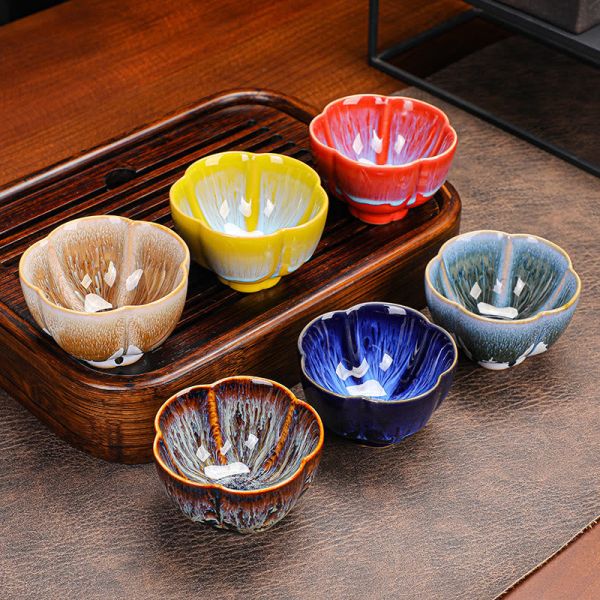 Buddha Stones 6Pcs Plum Blossom Petal Pattern Chinese Jianzhan Kiln Change Ceramic Teacup Kung Fu Tea Cup Bowl With Gift BoxAs low as $146.59 Regular Price $203.60