Chinese Guardian Lions Meaning: A Practical Field Guide
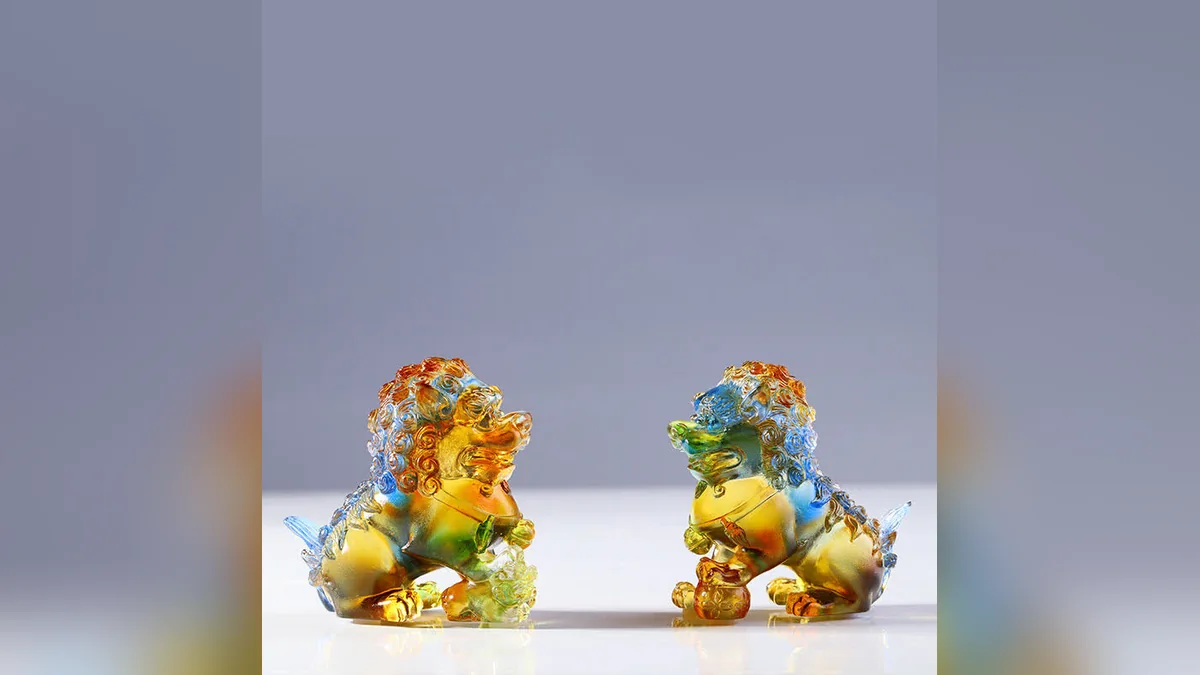
Stone lions stand in pairs outside palaces, temples and banks. Chinese guardian lions meaning centers on their role as symbolic guardians: these paired lion figures, called shishi and often “foo dogs” in English, express a traditional wish for protection, dignity and a well-kept household. Their presence offers no guarantee of safety or prosperity. Read the figures through the details that distinguish a pair, then follow the lion into Buddhist imagery, performance and objects for the home.
How to read a pair
Start with what lies beneath a raised paw. The ball and cub usually tell you more than the face, mane or apparent size. Use the entrance itself as your reference point when deciding which side is which.
| Male lion | Female lion |
|---|---|
| A paw usually rests on an embroidered ball. | A paw usually rests on a cub. |
| The ball is commonly read as the world or authority. | The cub is commonly read as family and nurturing. |
| Traditionally on the left when standing inside and looking out. | Traditionally on the right when standing inside and looking out. |
For a visitor facing the entrance, those positions reverse: the male is on the visitor’s right and the female on the left. This change of viewpoint explains many seemingly contradictory placement instructions. Local practice varies, so the arrangement at a particular temple or household may differ.
The pairing brings public authority and family continuity into one composition. These are customary readings of the figures. A fierce expression belongs to their guardian role in art; it does not make the statue a promise of real-world protection.
How lions reached China
Lions are not native to China. From the Han dynasty onward, living lions arrived as diplomatic gifts from Central and West Asia. The animal became known through these exchanges, while its image traveled beyond the places where people could see a living example.
Chinese artists developed stylized forms rather than a fixed anatomical likeness. Curled manes, emphatic eyes and elaborate poses make sense within that visual language. A guardian lion does not need to resemble a wildlife photograph to be recognizable.
This history also helps explain why the figures can look unfamiliar to someone expecting a realistic big cat. Read them as a developed artistic tradition, with the ball, cub and paired arrangement providing useful clues to their intended roles.
Foo dogs, fu lions and shishi: the names
Shishi means “stone lion” in Chinese. It names the familiar architectural figures, although related lion forms now appear in other materials. “Guardian lion” describes their role and is a useful English term when discussing the tradition.
“Foo dog” is a Western label for these lions. It can suggest a canine identity that the figures do not have. The spelling “foo” is often linked to fo, meaning Buddha, or fu, associated with good fortune; explanations of the English name vary. “Fu lion” is another name you may encounter.
When comparing objects, the name alone will not tell you whether you are looking at an entrance guardian, a Buddhist lion image or a dancing lion. The pose and surrounding details matter more than a product label.
The lion in Buddhism
In Buddhist imagery, the bodhisattva Manjushri rides a lion. Manjushri is associated with wisdom, and the lion is part of the imagery through which that association is expressed. A lion beside or beneath a Buddhist figure therefore deserves a different reading from a pair beside a doorway.
The Buddha’s teaching is also called the “lion’s roar.” This is a metaphor for the teaching’s confident, authoritative declaration. The phrase concerns the teaching, not a sound that a decorative lion makes or a property of its material.
These connections help explain the lion’s place in Buddhist art without making every lion statue an image of Manjushri. Look for the complete composition: a rider, a paired entrance arrangement or a performance costume supplies the context.
Guardian lions and the lion dance
The lion dance is a separate performance tradition, familiar at Lunar New Year celebrations and business openings. It shares the lion’s auspicious associations, with performances traditionally expressing wishes for good fortune and a favorable beginning.
Northern and southern styles belong to this tradition, with differences in the lions’ appearance and movement. Both are performed traditions, distinct from the stationary male-and-female guardians at an entrance.
That distinction is useful when reading decorative objects. A dancing-lion charm or a lion-dance pattern on teaware refers to the performance. It does not automatically follow the ball-and-cub arrangement of architectural guardians. Similar subject matter can carry different references, so there is no need to assign every lion object a partner or an entrance position.
Chinese guardian lions meaning: placement customs
For a home display, common custom offers a few straightforward starting points. Treat these as conventions for arranging symbolic objects, not instructions that determine what will happen in your household.
- Keep a guardian pair together. Flank an entrance or place the figures at opposite ends of a shelf so their relationship is easy to read.
- Face them outward. At a doorway, this usually means toward the approach. On a shelf, arrange them facing into the room.
- Use the same height. A shared, level surface gives both figures equal standing. Leave enough room for their bases to sit securely.
- Check the viewpoint. The customary male-left arrangement is read from inside looking out. Follow local practice where appropriate.
- Keep the display clean. Leave access for routine dusting, and choose a stable position away from a shelf edge.
- Allow a single lion to be decor. One lion indoors can stand alone as an ornament; owning one does not require completing a ritual arrangement.
Lion objects to compare
Our lion designs include decorative statues and references to the lion dance. Words such as “Strength” and “Wealth” in their names express traditional wishes.
A single resin lion
Our Lion Statue resin decoration includes one lion. It measures 11.5 × 14 × 17.5 cm in length, width and height, is made of resin and weighs 800 g. It can be displayed as a single ornament.
Liuli lions, singly or paired
The Handmade Liuli Crystal Lion art piece has gold or colorful options, with one liuli lion or a pair available. Its listing gives the material as liuli glassware or crystal glass. Dimensions are about 8 × 4 × 7.7 cm; the specifications give weights of 750 g or 1500 g. Check the selected option for the number of lions.
A dancing-lion key chain
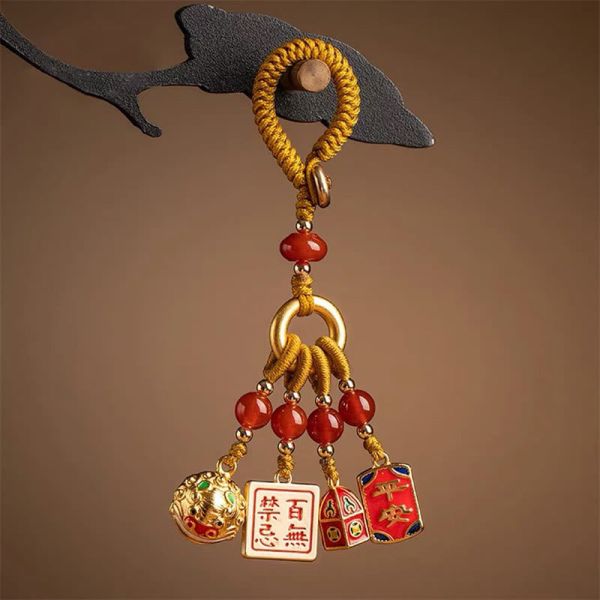
Our Dancing Lion copper key chain comes in four colors: dark blue, dark green, red and yellow. Some options have a dancing-lion charm; others have a 百无禁忌 charm, translated on the page as “Nothing to Be Superstitious.” Traditionally, the phrase means no taboos apply. The materials are copper/brass, red agate and blue sandstone.
A lion-dance gaiwan
The Blue and White Porcelain gaiwan offers a Lion Dance option alongside Lotus Koi Fish and Watermelon patterns. It is ceramic, measures 12.4 × 11 cm and has a 300 ml capacity. Here, the lion belongs to the performance tradition, giving a familiar celebration motif a place on teaware.
Shop the story
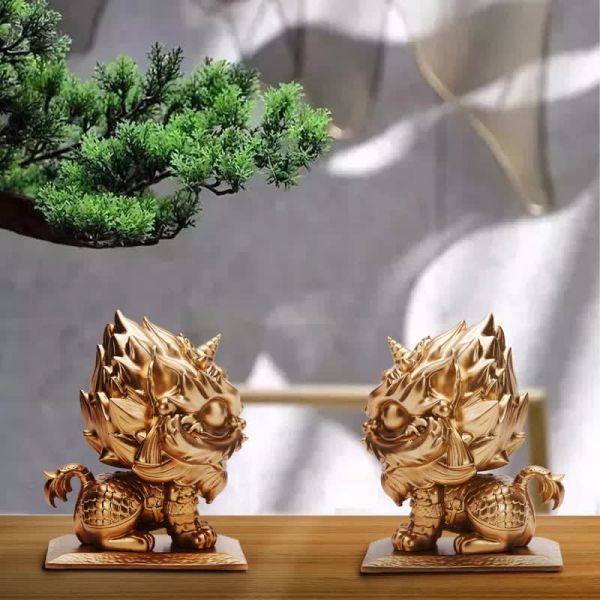 Buddha Stones Lion Statue Strength Resin Home Office DecorationSpecial Price $159.59 Regular Price $221.65
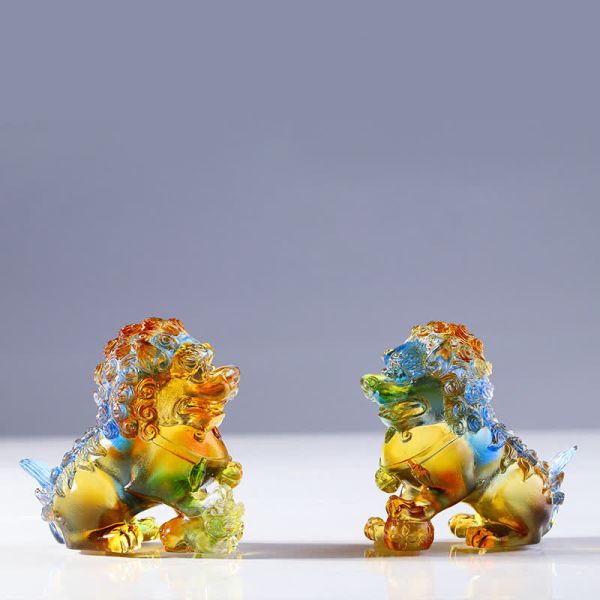 Buddha Stones Handmade Liuli Crystal Lion Art Piece Strength Home Office DecorationAs low as $139.59 Regular Price $186.12
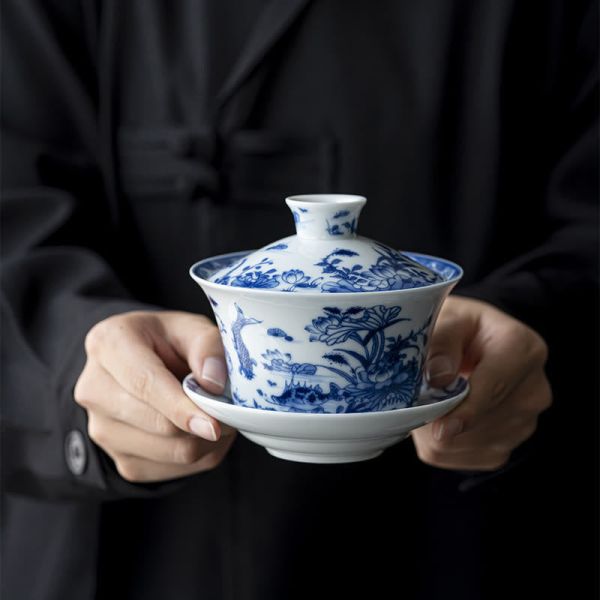 Buddha Stones Blue And White Porcelain Lotus Koi Fish Lion Dance Watermelon Ceramic Gaiwan Sancai Teacup Kung Fu Tea Cup And Saucer With Lid 300mlAs low as $38.59 Regular Price $52.15