
Butterfly Buying Guide: Bag Care and Everyday Use
Bag corners and strap attachments often show wear before the main fabric does. Our butterfly buying guide is a care-and-use manual for butterfly-pattern bags: it explains how to compare dimensions and straps, pack without strain, remove loose dirt, and recognize damage. Start with the way you intend to carry a bag, then consider its pattern. A butterfly option may share a product page with flowers, geometric designs, or other motifs, so check the selected option before ordering.
Butterfly buying guide: tools and materials
Prepare a clean, dry work surface before inspecting or tending to a bag. Keep the routine simple, especially when fabric, metal, and other materials meet at seams or attachments.
- Two clean, soft cloths: reserve one for dry dusting and another for blotting accidental moisture.
- Plain, unprinted tissue: use loose stuffing to support an empty bag during storage without stretching it.
- A ruler or measuring tape: compare your intended contents with the published dimensions before choosing a size.
- A separate pouch: contain keys, pens, or small loose items that could rub against the interior.
Avoid assembling a kit of stain removers before you know the care requirements. A cleaner suitable for one component may mark another. If care instructions supplied with the bag are more specific, follow those instructions.
A step-by-step routine for carrying and care
- Check dimensions before choosing. Measure the items you plan to carry, including their cases. Published bag dimensions do not establish the usable opening or guarantee that a particular phone, wallet, or notebook will fit. Allow room to reach inside and close the fastening without pushing against the contents.
- Consider the fixed strap. The four bags described below have non-adjustable straps. Where a chain length is provided, compare it with a strap length you already find suitable. Length alone does not establish where a bag will sit, because the bag shape and attachment positions also matter.
- Inspect before loading. Look at the strap connections, seams, closure, and any chain links. Open and close the fastening gently while the bag is empty. If something catches, locate the obstruction instead of pulling harder. Keep fabric clear of the closing surfaces.
- Pack without forcing the shape. Place items so their weight is distributed across the base. Keep pointed objects enclosed and cap pens securely. Reduce the contents if the opening pulls apart, the fabric bulges sharply, or the closure requires pressure. A large outer measurement is not a stated weight capacity.
- Remove loose dirt after use. Empty the bag and lift out debris you can reach easily. Wipe accessible surfaces lightly with a dry cloth, avoiding repeated rubbing over one spot. Blot accidental moisture promptly with a separate dry cloth. For a persistent mark, seek material-specific care advice before applying a treatment.
- Store only when dry. Leave a damp bag open in a shaded, ventilated place, away from direct heat. Once dry, add a little loose tissue if needed to support its shape. Set it on a shelf with the strap resting without tension. Arrange a chain so it does not press into the fabric.
Repeat the inspection whenever a bag catches on something or carries an unusually awkward load. Small changes at a seam or attachment deserve attention before the next outing.
What not to do during cleaning or use
Do not assume that a fabric bag can go into a washing machine. Mixed materials and attached hardware make whole-bag washing a separate question from cleaning an individual textile. Avoid soaking, bleaching, ironing, tumble drying, and direct heat unless specific care instructions expressly permit the method.
Keep perfume, ink, oily cosmetics, and cleaning sprays away from the surface. Do not use metal polish on unidentified hardware or scrub a patterned area with a stiff brush. If the bag becomes wet, avoid twisting or wringing it.
During use, open the closure before reaching inside. Do not pull the bag open by its chain, fasten a buckle over trapped fabric, or hang a loaded bag from a small decorative detail. Carry less if attachments look strained.
When to replace or retire a piece
A faint surface mark does not automatically make a bag unusable. Distinguish appearance changes from damage that affects carrying: opening seams, loose strap attachments, distorted chain links, sharp exposed metal, or a fastening that no longer stays closed.
Stop carrying contents if an attachment is separating or hardware has developed a sharp edge. Empty the bag and ask a bag-repair professional whether the affected part can be repaired. Do not hide a failing attachment beneath tape and continue loading it.
Retire it from carrying duties when a sound repair is unavailable. Local textile and mixed-material disposal rules vary, so check what your local service accepts before discarding it.
Products: match the construction to your routine
Our product specifications provide a starting point for comparison. Select the pattern separately from the size and fastening details; some options on these pages feature motifs other than butterflies.
Triangle shoulder bag with a buckle closure
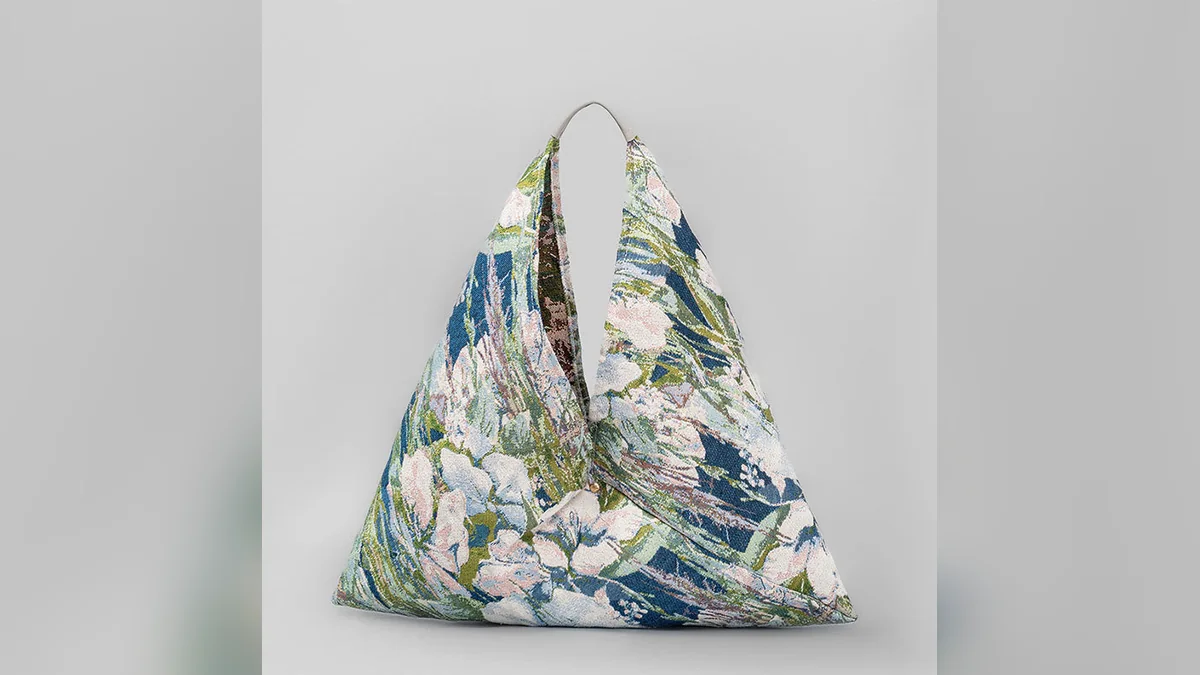
The Buddha Stones Flowers Letters Butterfly Geometry Print Underarm Triangle Shoulder Bag measures 58*52cm and weighs about 300g. Its materials are cotton fabric, polyester, leather, and metal. It has one main pocket, a non-adjustable strap, and a buckle closure. White Red Butterfly Flower is one option; other choices include Brown Blue Geometric and Green English Letters. Keep the leather and metal components in mind before choosing any surface treatment.
Bamboo handle bag with a magnetic clasp
The Buddha Stones Jacquard Flowers Butterfly Bamboo Handle Metal Chain Crossbody Bag measures 23.5*11*17cm. Its materials are polyester, metal, and a bamboo handle. The non-adjustable metal chain measures 120cm, and the closure is a magnetic clasp. Options include Black Butterfly Flower, ForestGreen Butterfly Flower, Orange Butterfly Flower, and MediumTurquoise Jacquard. Before closing, move fabric and loose contents clear of the clasp so its surfaces can meet.
Small crossbody bag with a 110cm chain
The Buddha Stones Small Bamboo Leaves Butterfly Peony Flowers Magpie Crossbody Bag measures 14*18*9cm, in height, width, and thickness. Its materials include polyester, cotton, metal, metal chain, and a velvet strap. It has one main pocket, a buckle closure, and a non-adjustable strap; the shoulder bag metal chain length is 110cm. Purple-Blue Butterfly Bamboo is the butterfly option. Check the dimensions of intended contents carefully rather than relying on the word “small.”
Shoulder bag with a 33*33cm size
The Buddha Stones Bamboo Leaves Flower Butterfly Persimmon Shoulder Bag measures 33*33cm, in height and width. It uses polyester, cotton, and metal, with one main pocket, a non-adjustable strap, and a buckle closure. Khaki Bamboo Butterfly is one option alongside Flower Bamboo Leaves, Gold Bamboo Leaves, Orange Persimmon, and Yellow Flower Bamboo Leaves. No thickness measurement is provided in these specifications, so avoid inferring depth from the height and width.
Keep the routine easy to repeat
Use this butterfly buying guide when choosing a size and whenever the bag needs attention. Empty it, inspect the carrying points, remove loose dirt gently, and put it away dry. Let the condition of the seams, strap attachments, and closure guide your repair decisions, while the pattern remains a matter of personal preference.
Shop the story
 Buddha Stones Flowers Letters Butterfly Geometry Print Underarm Triangle Shoulder BagAs low as $36.59 Regular Price $49.45
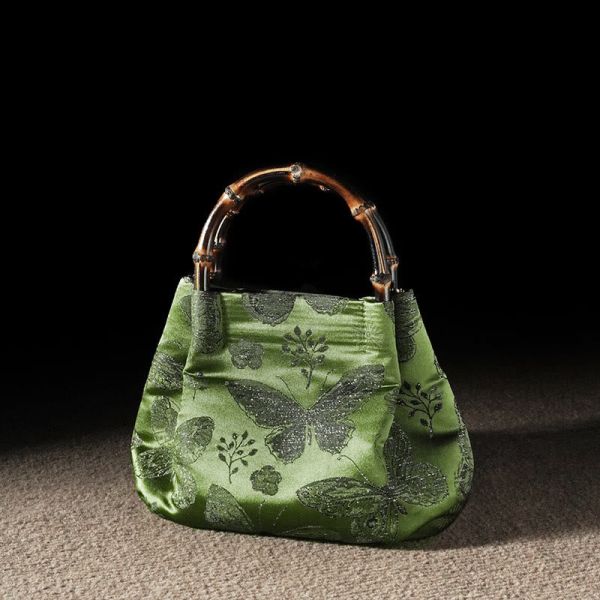 Buddha Stones Jacquard Flowers Butterfly Bamboo Handle Metal Chain Crossbody Bag HangbagsAs low as $122.59 Regular Price $165.66
 Buddha Stones Small Bamboo Leaves Butterfly Peony Flowers Magpie Metal Chain Crossbody Bag Shoulder Bag HandbagAs low as $116.59 Regular Price $164.21
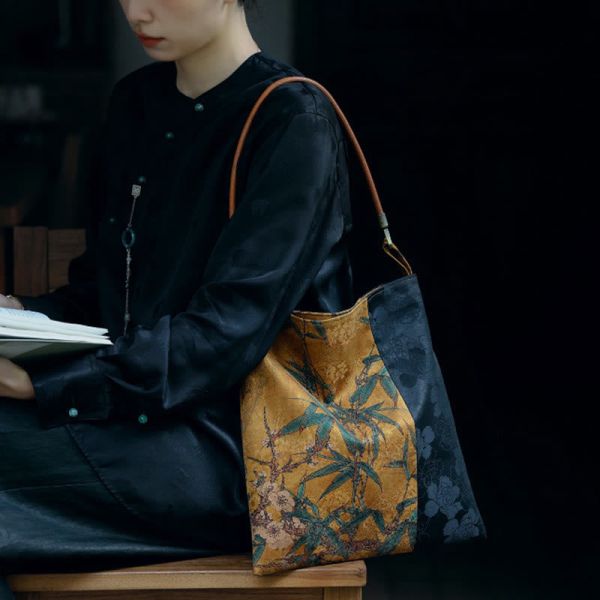 Buddha Stones Bamboo Leaves Flower Butterfly Persimmon Shoulder Bag HandbagAs low as $95.59 Regular Price $129.18