Blue and White Porcelain: A Practical Tea Table Guide
Tea flows from a lidded bowl into a patterned cup while a ceramic ornament stands beyond the tray. Blue and white porcelain gives this arrangement a shared visual thread: blue decoration against a white surface. For practical use, keep brewing and serving vessels within reach and place ornaments outside the wet working area. Chinese display traditions also give ceramics a place on shelves and side tables, so a tea setting can include a separate decorative area without becoming a formal altar.
The steps below help you arrange cups, a brewing vessel, and a decorative accent without crowding the table.Step 1: Choose a surface for blue and white porcelain
Start with a level table that gives the brewing vessel a stable resting place. Avoid a narrow shelf for active tea service: lifting, pouring, and replacing cups need more clearance than a static display. Leave enough room to set a vessel down without sliding another object aside.
Check the surface beneath the arrangement, too. Use suitable protection where water or warm vessels could mark furniture. A tray can define the serving area, but it should sit flat and remain steady when a cup is lifted. Keep the kettle and its cord away from the table edge and the route used to pass cups.
Step 2: Separate pouring space from display space
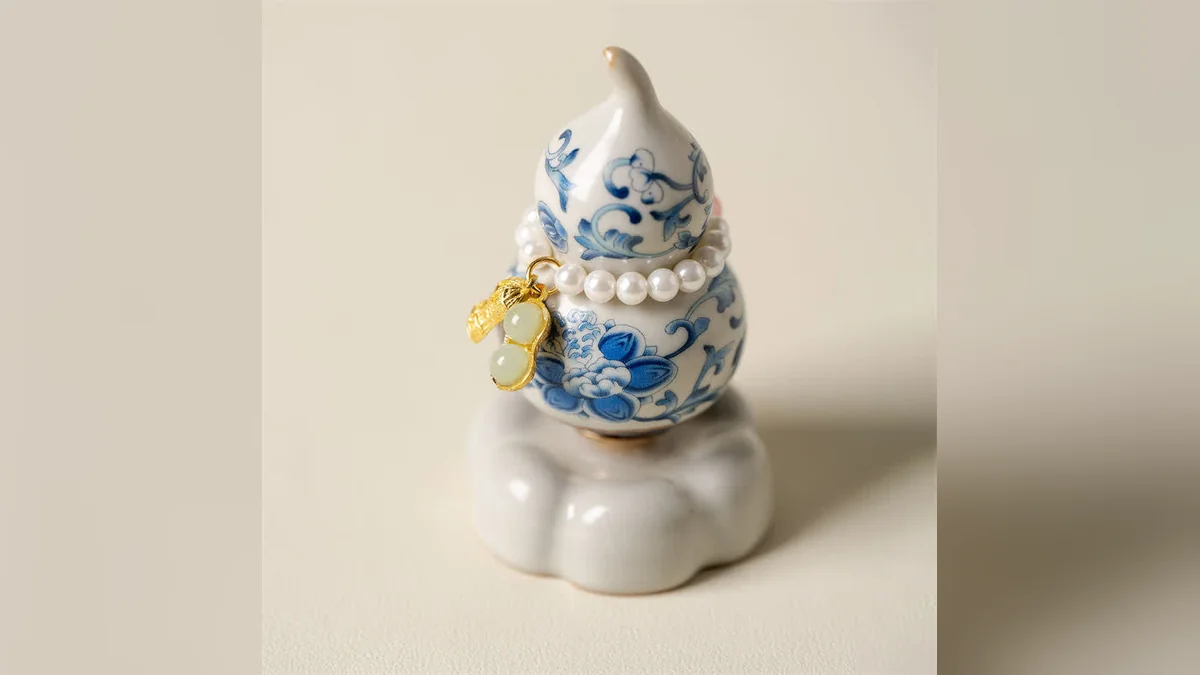
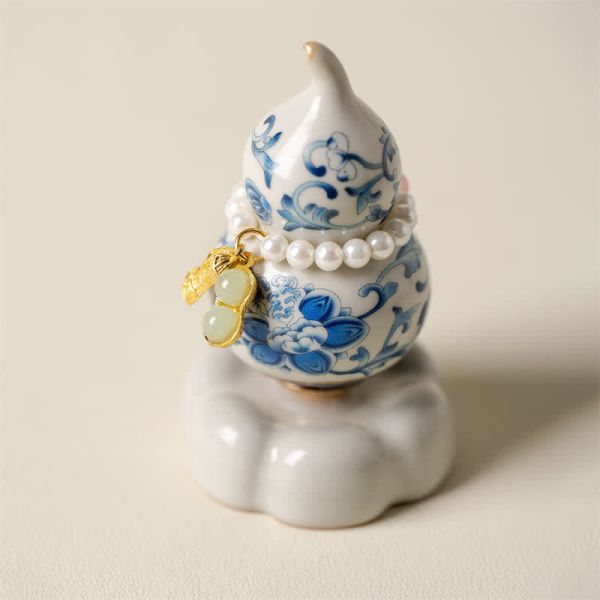
Arrange the table in two simple areas. Put the brewing vessel and drinking cups in the area where water will be handled. Give decorative objects a dry position to the side or toward the back, clear of the pouring path. A ceramic gourd belongs in that display space; it is not a brewing tool or a container for discarded tea.
Try the arrangement with empty vessels before adding water. Reach for the brewing vessel, bring it toward the cups, and return it to its resting place. If that movement crosses an ornament or requires reaching over a cup, adjust the layout. Keep separate components of a lidded vessel together so they do not become scattered among other objects.
Step 3: Give the patterns room to show
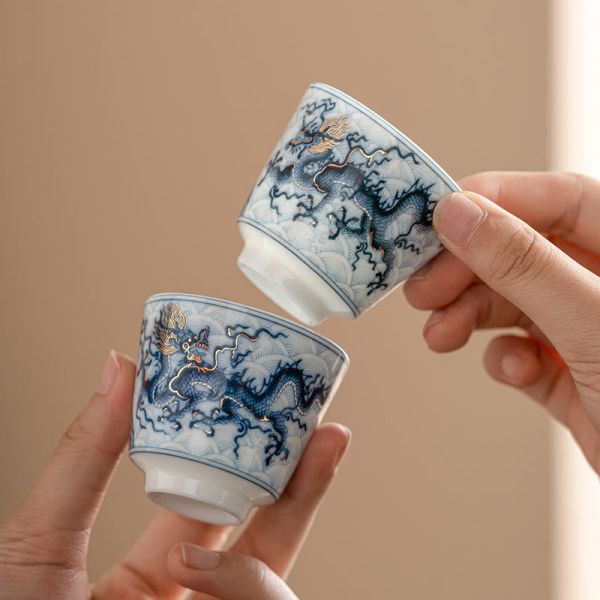
Choose one patterned object as the visual center, then leave open space around it. A cup with an animal motif can supply enough detail for a small setting. You do not need to repeat that animal on the tray, cloth, and ornament.
A plain background makes painted details easier to distinguish. Position the arrangement where the decoration can be seen from the usual sitting position, then check that a nearby lamp does not shine directly into your eyes. For a shelf display, bring the object far enough forward to be visible while keeping its base fully supported. Let the available space decide the arrangement; symmetry is optional.
Step 4: Match the cups to the way you serve
Decide how many people the table needs to accommodate before adding cups. Give every place a clear landing spot. If you plan to share tea from one brewing vessel, consider the cups’ stated capacities together, while allowing room below their rims.
A vessel’s advertised capacity is not a target for filling it during service. Tea leaves occupy space in a brewing bowl, and a brimful cup is awkward to move. Keep a place available for the lid and a separate container for discarded water or tea. Our tea category can help you compare vessel types when planning those roles.
Step 5: Plan the cleanup before the first pour
Keep a cloth nearby for spills, with enough clear space to lift vessels individually. After use, let hot ceramics cool before washing. Abrupt temperature changes can damage ceramic ware, so avoid moving a hot vessel straight into cold water.
Wash gently with mild dish soap and a soft sponge, rinse thoroughly, and dry before storing. Without product-specific instructions confirming dishwasher or microwave suitability, do not assume either method is appropriate. Keep a rotating decorative object’s base out of the washing water; remove surface dust gently, and follow any care directions supplied with it. Store lids where they cannot knock against cup rims.
Common mistakes that crowd the arrangement
- Treating photographs as a packing list. Check the stated contents before planning around an accessory shown beside a product.
- Putting decoration in the pouring path. Keep the space between brewing vessel and cups clear.
- Filling to the stated capacity. Leave room for handling instead of taking liquid to the rim.
- Stacking unlike shapes. A lid, saucer, and cup need secure support; an improvised stack can slip.
- Adding objects before checking reach. Rehearse the layout with empty vessels, then remove anything that interferes.
Products to assign a place on your table
Choose by function and available space. These selections cover decorative display, drinking cups, and a lidded brewing vessel.
For the dry display area, our rotating gourd lotus decor is ceramic and measures Approx. 4.8 cm × 4.8 cm × 8.5 cm (L × W × H). Pink Base and White Base options share those stated dimensions. The package contains 1 × Rotating Gourd Lotus Decor. Its handmade construction, ceramic firing, and hand-painting can produce variations in color, shape, size, and pattern.
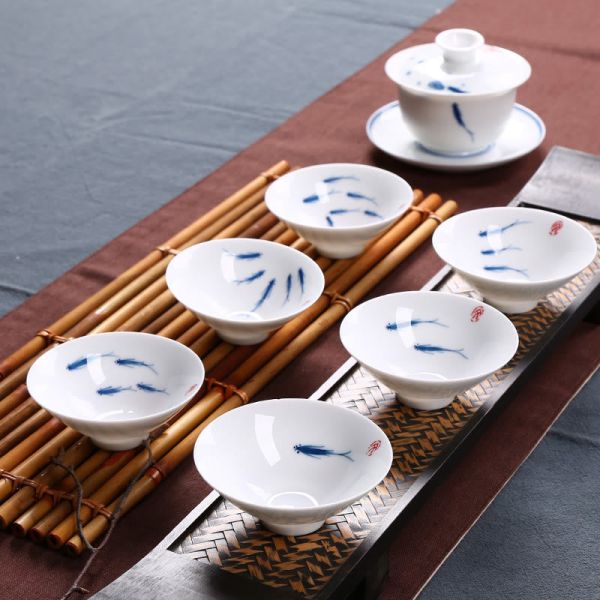
For a drinking position, our Jingdezhen koi fish teacup has a stated capacity of 60 milliliters. Its material is ceramic, and its stated origin is Jingdezhen, China. Options are named for one through six koi fish. Accessories appearing alongside the cup in photos are excluded.
Our dragon pattern ceramic teacup holds 45 milliliters and has a stated net weight of about 38g. Compare that capacity with the koi cup when deciding how much tea to portion into a serving.
For the brewing position, our vintage ceramic gaiwan with lid and saucer has a capacity of 150 milliliters. The included components are one cup, one lid, and one saucer. Additional accessories used in the photographs do not accompany it. Reserve space for the lid as well as the vessel itself.
FAQ: Finishing the arrangement
Does the ornament need to face a particular direction?
For this decorative tea-table setup, choose its position by stability, visibility, and access. Household and ceremonial customs differ. If you follow a specific tradition, use its placement guidance while keeping the serving area clear.
Can different blue patterns share the same table?
Yes. Give them a plain background and enough space to read separately. Matching the function and scale of the vessels matters more for service than making every motif identical.
Should cups stay on display between tea sessions?
They can, provided the shelf is stable and the cups are clean and dry. Check for dust before serving. Keep the cups you use regularly within easy reach, with lids supported securely beside their vessels.
Shop the story
 Buddha Stones Blue and White Ceramic Rotating Gourd Lotus Mindful Living DecorAs low as $29.59 Regular Price $41.68
 Buddha Stones Jingdezhen Blue and White Porcelain Koi Fish Ceramic Teacup Kung Fu Tea CupsAs low as $21.59 Regular Price $29.18
 Buddha Stones Vintage Blue And White Porcelain Ceramic Gaiwan Sancai Teacup Kung Fu Tea Cup And Saucer With LidSpecial Price $35.59 Regular Price $49.43