
Black Obsidian Bracelet Meaning: Six Myths and Facts
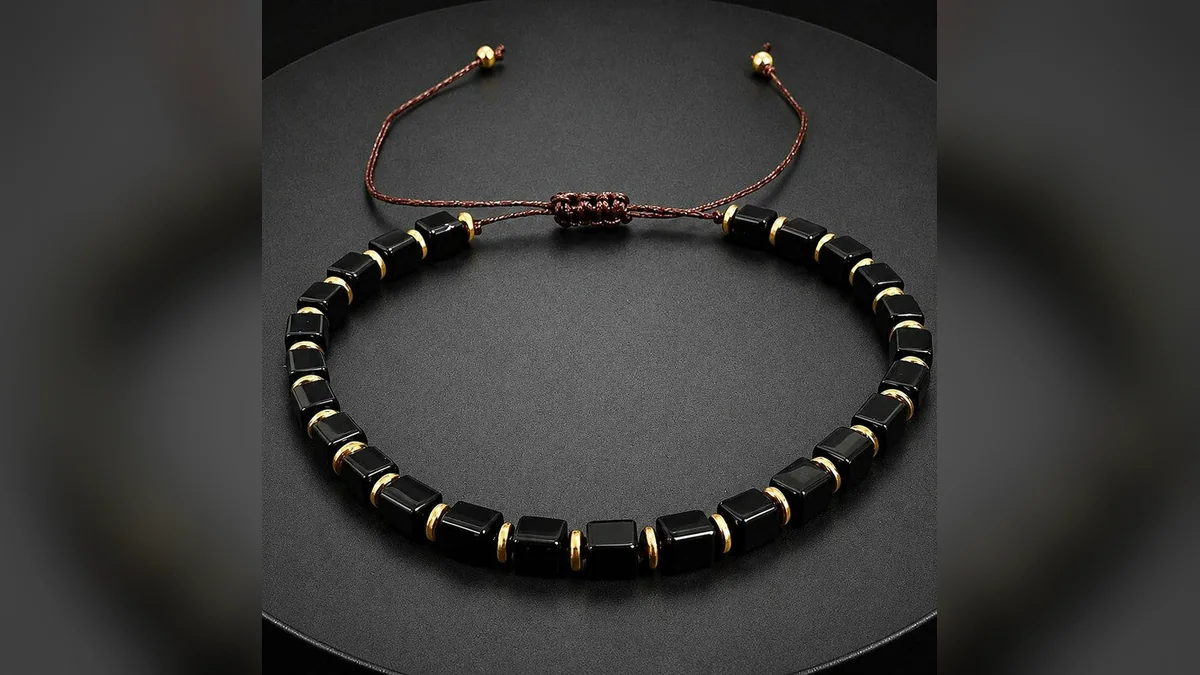
The glossy surface of a black obsidian bead looks almost like glass because that is what obsidian is: natural volcanic glass. It forms when lava cools too quickly for crystals to grow. In modern crystal lore and some feng shui practice, the black obsidian bracelet meaning centers on protection and steadiness. We describe those associations as beliefs and personal symbols, with no promised result attached to wearing the jewelry.
Six claims, sorted
1. Crystal or glass?
Claim: Obsidian is a crystal.
What we can say: Obsidian is amorphous volcanic glass, meaning it lacks an ordered crystal structure. The word “crystal” is often used loosely in jewelry shopping and modern crystal lore, where it can include materials that are not crystals in the geological sense. That broader usage does not change how obsidian formed. Rapid cooling prevented the development of a crystal structure, leaving glass instead. A polished bead can still be natural obsidian; its rounded shape and glossy finish do not make the material crystalline.
2. More than one appearance
Claim: All obsidian is pure black.
What we can say: Black is a familiar appearance, but obsidian has several varieties. Golden sheen and silver sheen obsidian show reflected light associated with tiny inclusions or gas bubbles within the glass. Snowflake obsidian has pale spots formed by crystalline material within it. Impurities can also contribute to obsidian’s color. These differences belong to the material’s appearance, rather than a ranking of symbolic importance. A gold or silver sheen does not, by itself, mean that the glass contains precious metal, and a pale pattern does not automatically mean that it is artificial.
3. Hardness has limits
Claim: Obsidian is unbreakable.
What we can say: Obsidian is fairly hard, at roughly 5 to 5.5 on the Mohs scale, but it is also brittle. Hardness describes resistance to scratching; it does not tell you that a material will survive a sharp impact. Obsidian can chip when knocked against a hard surface, and a smooth bead deserves careful handling. Treating it as indestructible confuses two different properties. Avoid letting a bracelet strike a countertop or the edge of a sink, and do not assume that a polished surface makes the underlying glass tougher.
4. Symbolism and promised effects
Claim: Obsidian bracelets do something to you.
What we can say: We do not make that claim. Protection and steadiness are meanings associated with obsidian in modern crystal lore and some feng shui practice, rather than outcomes we promise from wearing it. You can value a bracelet as jewelry, as a personal symbol, or for its connection with a tradition. None of those choices requires treating the material as an active force. Words used in a product name can express a symbolic theme; they should not be read as guarantees about what the piece will accomplish.
5. Many volcanic sources
Claim: Obsidian came from one place.
What we can say: Obsidian occurs in many regions where suitable volcanic eruptions have taken place. Its formation depends on the lava and cooling conditions, rather than on a single country or cultural tradition. Many cultures used it historically for blades and mirrors, including cultures in ancient Mesoamerica. That broad history does not establish the source of an individual bead. We should keep the material’s geological occurrence, its historical uses, and a particular piece of jewelry’s documented origin separate. A black color alone cannot tell you where obsidian was collected.
6. The wrist question
Claim: Feng shui says to wear obsidian on one specific wrist.
What we can say: Folk advice varies, and wrist recommendations are best described as differing customs. A direction offered by one seller or practitioner should not automatically become a rule for everyone who wears obsidian. If you follow a particular tradition, you may choose to follow its custom. Otherwise, the wrist is your choice, based on fit, comfort, and how you wear other jewelry. We do not attach a promised result to either side, and changing wrists does not need an elaborate explanation.
Black obsidian bracelet meaning in four designs
Symbolic associations do not tell you a bracelet’s size or construction. For those details, our product specifications are the useful reference. The four pieces below include adjustable cord, elastic bracelets, and an engraved necklace, with different listed materials and measurements. Keeping those details separate from traditional meanings makes each description easier to assess. A piece can carry a personal association while still being chosen for its bead size, wrist range, or necklace length.
Square beads with an adjustable cord
Our Black Obsidian Square Bead Braided Adjustable Bracelet lists black obsidian, copper alloy, and string as its materials. It has an adjustable cord and a stated wrist range of 16–21 cm. That range refers to wrist circumference, rather than bead diameter. If an adjustable band is your preference, these are the specifications to compare with your wrist measurement. The page does not list a bead size, so we do not supply one here.
Om Mani Padme Hum in four bead sizes
The Black Obsidian Om Mani Padme Hum Bracelet lists obsidian and alloy, with an elastic band. Its four bead sizes correspond to four wrist ranges: 8 mm for 15–16 cm, 10 mm for 16–17 cm, 12 mm for 17–18 cm, and 14 mm for 18–19 cm. Bead diameter and wrist circumference therefore need to be considered together when comparing the options. The elastic construction is distinct from the adjustable cord of the square bead design.
An engraved peace buckle necklace
The Black Obsidian Peace Buckle Engraved Braided Necklace lists black obsidian and tiger eye. Its necklace length is approximately 35 cm, and the pendant measures approximately 31.5 × 6.5 mm. Engraving options are Bodhisattva Tara, Manjushri, or Om Mani Padme Hum. This is a necklace option within the same material discussion. Its listed length describes the necklace, while the separate millimeter measurements describe the pendant; neither is a bracelet wrist range.
Golden sheen with a yin yang design
Our Golden Sheen Obsidian Yin Yang Bracelet lists golden sheen obsidian and copper alloy, with an elastic band. The 10 mm bead option is listed for 16–17 cm wrists, while the 12 mm option is listed for 17–18 cm wrists. Those pairings give you both bead diameter and the associated wrist range. Golden sheen names the obsidian variety here; it is separate from the copper alloy listed among the materials.
Care for the glass and the jewelry
Avoid knocks, and store obsidian jewelry separately from harder stones and metal that could scratch or chip it. A separate compartment or soft pouch helps keep pieces from striking one another in storage. Wipe the surface with a soft, dry cloth rather than an abrasive pad.
Our product pages advise taking these pieces off before washing or sleeping. Follow that simple routine for the bracelets and the necklace. When removing a piece, place it somewhere secure instead of leaving it on the edge of a sink. Care does not require a symbolic ritual: gentle handling and sensible storage address the material itself.
Obsidian has a clear material identity and several layers of cultural meaning. We can respect the beliefs associated with it while describing the glass accurately. Its symbolism is yours to interpret; its construction, measurements, and care deserve equally clear language.
Shop the story
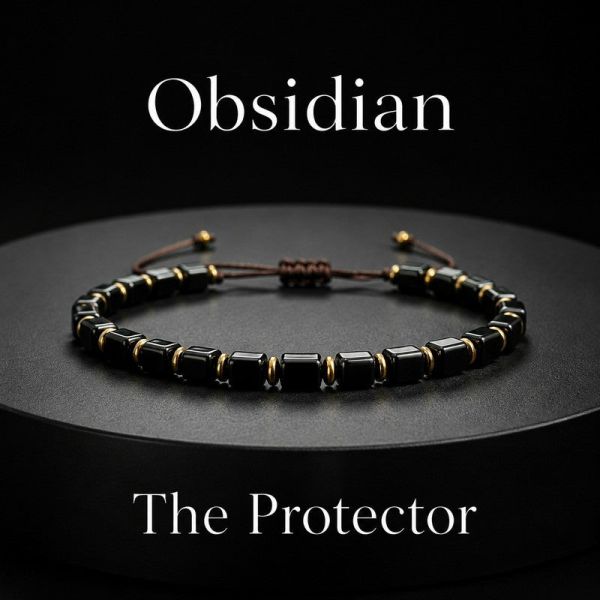 Buddha Stones Black Obsidian Protection Square Bead Braided Adjustable BraceletSpecial Price $25.59 Regular Price $36.04
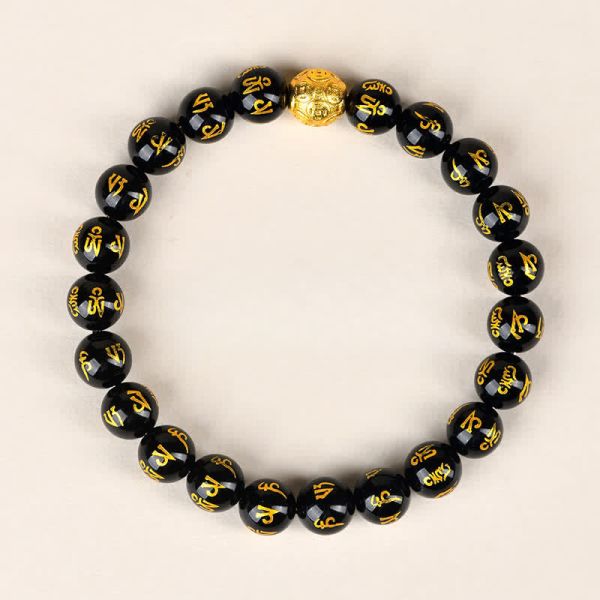 Buddha Stones Black Obsidian Om Mani Padme Hum Strength BraceletAs low as $25.59 Regular Price $34.12
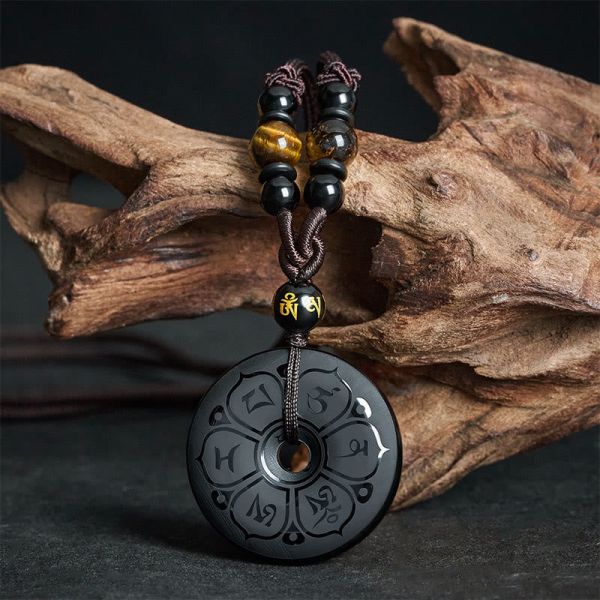 Buddha Stones Black Obsidian Peace Buckle Protection Engraved Braided NecklaceAs low as $26.59 Regular Price $37.45
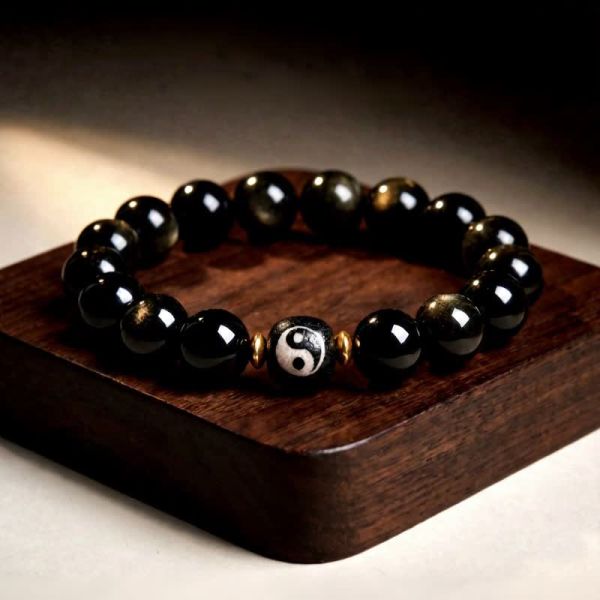 Buddha Stones Golden Sheen Obsidian Yin Yang Protection and Balance BraceletAs low as $25.59 Regular Price $34.58