Turtle for Beginners: A Bracelet Care and Use Manual
A bracelet often collects lotion around its beads and dust beside its small details. Our turtle for beginners manual explains how to fit, wipe, inspect, and store turtle-design jewelry, including beaded elastic styles and adjustable cord bracelets. Begin with the band and materials, then choose the gentlest care that removes surface dirt. You do not need an elaborate setup or a ceremonial cleaning method. A clear work surface, careful handling, and a quick check before wearing provide a practical starting routine.
Tools and materials for a gentle surface clean
Gather a few ordinary supplies before taking off your bracelet. Work over a folded towel or a shallow tray so a loose bead cannot roll far if you discover a damaged band.
- A clean, lint-free cloth: Use it dry for dust and fingerprints. Keep a separate cloth for jewelry instead of using one that may hold household cleaner.
- A second cloth and plain water: Dampen a corner only when dry wiping leaves visible residue. Squeeze it thoroughly; it should not drip.
- A soft, dry brush: Use light strokes to lift loose dust beside a turtle detail. Stop if the bristles catch on string or a rough edge.
- A separate storage compartment: Choose somewhere the bracelet can rest without tangling with other jewelry or sitting under heavy objects.
These are care supplies to gather yourself. Keep abrasive powders, metal polish, and household cleaning sprays away from the work area. For jewelry combining stone, copper alloy, and string, start with dry care rather than treating the bracelet as a single solid material.
Turtle for beginners: a step-by-step wearing routine
- Inspect before putting it on. Lay the bracelet flat and look at the visible band, bead openings, cord ends, and metal details. Check for loose fibers, sharp edges, gaps that have become larger, or a bead that appears damaged. Avoid pulling the band apart to inspect hidden sections.
- Check the fit. Compare your wrist measurement with the dimensions supplied for the particular bracelet. An elastic bracelet should pass over your hand without force. Open an adjustable cord enough to put it on, then adjust gradually while supporting the bracelet instead of tugging the decorative elements.
- Choose a workable position. Let the turtle detail sit where it does not repeatedly catch on a cuff or press against a desk edge. There is no required left or right wrist for ordinary jewelry use. Your clothing and the bracelet's fit can guide that choice.
- Remove it before wet or rough tasks. Set it aside before washing, swimming, cleaning, or work that could snag the cord. Apply lotion or perfume before putting jewelry on, and allow the application to dry. Take the bracelet off before bed to avoid pulling or catching it in bedding.
- Wipe after removal. Support the beads and decoration in your hand or on the towel. Pass the dry cloth over accessible surfaces without stretching the band. If residue remains, touch that area with the barely damp cloth, keeping moisture away from knots and bead openings as much as possible.
- Finish dry and put away. Blot any damp area with the clean cloth and leave the bracelet uncovered until dry. Set it in its own compartment without tension on the band. Keep its storage place away from direct sunlight, damp surfaces, and heat sources.
Repeat the inspection whenever you put the bracelet on; use the damp step only when needed. Dirt that remains around a knot or inside a bead opening is a reason to seek suitable jewelry care advice rather than keep adding water or pressure.
What not to do with beads, cords, and turtle details
Do not soak the whole bracelet to reach a small patch of dirt. Water can remain around string and bead openings after the outer surfaces look dry. Avoid steam equipment and ultrasonic cleaners unless a qualified jeweler has confirmed that the complete piece is suitable.
Do not use toothpaste, baking soda, vinegar, alcohol, or metal dip as a general cleaning recipe. A method intended for one material may be unsuitable for another part of the bracelet. Without specific finish or treatment information, do not assume that a polishing compound is appropriate.
Do not stretch elastic repeatedly to test its strength, pull a cord by its loose ends without supporting the adjustment, or scrub across a knot. If an adjustment resists gentle handling, stop. Forcing it can turn a small maintenance issue into a broken band.
When to repair, replace, or retire a bracelet
Pause wear if elastic stays stretched, fibers separate, a knot slips, or a metal edge begins catching fabric. A loose connection or damaged bead also deserves attention before the bracelet goes back on your wrist. Keep any detached parts together in a closed container.
A jeweler may be able to assess restringing or cord replacement. Ask for an inspection before assuming that a new band will solve the problem; bead openings and decorative connections also need to be usable. Avoid applying household glue as a shortcut.
Color differences alone do not establish damage. Our product details describe possible variations in color, details, and appearance from natural materials or jade. Compare an unfamiliar mark with an earlier photo if available. If repair is unsuitable, you can retire the bracelet from wear and keep it as a stored keepsake. No special disposal ritual is required for ordinary jewelry.
Four turtle bracelets and their care details
Use the specifications below to distinguish the band types and fit. Where a product name includes Luck, the word expresses a traditional wish. No result is guaranteed.
Blue crackle agate with elastic string
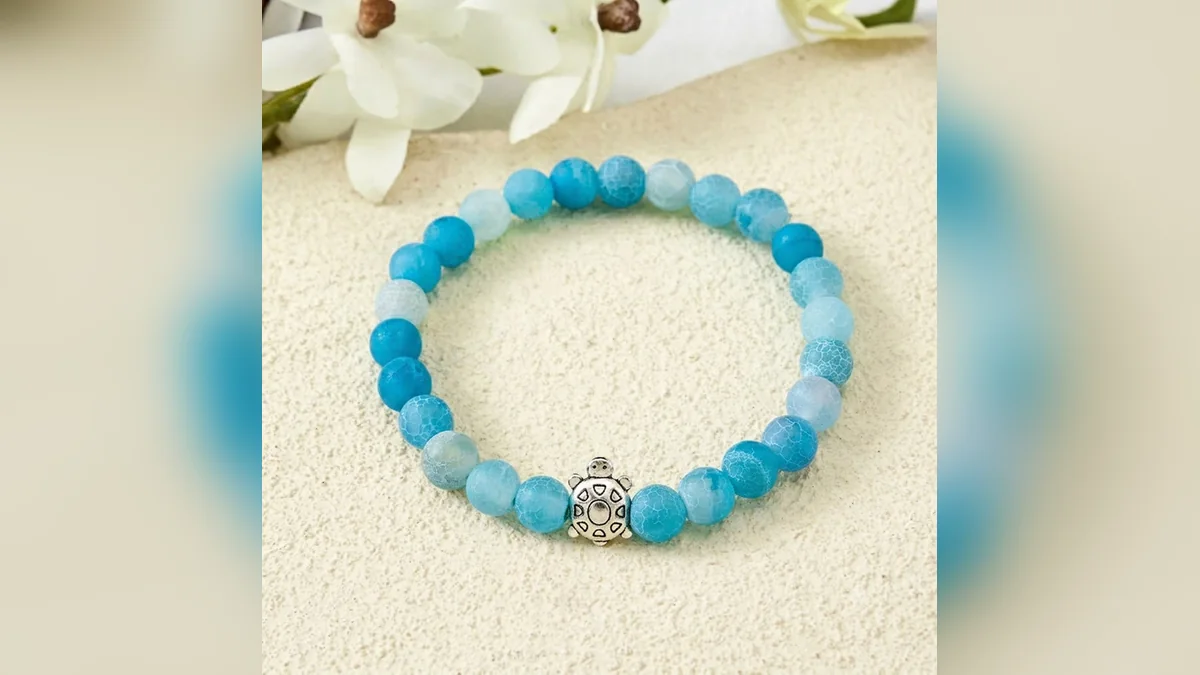
Our Blue Crackle Agate Turtle Bracelet combines Blue Crackle Agate and Copper Alloy. It has Premium Elastic String, 8 mm beads, and a wrist circumference of Approx. 5.9–6.3 in (15–16 cm). Support the beads during wiping so the band is not stretched.
Green agate and green aventurine beads
The Natural Green Agate and Green Aventurine Turtle Bracelet uses premium elastic string. Its materials are Green Agate, Green Aventurine, and Copper Alloy, with 8mm Green Agate and 8mm Green Aventurine beads. The wrist circumference is 5.9–6.3 in (15–16 cm). Check the visible string between beads without pulling them apart.
Hetian jade with an adjustable cord
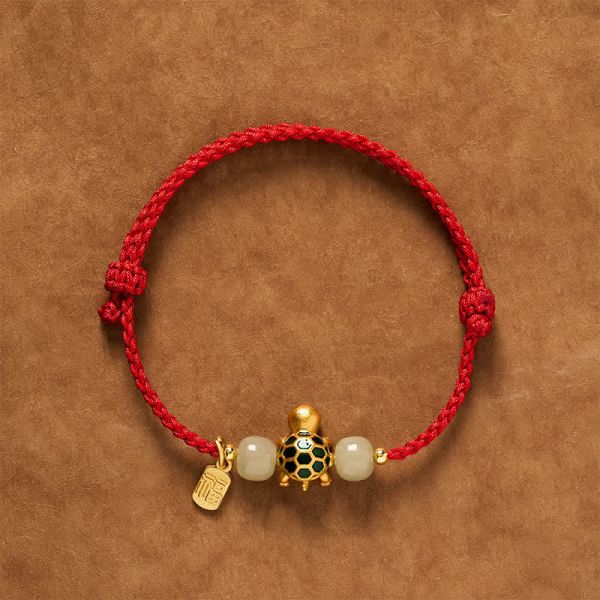
The Copper Turtle Hetian Jade Fu Character Bracelet has an Adjustable Cord and a wrist circumference of 5.5–7.1 in (14-18 cm). Red String, Hetian Jade, and Copper Alloy are its specified materials. Green and Red options are offered. Keep the adjustment supported when loosening or tightening the cord.
Jade with a different fit
Our Copper Turtle Jade Fu Character Bracelet combines Red String, Jade, and Copper Alloy with an Adjustable Cord. Its wrist circumference is 6.3–7.1 in (16-18 cm). Check this size separately from the Hetian jade version before choosing. Blot incidental moisture around the cord rather than rubbing it vigorously.
Keep the routine easy to repeat
Give your bracelet a regular place to rest and keep a clean cloth nearby. Check the band, handle the adjustment gently, remove surface dirt, and let damp areas dry before storage. When something changes, pause wear and inspect it before continuing. Consistent care starts with noticing small physical changes.
Shop the story
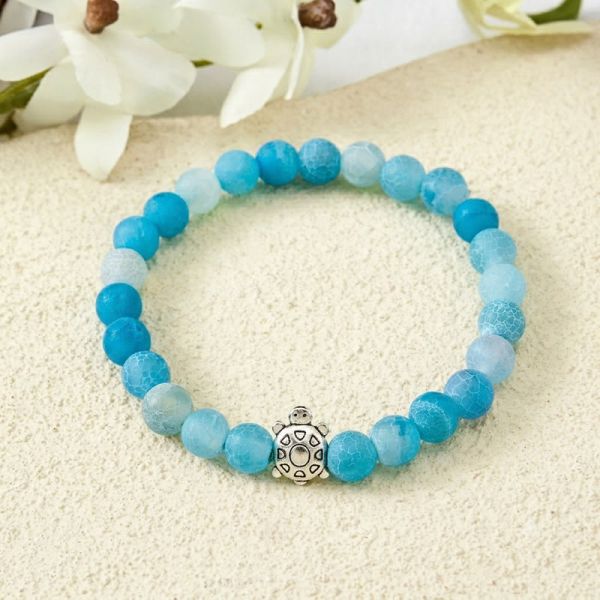 Buddha Stones Blue Crackle Agate Turtle Calm Beaded BraceletSpecial Price $25.59 Regular Price $34.12
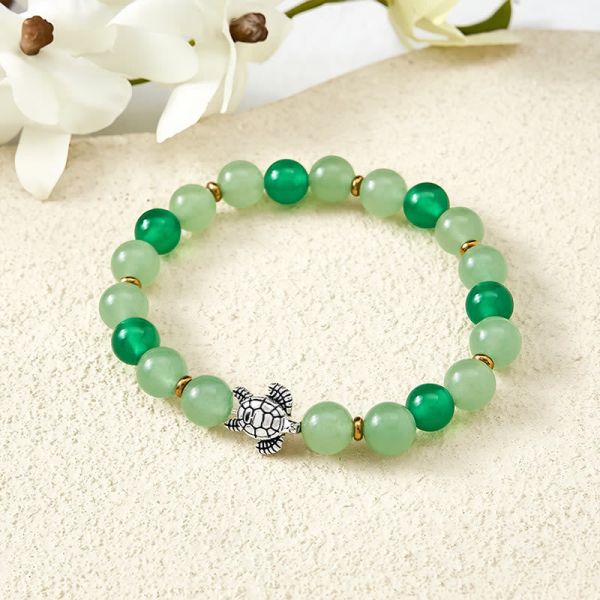 Buddha Stones Natural Green Agate Green Aventurine Turtle Design Success Beaded BraceletSpecial Price $25.59 Regular Price $35.54
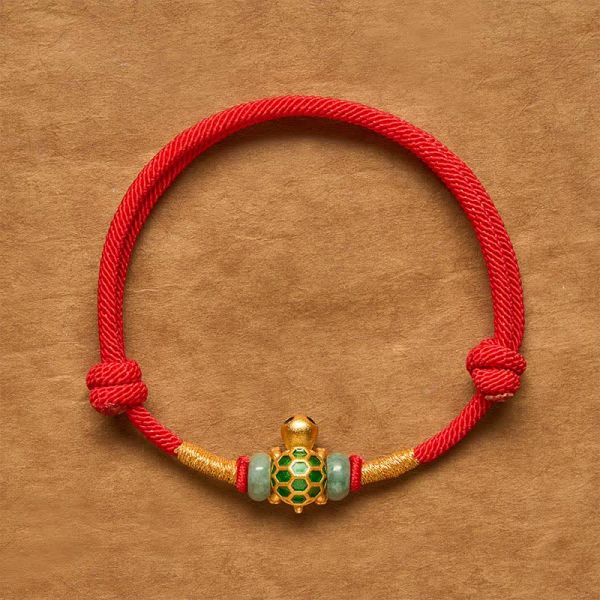 Buddha Stones Copper Turtle Jade Fu Character Luck Red String BraceletSpecial Price $25.59 Regular Price $35.05