Lotus for Beginners: A Lotus Bag Care and Use Manual
Bag handles and lower corners often collect dirt before the patterned front needs cleaning. This lotus for beginners manual is a practical guide to carrying, checking, spot-cleaning, and storing lotus-pattern fabric bags. Start with the fabric, embroidery, straps, and closure, then choose the smallest care task that addresses the problem. At Buddha Stones, we recommend checking any care label before cleaning. The routine below focuses on ordinary handling and cautious surface care; a lotus design does not tell you how its fabric should be washed.
Tools and materials for gentle surface care
Set up on a clean surface with enough space to lay the bag down without crushing its decoration. Keep these supplies nearby:
- A clean, soft white cloth for lifting surface dirt and checking for transferred color.
- A second dry cloth or towel to support the bag and blot moisture.
- Cool water for lightly dampening the cloth.
- A small amount of mild detergent, only if the care label permits it.
- Plain, unprinted tissue or clean cloth for loosely supporting an empty bag during storage.
Begin without detergent. If a mark needs more attention, check the label and test your proposed method on a hidden area first. Let that area dry before judging the result. Stop if color transfers, a water mark develops, or the surface changes. Avoid applying a new cleaning product directly to visible embroidery.
Lotus for beginners: a carry-to-storage routine
- Empty and inspect. Open the available pockets and remove their contents. Look along the base, corners, strap attachments, and closure. Check for caught threads, grit, loose stitching, or a strap beginning to separate. Deal with a structural problem before loading the bag again.
- Arrange what you carry. Put capped pens and closed cosmetics in a separate pouch. Cover pointed objects and keep keys from rubbing against decorative stitching. Choose contents that sit within the bag without pushing its sides outward. If closing it requires pressure, remove something.
- Set the strap before walking. Where a strap is adjustable, change its length while the bag is empty, then check that the adjustment holds under your intended load. For a fixed strap, check where the bag rests before packing. Keep loose strap ends clear of the closure.
- Use the closure gently. Move fabric away from a zipper before pulling it. If it catches, stop and ease the trapped fabric free without tugging. With a buckle or strap closure, check that it is secured before lifting the bag. Carry it by its intended handle or shoulder strap.
- Remove dry debris first. After use, empty crumbs or grit onto a cleanable surface. Lift away loose particles with the dry cloth. Work around embroidery without dragging across raised threads. Do not scrape a dried mark with a fingernail or sharp edge.
- Spot-clean only as permitted. Lightly dampen the white cloth, then blot a small mark after completing the hidden-area test. Keep the cloth barely damp and avoid saturating seams. If permitted detergent is used, blot away residue with another lightly dampened section. Stop if the mark spreads.
- Dry, then put away. Blot excess moisture without twisting the fabric. Leave pockets open and support the bag in a ventilated place away from direct heat and strong sunlight. Store only when the fabric and pocket interiors are fully dry. Add loose support if needed to prevent deep folds.
A brief check after carrying helps you notice dirt before it is rubbed farther into the surface. You do not need to wet-clean a bag after every use. When there is no visible dirt, emptying it and checking the straps may be enough.
Habits that can damage fabric and stitching
Do not assume a familiar fabric name authorizes machine washing. Thread, lining, trim, and closures can require different handling. Follow the care label, and avoid soaking when washing instructions are unavailable. A product name containing “waterproof” does not establish a cleaning method or permission to immerse it.
- Do not scrub embroidery with a stiff brush or pull a loose thread. Set the bag aside for assessment if stitching starts to unravel.
- Do not use bleach, strong solvents, or undiluted detergent as an improvised stain treatment.
- Do not wring the bag, place it on a radiator, or use a hair dryer to hurry drying.
- Do not pack it tightly enough to strain seams, distort the opening, or force the closure.
- Do not hang a loaded bag for extended storage. Empty it and support its shape on a shelf.
Keep a fabric bag away from rough walls and snagging surfaces while carrying it. When setting it down, choose a clean, dry spot.
When wear calls for repair or retirement
Surface fading alone may be acceptable to you. A failing strap attachment, opening seam, or closure that will not stay secured needs attention before further carrying. Stop using the bag if its contents could fall out. A repair professional can assess whether stitching or hardware can be repaired without damaging the surrounding fabric.
Repeatedly loosening repairs, tearing fabric around an attachment, or a stain that cannot be addressed under the care instructions may prompt retirement from daily use. If the bag remains clean and structurally suitable, you might repurpose it for light storage. Otherwise, check local textile collection rules before disposal; acceptance varies by material and condition.
Our lotus-pattern bags: details to check before choosing
Compare the stated fabric, dimensions, pocket arrangement, and strap type with what you plan to carry. Pattern options can differ within a product page, so confirm the selected option before ordering.
Nylon with an adjustable strap
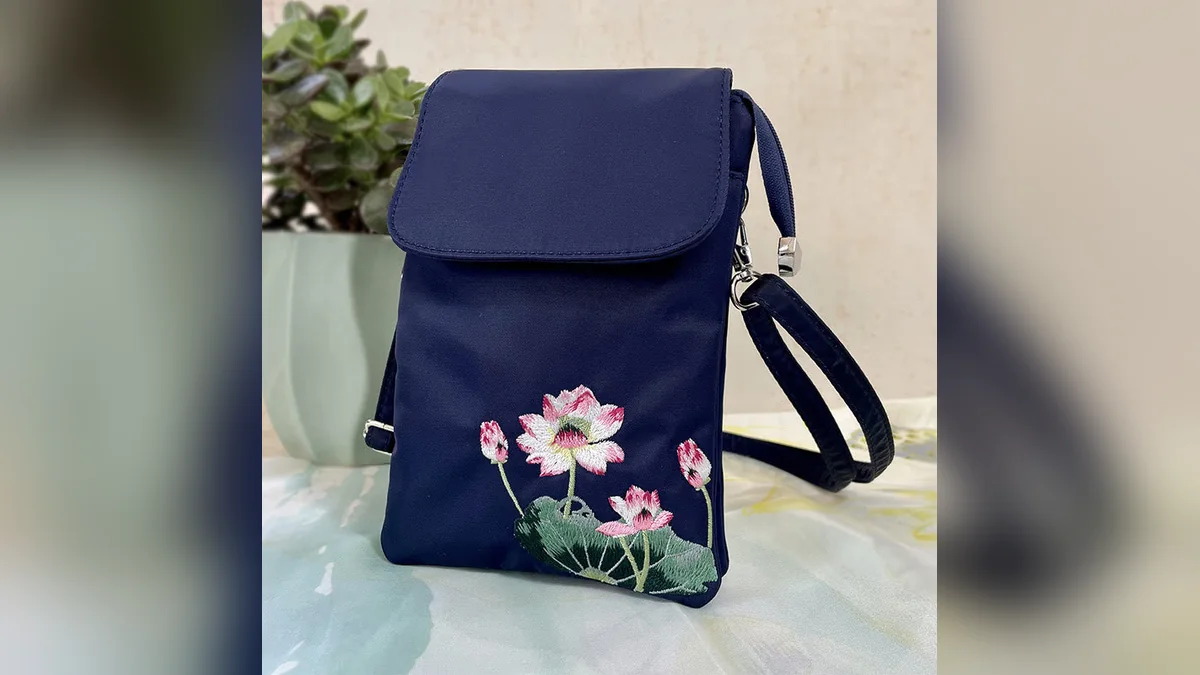
Our embroidered lotus flowers crossbody bag uses Nylon Fabric and measures 20*13cm. Its adjustable strap has a stated length of 120cm. Storage comprises one main pocket, two interior compartments, and one pocket; the closure types are buckle and zipper. Blue Four Lotus and Blue Lotus Dragonfly are among the options.
Canvas with several zipper pockets
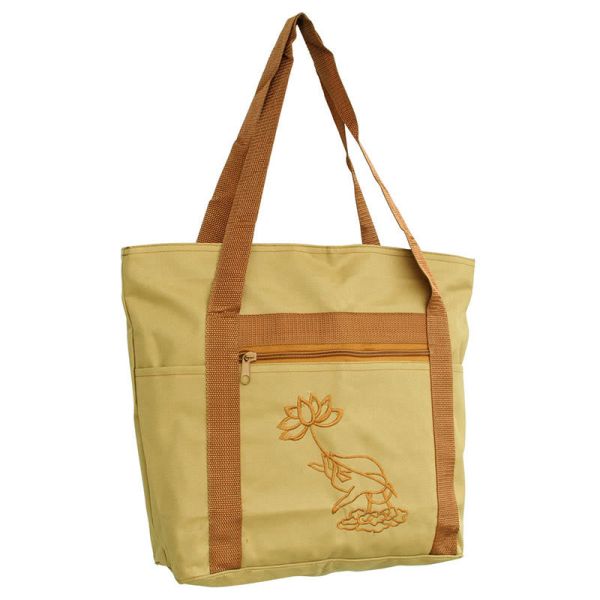
The Spiritual Mind Practice lotus canvas tote measures 31*12*31CM (Length*Width*Height). Its non-adjustable straps measure 68*6cm (Length*Width). The Canvas Fabric bag has a zipper closure, one main pocket, one interior zipper pocket, one front zipper pocket, and one back zipper pocket. Its stated weight is 240g.
Polyester with lotus and koi options
Our Luck Embroidery lotus and koi Hanfu bag uses Polyester and has a strap length of 100-110cm. The size specification reads Summer Lotus 22.3*16cm; do not apply that measurement to another option without confirmation. Koi Fish Lotus is another available pattern. “Luck” in the name expresses a traditional wish; no result is guaranteed.
Cotton linen with ceramic bead accessories
The butterfly lotus and magnolia cotton linen bag uses Cotton Linen Fabric with Ceramic Bead Accessories. It measures 20*20*7cm and has an adjustable shoulder strap with a stated length of 130cm. It has one main pocket, one back zipper pocket, and a strap closure. Options include Green Koi Fish Lotus and Light Blue Butterfly Lotus.
Finish with a dry bag and a sound strap
Keep your routine simple: empty, inspect, address visible dirt cautiously, and allow complete drying before storage. Let the care label guide cleaning and let the condition of the seams guide continued use. The lotus pattern can remain part of your everyday accessories without requiring an elaborate maintenance routine.
Shop the story
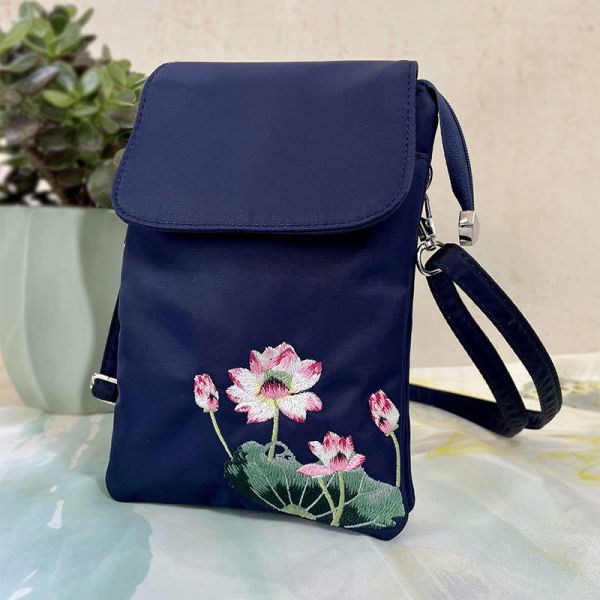 Buddha Stones Waterproof Handmade Embroidered Lotus Flowers Crossbody Bag Shoulder Bag Cellphone BagAs low as $25.59 Regular Price $34.12
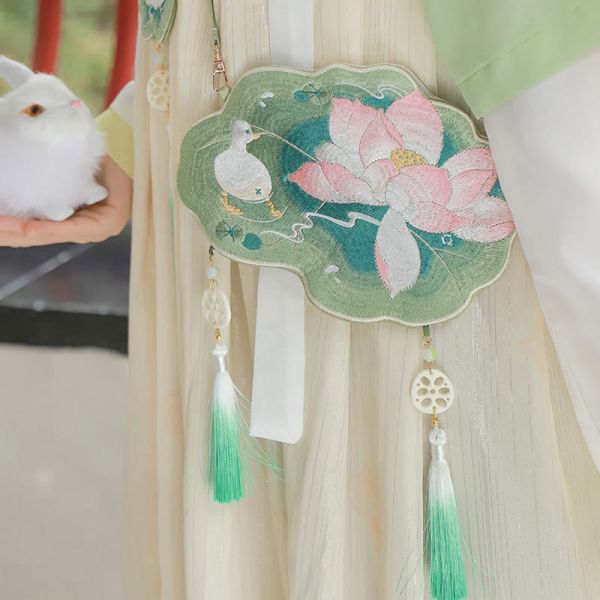 Buddha Stones Luck Embroidery Lotus Koi Fish Rabbit Flower Hanfu Bag Crossbody Bag Shoulder BagAs low as $29.59 Regular Price $39.45
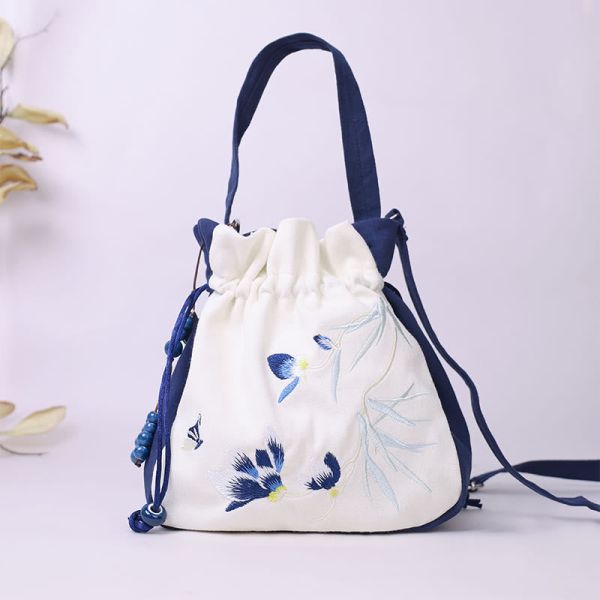 Buddha Stones Embroidered Butterfly Lotus Magnolia Cotton Linen Tote Crossbody Bag Shoulder Bag HandbagAs low as $25.59 Regular Price $35.05