
Amber for Beginners: A Practical Care and Use Manual
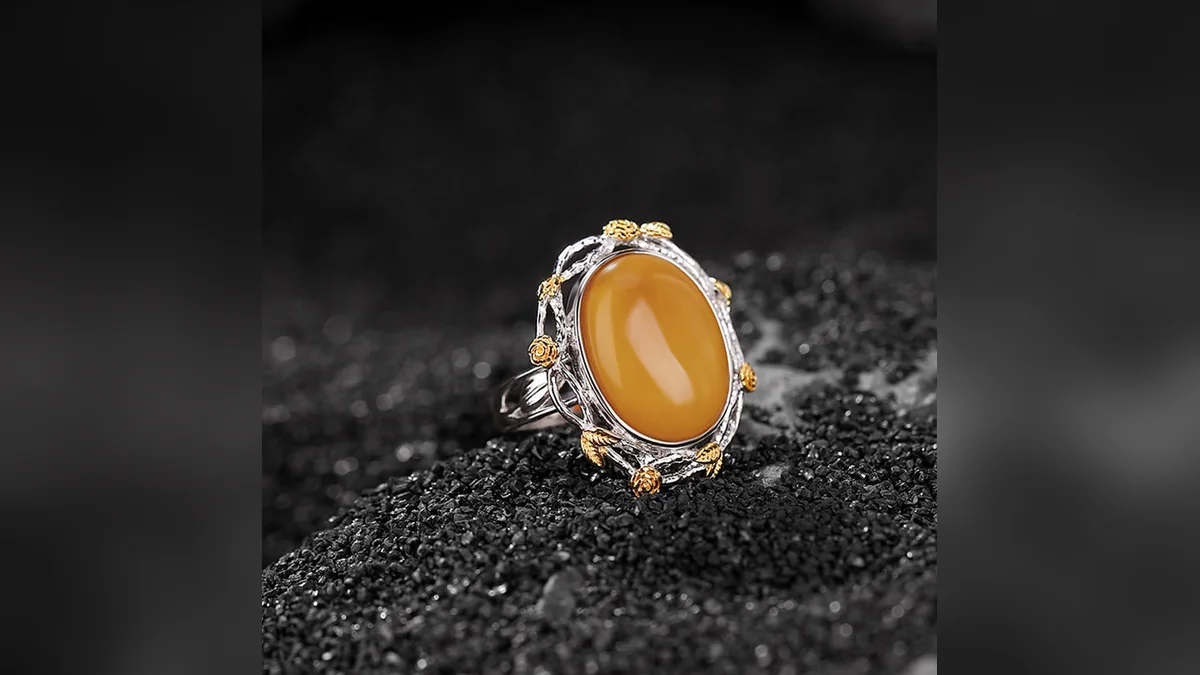
Fingerprints can leave amber jewelry looking dull after regular wear. Our guide to amber for beginners explains how to inspect a piece, put it on carefully, clean away ordinary residue, and store it between uses. You will also learn when to stop wearing an item and arrange a repair. Begin with the material description: amber and faux amber are different, and a familiar color does not establish what a bead contains.
At Buddha Stones, we recommend choosing a routine around the complete piece. A ring setting, plated detail, pearl, or elastic string needs attention alongside the amber. Keep the process gentle, brief, and easy to repeat.
Gather your tools and prepare a clear surface
Set up a small cleaning area away from the sink edge. A folded towel gives loose jewelry a resting place and helps prevent a ring or bead from rolling onto the floor. Work with one item at a time so that metal fittings do not rub against neighboring beads.
- Two clean, soft cloths: use one for wiping and keep the other dry. Choose cloths without polishing compounds or rough stitching across the cleaning surface.
- Lukewarm water: dampen a corner of the wiping cloth rather than placing the jewelry in a bowl.
- Mild soap, if needed: reserve a small amount for ordinary residue that a water-dampened cloth cannot remove.
- A separate storage space: use a clean pouch or lined compartment that keeps the jewelry from rubbing against other items.
Leave abrasive brushes, metal picks, and household cleaners out of the setup. If an item came with specific care instructions, check those before choosing any cleaning method.
Amber for beginners: your step-by-step routine
- Inspect before putting it on. In good light, look for cracks, loose settings, gaps between beads, and frayed or stretched string. Turn the piece slowly over the towel instead of tugging at a questionable area. If a bead moves inside its setting or a cord looks damaged, set the item aside for assessment.
- Finish washing and dressing first. Apply lotion, perfume, and hair products before adding jewelry, and let them dry. Remove jewelry before bathing, swimming, chores, or activities that expose it to knocks or chemicals. Put it in its designated storage place before starting, rather than balancing it beside a drain.
- Handle the structure gently. Guide an elastic bracelet over your hand with only the stretch needed. Do not pull it by a charm. Support a mala when lifting it, and avoid letting a long section dangle and catch on furniture. An adjustable ring still needs careful fitting; avoid repeatedly bending it open and closed.
- Wipe away surface residue. Begin with a dry cloth and light pressure. If residue remains, use a barely damp cloth with lukewarm water. For persistent ordinary grime, use a little mild soap on the damp cloth, then remove the soap with a separate clean, water-dampened section. Do not immerse the whole piece.
- Dry before putting it away. Blot gently with the dry cloth. Give any remaining moisture time to evaporate at room temperature, away from direct sunlight. Check around bead holes, settings, and knots without poking into them. Do not use a hair dryer or set jewelry on a heater to speed up drying.
- Return it to a protected space. Lay a strand down without tight bends or tension, and keep a ring from pressing against beads. Choose a dry place away from radiators and sunny windows. A quick wipe after wear is often enough; a more involved cleaning belongs only where visible residue calls for it.
What to leave out of amber care
Skip steam and ultrasonic cleaning. Heat and vigorous cleaning methods are unsuitable for amber. Mixed-material jewelry adds further reasons for caution: an approach intended for a metal setting may be unsuitable for an adjacent bead, its string, or a plated surface.
Do not use alcohol, acetone, bleach, toothpaste, or abrasive polishing pastes. Avoid rubbing a silver polishing cloth across amber or gold-plated details. When metal needs more attention than gentle wiping provides, ask a jeweler how to clean that component while keeping the adjoining materials safe.
Never use a hot needle, flame, solvent, or scratch test to decide whether something is amber. Those methods can permanently mark jewelry. A product description should identify faux amber clearly; if material identification remains uncertain, seek an assessment rather than experimenting at home. Oil and wax are also unnecessary additions to this basic routine.
When to repair, replace, or retire a piece
Pause wear when a setting becomes loose, a sharp edge appears, or a crack reaches a bead hole. Stretched elastic that no longer holds its shape, visible fraying, and a loosening knot also call for attention. Do not wait for a strand to break before arranging restringing.
A surface scuff does not automatically mean a piece must be discarded. Ask a jeweler familiar with amber to distinguish cosmetic wear from structural damage. Avoid home sanding or glue repairs, which can complicate later work. For an adjustable ring, stop making adjustments if the band develops a visible crack.
Retire jewelry from wear when its structure cannot be repaired reliably. Keep any detached beads together in a labeled container for assessment. Replacement should answer a practical problem, such as an unsafe setting or unsuitable fit, rather than follow an arbitrary calendar.
Product details to match with your care routine
Our 990 Sterling Silver Plated Gold Amber Adjustable Ring has an inner perimeter of 54-60mm(Adjustable), with the amber size given as 12*16mm. Its materials are 990 Sterling Silver, 990 Sterling Silver Plated Gold, and Amber. Keep cleaning gentle around the amber and plated areas; adjustment is a fitting task, not a daily care step.
The Tibetan White Yellow 108 Beads Amber Mala uses Faux Amber and has about 108 beads. Options are 10mm, 6mm, and 8mm. Despite the shorter word “amber” in its name, the material specification identifies it as faux amber. Use that distinction when choosing care advice, and support the strand during handling.
Our Natural Aquamarine Amber Chinese Knotting Charm Peace Bracelet combines Aquamarine, Amber, Red Agate, Green Jasper, and Pearl. It has premium elastic string, 10mm beads, and a wrist circumference specification of 15-19cm. This combination calls for attention to the string as well as the bead surfaces; do not pull on the charm when removing it.
The 925 Sterling Silver Natural Jade Amber Butterfly Luck Abundance Bracelet contains Jade, Amber, Red Agate, and 925 Sterling Silver Plated Gold. Its premium elastic string accompanies 7mm beads; wrist circumference is 14-16.5cm and weight is 34g. Its care note asks you to remove it before sleeping or washing. “Luck” and “Abundance” in the name express traditional wishes, and neither is a guaranteed result.
Make the next wear easy to prepare for
Keep your cloths clean and your storage space ready before removing jewelry. At the next wear, check the setting or string first, then decide whether the surface needs a wipe. Consistent handling matters more than elaborate cleaning. If damage interrupts that routine, let repair come before wear.
Shop the story
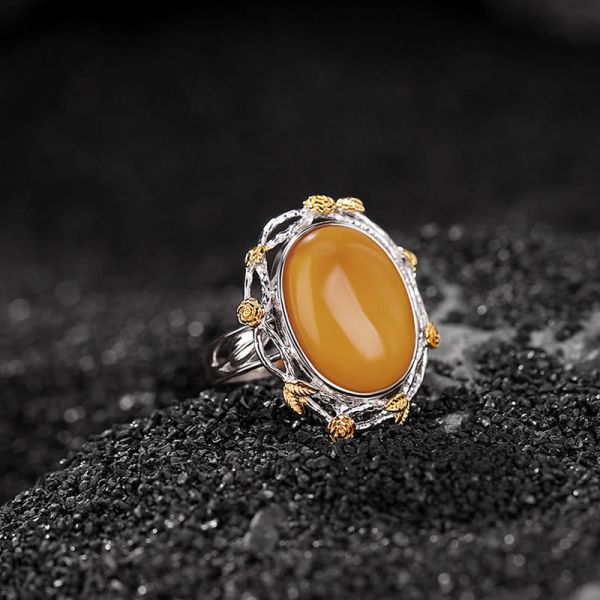 Buddha Stones 990 Sterling Silver Plated Gold Amber Focus Adjustable RingSpecial Price $103.59 Regular Price $138.12
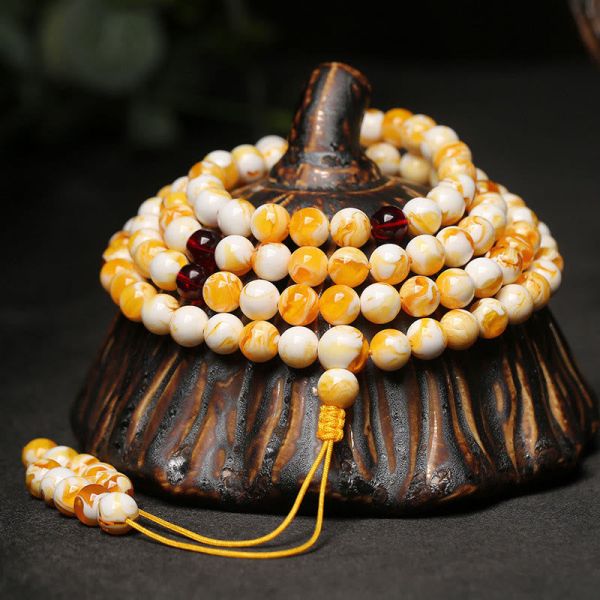 Buddha Stones Tibetan White Yellow 108 Beads Amber MalaAs low as $25.59 Regular Price $36.04
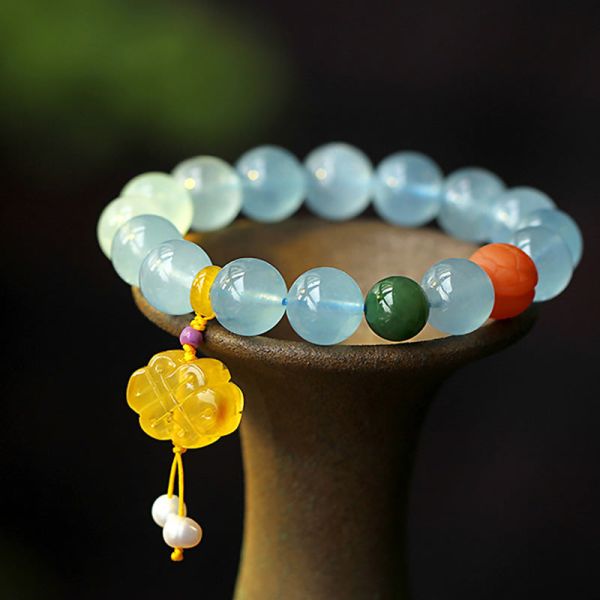 Buddha Stones Natural Aquamarine Amber Chinese Knotting Charm Peace BraceletSpecial Price $123.59 Regular Price $174.07
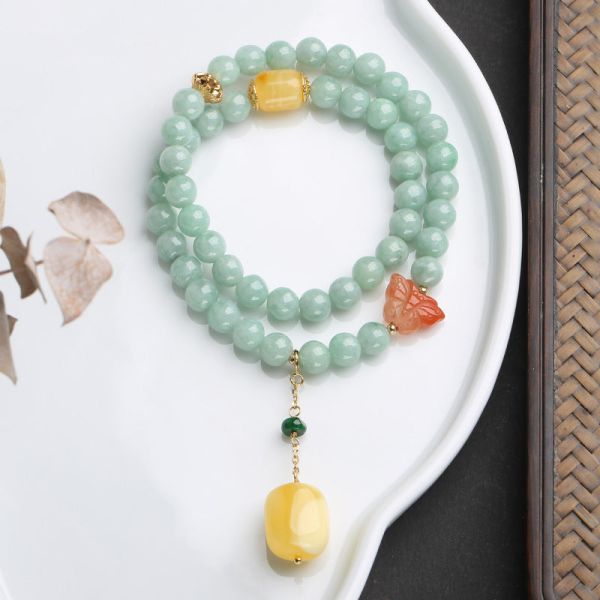 Buddha Stones 925 Sterling Silver Natural Jade Amber Butterfly Luck Abundance BraceletSpecial Price $241.59 Regular Price $322.12