
Bangle Sizing Guide: Fit, Wear, and Care Instructions
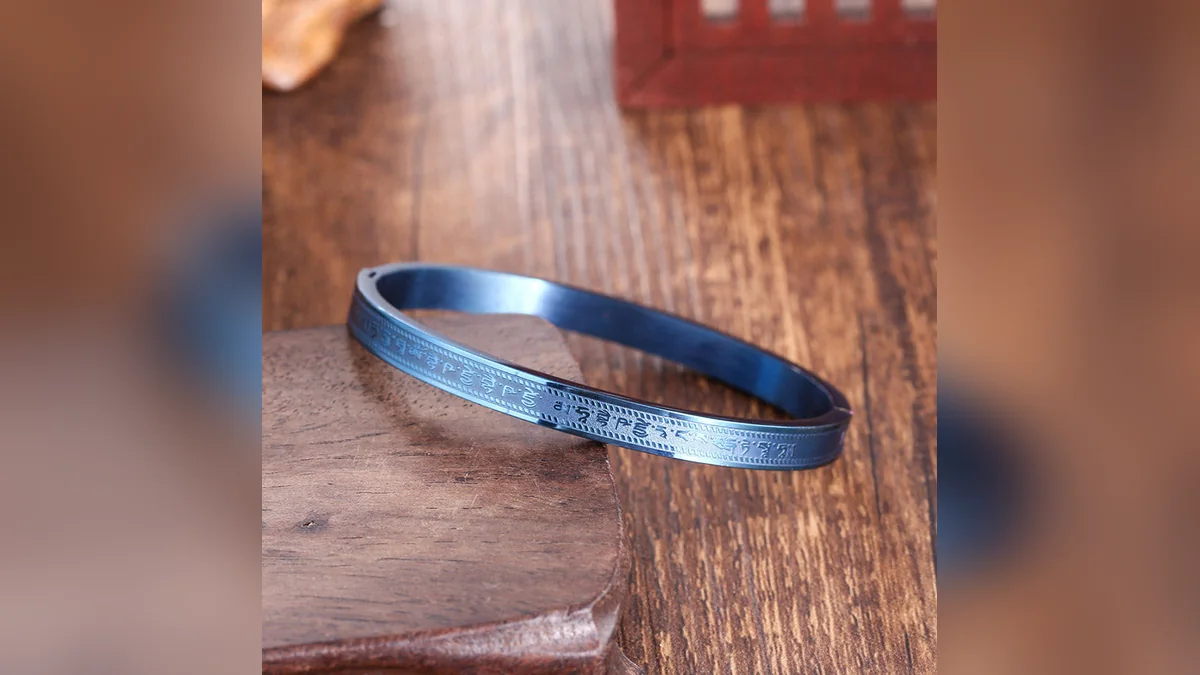
A bangle can collect soap around its inner edge during handwashing. Before wiping it down and putting it back on, check its fit and condition. Our bangle sizing guide explains how to compare an opening with your hand, read diameter measurements, and build a simple routine for wearing, cleaning, and storing your jewelry. A closed bangle must pass over your hand; an adjustable style needs its own fit check. Wrist circumference alone cannot answer both questions.
Tools and materials for a bangle sizing guide
Prepare a clear surface with a folded towel so a bangle cannot roll onto a hard floor. Keep your measuring tools separate from anything abrasive. You will need:
- A flexible measuring tape or a strip of nonstretch paper and a ruler.
- A ruler marked in millimeters for checking an existing bangle.
- A clean, soft cloth for wiping the surface.
- A small pouch or divided jewelry box for storage.
- A note of the product’s size description and any care instructions.
A bangle that already passes over your hand comfortably can provide a useful comparison. Measure its opening across the center, from one inside edge to the other. Exclude the thickness of the band. If the opening is oval, record both directions rather than treating it as a circle.
Keep units consistent when comparing measurements. Diameter runs straight across an opening, circumference goes around it, and width describes a different dimension. A width number cannot stand in for an inner diameter.
A step-by-step routine from fitting to storage
- Read the size field before trying the piece. Establish whether the description gives inner diameter, wrist circumference, adjustable length, or another measurement. Record the label beside the number. Do not assume that a diameter describes an adjustment mechanism unless the product information says so.
- Check the hand passage for a closed bangle. Bring your fingers together and tuck your thumb toward your palm, as you would for putting it on. Wrap the tape or paper around the broadest part of the gathered hand without tightening it. For a roughly circular opening, dividing that circumference by 3.14 gives a starting estimate of diameter. Hand shape and the bangle’s profile still affect passage, so this calculation does not establish a guaranteed fit.
- Compare with a known comfortable opening. Use the inside measurement of an existing bangle alongside the hand estimate. If the measurements disagree, repeat them before choosing a size. Avoid adding an arbitrary allowance: too much room can let the bangle slide off, while too little can make removal difficult.
- Inspect before putting it on. Under ordinary light, look around the inside edge and outer surface. Check for a crack, a sharp edge, lifting plating, or a change in shape. Remove any loose grit with a gentle wipe before it can rub against the surface.
- Put it on over the towel. Guide a closed bangle over the gathered hand slowly, keeping the opening aligned with the hand. Stop if it catches or requires force. With an adjustable design, follow its adjustment instructions and avoid repeated bending back and forth. The word adjustable does not specify how far you may move it.
- Check movement at the wrist. Let your hand rest, then turn it gently. The bangle should have room to move without catching at its edges or slipping off during ordinary movement. Confirm that you can remove it before settling on the fit.
- Wipe, dry, and put away. After removal, use a clean cloth to lift surface marks. For an unidentified finish, begin with a dry wipe and check the care directions before using liquids. Let any damp surface dry completely before placing the bangle in its own compartment or pouch.
Remove bangles before washing dishes, bathing, or tasks that expose them to cleaners, grit, or hard knocks. Put jewelry on after applying lotions and let those products dry first. This makes the care routine easier to keep consistent without making assumptions about a particular finish.
What not to do when fit or finish changes
Do not push a rigid bangle over your hand because its wrist fit looks right. Getting it onto the wrist is only half the check; it also needs to come off without force. Extra pressure is not a sizing method.
Avoid pliers, stretching tools, or repeated squeezing to change an adjustable bangle. An adjustable size description does not authorize unlimited reshaping. If the adjustment method is unclear, leave the shape as supplied until you have suitable instructions.
Do not scrub plated surfaces with abrasive powders or use polishing compounds without checking compatibility. A cloth intended to remove tarnish can be unsuitable for a plated finish. Avoid soaking a piece when you do not have material-specific directions, and do not use a household cleaner as a shortcut.
Keep bangles from knocking together in a loose drawer. Use separate compartments, and avoid resting a rigid piece on the edge of a sink while cleaning it.
When to replace or retire a bangle
A visible crack, a sharp exposed edge, or a closure that no longer works reliably is a reason to stop wearing a piece. Set it aside for assessment before trying another fitting session. Do not test a suspected crack by flexing the band.
Surface wear and structural damage call for different decisions. A small cosmetic mark may simply change the appearance; a distorted opening can change fit. If plating lifts or an edge catches on clothing, pause wear and seek an appropriate jewelry assessment.
There is no fixed replacement schedule based only on material names. Retire a bangle from regular use if it can no longer pass on and off comfortably or hold its intended shape. You can keep a sentimental piece in a padded box without continuing to wear it.
Product measurements to check before choosing
In our product names, Blessing, Luck, and Wealth express traditional wishes. These names carry no guarantee of personal or financial results.
Titanium steel: keep both diameter values
Our Buddha Stones Titanium Steel Blessing Bracelet Bangle uses Titanium Steel. Its size fields read Wrist Circumference: 15cm and Diameter: 5.1cm (Min), 6.4cm (Max). Keep these separate fields in your sizing notes; do not read the diameter figures as instructions for bending it.
White copper: distinguish width from diameter
The Buddha Stones Tibetan Sanskrit White Copper Meditation Prayer Bracelet Bangle specifies Adjustable length, White Copper and Silver-Plated Copper materials, Width: 8mm, 12mm, and Diameter: 5cm-6cm. Options include 12mm, 8mm, White Copper (Black), and White Copper (White). Compare the selected option’s details before deciding.
PiXiu: an adjustable size with a width measurement
The Buddha Stones FengShui Engraving PiXiu Blessing Bracelet Bangle specifies Silver-Plated Copper, Size: Adjustable, and Width: 54mm. That width is not an inner diameter. Use the size description without converting it into an unsupported hand-fit measurement.
Jade: choose an inner diameter
The Buddha Stones Natural Jade Luck Wealth Bangle Bracelet is Jade, with inner diameter options of 55mm, 56mm, 57mm, 58mm, 59mm, 60mm, 61mm, 62mm. Its instructions allow lubricant, detergent, or soap on the hand to make putting it on easier. This is a wearing aid, not a reason to force a smaller opening.
Keep the fit record with the jewelry
Save the chosen size, its measurement label, and the care directions together. Before wearing again, check the opening and edges, then repeat the same gentle handling routine. A useful fit record makes future comparisons clearer and keeps diameter, width, and circumference from becoming interchangeable numbers.
Shop the story
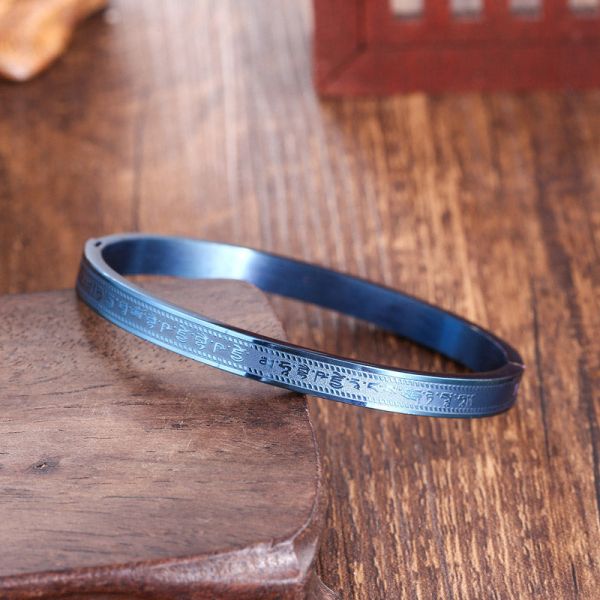 Buddha Stones Titanium Steel Blessing Bracelet BangleSpecial Price $25.59 Regular Price $34.58
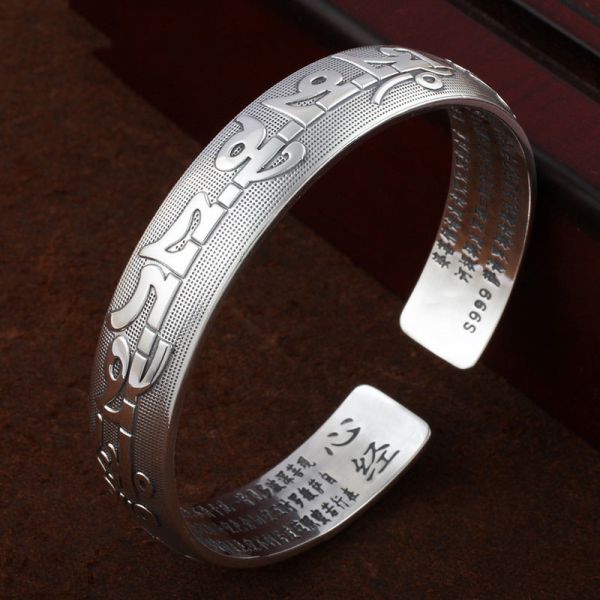 Buddha Stones Tibetan Sanskrit White Copper Meditation Prayer Bracelet BangleAs low as $25.59 Regular Price $34.58
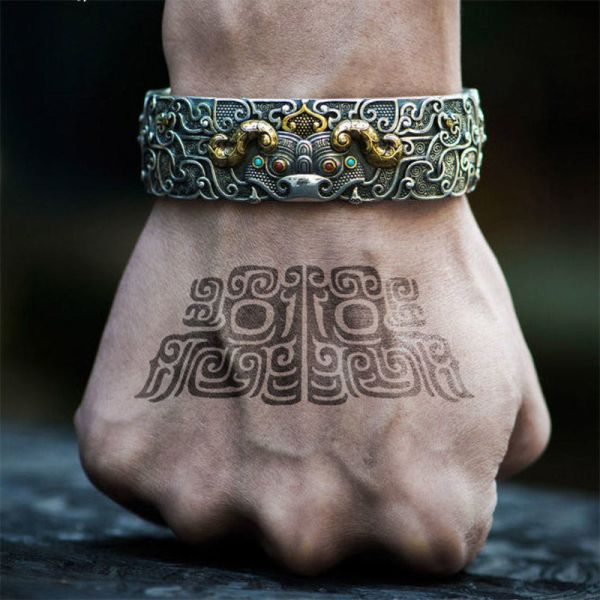 Buddha Stones FengShui Engraving PiXiu Blessing Bracelet BangleSpecial Price $31.59 Regular Price $44.49
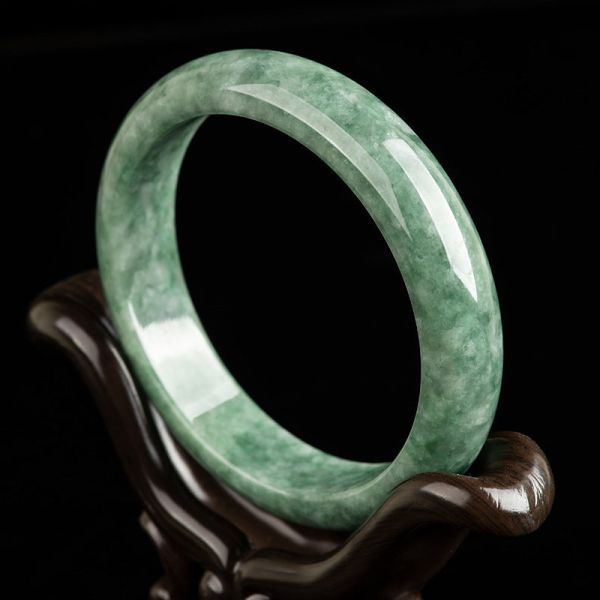 Buddha Stones Natural Jade Luck Wealth Bangle BraceletAs low as $149.59 Regular Price $210.69