
Bamboo Symbolism: A Visual Guide to Motifs and Meaning
Thin, pointed leaves spread from a jointed stalk, leaving open space between the branches. In Chinese art, bamboo symbolism traditionally centers on integrity, resilience, and modesty: an upright plant that bends and has a hollow stem. References to luck, wealth, or protection express traditional beliefs; owning or displaying bamboo guarantees none of these. At Buddha Stones, we distinguish those cultural associations from the details of an object. This field guide helps you recognize the motif, read its companions, and tell a bamboo image from a bamboo component.
How to recognize the motif
Begin with the structure. Color can change across ink paintings, embroidery, and patterned fabric, but a few repeated shapes make bamboo recognizable even in a small design.
- Stalks divided by joints. Look for long, narrow stems interrupted by short crosswise lines or raised rings. These joints, called nodes, give bamboo its segmented outline. A plain vertical stripe alone is less distinctive.
- Long leaves with pointed tips. Bamboo leaves usually appear as slender blades. Artists often group several around a twig, with their tips spreading in different directions rather than forming one rounded mass.
- Fine branches leaving a larger stem. Small side branches connect the leaf clusters to the stalk. Follow those connections to distinguish a bamboo spray from a loose scattering of decorative leaves.
- Repeated stems with slight changes in angle. A cluster may combine upright and leaning stalks. Notice how the leaf groups cross those lines; the spaces between them help define the plant as clearly as the marks themselves.
- Nodes echoed in an object's shape. A handle or border may suggest bamboo through repeated joint-like sections. Check the material description separately, because a bamboo-shaped detail does not establish what it is made from.
Green is useful evidence, but it is not a requirement. Black ink, blue thread, or a single-color pattern can preserve the same recognizable stalk-and-leaf structure.
Bamboo symbolism in Chinese artistic tradition
Bamboo's upright growth is traditionally associated with integrity. Its ability to bend supplies a familiar image of resilience, while its hollow stem is read as modesty or openness to learning. These are comparisons drawn from the plant's form. They describe admired qualities through an image rather than assign a result to someone carrying that image.
In Chinese painting, bamboo belongs to the Four Gentlemen, alongside plum blossom, orchid, and chrysanthemum. This grouping connects plants with qualities of character. Bamboo also appears with pine and plum in the Three Friends of Winter, a traditional grouping associated with endurance through difficult conditions. Recognizing the other plants can therefore change how you read the whole composition.
For a visual field guide, placement matters as much as a symbol's familiar meaning. A tall stalk standing alone emphasizes its line and joints. A dense stand emphasizes repeated growth. A branch beside flowers becomes part of a larger botanical composition. Start with what is visibly present before deciding which traditional association fits.
Companion motifs deserve the same care. A bird perched among bamboo and a flowering branch beside bamboo are different arrangements, even when the central plant is identical. They need not share one fixed message. We describe traditional associations as context, while leaving room for a design to be appreciated for its spacing, contrast, and subject.
Bamboo is not exclusively a Buddhist emblem, and its presence does not make an object a ritual instrument. It can appear in secular decorative art and ordinary accessories. That distinction helps keep cultural meaning separate from assumptions about an item's intended use.
Where the bamboo detail takes shape
Use the surface and construction as a second identification step. An image of bamboo and a component made from bamboo offer different evidence.
| Where you see it | How it usually appears |
|---|---|
| Ink paintings and decorative pictures | Jointed stalks and pointed leaf clusters, often with open space around the branches. |
| Textiles and bag patterns | A stitched or printed plant motif, sometimes combined with flowers or birds. |
| Teaware and household objects | A surface design or a shape that repeats bamboo's segmented outline. |
| Bag handles and other components | A structural detail identified by its form; the stated materials establish whether bamboo is included. |
A product name may combine several motifs across different options. Read the selected option as well as the overall title before assuming that a particular plant appears on the version you choose.
Four bag designs to read by motif and construction
Our bag selection provides examples of bamboo named in a pattern option and bamboo used in a handle. The option names and construction details below show where to look.
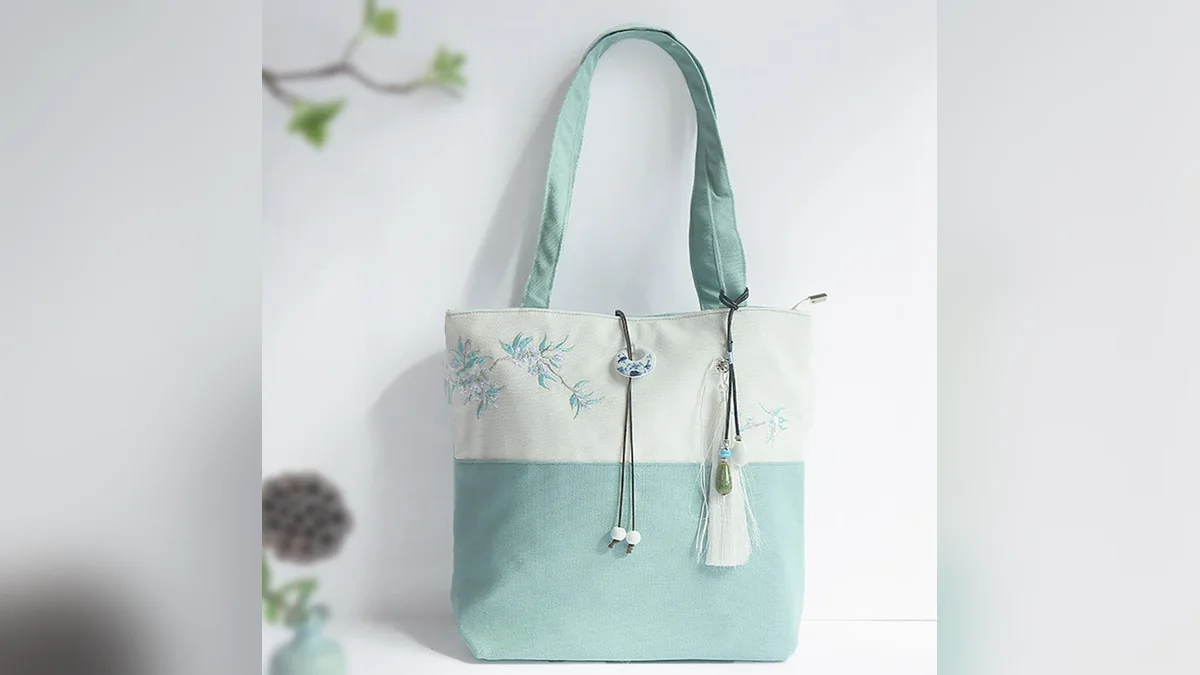
A plum-and-bamboo option on a canvas tote
The Buddha Stones blossom and bamboo embroidery canvas tote includes a Blue White Plum Bamboo option. Other choices have different flower names, so the bamboo reference should stay attached to that specific option. Materials are canvas fabric, polyester, and a nylon zipper. The bag has a zipper closure and non-adjustable straps, with a tote strap length of 27cm. Its interior structure includes one main pocket, one zipper interior pocket, two pockets, and one back zipper pocket.
Bamboo and magpie named together
Two options on the Buddha Stones vintage bamboo magpie shoulder bag name this pairing directly: Purple Bamboo Magpie and Yellow Bamboo Magpie. Dark Purple Butterfly and Green Peony are separate choices. Materials include cotton linen, cotton, polyester, leather, metal, and tassels, with polyester lining. A buckle closes the bag; inside are one main pocket and one interior zipper pocket. The strap is non-adjustable. For motif comparison, begin with the two options that explicitly name bamboo.
A wooden-bead bag with a named bamboo handle
The Buddha Stones hand-woven wooden-bead bamboo-handle bag shifts attention from a plant pattern to a handle identified in its name. Its material specification gives wooden beads and polyester cotton. Black, Brown, Ivory, and Yellow options are available. The handle height is 12.5cm, and the bag has a strap closure, a non-adjustable strap, one main pocket, and one interior bag. This is a useful example of reading the title and material specification separately rather than extending one named detail to the whole construction.
A bamboo component with a metal chain
Bamboo appears in the material specification for the Buddha Stones green plants and mountains bamboo-handle crossbody bag, together with polyester, metal, and metal chain. The lining is polyester. Green and Orange options are available, and the metal chain strap length is given as 120cm/40cm. Construction details include a buckle closure, a non-adjustable strap, one main pocket, and one interior pocket. Here, the material description supports reading bamboo as part of the object's construction, alongside the plants-and-mountains wording in its name.
Reading bamboo symbolism starts with a few concrete observations: joints along a stalk, pointed leaves, nearby motifs, and the difference between a pictured plant and a material. Those details let you appreciate the traditional references without treating them as promises. A sparse branch and a shaped handle invite different kinds of attention; understanding which one you are looking at is the first step.
Shop the story
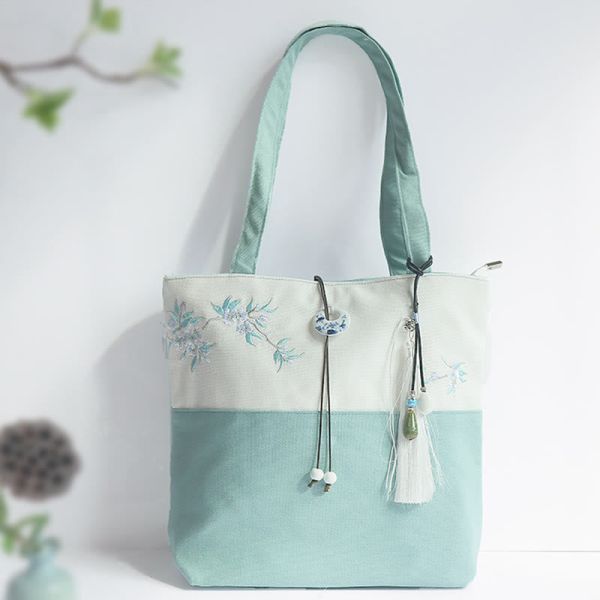 Buddha Stones Pear Flower Plum Peach Blossom Bamboo Embroidery Canvas Large Capacity Shoulder Bag Tote BagAs low as $46.59 Regular Price $65.62
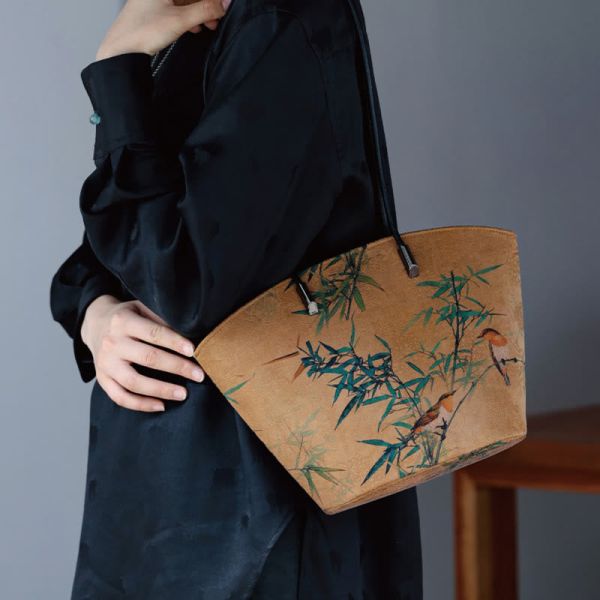 Buddha Stones Vintage Bamboo Magpie Peony Butterfly Large Capacity Shoulder Bag HandbagAs low as $189.59 Regular Price $263.32
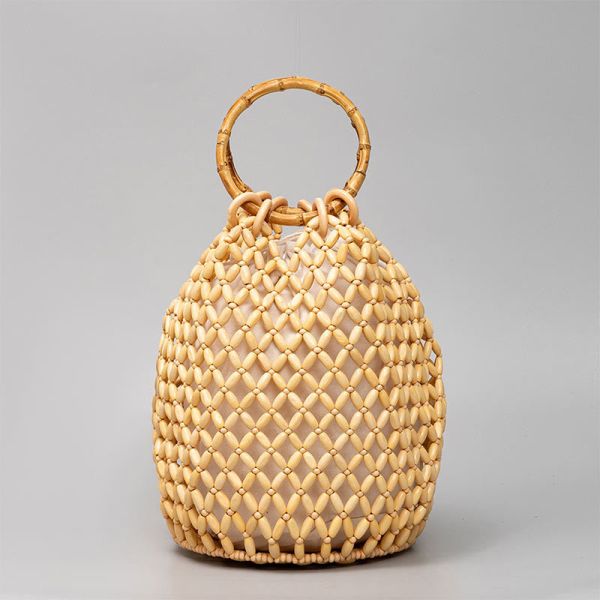 Buddha Stones Hand-woven Wooden Beads Bamboo Handle Shoulder Bag HandbagAs low as $62.59 Regular Price $83.45
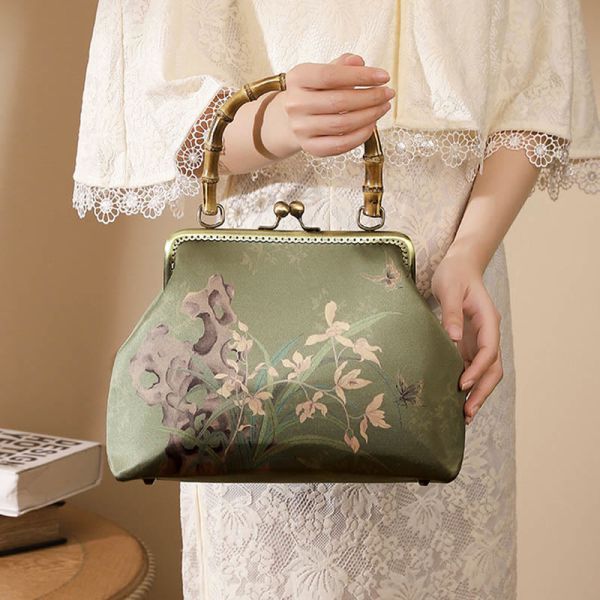 Buddha Stones Green Plants Mountains Bamboo Handle Metal Chain Crossbody Bag HandbagsAs low as $54.59 Regular Price $72.79