
Bamboo Care Tips for Handles, Bags, and Daily Use
Dust collects where a bag handle meets its fabric body. These bamboo care tips cover how to remove that dust, handle small spills, check attachment points, and store a piece without bending or trapping moisture. We focus on bags and accessories with bamboo handles, along with bags that feature bamboo designs.
Start by identifying the materials. A bamboo motif does not make a fabric bag a bamboo object, and a product name does not tell you what finish is on a handle. Follow any care label supplied with your piece before using water or a cleaning solution.
Tools and materials for careful cleaning
Set up a clear, dry surface where the bag can rest without hanging from its handles. Gather a few simple supplies:
- A clean, lint-free cloth for removing surface dust.
- A second dry cloth for blotting accidental moisture.
- A soft brush for accessible seams and handle joints.
- Plain water, used sparingly only where the care instructions permit damp wiping.
- Unprinted tissue or clean fabric to support the bag during storage.
- A breathable fabric cover to keep settling dust off the surface.
Keep brushes free of grit. A cloth used for household polishing may hold cleaner residue, so choose one reserved for accessories. You do not need polish, oil, or a soaking basin for routine dust removal.
Bamboo care tips: a step-by-step routine
- Empty and support the bag. Remove the contents and check the pockets. Rest the base on your work surface. Support a handle close to its attachment while cleaning around it, rather than pulling the handle away from the body.
- Inspect before wiping. Look for cracks, raised splinters, loose thread, displaced beads, or movement at a handle joint. Do not rub a cloth across a sharp edge or pull a snag to see whether it will come free. Set damaged areas aside for repair assessment.
- Remove loose dust first. Pass the dry cloth gently over accessible surfaces. Use the brush lightly around seams and fittings, keeping it away from loose embroidery threads. Do not push debris deeper into a joint or scrape it out with a pin.
- Separate the cleaning tasks. Treat a handle, fabric panel, lining, and metal fitting as different surfaces. Permission to spot-clean fabric does not establish that a handle finish tolerates water. If instructions are missing or unclear, stop at dry dusting and ask a bag repair or cleaning specialist about stains.
- Use moisture only when permitted. For a surface approved for damp wiping, wring the cloth thoroughly so it cannot drip. Test an inconspicuous area first and let it dry before continuing. Stop if color transfers, the surface becomes tacky, or the appearance changes. Never spray the bag directly.
- Blot a spill promptly. Lift liquid with a dry cloth without scrubbing. Open accessible compartments and let the bag dry at room temperature with air around it. Keep it away from radiators and hair dryers. Do not pack or cover it while any area remains damp.
- Check before repacking. Once dry, check that closures operate without force and attachments remain secure. Add contents without stretching seams or pulling the opening out of shape. If the body sags sharply or the handles pull at their mounts, remove some contents.
After use, a brief visual check can catch a spill or loosening joint before the next outing. Reserve more detailed cleaning for visible dust or marks; repeated rubbing can become a source of wear itself.
What not to do with handles and mixed materials
Do not immerse a mixed-material bag or put it through a washing machine unless its own instructions explicitly allow that method. Avoid steam, bleach, abrasive pads, and household surface cleaners. A treatment suitable for one component may mark another.
Do not apply furniture oil, wax, or leather conditioner to bamboo simply because it looks dry. An unknown coating may react differently from an unfinished surface. Treat a change in texture as a reason to identify the finish before adding a product.
For daily handling and storage:
- Keep sharp keys and uncapped pens contained inside the bag.
- Lift the bag by its intended handle or strap, without jerking.
- Store it away from direct sunlight, damp walls, and heat sources.
- Support the body lightly; do not overstuff it or place heavy objects on top.
- Avoid prolonged storage hanging from a loaded strap or handle.
When to repair, replace, or retire a piece
A faint surface scuff alone does not necessarily call for replacement. Structural changes deserve closer attention: a widening crack, a handle that shifts at its mount, a strap pulling away from a seam, or a closure that will not stay fastened.
Stop carrying the bag if an attachment appears likely to fail or an exposed edge could catch clothing. A bag repair specialist can assess whether the affected component can be replaced without damaging neighboring materials. Do not use household glue as a substitute for assessing a load-bearing joint.
If repair is impractical, retire the bag from carrying duties. An intact compartment may still serve as stationary storage, provided damaged parts cannot snag its contents. For disposal, follow local guidance for mixed materials; do not assume a finished accessory belongs in garden compost.
Our bags: match care to the stated construction
Plum blossom embroidery and a crossbody strap
Our Plum Blossom Embroidery Bamboo Handle Bag has embroidery fabric and metal in its material specifications. It has a buckle closure, one main pocket, one interior pocket, and a non-adjustable crossbody strap measuring 120cm. Keep cleaning around the embroidery gentle, and check the buckle without pulling against the surrounding fabric.
Canvas with flower and bamboo options
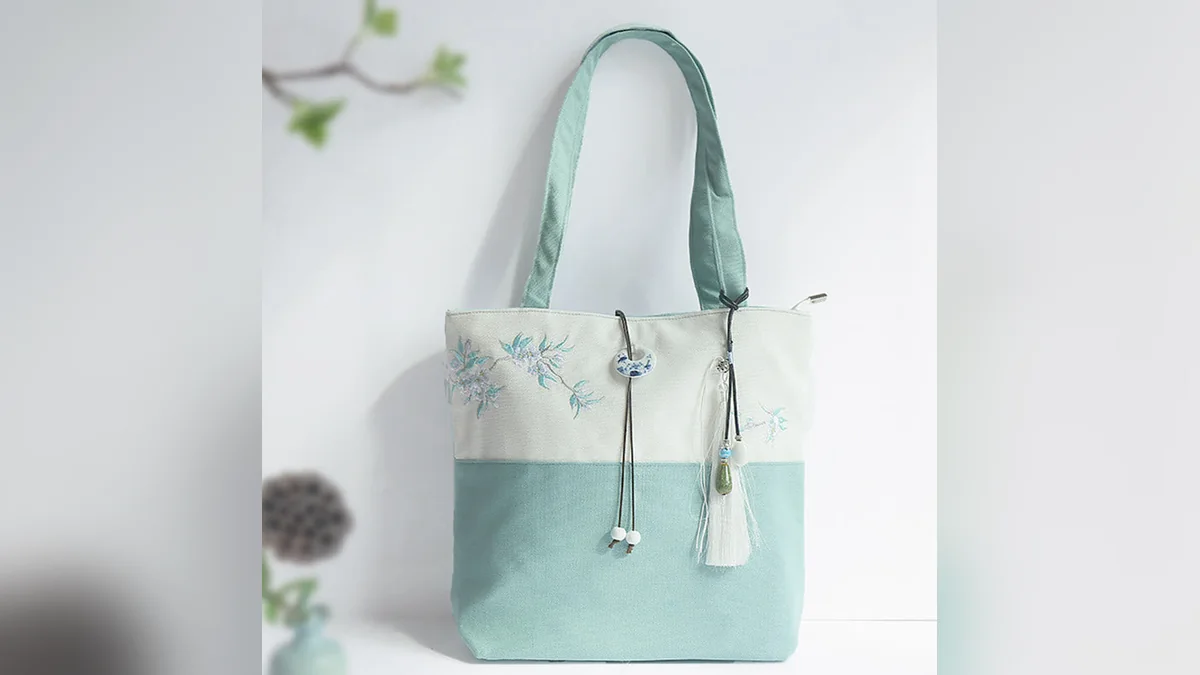
The Pear Flower and Bamboo Embroidery Canvas Tote uses canvas fabric, polyester, and a nylon zipper. Blue White Plum Bamboo is one option; other options feature flowers. Its compartments include one main pocket, one zipper interior pocket, two pockets, and one back zipper pocket. Check those separate spaces for debris before cleaning, and keep the contents clear of the zipper path.
Bamboo magpie, peony, and butterfly options
The Vintage Bamboo Magpie Peony Butterfly Bag comes in Dark Purple Butterfly, Green Peony, Purple Bamboo Magpie, and Yellow Bamboo Magpie options. Its specified materials include cotton linen, cotton, polyester, leather, metal, and tassels, with a polyester lining. This combination calls for checking care instructions by component before attempting stain treatment. Keep tassels clear when fastening its buckle.
Wooden beads with a bamboo handle
Our Hand-woven Wooden Beads Bamboo Handle Bag specifies wooden beads and polyester cotton. It has one main pocket, one interior bag, a strap closure, and a non-adjustable strap. Options are Black, Brown, Ivory, and Yellow. Support the body while inspecting bead connections, and avoid forcing a brush between tightly spaced components.
Finish with a dry surface and supported shape
Keep your routine modest: identify the materials, remove loose dust, address moisture carefully, and inspect the parts that carry weight. Before putting a bag away, confirm that its compartments are dry and its shape is gently supported. A visible crack or loose attachment calls for assessment before the bag carries weight again.
Shop the story
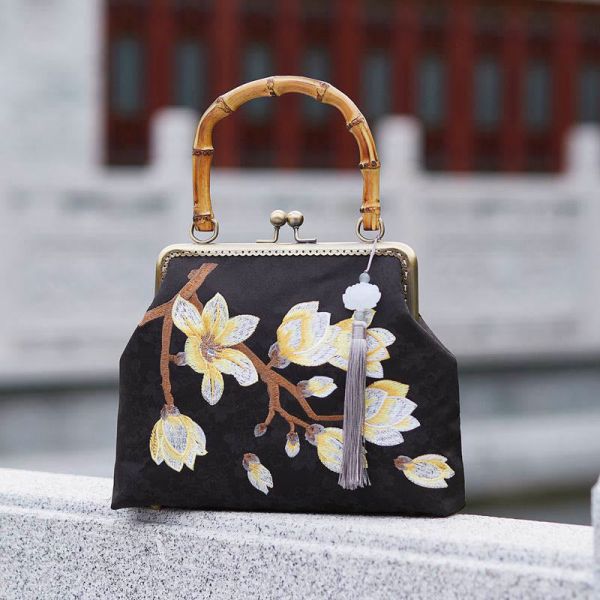 Buddha Stones Plum Blossom Embroidery Bamboo Handle Handbag Crossbody BagSpecial Price $59.59 Regular Price $79.45
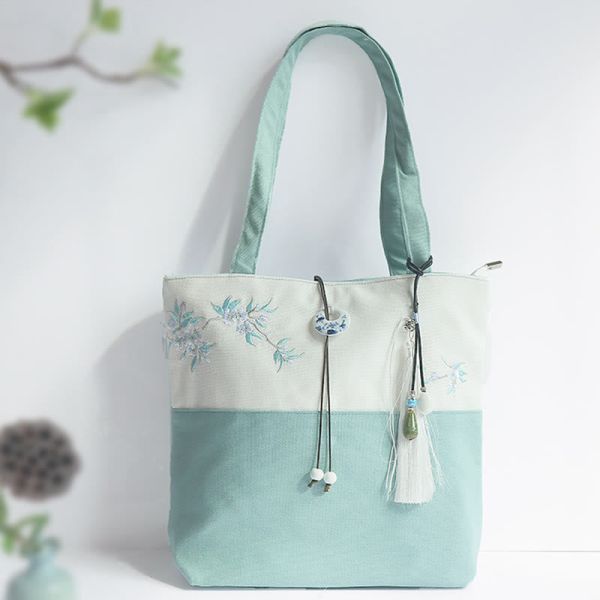 Buddha Stones Pear Flower Plum Peach Blossom Bamboo Embroidery Canvas Large Capacity Shoulder Bag Tote BagAs low as $46.59 Regular Price $65.62
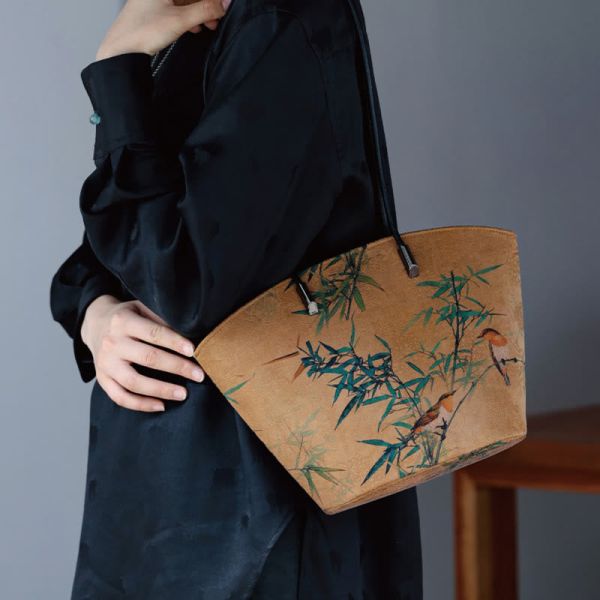 Buddha Stones Vintage Bamboo Magpie Peony Butterfly Large Capacity Shoulder Bag HandbagAs low as $189.59 Regular Price $263.32
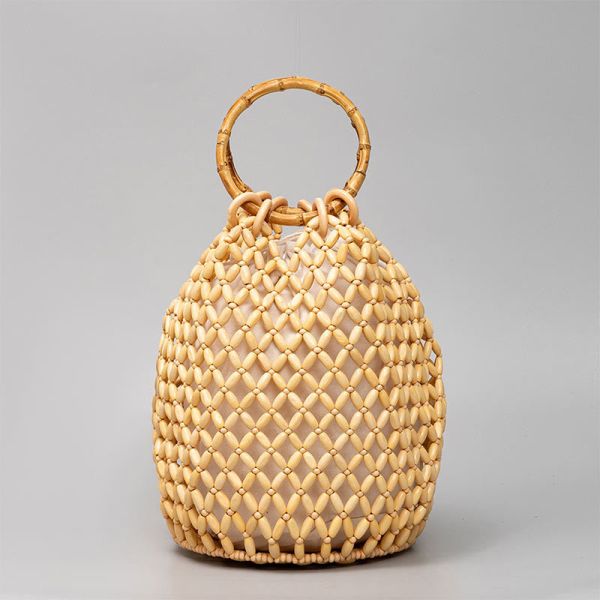 Buddha Stones Hand-woven Wooden Beads Bamboo Handle Shoulder Bag HandbagAs low as $62.59 Regular Price $83.45