Anklet Meaning: Myths, Facts, and What We Know
An anklet is one of the few pieces of jewelry that most people notice only once its wearer moves. A ring catches light while a hand is still, and a necklace sits in view all day, but an anklet mostly stays hidden under a hem or inside a shoe until a step, a stretch, or a bit of dancing sets a chain or a charm swinging. At a dance class, on a boardwalk, or barefoot at home, it is almost always the movement that gives it away, not the metal itself. That small reveal is part of why anklet meaning gets repeated online with more confidence than evidence behind it.
Ankle ornaments turn up across many cultures over long stretches of history. Jewelry attributed to ancient Egypt includes anklets, and in South Asia, silver anklets known as payal remain part of traditional dress and wedding customs, often strung with small bells that sound softly with each step. Elsewhere, anklets show up in dance traditions, beach culture, and plain everyday styling, often with no ceremony attached at all. Past that shared thread, the details vary a great deal by region, family, and occasion, and no single origin story covers all of it.
Anklet meaning: myth versus what we actually know
Searches for anklet meaning turn up a lot of confident claims that do not agree with each other. Here is where the stories split from what is actually documented or widely practiced.
Myth: The left ankle means one thing and the right ankle means another
What we know: this is one of the most repeated claims attached to anklets, and also one of the least consistent. One widely shared post might claim the left side relates to one idea while the right relates to its opposite, and another post states the reverse, with neither citing where the claim originated. Different sources assign different meanings to each side, and they frequently contradict one another outright. There is no documented, universally recognized rule that fixes a meaning to either ankle. If you have heard that one side signals one thing and the other its opposite, treat it as folklore that shifts depending on who is telling it, not as settled fact.
Myth: Anklets are only for summer
What we know: anklets become more visible in warm weather mainly because sandals and bare ankles are more common then. That is a matter of what shoes and hemlines allow, not a rule about the jewelry itself. Plenty of people simply layer an anklet under tights, socks, or boots once the weather turns, which keeps it in rotation all year rather than packed away after summer ends. An anklet worn under socks, boots, or wide-leg pants in cooler months is no less real, even if no one but you knows it is there.
Myth: An anklet has to be gold to count
What we know: across the cultures that wear ankle ornaments, materials vary widely. Payal are traditionally made in silver rather than gold through much of South Asia, and anklets elsewhere are just as often brass, copper, or steel. Titanium steel, used in one of our own anklets, is a common alternative to precious metal for anklets precisely because it holds up well to daily wear. Material says more about durability, weight, and look than about whether a piece counts as a proper anklet.
Myth: Red string on the ankle is only for luck
What we know: red cord and thread show up in many traditions as a protective or blessing symbol, not only as a good-luck charm. The meaning attached to it depends on who ties it and in what context, and different traditions treat it differently. That is different from promising a particular outcome; it is closer to a personal or inherited custom than a rule with the same meaning for everyone who wears it. Worn around an ankle rather than a wrist, a red string carries the same kind of symbolic weight for the people who choose it, as a personal marker more than a promise of any particular outcome.
Myth: One size fits all
What we know: ankles vary enough in size that a single length rarely suits everyone. The usual approach is to measure around the ankle at the point where you plan to wear the piece, then leave about a finger's width of room so it does not sit too tight. Anklets in our own shop run from about 18 to 23 centimeters for the chain styles, up to 22, 24, or 26 centimeters for the beaded sterling silver version, and about 30 centimeters for the string rope style. If you are unsure which length suits your ankle, the steps in our size guide make it quick to check.
Four anklets, four materials
We make anklets in a handful of materials rather than one, since an anklet is as much about daily comfort as it is about symbolism, and comfort depends on your skin, your climate, and what you like to see when you look down.
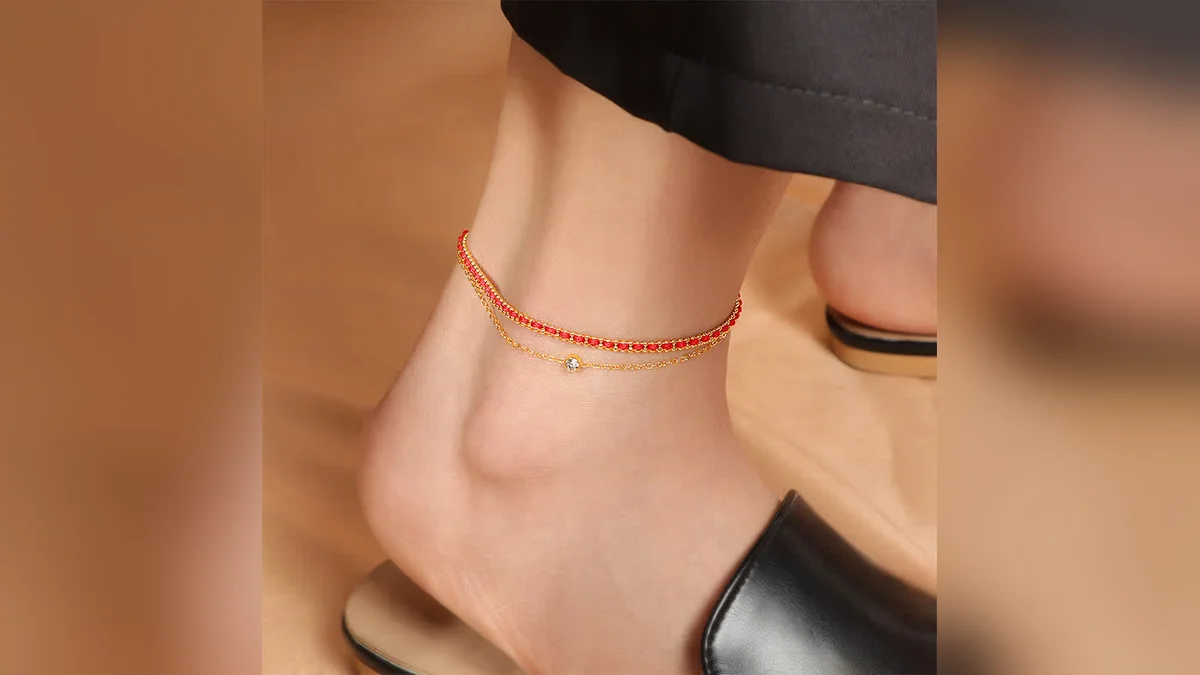
The titanium steel and red string double wrap anklet is a double-wrap design that pairs a titanium steel chain with red string, sized to fit an ankle circumference of about 18 to 23 centimeters.
The 925 sterling silver anklet with cinnabar beads pairs 6mm cinnabar beads with 925 sterling silver (or gold-plated sterling silver) on elastic string, in lengths of 22, 24, or 26 centimeters and weighing about 15 to 18 grams. Being on elastic string, it slips on rather than fastening with a clasp.
The copper bamboo leaves chain anklet is a copper chain shaped into bamboo leaf links, in the same 18 to 23 centimeter range as the titanium steel style. The leaf-shaped links give the chain more texture than a plain curb chain.
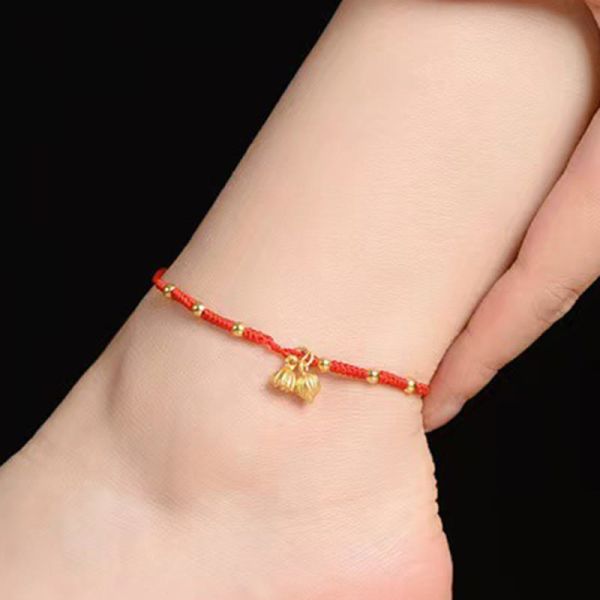
The lotus pod charm string rope anklet is made of copper alloy and braided string with a single lotus pod charm, measuring about 30 centimeters and available in black or red cord. Because the charm sits on a cord rather than a metal chain, it reads as more casual than the other three styles.
If you want to see these alongside our other styles, our anklet collection has the full range in one place.
As with most anklets, it is worth taking these off before swimming, showering, or sleeping, since prolonged contact with water, soap, or friction against sheets or socks wears on a chain or string faster than ordinary daytime wear.
None of this makes anklet meaning fixed or official. What an anklet signals, if anything, depends on who is wearing it, where they are from, and what story they want to tell with it on a given day. For some people it carries family tradition or wedding custom; for others it is simply a chain they like the look of against bare skin. Both are reasonable ways to wear one.
Shop the story
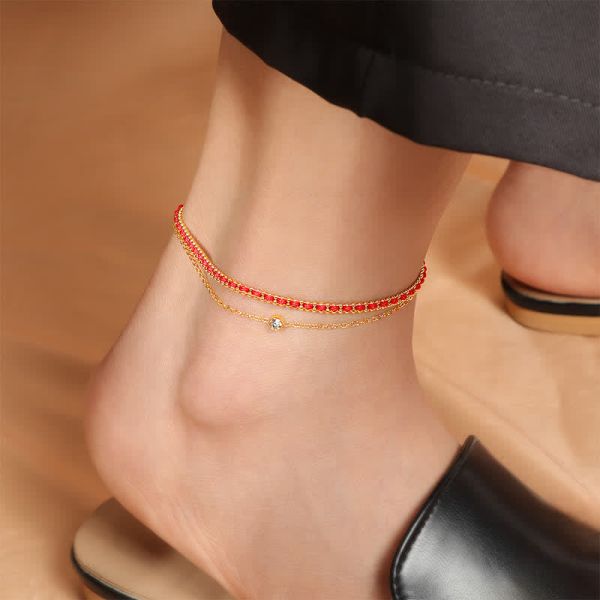 Buddha Stones Titanium Steel Red String Faith Double Wrap AnkletSpecial Price $25.59 Regular Price $35.05
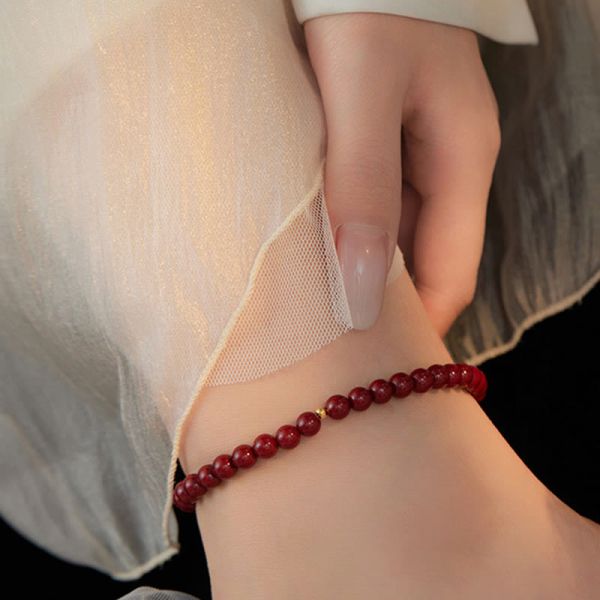 Buddha Stones 925 Sterling Silver Cinnabar Beads Blessing AnkletSpecial Price $31.59 Regular Price $42.12
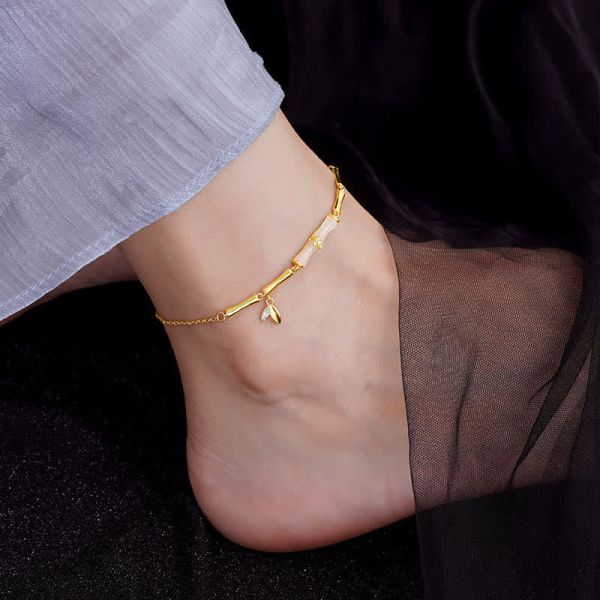 Buddha Stones Copper Bamboo Leaves Wealth Chain AnkletSpecial Price $25.59 Regular Price $36.04