
Amber Symbolism: A Visual Guide to Jewelry Details
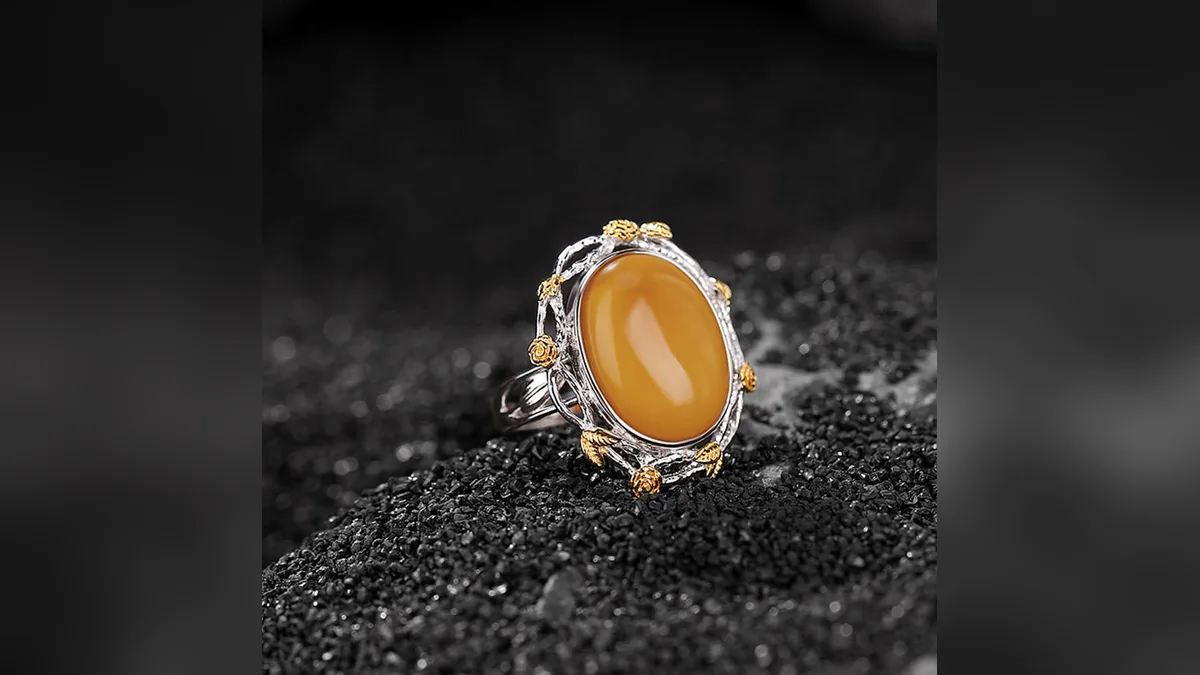
A honey-colored bead can have a clear edge and a cloudy center. That contrast is a useful starting point for reading amber symbolism: in traditional jewelry, amber often represents warmth, sunlight, and continuity. Some folk traditions also connect it with luck or protection. These are beliefs, and wearing amber guarantees neither. At Buddha Stones, we separate that symbolic language from the details that identify an object: its stated material, form, accompanying motifs, and dimensions. This field guide helps you notice those details without treating appearance as proof.
How to recognize the motif
Amber is a material rather than a single drawn symbol. Its visual identity can travel through a bead strand, a ring setting, or a mixed-material bracelet. Start with the whole design, then look for these cues:
- A yellow-to-brown palette. Honey, golden yellow, orange, and brown are familiar amber colors. These shades can suggest sunlight in a design, but color alone cannot identify the material.
- Different degrees of transparency. Amber can appear transparent, cloudy, or opaque. A photograph may show those differences, although lighting and the background can change how a surface looks.
- Variation within the surface. Clouding or small inclusions may interrupt an otherwise even color. Such details are visual observations, not a reliable way to authenticate a piece from a photograph.
- A repeated shape or a single accent. Beads distribute color along a strand; a ring setting concentrates attention in one place. This difference helps you read the composition before assigning meaning.
- A neighboring emblem. A knot or butterfly introduces its own symbolic vocabulary. Identify that motif separately instead of assuming every element shares the same meaning as amber.
Keep three questions apart: What color is visible? What material is specified? What symbol accompanies it? A product can use an amber-colored appearance without containing amber, so the written material description matters as much as the photograph.
Amber symbolism in traditional interpretation
The connection with sunlight begins with appearance. Yellow and golden tones offer a familiar visual comparison, making warmth a common symbolic reading. Here, warmth describes an association with welcome, generosity, or affection; it is not a claim about what wearing a piece will do.
Continuity is another way to read amber. As fossilized tree resin, it connects something once living with an object preserved over time. That background can support a personal interpretation of remembrance or an enduring connection. It does not establish one universal meaning shared by every culture or wearer.
Protective associations belong to the history of amulets and folk belief. They should be understood in that context, rather than as evidence that a ring or bead strand provides protection. Similarly, luck and wealth language in jewelry traditions expresses hopes, not a guaranteed result. We describe these meanings as cultural associations and wishes.
Context also changes the reading. A mala has a role as a counting strand in Buddhist practice; its form does not make every material on it a separate Buddhist emblem. A Chinese knot or butterfly can carry additional traditional associations, but those meanings should remain attached to the recognizable motif. There is no need to combine them into a single claim about the wearer.
Where amber appears in a design
Use this quick map to identify the visual role before reading the symbolism. These are general design patterns, not specifications for the products below.
| where you see it | how it usually appears |
|---|---|
| A ring | A single amber element occupies a setting, creating a concentrated area of color beside the metal. |
| A mala | Beads repeat along a counting strand. Read the material description carefully, since an amber appearance may come from faux amber. |
| A mixed-material bracelet | Amber appears alongside other named materials, so contrast and repetition become part of the overall arrangement. |
| Jewelry with another motif | A knot, butterfly, or other emblem adds a recognizable form whose meaning should be considered separately from the amber. |
A close-up helps show surface details, while a full view reveals placement and proportion. Neither replaces the specifications. If the written description does not identify a detail, leave it open rather than supplying an origin, technique, or meaning from appearance alone.
Four Buddha Stones designs to compare
Our selection below gives you several ways to compare material, format, and accompanying motifs. Begin with the specifications, then decide which visual arrangement interests you.
Amber in an adjustable ring
The Buddha Stones amber adjustable ring specifies 990 sterling silver, 990 sterling silver plated gold, and amber. Its ring inner perimeter is 54-60mm(Adjustable), and the amber size is 12*16mm. This format offers a straightforward comparison between a metal setting and an amber element. Keep the two measurements distinct: one describes the ring opening, while the other describes the amber.
An amber appearance in a mala
The Buddha Stones Tibetan White Yellow 108 Beads Amber Mala specifies faux amber as its material, with about 108 beads. Size options are 10mm, 6mm, and 8mm. That distinction belongs at the center of any comparison: the amber wording in the name does not replace the material specification. You can appreciate the design while describing its material accurately.
Amber alongside a Chinese knotting reference
The Buddha Stones Aquamarine Amber Chinese Knotting Charm Bracelet combines aquamarine, amber, red agate, green jasper, and pearl. Its specifications give a bead size of 10mm, wrist circumference of 15-19cm, and premium elastic string. The Chinese knotting reference identifies another motif to consider alongside amber. Read the knot and the material as separate parts of the design rather than assigning one meaning to the whole material list.
Amber with a butterfly reference
The Buddha Stones Jade Amber Butterfly Bracelet specifies jade, amber, red agate, and 925 sterling silver plated gold. Bead size is 7mm, wrist circumference is 14-16.5cm, and weight is 34g; the band uses premium elastic string. Its full product name includes Luck and Abundance, words expressing traditional wishes rather than promised results. The care note asks you to remove the bracelet before sleeping or washing.
Reading an amber design starts with attention to what is actually present. Notice the color, confirm the material, and identify any accompanying emblem before choosing an interpretation. A meaningful description can stay simple: amber associated with sunlight, a counting strand identified by its form, or a butterfly considered on its own terms. The symbolism can remain personal while the product details stay precise.
Shop the story
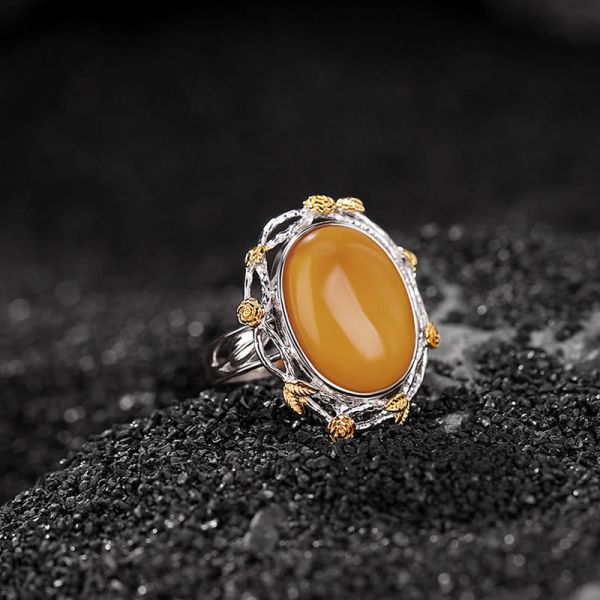 Buddha Stones 990 Sterling Silver Plated Gold Amber Focus Adjustable RingSpecial Price $103.59 Regular Price $138.12
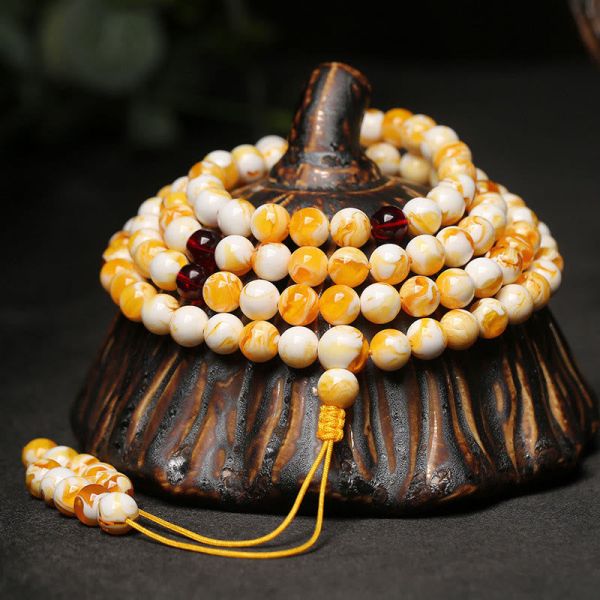 Buddha Stones Tibetan White Yellow 108 Beads Amber MalaAs low as $25.59 Regular Price $36.04
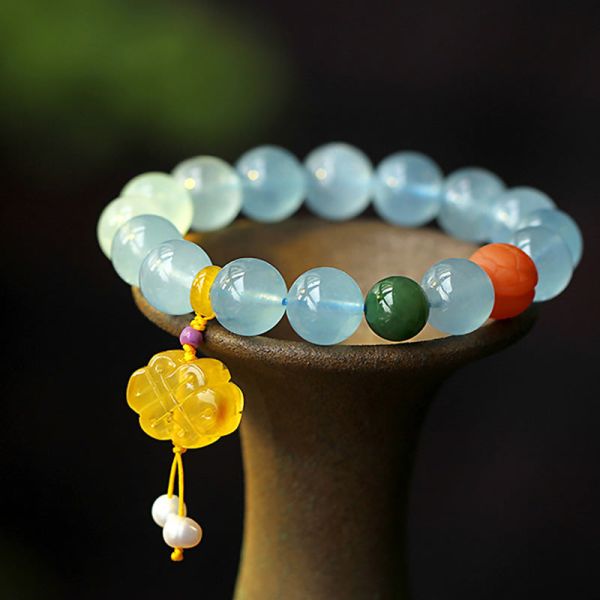 Buddha Stones Natural Aquamarine Amber Chinese Knotting Charm Peace BraceletSpecial Price $123.59 Regular Price $174.07
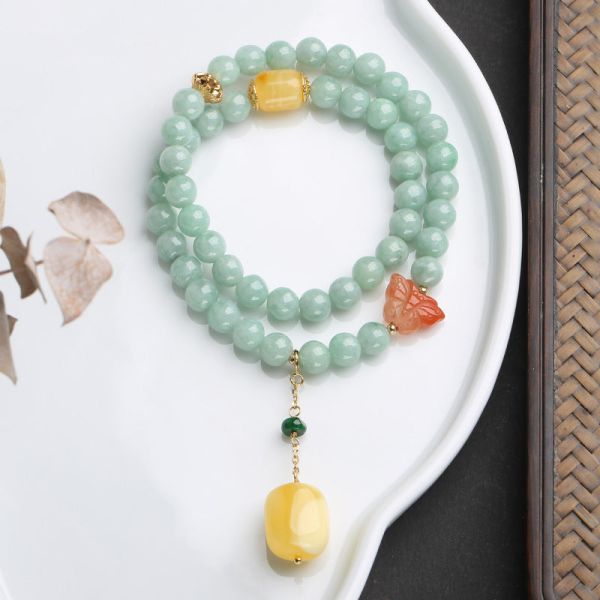 Buddha Stones 925 Sterling Silver Natural Jade Amber Butterfly Luck Abundance BraceletSpecial Price $241.59 Regular Price $322.12