
Amber Buying Guide: Choose Materials, Fit and Care
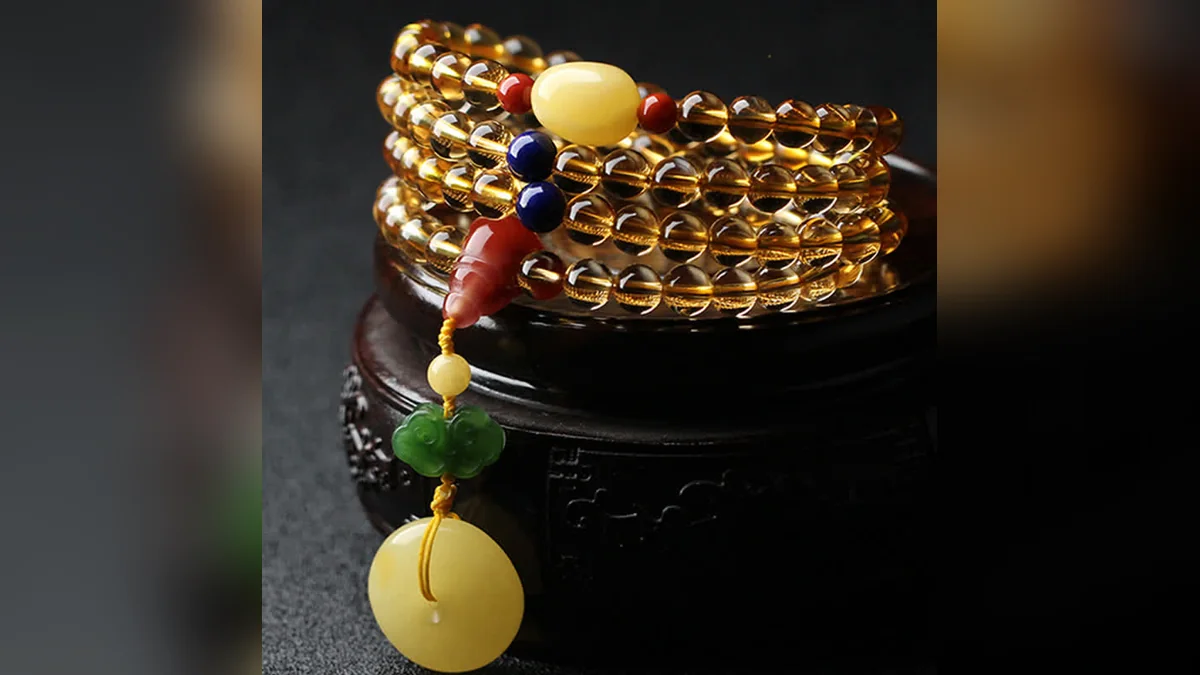
An amber bracelet page may offer several material combinations under one long product name. The amber named in the title may belong to a particular option, so the selection menu deserves as much attention as the photograph. This amber buying guide explains how to check material descriptions, compare bead sizes, judge fit, and plan suitable care before choosing a bracelet. At Buddha Stones, we suggest settling those practical details before deciding which design you prefer.
Start with these questions
- Where does amber appear in the selected option? Read the option name alongside the material specification rather than relying on the product title alone.
- Do you want a 108-bead design or a bracelet with a specified wrist measurement? Bead count and wrist fit answer different questions.
- How prominent should the beads look? Compare the stated bead diameter with jewelry you already own, where you know its dimensions.
- Will the bracelet need frequent removal? Consider washing, household tasks, and storage when deciding whether its care requirements suit your routine.
- Are you choosing for yourself or as a gift? For a gift, establish the recipient's size and material preferences before choosing a symbolic name.
Amber buying guide: read the material details
Amber is fossilized tree resin. A yellow or honey-colored bead, however, is not automatically amber, and color in a photograph cannot confirm material identity. Treat the written description as essential buying information. If you need more detail about a material's identity or treatment, request that information before ordering.
Mixed-material bracelets require an extra check: distinguish the page's overall material specification from the combination you select. A title can name several materials while the menu offers different pairings. Do not assume that every material in a long title appears in every option, or that amber forms the majority of the bracelet.
For the designs below, the supplied specifications do not establish an amber source location, treatment status, or independent certification. We cannot infer those details from the word “natural” or from an image. If one of those details is central to your purchase, make it a question to resolve before selecting.
Choose accompanying materials for their stated identity and the appearance you prefer. Symbolic names are a separate consideration. Words such as Luck and Protection in jewelry names express traditional wishes; they offer no guarantee of a result.
Match bead size and bracelet fit to your needs
Bead diameter is not bracelet circumference. A 6mm bead measurement describes the bead, while a wrist measurement helps you assess whether the bracelet is intended for your size. Likewise, 108 identifies a bead count. It does not, by itself, tell you the bracelet's length or how it will fit.
Where 6mm and 8mm options are available, decide how much visual presence you want. Larger beads generally occupy more space against a sleeve or neighboring jewelry. A photograph without a clear scale can make this difficult to judge, so use the written diameter as your reference.
Measure around the place on your wrist where you intend to wear the bracelet, using a flexible measuring tape without pulling it tight. Then compare that measurement with the product's stated sizing. If you are near a limit, clarify the intended fit rather than assuming the string will accommodate extra room.
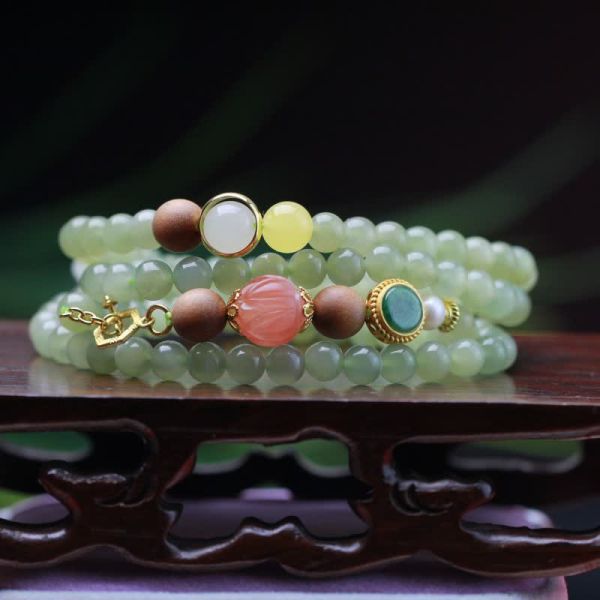
The two lotus bracelets below specify wrist circumference as 14-17.5cm and bead size as 6mm. Their notes allow for slight differences from manual measurement. The two 108-bead designs do not provide a wrist circumference in the supplied specifications, so their bead counts should not be used as substitutes for sizing information.
Elastic string helps a bracelet pass over the hand, but avoid treating stretch as an unlimited size adjustment. For a gift, a known wrist measurement is more useful than guessing from someone's height or clothing size.
Choose care you can keep up with
Plan care around the complete material combination, including the string. Amber can scratch, and mixed-material jewelry may need gentler handling than a metal-only accessory. Keep bracelets away from rough surfaces and avoid dropping them into a compartment containing loose jewelry.
For routine surface care, gently wipe with a clean, nonabrasive cloth. Avoid soaking, steam, ultrasonic cleaners, and harsh cleaning products. Do not assume that a cleaner suitable for silver is appropriate for nearby amber, pearls, or other beads. If more thorough cleaning is needed, seek instructions for the complete bracelet.
Remove jewelry before washing, swimming, or applying lotions and fragrance. Keep it away from direct heat and prolonged strong sunlight, and give it a separate pouch or divided storage space. The supplied care notes for the silver mala and both lotus bracelets also advise removal before sleep or washing.
Handle elastic string without sharp pulling. If you notice fraying or a damaged bead hole, stop wearing the bracelet until the issue can be assessed. A purchase decision should include willingness to follow these ordinary handling steps.
Four product choices to compare
Start with the option pairing: the 108-bead citrine and amber peace buckle bracelet uses premium elastic string and has 108 beads. Its material specification includes citrine, red agate, and amber; the available options are Citrine&Amber and Citrine&Red Agate. Select by the option name, especially when amber is your reason for buying.
Compare two bead diameters: the 925 sterling silver 108-bead citrine, red agate, and amber bracelet has premium elastic string and 108 beads, with 6mm and 8mm bead sizes. Its specification includes citrine, red agate, amber, 925 sterling silver, lazurite, green jasper, and amazonite. Material option labels include Citrine&925 Sterling Silver and Citrine&Red Agate; check the selected combination rather than assuming the full specification describes one option.
Use an explicit wrist measurement: the Hetian jade, amber, and red agate lotus bracelet combines those three stated materials on premium elastic string. It specifies 6mm beads and wrist circumference of 14-17.5cm. This gives you a direct sizing reference to compare with your measurement.
Consider a different material combination: the Hetian topaz, amber, white jade, and pearl lotus bracelet specifies Natural Hetian Topaz, amber, pearl, white jade, and turquoise. It uses premium elastic string, with 6mm beads and wrist circumference of 14-17.5cm. Compare this combination with your material preferences and care routine.
FAQ
Does an amber product name mean every bead is amber?
No. A mixed-material title can identify several components or cover multiple options. Read the material specification and selected option together. If the description does not identify which beads are amber, ask for clarification rather than estimating from their color.
Can I confirm amber authenticity from a photograph?
A photograph can show appearance, but it cannot establish authenticity or treatment status. Request written material details and any documentation you require. Avoid scratch, heat, or solvent experiments on jewelry, since these can damage the bracelet.
Which detail should decide between two similar bracelets?
Resolve fit first, then confirm the selected materials and care requirements. After those checks, choose the bead size and design you prefer. An attractive photograph is useful for comparison, but it cannot fill gaps in sizing or material information.
Shop the story
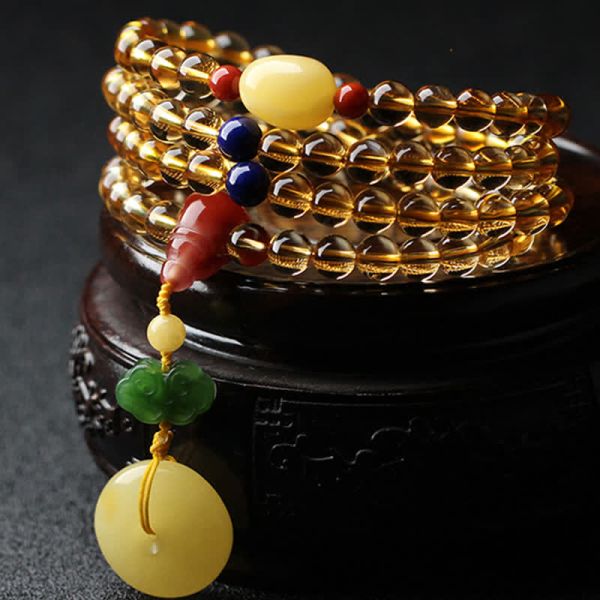 108 Mala Beads Natural Citrine Amber Peace Buckle Red Agate PiXiu Protection Charm BraceletAs low as $1,618.59 Regular Price $2,158.12
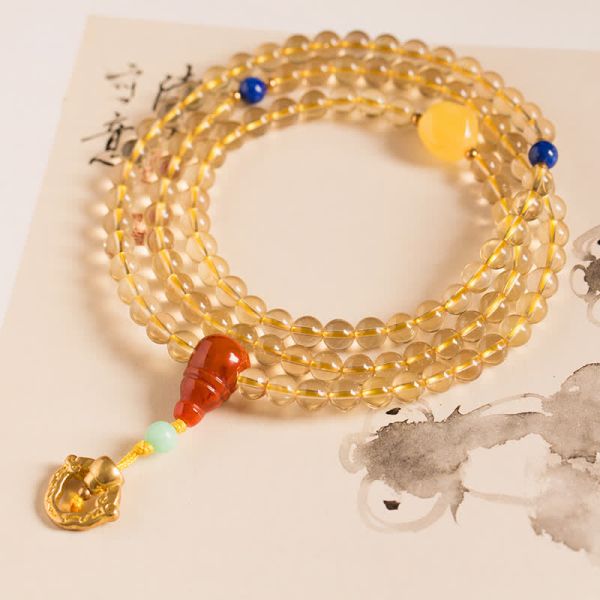 925 Sterling Silver 108 Mala Beads Natural Citrine Red Agate Amber Pleasure Charm BraceletAs low as $202.59 Regular Price $273.77
 Buddha Stones Natural Hetian Jade Amber Lotus Red Agate Luck Abundance BraceletSpecial Price $195.59 Regular Price $271.65
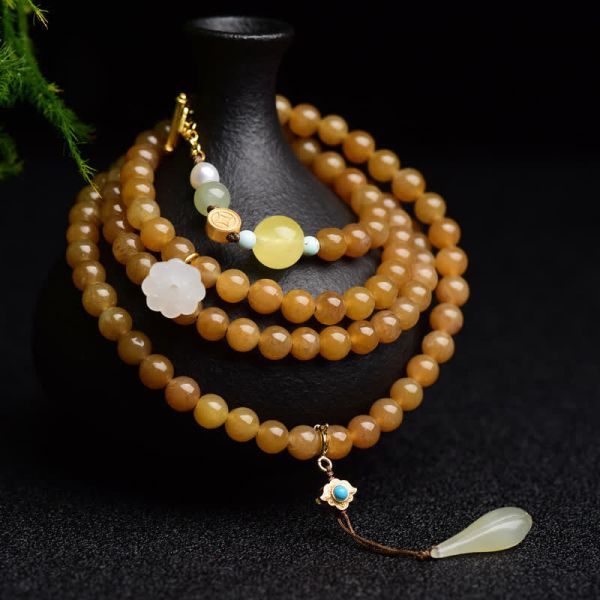 Buddha Stones Natural Hetian Topaz Amber Lotus White Jade Pearl Success BraceletSpecial Price $255.59 Regular Price $359.99