
Agarwood Incense Guide: Set Up a Thoughtful Space
A small agarwood chip warms in an electric incense heater on a clear, heat-resistant surface, with nearby paper and fabric moved away. This agarwood incense guide covers choosing a format, matching it to suitable equipment, and putting everything away after use. In Buddhist offering practice, incense may be placed before a sacred image; at home, keep that arrangement respectful while allowing generous clearance above and around the heat source. Start with a small amount and follow the instructions for both your incense and burner.
Agarwood incense guide: Step 1, choose your format
Check whether you have wood chips, loose powder, sticks, or cones before choosing equipment. These forms need different supports and methods. A holder made for a standing stick does not automatically accommodate loose wood, and an open metal vessel is not an electric heater.
For chips, an electric incense heater specifically designed for wood offers a way to apply heat without lighting the chip itself. Powder requires equipment intended for that format. Prepared sticks and cones should follow their package directions. If the packaging does not explain the intended method, obtain those instructions before lighting or heating anything.
Keep the incense label with the supply. A product name alone may not explain its ingredients or how it should be used.
Step 2: Match the holder to the heat source
Set out the incense, suitable holder or heater, and a separate place for cooled tools. For an electric model, check that the heating cup is correctly seated and that the cord cannot touch a hot section. Follow its instructions for temperature settings and any required insert.
If your method uses combustion, the holder must support the incense securely and catch falling ash. Make sure a stick cannot tip beyond the catch area. Loose chips heated over charcoal require equipment expressly intended for that method; follow the charcoal and burner instructions together.
A vessel’s material and dimensions do not, by themselves, establish suitability for a particular heat source. Check compatibility rather than choosing solely by appearance.
Step 3: Arrange the space around the burner
Choose a level, stable surface with a heat-resistant layer suitable for your equipment. Leave open space above the burner as well as around it. Shelves, curtains, hanging decorations, and paper offerings should remain outside the heated area. Avoid positions where a sleeve or passing hand could knock the setup.
Traditional placement before a sacred image is an arrangement of respect and offering, not a promise of a particular result. Practical clearance takes priority over symmetry. Move the incense position forward or use a separate suitable surface if the display is crowded.
Allow ventilation without directing a strong draft across burning incense. Keep the setup beyond the reach of children and animals, and remain present throughout use.
Step 4: Warm or light only a small portion
For a compatible electric heater, place a small amount of agarwood in the designated cup and begin at the setting recommended by the manufacturer. Adjust only within the equipment’s directions. Do not add a flame to an electric heating method, and do not touch the cup to check its temperature.
With prepared sticks or cones, follow the supplied lighting instructions and confirm that the holder remains stable. Avoid adding several portions simply to fill a larger vessel. The container’s capacity does not determine how much incense a room needs.
Visible smoke is not a target for every method. Keep attention on the instructions and the condition of the setup, rather than increasing heat to produce a thicker plume. Stop if the equipment behaves unexpectedly.
Step 5: Finish, cool, and store separately
Switch off an electric heater according to its instructions. For burning incense, use the extinguishing method specified for that format and holder. Never leave an ember unattended while waiting for it to finish.
Allow the incense, vessel, ash, and tools to cool completely before handling or disposal. Ash can conceal hot material, so the absence of visible smoke is not enough to establish that everything is cold.
Empty cooled residue and maintain the equipment as directed. Keep unused agarwood in its labeled, closed packaging, away from moisture and heat. Store matches and lighters separately from decorative accessories so they remain easy to account for.
Common mistakes to catch before starting
- Confusing wood types: a sappanwood necklace is not an agarwood incense supply.
- Assuming metal means compatible: confirm that the vessel supports your chosen heating method.
- Overfilling the setup: begin with a small portion instead of covering the entire heating area.
- Placing fabric nearby: bags, cords, runners, and hanging decorations need clearance from heat and embers.
- Moving a hot vessel: choose its position before use and let it cool before relocating it.
- Discarding warm ash: wait until the remaining material is completely cold.
Products to consider for the arrangement
Our Buddha Stones cast iron cauldron has iron specified as its material, and the package includes one cast iron cauldron. Available options include incense burners, a black stand, and designs named Pentagram or Triple Moon Goddess. Select the intended option carefully, then confirm the requirements of your incense method before using it with heat.
The Buddha Stones small copper offering tray is copper and has a diameter of 10cm. One option contains the tray; another contains the tray and 250g of incense. The specifications do not identify that incense as agarwood. Its inclusion should therefore be treated separately from selecting your agarwood supply and suitable heating equipment.
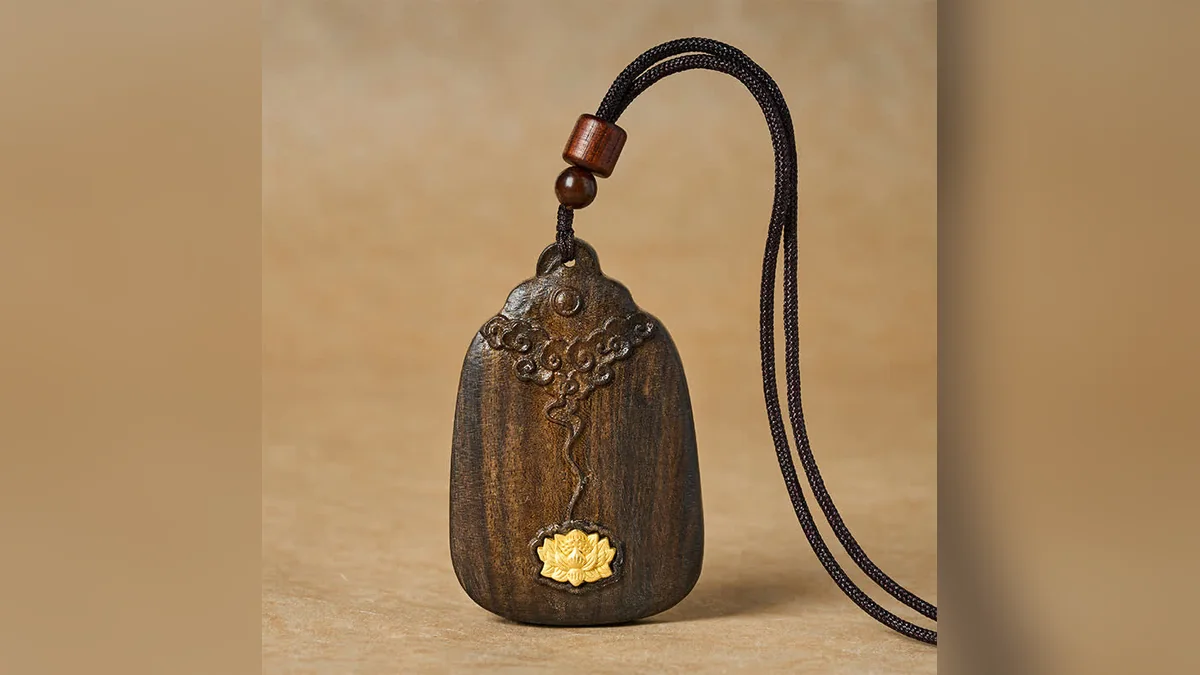
For an accessory kept outside the heated area, our Buddha Stones Sappanwood Auspicious Clouds Lotus Carved pendant necklace uses sappanwood, teak, and rope. The package contains one necklace. Its wood may show differences in grain and color, and the care instructions say to avoid water exposure. Keep the pendant and cord clear of the working surface while handling incense.
The Buddha Stones Auspicious Clouds Cranes handbag has embroidery fabric, polyester, and wood specified as its materials. It has one main pocket, one interior pocket, a non-adjustable strap, and a buckle closure. Black, white, and yellow options are available. Set the bag away from the burner so its fabric and strap cannot enter the heated area.
FAQ
Can agarwood chips go directly into an offering tray?
An offering tray alone does not establish a heating method. Follow instructions that explicitly cover the tray, heat source, and wood chips. If you are using an electric heater, put the chips only in its designated heating area. Do not improvise by placing an ordinary tray on a stove or other heater.
Does agarwood incense always need a flame?
No. Wood chips can be warmed in an electric incense heater designed for that purpose. Prepared sticks and cones use a different method and should follow their own directions. Choose equipment for the form you have, rather than treating every product bearing the word incense the same way.
Where should incense sit in a small offering space?
Incense may traditionally sit before a sacred image, but the available clearance determines the practical position. Give the heat source room above and around it, with no fabric or paper overhead. If the display cannot accommodate that spacing, place the incense on a separate suitable surface nearby.
Shop the story
 Buddha Stones Sappanwood Auspicious Clouds Lotus Carved New Beginnings Pendant NecklaceSpecial Price $25.59 Regular Price $35.54
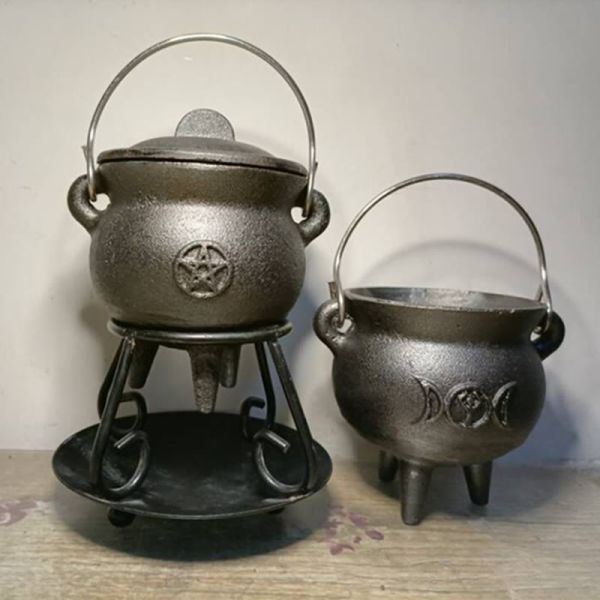 Buddha Stones Cast Iron Cauldron Prayer Altar Burning Holder Incense Sage Smudging Rituals Use ItemsAs low as $42.59 Regular Price $56.79
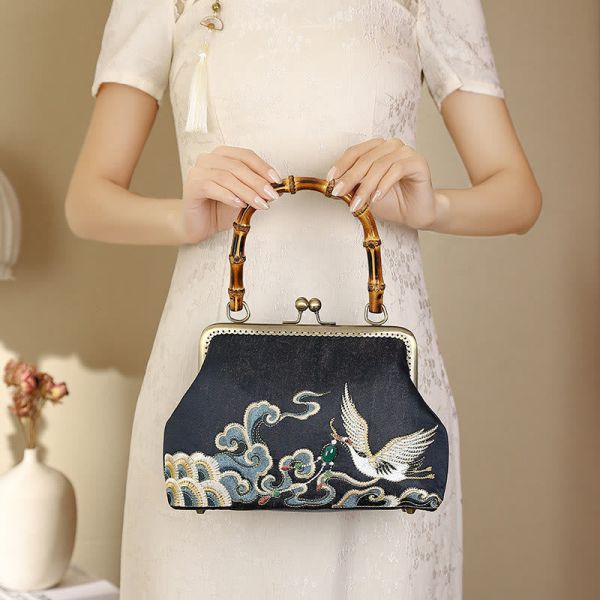 Buddha Stones Auspicious Clouds Cranes Embroidery Bamboo Handle Handbag Crossbody BagAs low as $59.59 Regular Price $79.45
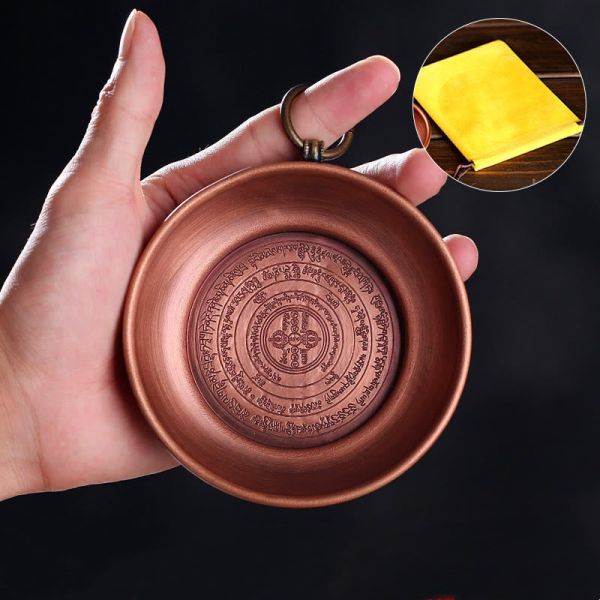 Buddha Stones Small Copper Prayer Altar Portable Burning Holder Incense Sage Smudging Rituals Use ItemsAs low as $79.59 Regular Price $106.12