
108 Bead Mala Guide: Daily Use and Care Routine
Dust can collect between mala beads and around the knot during regular handling. This 108 bead mala guide explains how to count repetitions, wipe the strand, inspect its string, and recognize when it needs repair. A 108-bead mala is a strand of counting beads used for repeated prayers or mantras; its physical care starts with gentle handling. At Buddha Stones, we recommend checking the construction before use and choosing cleaning methods according to the materials and care instructions for your particular piece.
Your 108 bead mala guide: tools and materials
Set the mala on a clean, dry surface with enough room to lay out the strand without pulling it straight. A folded cloth underneath can keep loose beads from rolling away if the string is already damaged. Work in good light so you can see exposed thread near bead holes and knots.
- A clean, soft, lint-free cloth: Use it for dry wiping rather than scrubbing.
- A separate dry cloth: Keep one available for the final pass if the first picks up visible dirt.
- A shallow tray: Use it to contain the strand during inspection.
- A dry pouch or lined container: Choose storage that does not compress the beads or catch a tassel.
Keep cleaning chemicals off the work surface. You do not need oils, polish, or scented sprays for this routine.
A step-by-step routine for counting and care
- Start with clean, dry hands. Finish applying lotion or other personal care products before handling the strand, and remove any residue from your hands. Place the mala over the cloth rather than letting part of it hang off a table.
- Inspect before counting. Look for fraying, an opening knot, a cracked bead, or a sharp edge around a bead hole. Check the thread where it is visible without separating the beads by force. If something looks damaged, pause use and follow the repair guidance below.
- Choose a starting point. If your mala has a distinct marker or larger bead, start beside it. For this routine, leave that marker out of the count. If your tradition or teacher gives different instructions, follow those instead. A tassel alone does not establish the bead count.
- Move one bead per repetition. Support the strand in one hand and use your thumb to advance a bead after each prayer or mantra. Let the remaining beads rest in your hand or on the cloth. Move the beads along gently; do not pull the strand through a tight grip.
- Complete the round without stretching. On a strand confirmed to contain 108 counting beads, one pass covers 108 repetitions. If you continue, turn the strand and work back in the opposite direction. When stopping partway through, set it down without clamping a clip onto the string to mark your place.
- Wipe after handling. Support a short section and pass the dry cloth over the exposed bead surfaces. Rotate the strand a little at a time. Avoid dragging fabric across a loose knot or tugging the tassel. If dirt remains, check the relevant care instructions before introducing moisture or a cleaning product.
- Put the strand away loosely. Lay it in broad loops inside its container, with the tassel resting freely if present. Keep the container dry and away from direct heat. Do not hang the mala from its tassel or leave the string stretched around an object.
You can use the same inspection sequence before a counting session and after an accidental snag. There is no need to repeatedly stretch the string to test it; that adds strain without helping you inspect the visible fibers.
What not to do with beads, string, or tassels
Do not soak an assembled mala. A strand may combine materials that need different care, and water can reach thread and knots through the bead holes. Avoid ultrasonic cleaners, steam, and abrasive household powders unless care instructions specifically permit them for the entire assembled piece.
Do not use a needle or another sharp tool to dig dirt from a bead hole while the strand is assembled. You could catch the thread. Likewise, do not pull a knot apart to make more room for counting, or glue a frayed area and assume the string is repaired.
Keep the mala away from washing and tasks that could snag it. If a strand catches, stop moving and release the snag by hand. Pulling harder can turn a small thread problem into a broken strand. Avoid forcing additional wrist wraps when that requires stretching or tightening the string.
When to replace the string or retire the piece
Separate ordinary surface differences from structural damage. Variation in a bead's color is not, by itself, a reason to discard it. A sharp chip, spreading crack, exposed frayed thread, or knot that is coming undone deserves attention before further handling.
Restring when the beads remain usable but the string is compromised. Keep the complete strand in a closed container and ask a jewelry repair professional familiar with strung beads to assess it. If it breaks, collect the beads in a tray and retain the string fragments so the original arrangement can be reviewed.
Retire a damaged bead from use if its edge could cut the replacement string. You can also retire the whole piece from counting and keep it in a dedicated box. Religious customs for retiring prayer objects vary; ask your own temple or teacher if you want guidance within a particular tradition. There is no single disposal rule for every mala.
Our products: check the construction before choosing
A product's bead count and string type matter more for this routine than its name. The two bracelets below have no bead count supplied in their specifications, and the turquoise mala's specifications do not give one either. Do not assume they contain 108 beads.
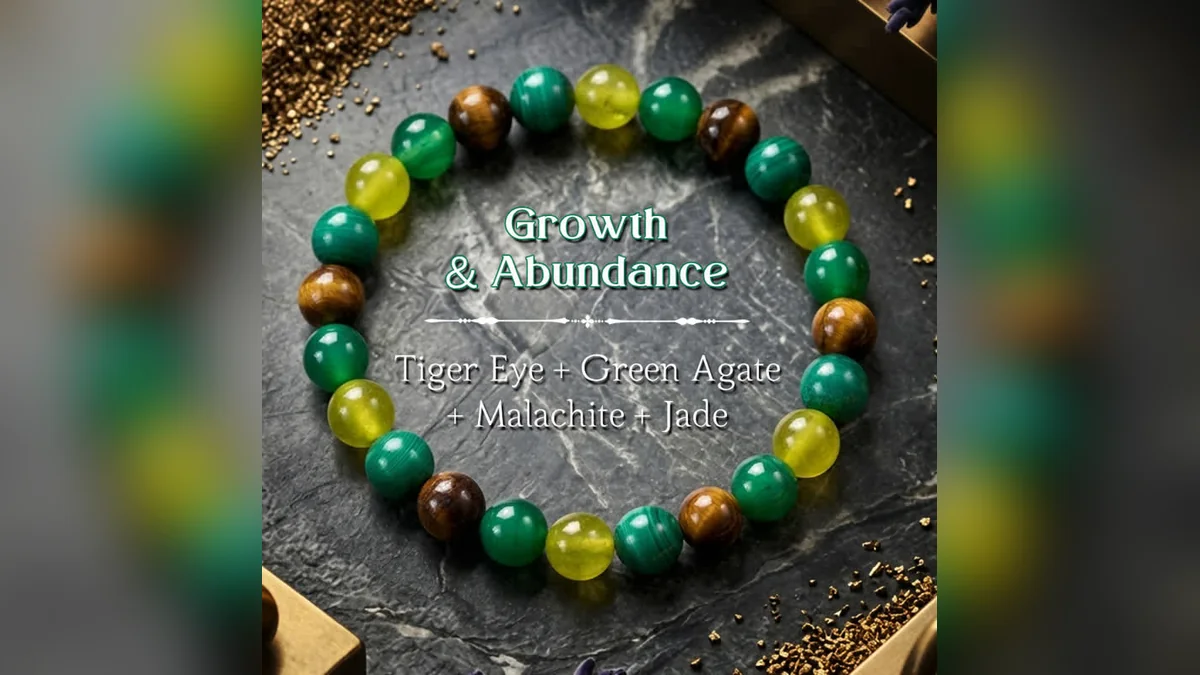
A bracelet combining four named materials
Our Tiger Eye Malachite Cyan Jade Green Agate Courage Bracelet uses Premium Elastic String and 8mm beads. Its wrist circumference is 5.9–6.3 in (15–16 cm). The materials are Tiger Eye, Malachite, Cyan Jade, and Green Agate. The package includes one bracelet; slight variations in color, details, and appearance are possible.
A three-material bracelet option
The Tiger Eye Malachite Green Agate Strength Beads Bracelet combines Tiger Eye, Malachite, and Green Agate. It has 8mm beads, Premium Elastic String, and a wrist circumference of 5.9–6.3 in (15–16 cm). One bracelet is included. Its natural materials may show slight differences in color and overall appearance.
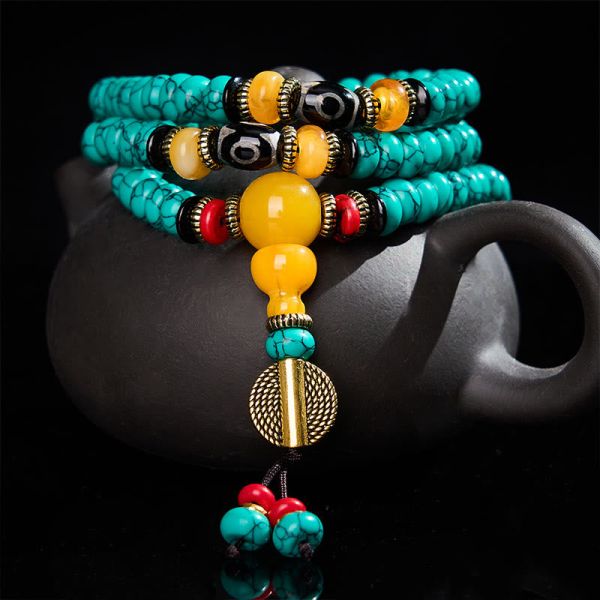
A mala with synthetic turquoise
Our Turquoise Abacus Beads Dzi Bead Mala has 8mm beads, Premium String, and materials specified as Turquoise(Synthetic) and Copper Alloy. Its wrist circumference is Approx. 6.3–7.1 in (16-18 cm). The package contains one mala.
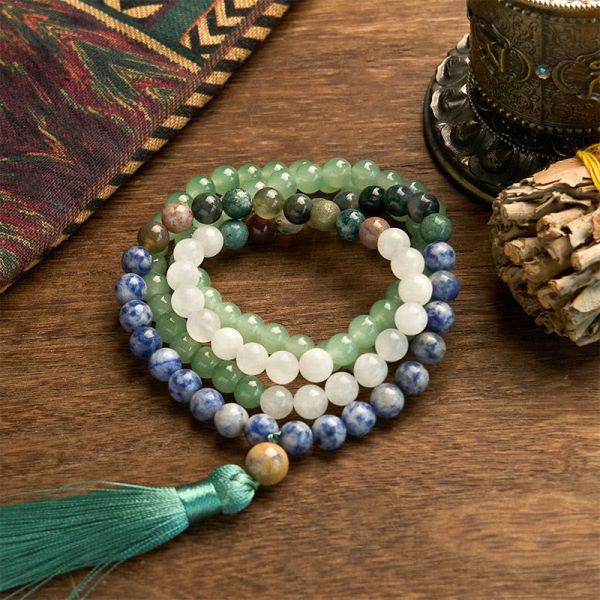
An option with a specified 108-bead count
The 108 Mala Beads Green Aventurine Blue Spot Jasper Indian Agate Green Tassel Bracelet is specified as both a bracelet and a mala. It has 108 beads measuring 8mm, premium elastic string, and a wrist circumference of 14-16cm. Its materials are Green Aventurine, Blue Spot Jasper, and Indian Agate.
Luck and prosperity wording in product names expresses traditional wishes. There is no guarantee of good fortune or financial results; a name does not promise a change in your circumstances.
Leave the strand ready for its next use
Keep the routine small: inspect, count gently, dry-wipe, and put away loosely. Set aside a strand as soon as you notice damage rather than waiting for it to break. A clean storage place and an intact string give you a practical starting point for the next counting session.
Shop the story
 Buddha Stones Tiger Eye Malachite Cyan Jade Green Agate Courage BraceletSpecial Price $25.59 Regular Price $35.54
 Buddha Stones Tiger Eye Malachite Green Agate Strength Beads BraceletSpecial Price $25.59 Regular Price $35.54
 Buddha Stones Turquoise Abacus Beads Dzi Bead Communication and Prosperity MalaSpecial Price $29.59 Regular Price $41.10
 Buddha Stones 108 Mala Beads Natural Green Aventurine Blue Spot Jasper Indian Agate Green Tassel Luck BraceletSpecial Price $26.59 Regular Price $36.42